Sinha Joydeb, Nickels Jan F, Thurm Abby R, Ludwig Connor H, Archibald Bella N, Hinks Michaela M, Wan Jun, Fang Dong, Bintu Lacramioara
Department of Chemical and Systems Biology, Stanford University School of Medicine, Stanford, CA 94305, USA.
Niels Bohr Institute, University of Copenhagen, Copenhagen 2100, Denmark.
bioRxiv. 2023 Oct 14:2023.10.13.562147. doi: 10.1101/2023.10.13.562147.
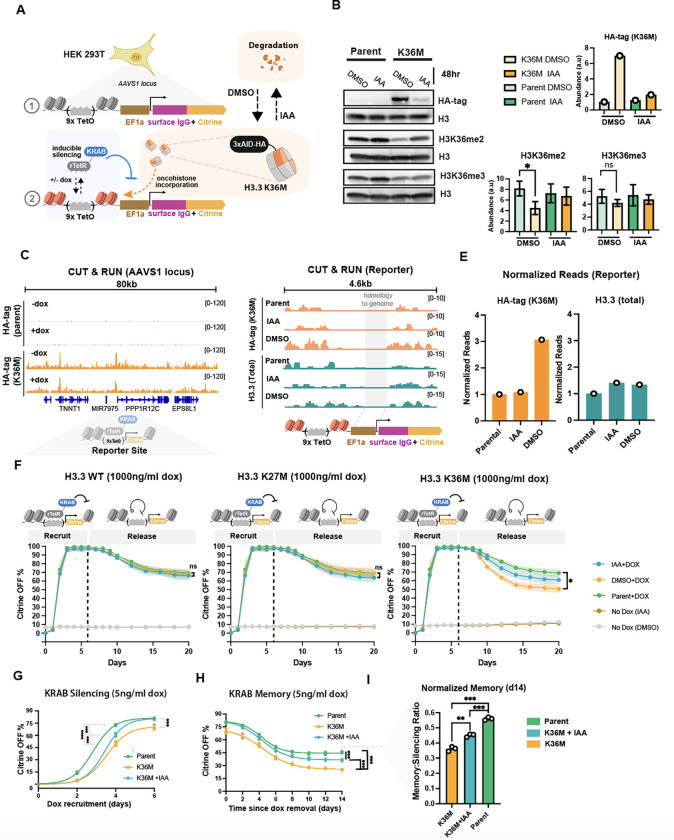
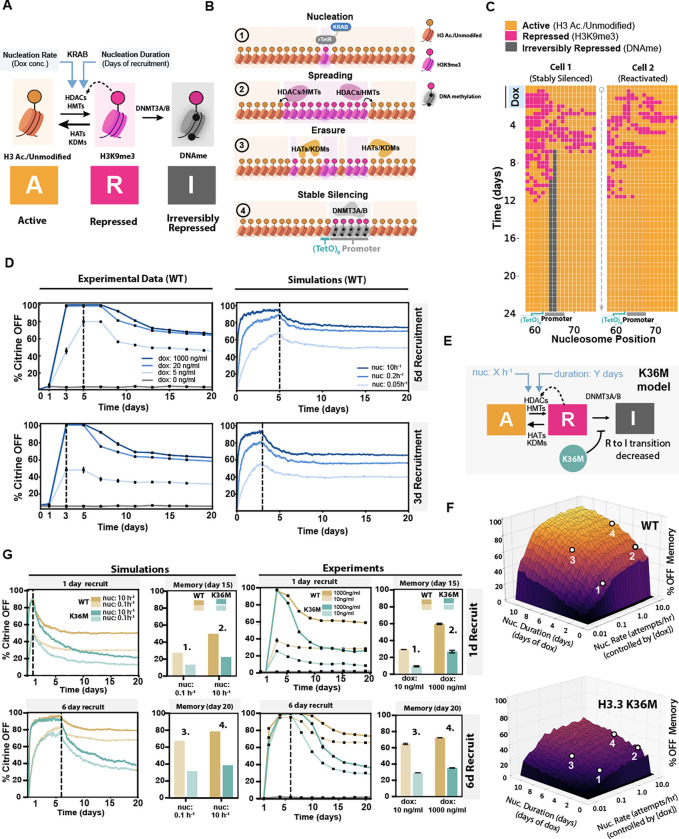
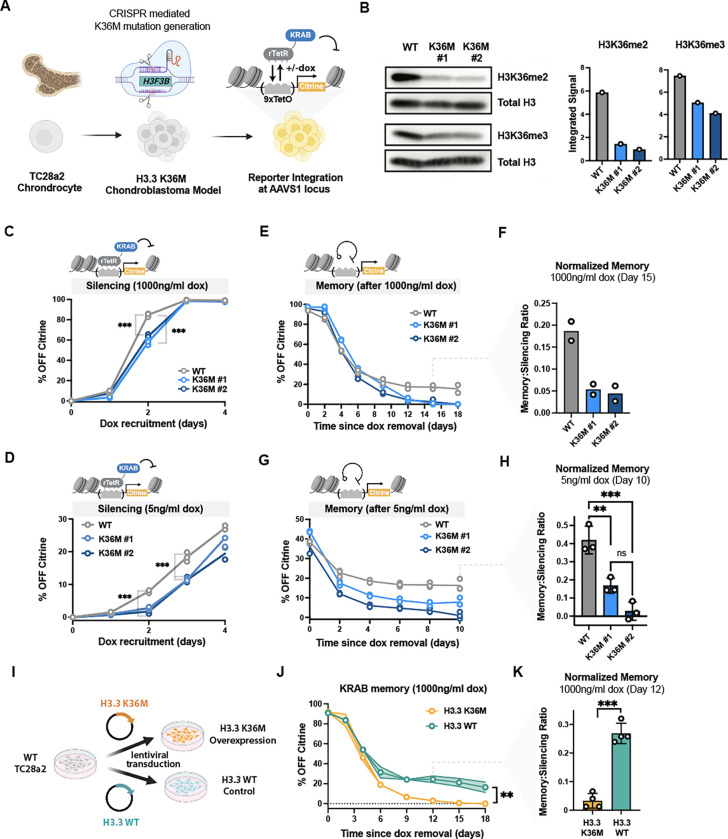
Histone H3.3 is frequently mutated in cancers, with the lysine 36 to methionine mutation (K36M) being a hallmark of chondroblastomas. While it is known that H3.3K36M changes the cellular epigenetic landscape, it remains unclear how it affects the dynamics of gene expression. Here, we use a synthetic reporter to measure the effect of H3.3K36M on silencing and epigenetic memory after recruitment of KRAB: a member of the largest class of human repressors, commonly used in synthetic biology, and associated with H3K9me3. We find that H3.3K36M, which decreases H3K36 methylation, leads to a decrease in epigenetic memory and promoter methylation weeks after KRAB release. We propose a new model for establishment and maintenance of epigenetic memory, where H3K36 methylation is necessary to convert H3K9me3 domains into DNA methylation for stable epigenetic memory. Our quantitative model can inform oncogenic mechanisms and guide development of epigenetic editing tools.
组蛋白H3.3在癌症中经常发生突变,其中赖氨酸36突变为甲硫氨酸的突变(K36M)是软骨母细胞瘤的一个标志。虽然已知H3.3K36M会改变细胞的表观遗传格局,但尚不清楚它如何影响基因表达的动态变化。在这里,我们使用一个合成报告基因来测量H3.3K36M对招募KRAB后沉默和表观遗传记忆的影响:KRAB是人类最大类别的阻遏物成员,常用于合成生物学,并与H3K9me3相关。我们发现,降低H3K36甲基化的H3.3K36M会导致KRAB释放数周后表观遗传记忆和启动子甲基化减少。我们提出了一种表观遗传记忆建立和维持的新模型,其中H3K36甲基化对于将H3K9me3结构域转化为DNA甲基化以实现稳定的表观遗传记忆是必要的。我们的定量模型可以为致癌机制提供信息,并指导表观遗传编辑工具的开发。