Garcia-Mendez Juan P, Lal Amos, Herasevich Svetlana, Tekin Aysun, Pinevich Yuliya, Lipatov Kirill, Wang Hsin-Yi, Qamar Shahraz, Ayala Ivan N, Khapov Ivan, Gerberi Danielle J, Diedrich Daniel, Pickering Brian W, Herasevich Vitaly
Department of Anesthesiology and Perioperative Medicine, Division of Critical Care, Mayo Clinic, Rochester, MN 55905, USA.
Department of Medicine, Division of Pulmonary and Critical Care Medicine, Mayo Clinic, Rochester, MN 55905, USA.
Bioengineering (Basel). 2023 Oct 2;10(10):1155. doi: 10.3390/bioengineering10101155.
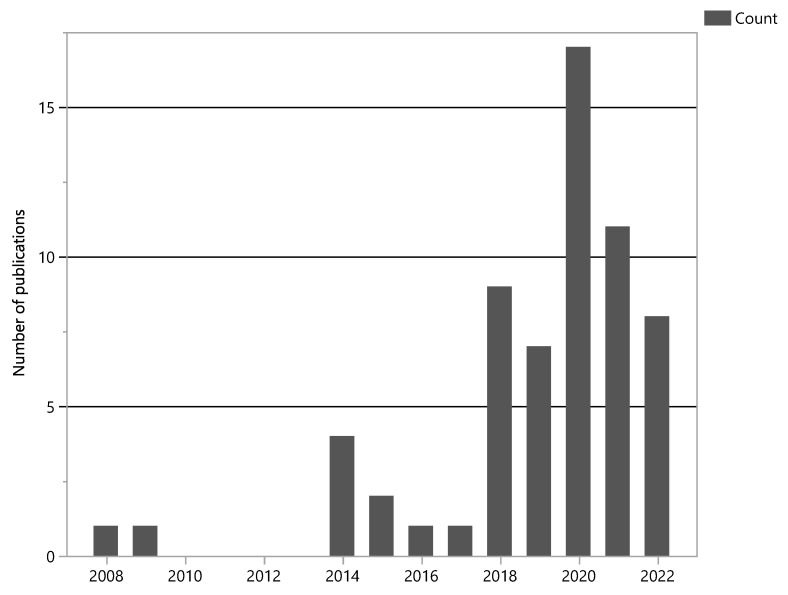
Pulmonary auscultation is essential for detecting abnormal lung sounds during physical assessments, but its reliability depends on the operator. Machine learning (ML) models offer an alternative by automatically classifying lung sounds. ML models require substantial data, and public databases aim to address this limitation. This systematic review compares characteristics, diagnostic accuracy, concerns, and data sources of existing models in the literature. Papers published from five major databases between 1990 and 2022 were assessed. Quality assessment was accomplished with a modified QUADAS-2 tool. The review encompassed 62 studies utilizing ML models and public-access databases for lung sound classification. Artificial neural networks (ANN) and support vector machines (SVM) were frequently employed in the ML classifiers. The accuracy ranged from 49.43% to 100% for discriminating abnormal sound types and 69.40% to 99.62% for disease class classification. Seventeen public databases were identified, with the ICBHI 2017 database being the most used (66%). The majority of studies exhibited a high risk of bias and concerns related to patient selection and reference standards. Summarizing, ML models can effectively classify abnormal lung sounds using publicly available data sources. Nevertheless, inconsistent reporting and methodologies pose limitations to advancing the field, and therefore, public databases should adhere to standardized recording and labeling procedures.
肺部听诊对于在体格检查中检测异常肺音至关重要,但其可靠性取决于操作者。机器学习(ML)模型通过自动对肺音进行分类提供了一种替代方法。ML模型需要大量数据,公共数据库旨在解决这一限制。本系统评价比较了文献中现有模型的特征、诊断准确性、关注点和数据来源。评估了1990年至2022年间从五个主要数据库发表的论文。使用改良的QUADAS-2工具进行质量评估。该评价涵盖了62项利用ML模型和公共访问数据库进行肺音分类的研究。人工神经网络(ANN)和支持向量机(SVM)在ML分类器中经常被使用。区分异常声音类型的准确率在49.43%至100%之间,疾病类别分类的准确率在69.40%至99.62%之间。确定了17个公共数据库,其中ICBHI 2017数据库使用最多(66%)。大多数研究显示出与患者选择和参考标准相关的高偏倚风险和关注点。总之,ML模型可以使用公开可用的数据源有效地对异常肺音进行分类。然而,报告和方法的不一致对该领域的发展构成了限制,因此,公共数据库应遵循标准化的记录和标记程序。