Reza Md Shamim, Rahman Md Ferdous, Kuddus Abdul, Mohammed Mustafa K A, Al-Mousoi Ali K, Islam Md Rasidul, Ghosh Avijit, Bhattarai Sagar, Pandey Rahul, Madan Jaya, Hossain M Khalid
Advanced Energy Materials and Solar Cell Research Laboratory, Department of Electrical and Electronic Engineering, Begum Rokeya University Rangpur 5400 Bangladesh
Ritsumeikan Global Innovation Research Organization, Ritsumeikan University Shiga 525-8577 Japan
RSC Adv. 2023 Oct 30;13(45):31330-31345. doi: 10.1039/d3ra06137j. eCollection 2023 Oct 26.
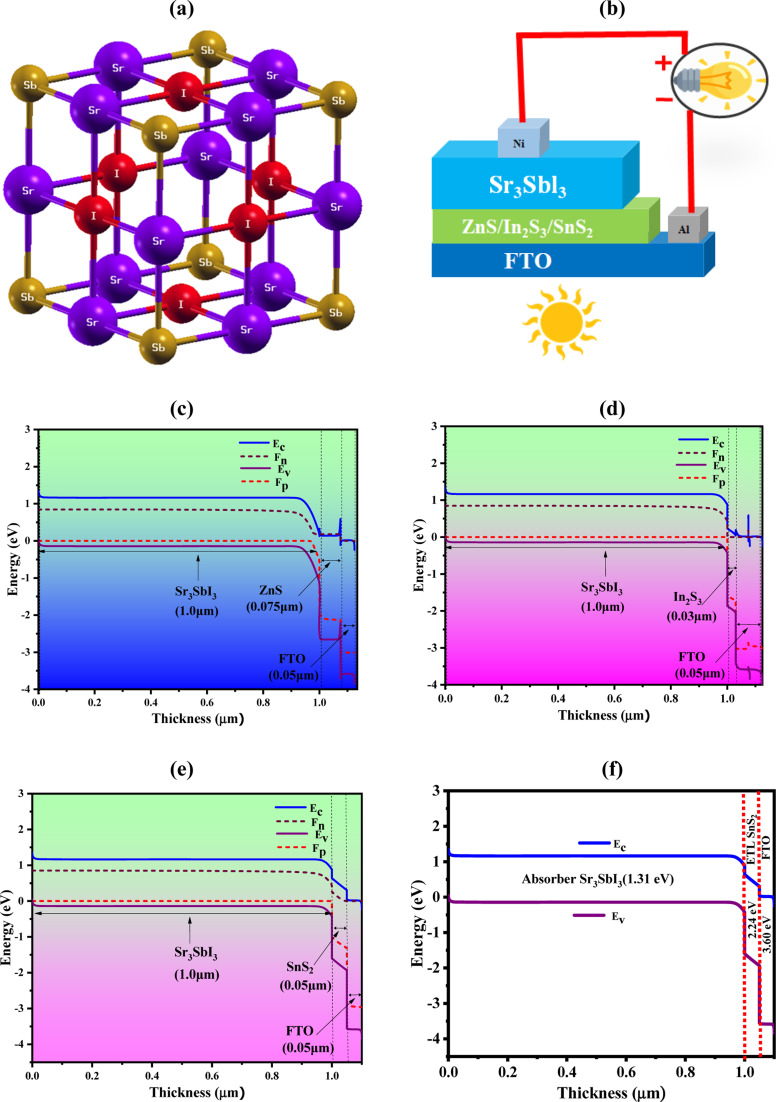
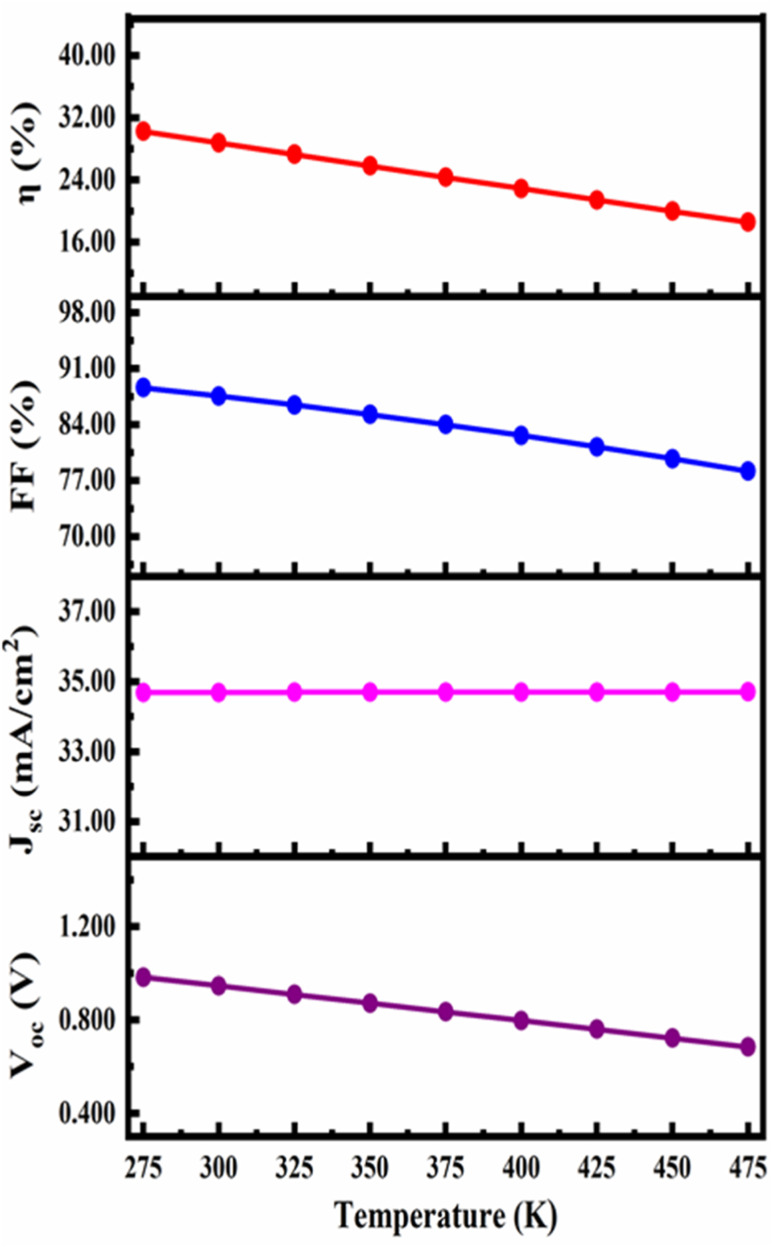
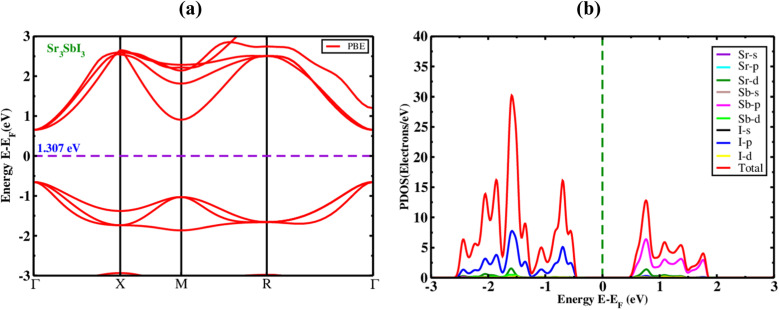
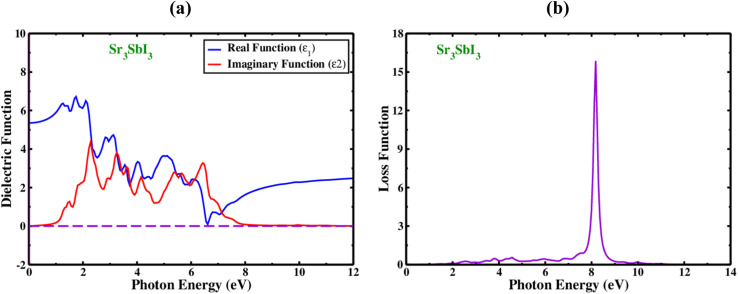
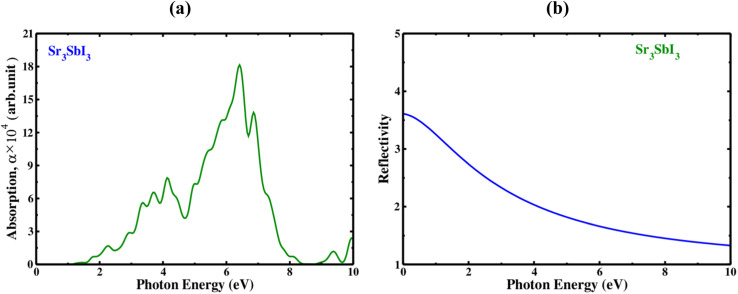
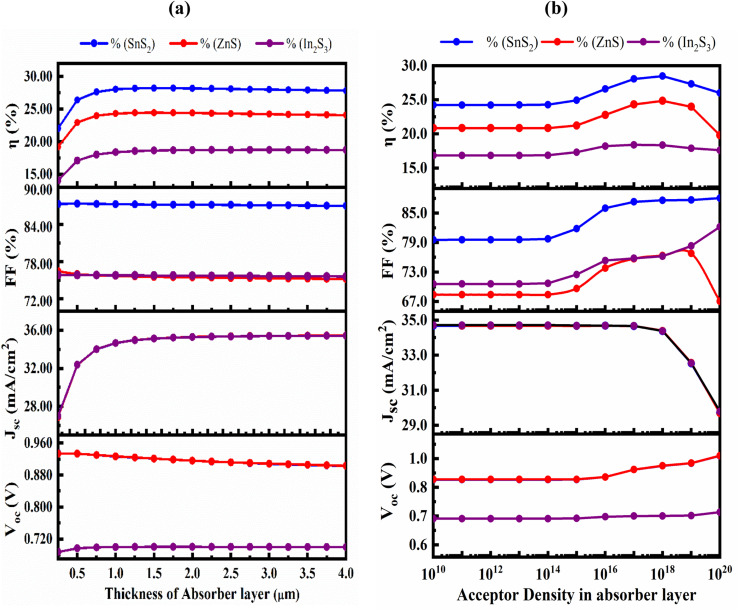
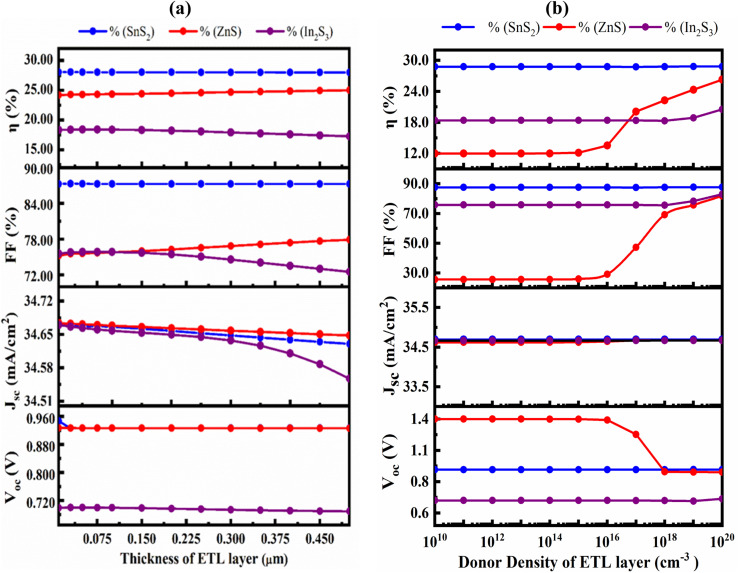
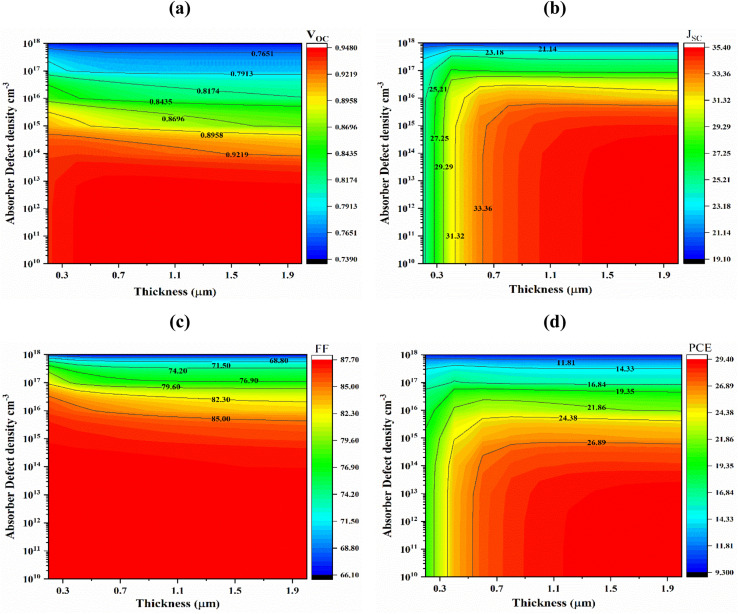
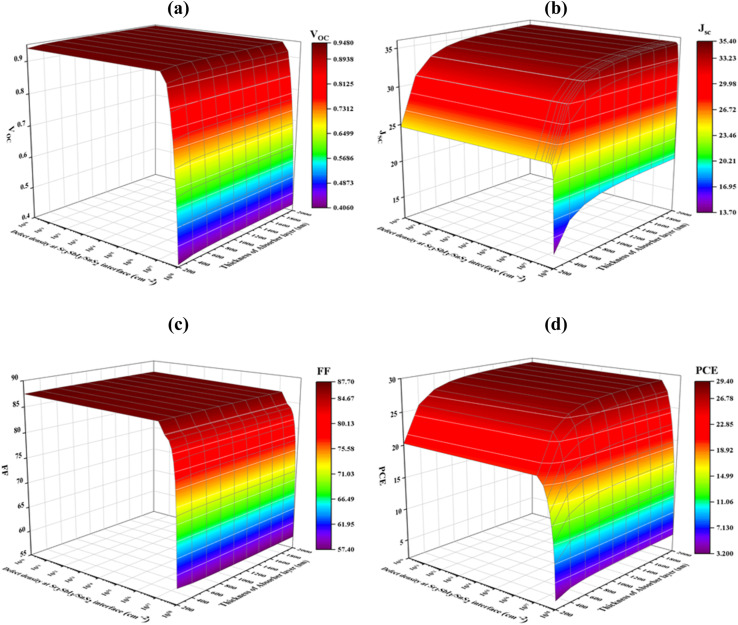
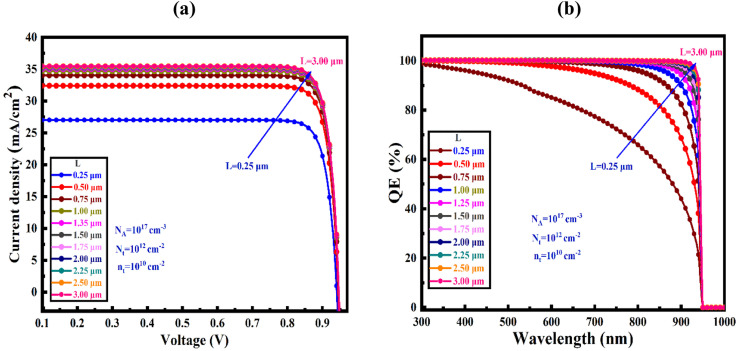
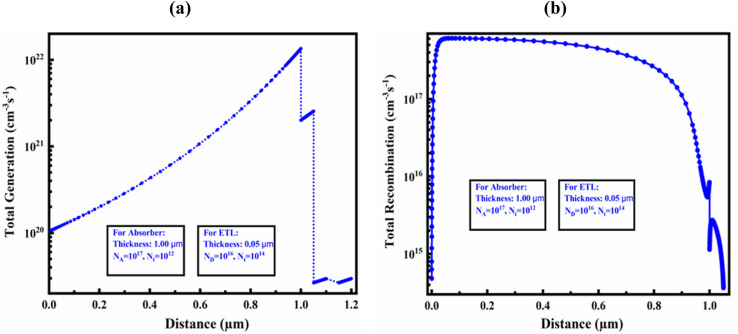
Strontium antimony iodide (SrSbI) is one of the emerging absorbers materials owing to its intriguing structural, electronic, and optical properties for efficient and cost-effective solar cell applications. A comprehensive investigation on the structural, optical, and electronic characterization of SrSbI and its subsequent applications in heterostructure solar cells have been studied theoretically. Initially, the optoelectronic parameters of the novel SrSbI absorber, and the possible electron transport layer (ETL) of tin sulfide (SnS), zinc sulfide (ZnS), and indium sulfide (InS) including various interface layers were obtained by DFT study. Afterward, the photovoltaic (PV) performance of SrSbI absorber-based cell structures with SnS, ZnS, and InS as ETLs were systematically investigated at varying layer thickness, defect density bulk, doping density, interface density of active materials including working temperature, and thereby, optimized PV parameters were achieved using SCAPS-1D simulator. Additionally, the quantum efficiency (QE), current density-voltage (-), and generation and recombination rates of photocarriers were determined. The maximum power conversion efficiency (PCE) of 28.05% with of 34.67 mA cm, FF of 87.31%, of 0.93 V for SnS ETL was obtained with Al/FTO/SnS/SrSbI/Ni structure, while the PCE of 24.33%, and 18.40% in ZnS and InS ETLs heterostructures, respectively. The findings of this study contribute to in-depth understanding of the physical, electronic, and optical properties of SrSbI absorber perovskite and SnS, ZnS, and InS ETLs. Additionally, it provides valuable insights into the potential of SrSbI in heterostructure perovskite solar cells (PSCs), paving the pathway for further experimental design of an efficient and stable PSC devices.
碘化锶锑(SrSbI)因其在高效且经济高效的太阳能电池应用中具有引人入胜的结构、电子和光学特性,而成为新兴的吸收材料之一。本文从理论上研究了SrSbI的结构、光学和电子特性,并对其在异质结太阳能电池中的后续应用进行了全面研究。首先,通过密度泛函理论(DFT)研究获得了新型SrSbI吸收体的光电参数,以及包括各种界面层的硫化锡(SnS)、硫化锌(ZnS)和硫化铟(InS)等可能的电子传输层(ETL)。随后,利用SCAPS-1D模拟器系统地研究了以SnS、ZnS和InS作为ETL的基于SrSbI吸收体的电池结构在不同层厚度、体缺陷密度、掺杂密度、活性材料界面密度(包括工作温度)下的光伏(PV)性能,从而获得了优化的PV参数。此外,还测定了量子效率(QE)、电流密度-电压(J-V)以及光载流子的产生和复合率。对于Al/FTO/SnS/SrSbI/Ni结构,以SnS作为ETL时,获得了最大功率转换效率(PCE)为28.05%,Jsc为34.67 mA cm²,填充因子(FF)为87.31%,Voc为0.93 V;而在ZnS和InS ETL异质结构中,PCE分别为24.33%和18.40%。本研究结果有助于深入了解SrSbI吸收体钙钛矿以及SnS、ZnS和InS ETL的物理、电子和光学特性。此外,它为SrSbI在异质结钙钛矿太阳能电池(PSC)中的潜力提供了有价值的见解,为高效稳定的PSC器件的进一步实验设计铺平了道路。