Department of Nutrition Sciences, Research Center for Environmental Determinants of Health (RCEDH), Health Institute, Kermanshah University of Medical Sciences, Kermanshah, Iran.
Student Research Committee, School of Nutritional Sciences and Food Technology, Kermanshah University of Medical Sciences, Kermanshah, Iran.
Sci Rep. 2023 Nov 4;13(1):19075. doi: 10.1038/s41598-023-46447-8.
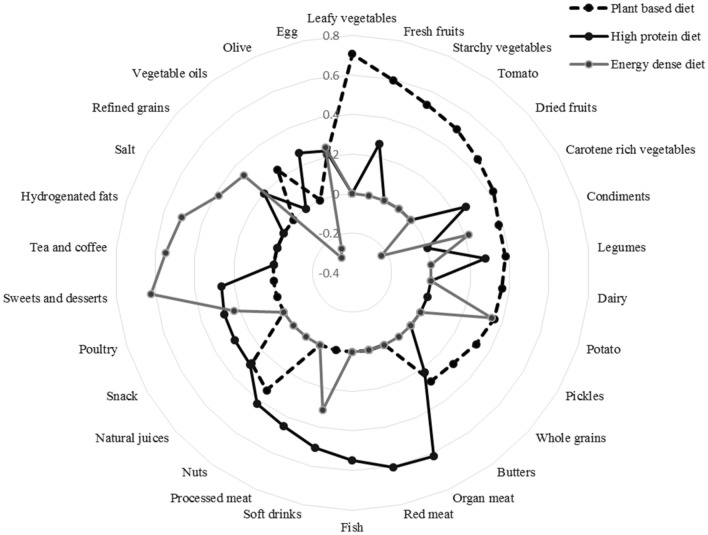
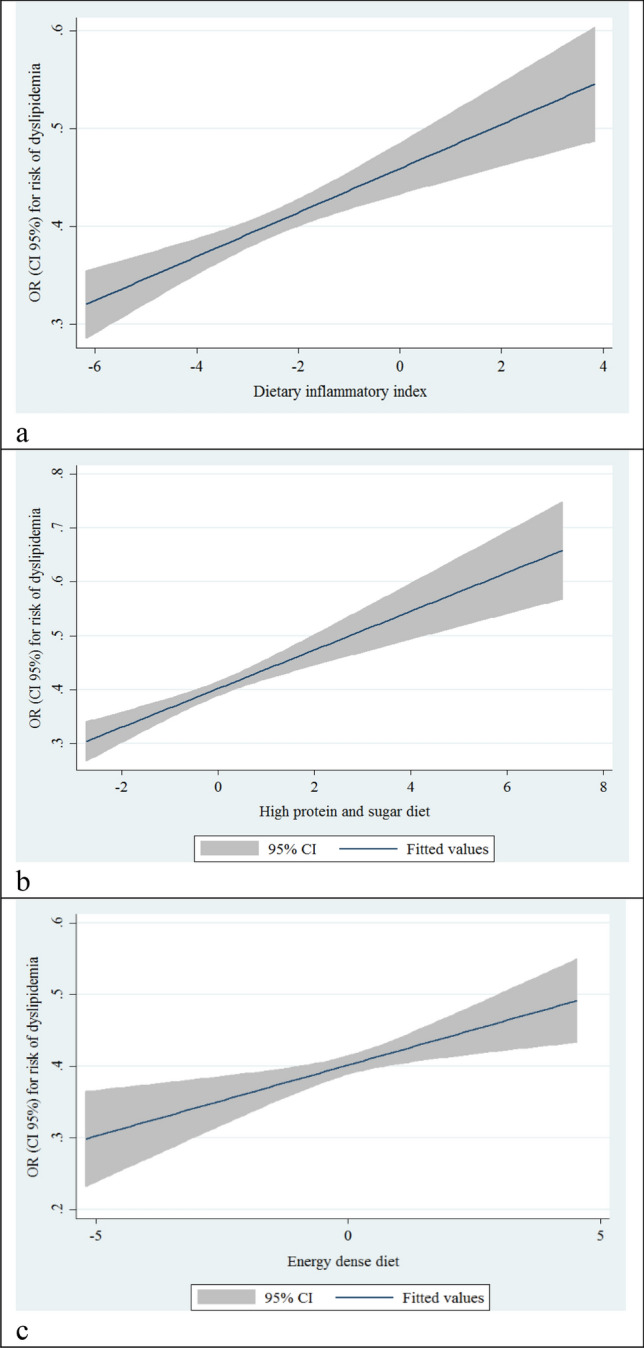
Dyslipidemia can increase the risk of heart attack and stroke due to the restriction of blood flow through the blood vessels. Dietary modification is an appropriate approach to reducing this phenomenon. This cross-sectional study aimed to evaluate major dietary patterns and the dietary inflammatory index (DII) in relation to dyslipidemia. 5954 participants in the Ravansar non-communicable diseases (RaNCD) cohort study were eligible for this study. Dyslipidemia was diagnosed based on the lipid profile under consideration of the RaNCD physician. Dietary patterns were assessed by principal component analysis. The three identified dietary patterns included (1) plant-based pattern; (2) high protein and sugar pattern; and (3) energy-dense dense pattern. DII was also calculated based on the dietary information from a validated semi-quantitative food frequency questionnaire (FFQ). We found that higher adherence to DII was significantly associated with increased odds of dyslipidemia after adjusting for age, sex, and physical activity (OR: 1.24; CI 95% 1.09-1.42). Additionally, higher adherence to the high protein and sugar diet and an energy-dense diet was significantly associated with higher odds for dyslipidemia (OR: 1.31; CI 95% 1.16-1.49) and (OR: 1.28; CI 95% 1.12-1.46). Nevertheless, according to our results, following plant-based diet had no association with dyslipidemia in both crude and adjusted models. Our findings revealed that greater adherence to DII, a high-protein, high-sugar diet, and an energy-dense diet can have undesirable effects on dyslipidemia.
血脂异常会由于血管中血流受限而增加心脏病发作和中风的风险。饮食调整是减少这种现象的一种适当方法。本横断面研究旨在评估主要的饮食模式和饮食炎症指数(DII)与血脂异常的关系。 Ravansar 非传染性疾病(RaNCD)队列研究中的 5954 名参与者符合本研究条件。血脂异常是根据考虑到 RaNCD 医生的血脂谱诊断的。饮食模式通过主成分分析进行评估。确定的三种饮食模式包括:(1)植物性模式;(2)高蛋白和高糖模式;和(3)高能量密集模式。根据经过验证的半定量食物频率问卷(FFQ)中的饮食信息,还计算了 DII。我们发现,在调整年龄、性别和体力活动后,DII 更高的依从性与血脂异常的几率增加显著相关(OR:1.24;95%CI 1.09-1.42)。此外,较高的高蛋白和高糖饮食以及高能量密集饮食的依从性与血脂异常的几率较高显著相关(OR:1.31;95%CI 1.16-1.49)和(OR:1.28;95%CI 1.12-1.46)。然而,根据我们的结果,在未调整和调整模型中,遵循植物性饮食与血脂异常均无关联。我们的研究结果表明,DII、高蛋白、高糖饮食和高能量密集饮食的更高依从性可能对血脂异常产生不利影响。