Institute of Biomedical Sciences, Academia Sinica, Taipei, 115, Taiwan.
Division of Cardiology, Department of Internal Medicine, National Cheng Kung University Hospital, College of Medicine, National Cheng Kung University, Tainan, 704, Taiwan.
Nat Commun. 2023 Nov 9;14(1):7249. doi: 10.1038/s41467-023-43167-5.
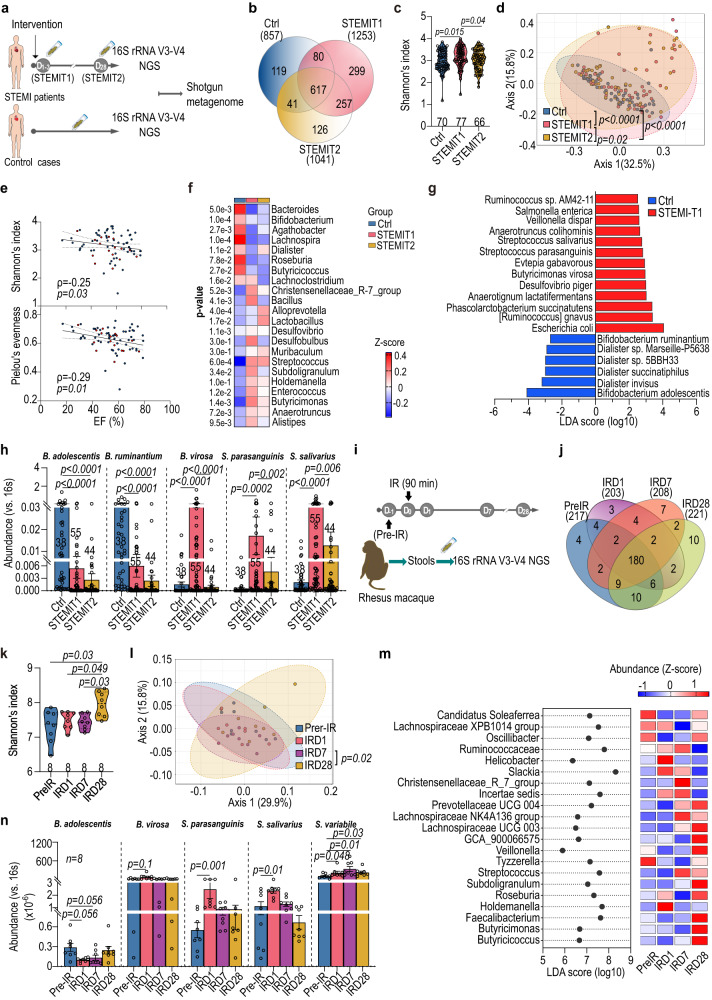
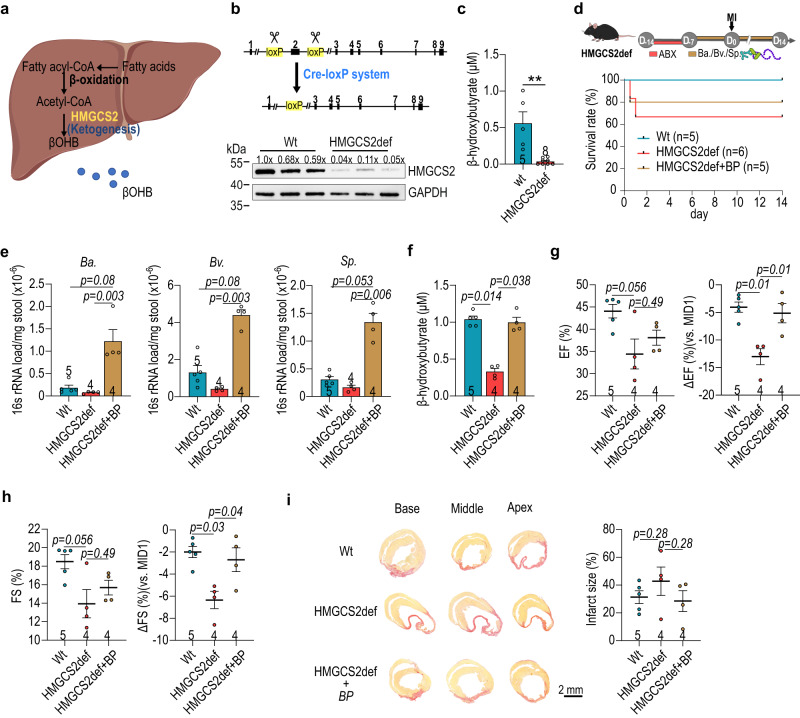
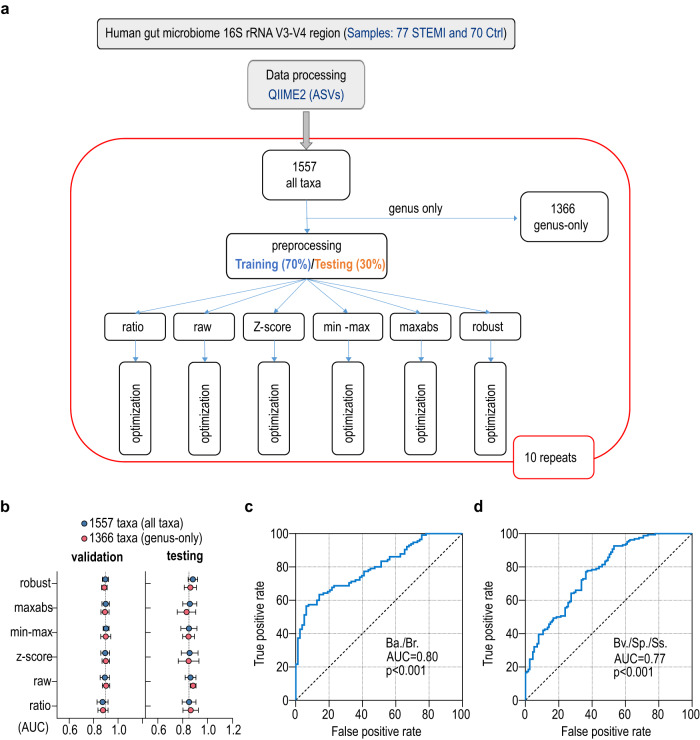
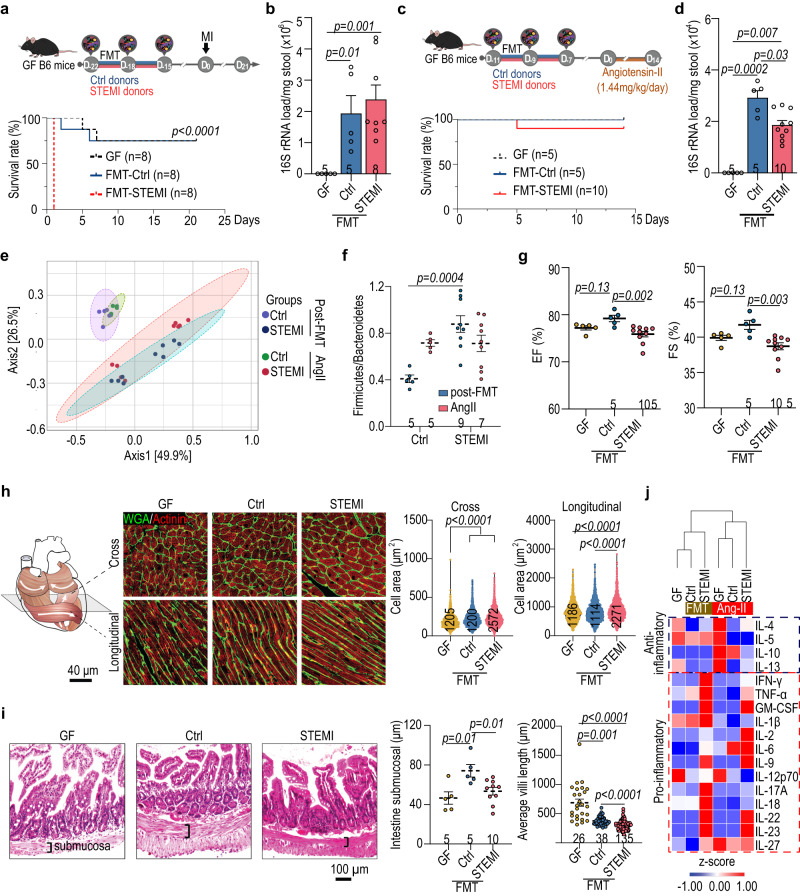
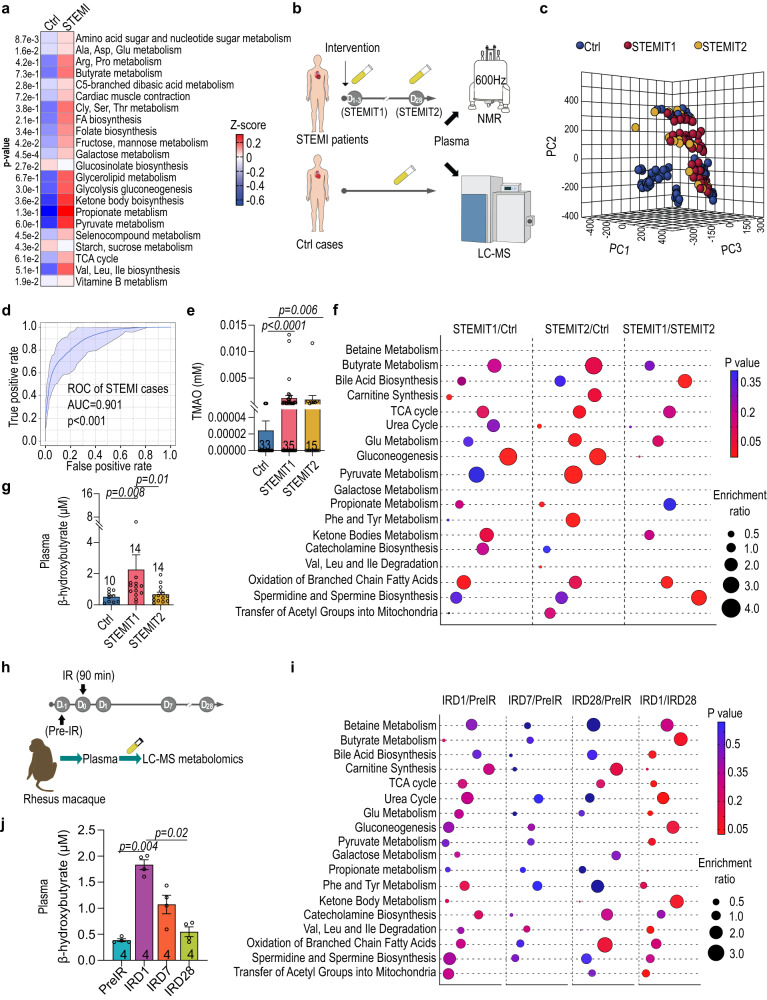
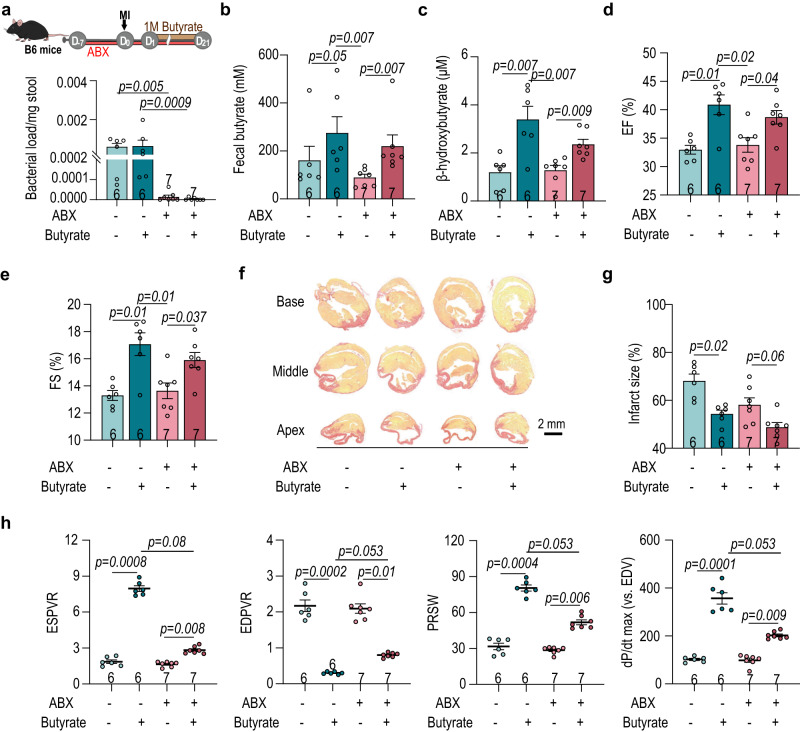
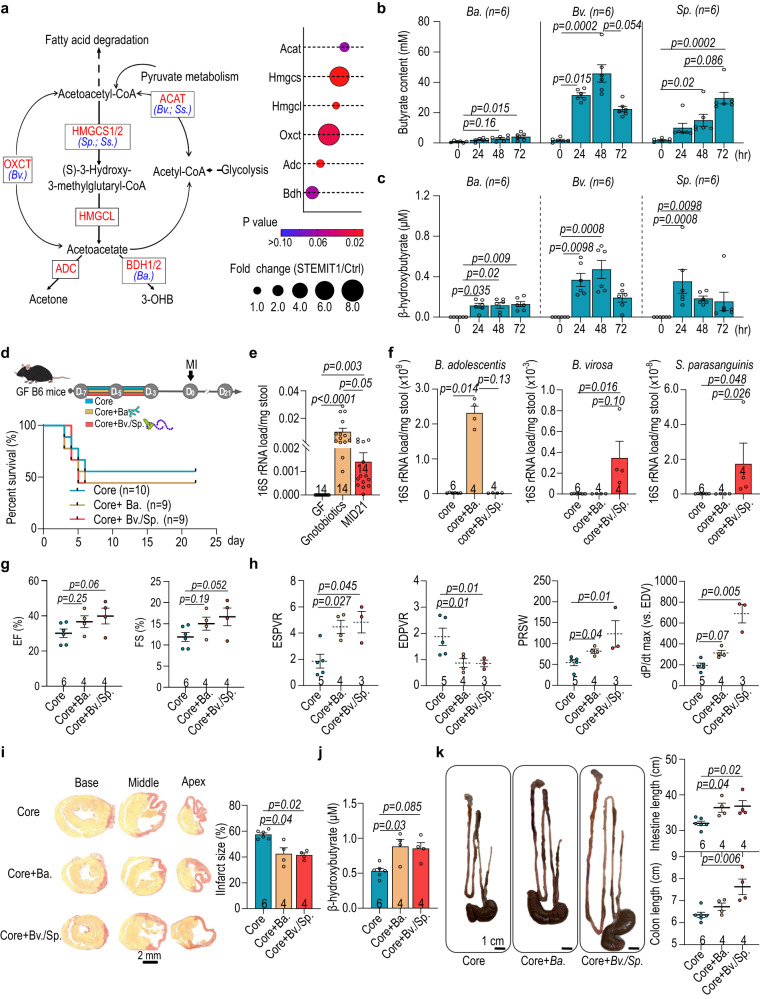
The gut microbiome and its metabolites are increasingly implicated in several cardiovascular diseases, but their role in human myocardial infarction (MI) injury responses have yet to be established. To address this, we examined stool samples from 77 ST-elevation MI (STEMI) patients using 16 S V3-V4 next-generation sequencing, metagenomics and machine learning. Our analysis identified an enriched population of butyrate-producing bacteria. These findings were then validated using a controlled ischemia/reperfusion model using eight nonhuman primates. To elucidate mechanisms, we inoculated gnotobiotic mice with these bacteria and found that they can produce beta-hydroxybutyrate, supporting cardiac function post-MI. This was further confirmed using HMGCS2-deficient mice which lack endogenous ketogenesis and have poor outcomes after MI. Inoculation increased plasma ketone levels and provided significant improvements in cardiac function post-MI. Together, this demonstrates a previously unknown role of gut butyrate-producers in the post-MI response.
肠道微生物组及其代谢物与多种心血管疾病的发生密切相关,但它们在人类心肌梗死(MI)损伤反应中的作用尚未确定。为了解决这个问题,我们使用 16S V3-V4 下一代测序、宏基因组学和机器学习技术,对 77 名 ST 段抬高型心肌梗死(STEMI)患者的粪便样本进行了检测。我们的分析确定了丁酸产生菌的富集种群。然后,我们使用 8 只非人类灵长类动物的控制性缺血/再灌注模型对这些发现进行了验证。为了阐明机制,我们用这些细菌接种无菌小鼠,发现它们可以产生β-羟基丁酸,支持 MI 后心脏功能。这在用缺乏内源性酮生成的 HMGCS2 缺陷型小鼠进一步证实,这些小鼠在 MI 后预后不良。接种增加了血浆酮体水平,并在 MI 后显著改善了心脏功能。总之,这表明肠道丁酸产生菌在 MI 后反应中发挥了以前未知的作用。