Department of Neurosurgery, Medical Center - University of Freiburg, Freiburg, Germany.
Faculty of Medicine, Freiburg University, Freiburg, Germany.
Nat Commun. 2023 Nov 16;14(1):7432. doi: 10.1038/s41467-023-43201-6.
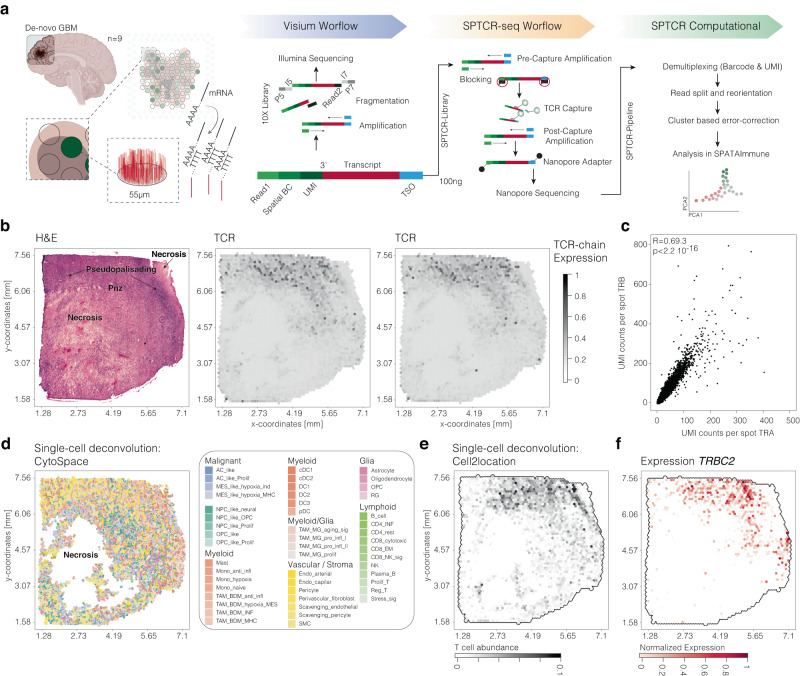
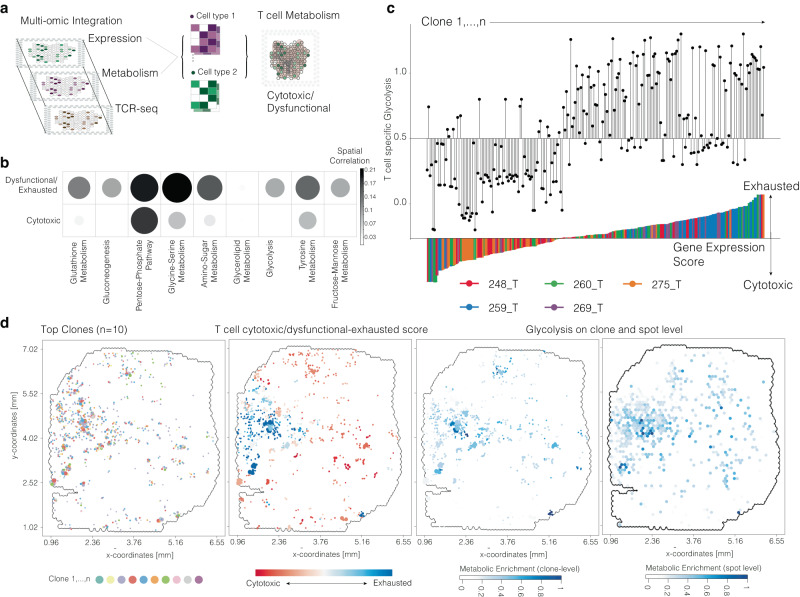
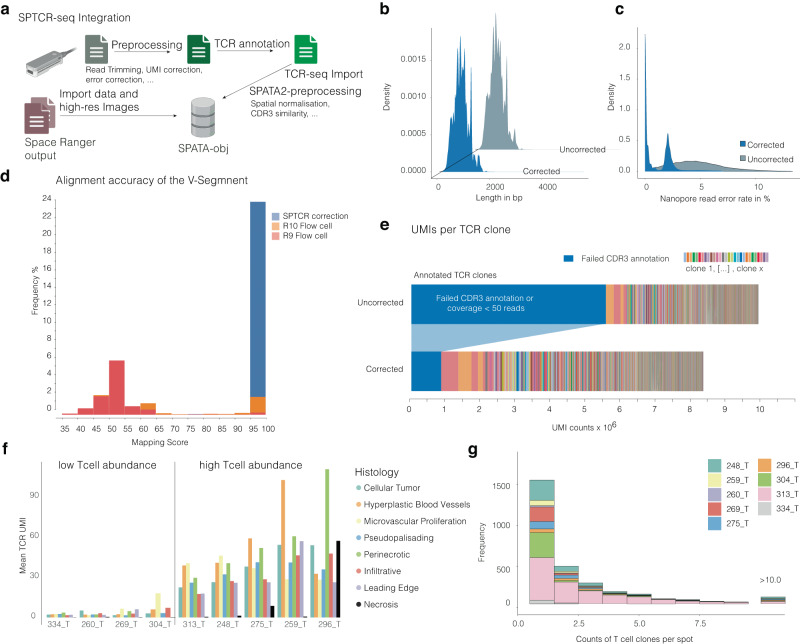
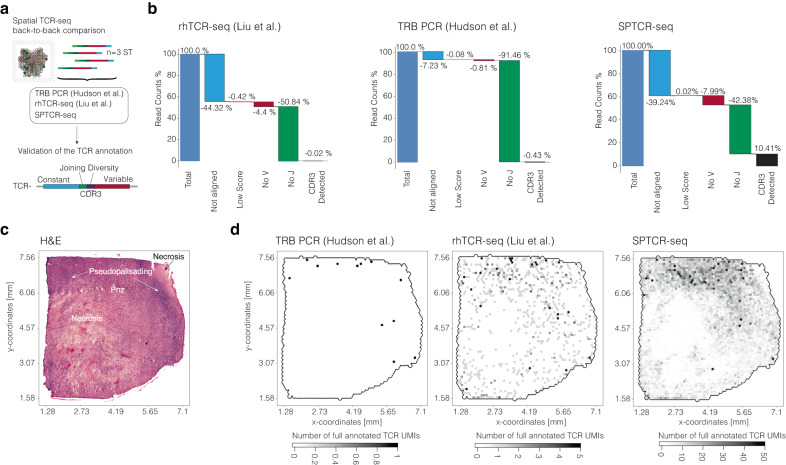
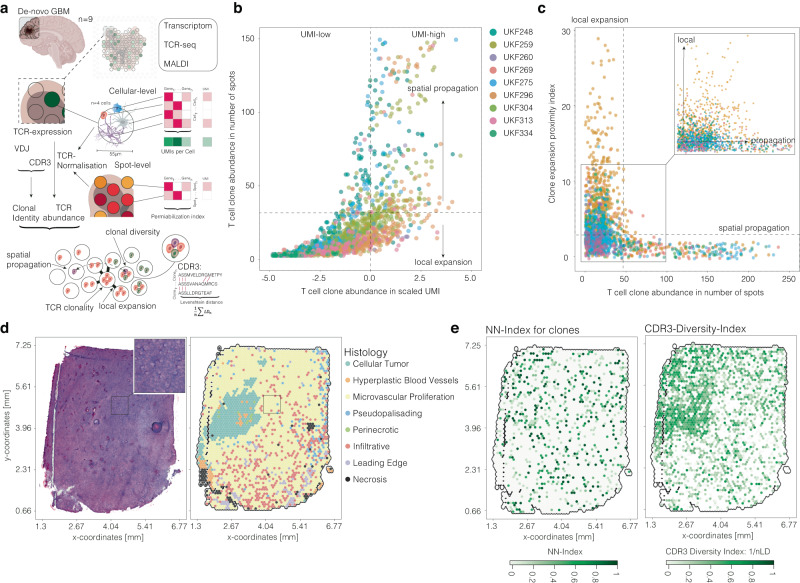
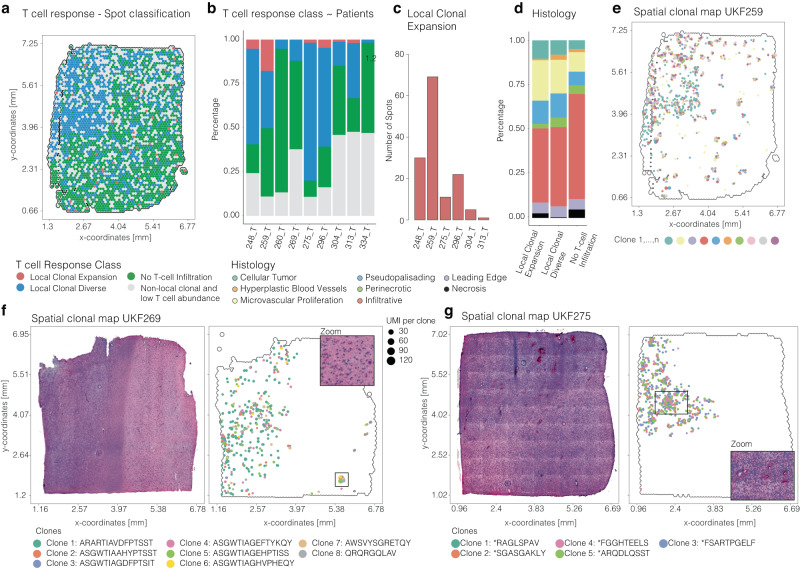
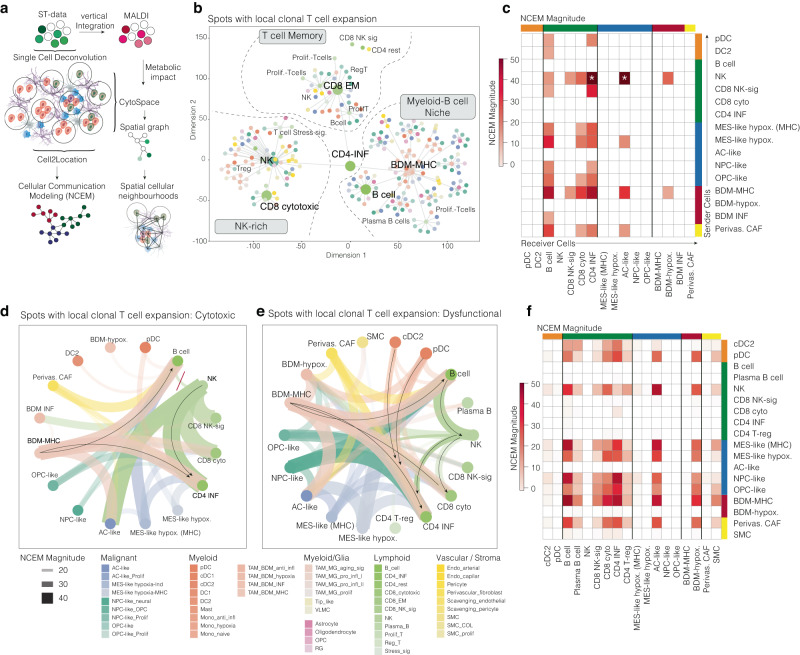
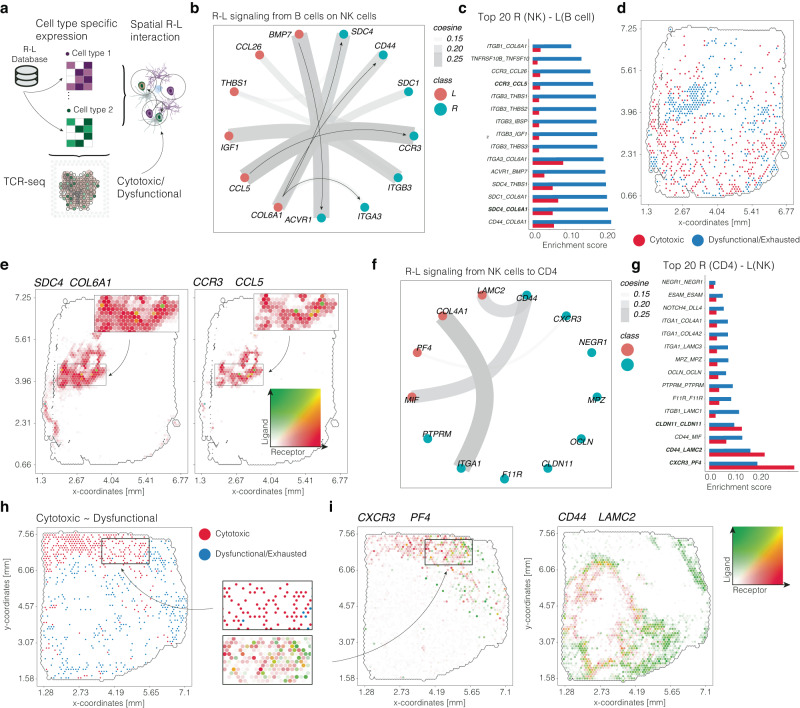
Spatial resolution of the T cell repertoire is essential for deciphering cancer-associated immune dysfunction. Current spatially resolved transcriptomic technologies are unable to directly annotate T cell receptors (TCR). We present spatially resolved T cell receptor sequencing (SPTCR-seq), which integrates optimized target enrichment and long-read sequencing for highly sensitive TCR sequencing. The SPTCR computational pipeline achieves yield and coverage per TCR comparable to alternative single-cell TCR technologies. Our comparison of PCR-based and SPTCR-seq methods underscores SPTCR-seq's superior ability to reconstruct the entire TCR architecture, including V, D, J regions and the complementarity-determining region 3 (CDR3). Employing SPTCR-seq, we assess local T cell diversity and clonal expansion across spatially discrete niches. Exploration of the reciprocal interaction of the tumor microenvironmental and T cells discloses the critical involvement of NK and B cells in T cell exhaustion. Integrating spatially resolved omics and TCR sequencing provides as a robust tool for exploring T cell dysfunction in cancers and beyond.
T 细胞受体测序技术解析肿瘤相关免疫功能障碍
T 细胞受体(TCR)的空间分辨率对于解析癌症相关免疫功能障碍至关重要。目前的空间分辨转录组学技术无法直接注释 TCR。我们提出了空间分辨 T 细胞受体测序(SPTCR-seq),它集成了优化的靶向富集和长读测序,以实现高度敏感的 TCR 测序。SPTCR 计算管道实现了与替代单细胞 TCR 技术相当的每 TCR 的产量和覆盖度。我们对基于 PCR 的 SPTCR-seq 方法进行了比较,突显了 SPTCR-seq 重建整个 TCR 结构(包括 V、D、J 区和互补决定区 3(CDR3))的卓越能力。我们采用 SPTCR-seq 评估了局部 T 细胞多样性和克隆扩增在空间离散龛中的情况。探索肿瘤微环境和 T 细胞的相互作用揭示了 NK 和 B 细胞在 T 细胞耗竭中的关键作用。整合空间分辨组学和 TCR 测序为探索癌症及其他疾病中的 T 细胞功能障碍提供了一种强大的工具。