Institut de Recherche Interdisciplinaire en Biologie Humaine et Moléculaire (IRIBHM), Université Libre de Bruxelles (ULB), Brussels, Belgium.
Thyroid Section, Endocrine Division, Hospital de Clínicas de Porto Alegre (HCPA), Universidade Federal do Rio Grande do Sul (UFRGS), Porto Alegre, Brazil.
Oncogene. 2024 Jan;43(3):155-170. doi: 10.1038/s41388-023-02889-y. Epub 2023 Nov 20.
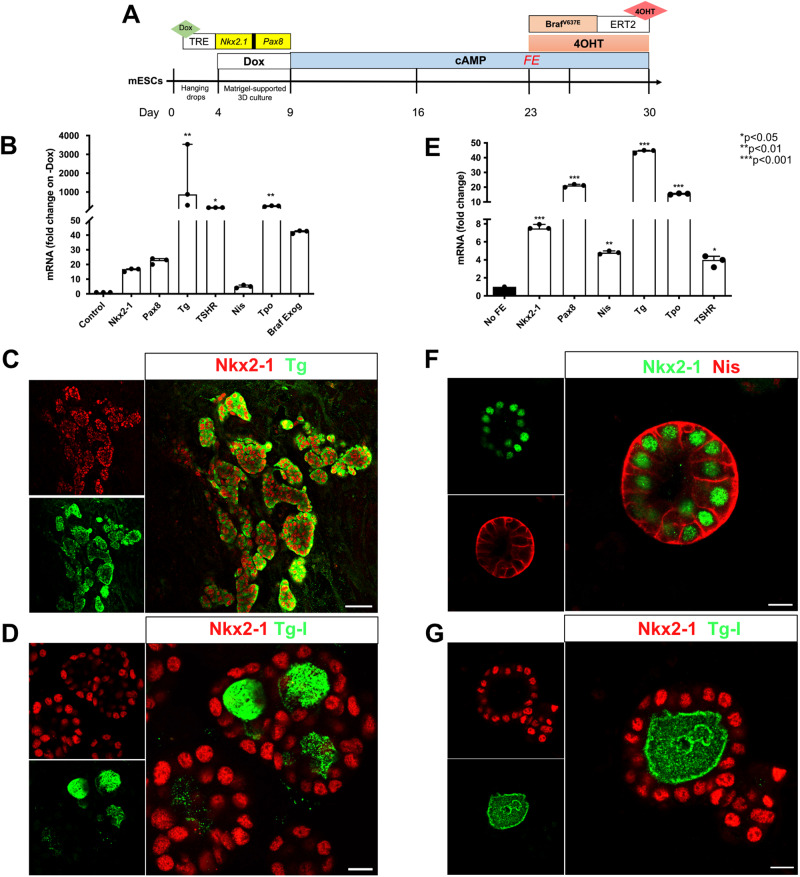
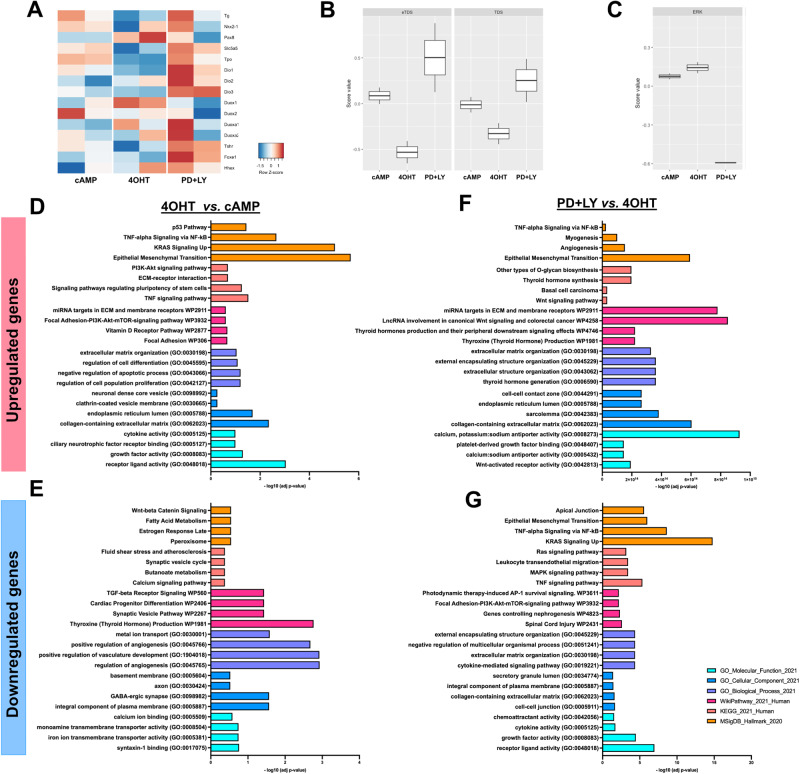
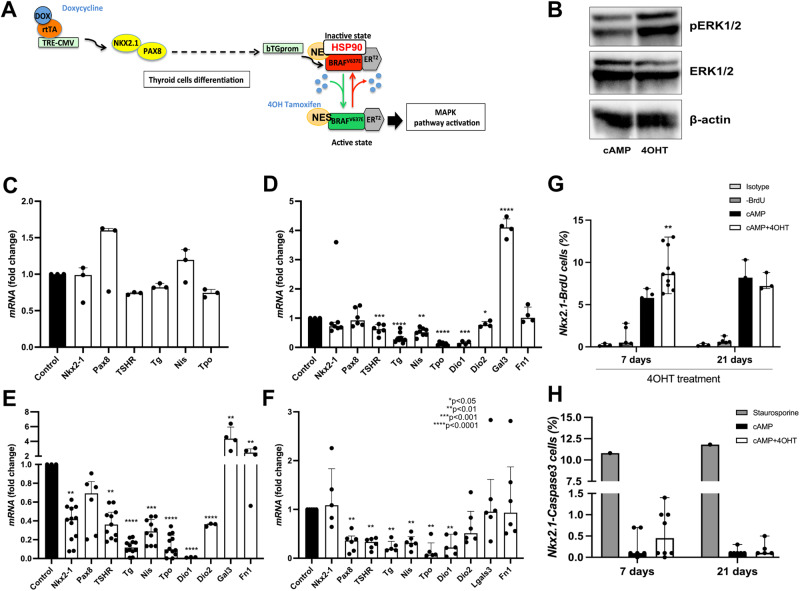
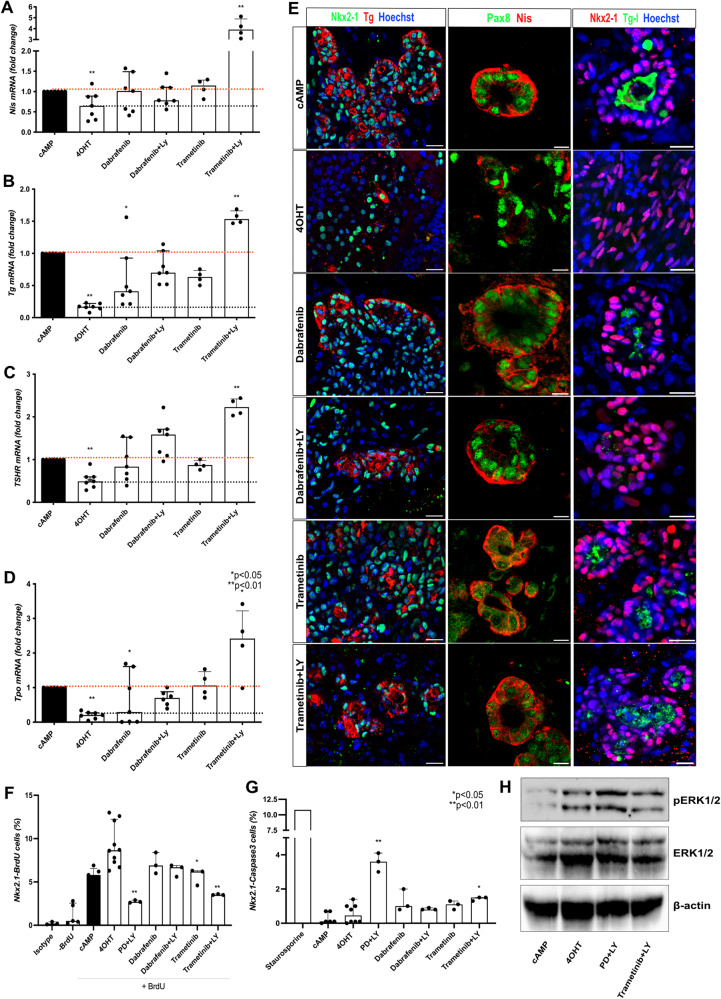
Thyroid cancer is the most common endocrine malignancy and several genetic events have been described to promote the development of thyroid carcinogenesis. Besides the effects of specific mutations on thyroid cancer development, the molecular mechanisms controlling tumorigenesis, tumor behavior, and drug resistance are still largely unknown. Cancer organoids have been proposed as a powerful tool to study aspects related to tumor development and progression and appear promising to test individual responses to therapies. Here, using mESC-derived thyroid organoids, we developed a Braf-inducible model able to recapitulate the features of papillary thyroid cancer in vitro. Overexpression of the murine Braf mutation, equivalent to Braf in humans, rapidly triggers to MAPK activation, cell dedifferentiation, and disruption of follicular organization. Braf-expressing organoids show a transcriptomic signature for p53, focal adhesion, ECM-receptor interactions, EMT, and inflammatory signaling pathways. Finally, PTC-like thyroid organoids were used for drug screening assays. The combination of MAPK and PI3K inhibitors reversed Braf oncogene-promoted cell dedifferentiation while restoring thyroid follicle organization and function in vitro. Our results demonstrate that pluripotent stem cells-derived thyroid cancer organoids can mimic tumor development and features while providing an efficient tool for testing novel targeted therapies.
甲状腺癌是最常见的内分泌恶性肿瘤,已有多种遗传事件被描述为促进甲状腺癌发生的发展。除了特定突变对甲状腺癌发展的影响外,控制肿瘤发生、肿瘤行为和耐药性的分子机制在很大程度上仍不清楚。类器官已被提议作为研究与肿瘤发展和进展相关方面的有力工具,并且似乎有希望测试针对个体的治疗反应。在这里,我们使用 mESC 衍生的甲状腺类器官,开发了一种可在体外重现甲状腺乳头状癌特征的 Braf 诱导模型。鼠 Braf 突变的过表达,相当于人类中的 Braf,可迅速引发 MAPK 激活、细胞去分化和滤泡组织破坏。表达 Braf 的类器官显示出 p53、黏附斑、ECM-受体相互作用、EMT 和炎症信号通路的转录组特征。最后,使用 PTC 样甲状腺类器官进行药物筛选测定。MAPK 和 PI3K 抑制剂的联合使用逆转了 Braf 致癌基因促进的细胞去分化,同时恢复了体外甲状腺滤泡的组织和功能。我们的结果表明,多能干细胞衍生的甲状腺癌类器官可以模拟肿瘤的发展和特征,同时为测试新型靶向治疗提供了有效的工具。