College of Information and Intelligence, Hunan Agricultural University, Changsha, China.
BMC Psychiatry. 2023 Nov 27;23(1):883. doi: 10.1186/s12888-023-05384-6.
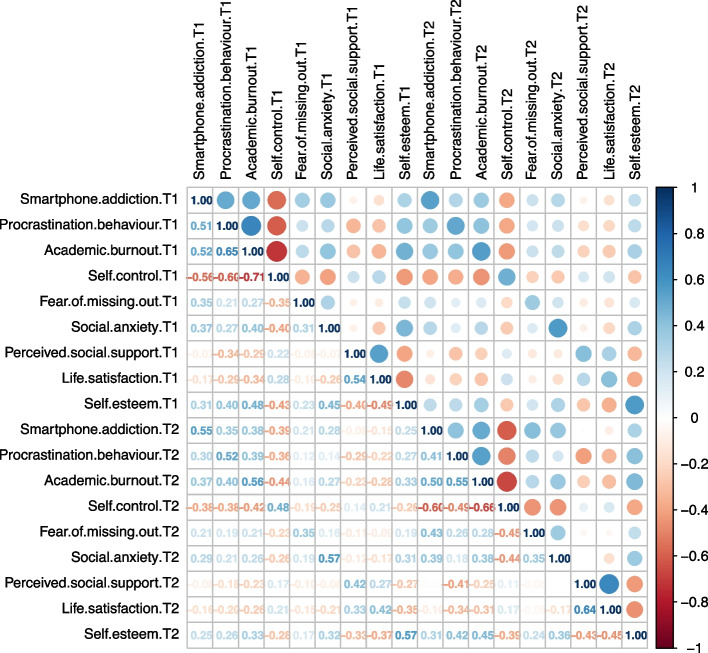
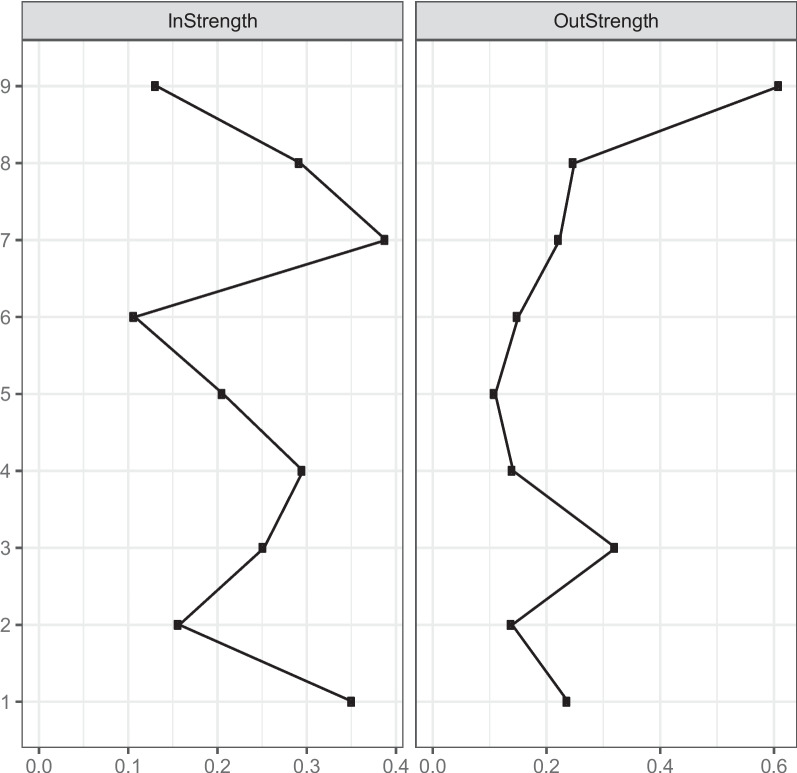
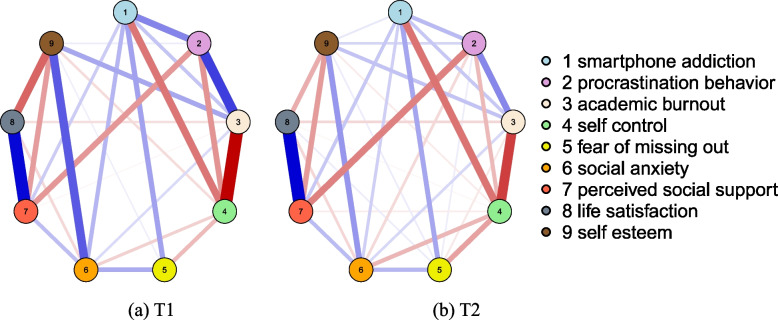
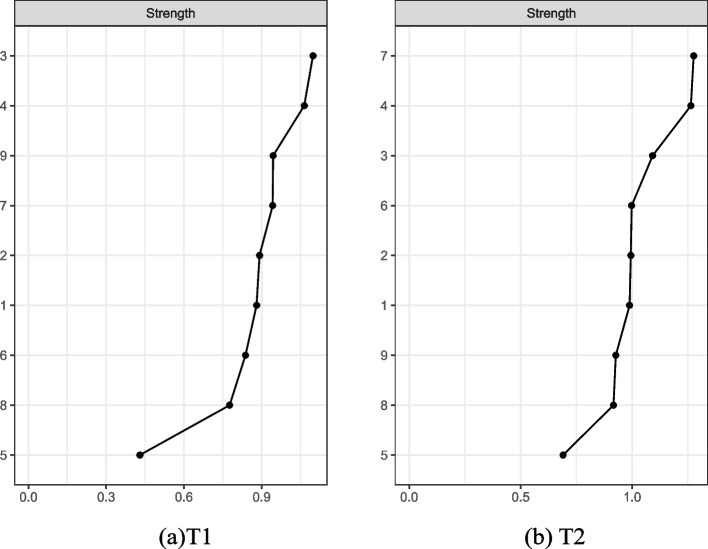
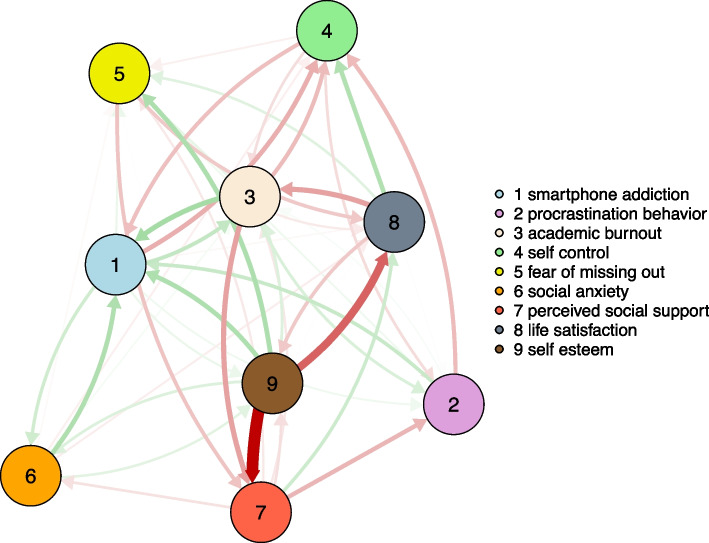
Smartphone addiction is a global problem affecting university students. Previous studies have explored smartphone addiction and related factors using latent variables. In contrast, this study examines the role of smartphone addiction and related factors among university students using a cross-sectional and cross-lagged panel network analysis model at the level of manifest variables. A questionnaire method was used to investigate smartphone addiction and related factors twice with nearly six-month intervals among 1564 first-year university students (M = 19.14, SD = 0.66). The study found that procrastination behavior, academic burnout, self-control, fear of missing out, social anxiety, and self-esteem directly influenced smartphone addiction. Additionally, smartphone addiction predicted the level of self-control, academic burnout, social anxiety, and perceived social support among university students. Self-control exhibited the strongest predictive relationship with smartphone addiction. Overall, self-control, self-esteem, perceived social support, and academic burnout were identified as key factors influencing smartphone addiction among university students. Developing prevention and intervention programs that target these core influencing factors would be more cost-effective.
智能手机成瘾是一个影响大学生的全球性问题。之前的研究使用潜在变量探索了智能手机成瘾和相关因素。相比之下,本研究使用显变量的横断和交叉滞后面板网络分析模型,在显变量层面上检查了智能手机成瘾和相关因素在大学生中的作用。研究采用问卷法,对 1564 名大一学生进行了两次智能手机成瘾和相关因素的调查,两次调查间隔近六个月(M=19.14,SD=0.66)。研究发现,拖延行为、学业倦怠、自我控制、错失恐惧、社交焦虑和自尊直接影响智能手机成瘾。此外,智能手机成瘾预测了大学生自我控制、学业倦怠、社交焦虑和感知社会支持的水平。自我控制与智能手机成瘾的预测关系最强。总的来说,自我控制、自尊、感知社会支持和学业倦怠是影响大学生智能手机成瘾的关键因素。针对这些核心影响因素制定预防和干预计划将更具成本效益。