Ackerman Jessica E, Muscat Samantha N, Adjei-Sowah Emmanuela, Korcari Antonion, Nichols Anne E C, Buckley Mark R, Loiselle Alayna E
Center for Musculoskeletal Research, University of Rochester Medical Center, Rochester, NY, United States; NDORMS, University of Oxford, Oxford, United Kingdom.
Center for Musculoskeletal Research, University of Rochester Medical Center, Rochester, NY, United States; Department of Pathology & Laboratory Medicine, University of Rochester Medical Center, Rochester, NY, United States.
Matrix Biol. 2024 Jan;125:59-72. doi: 10.1016/j.matbio.2023.12.004. Epub 2023 Dec 13.
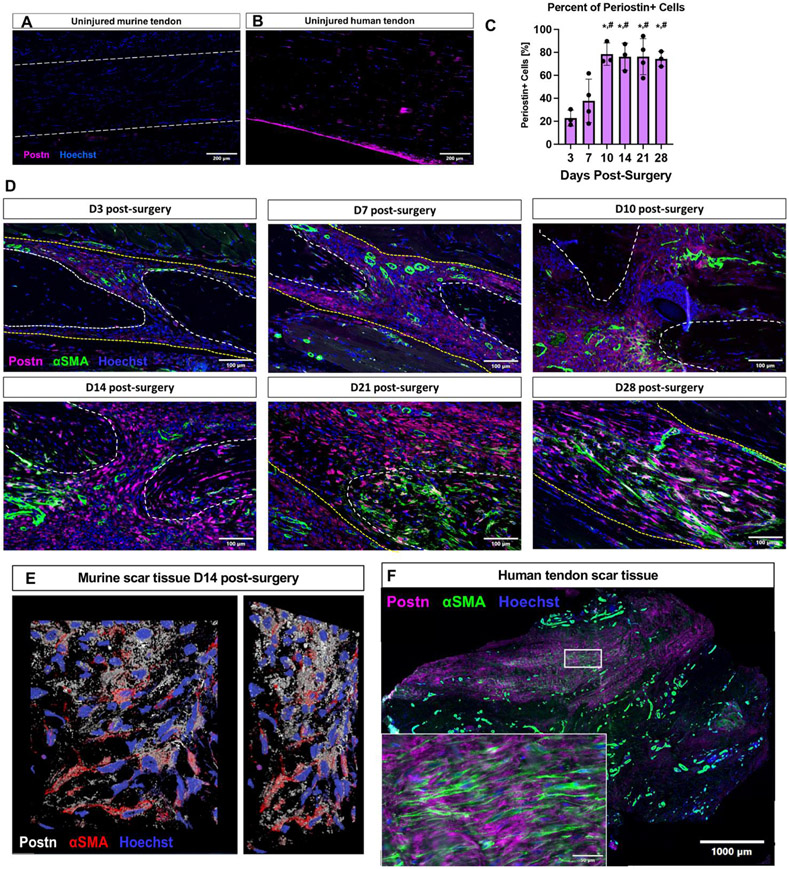
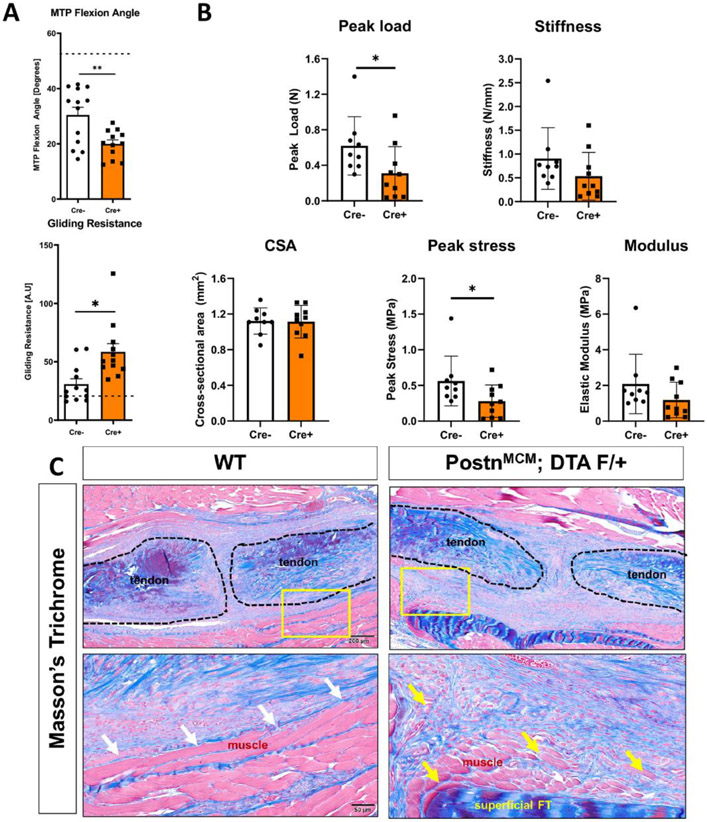
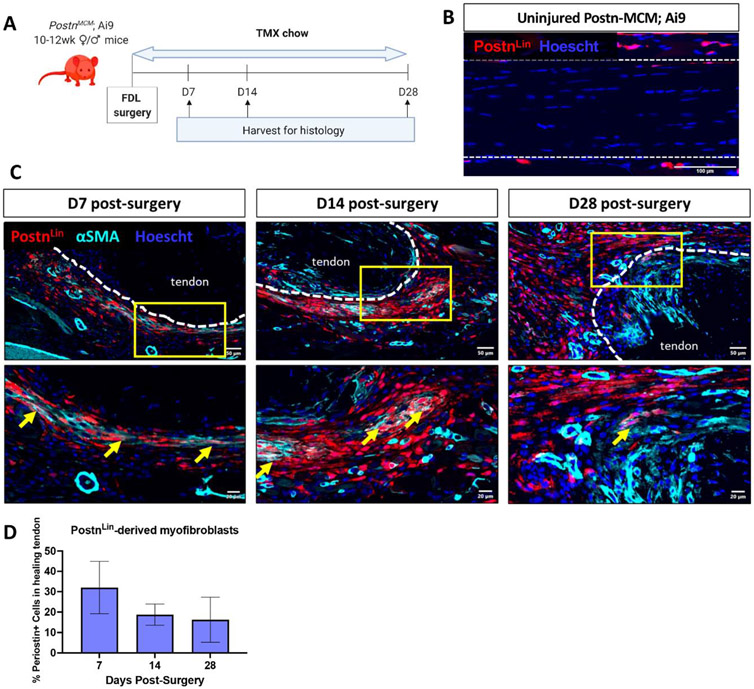
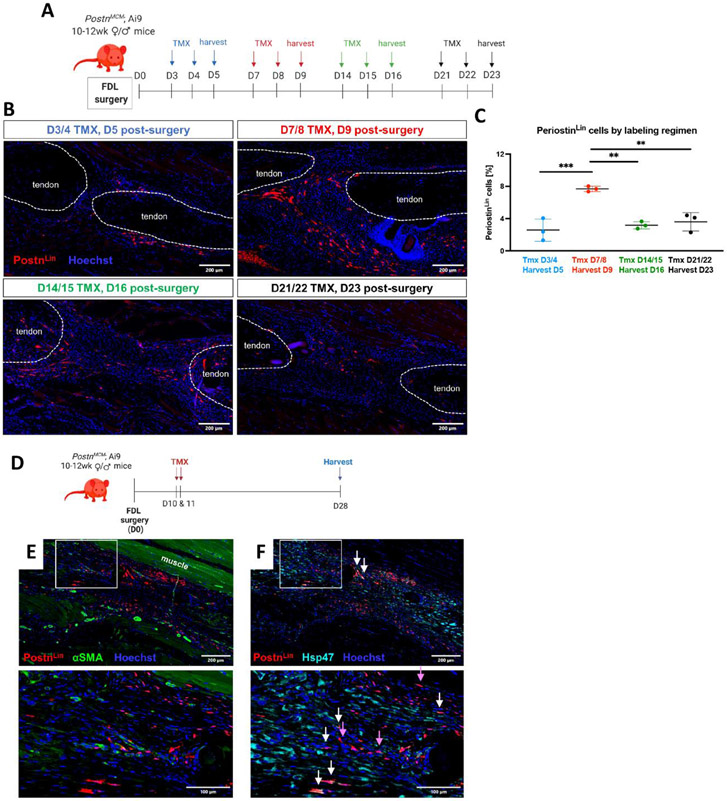
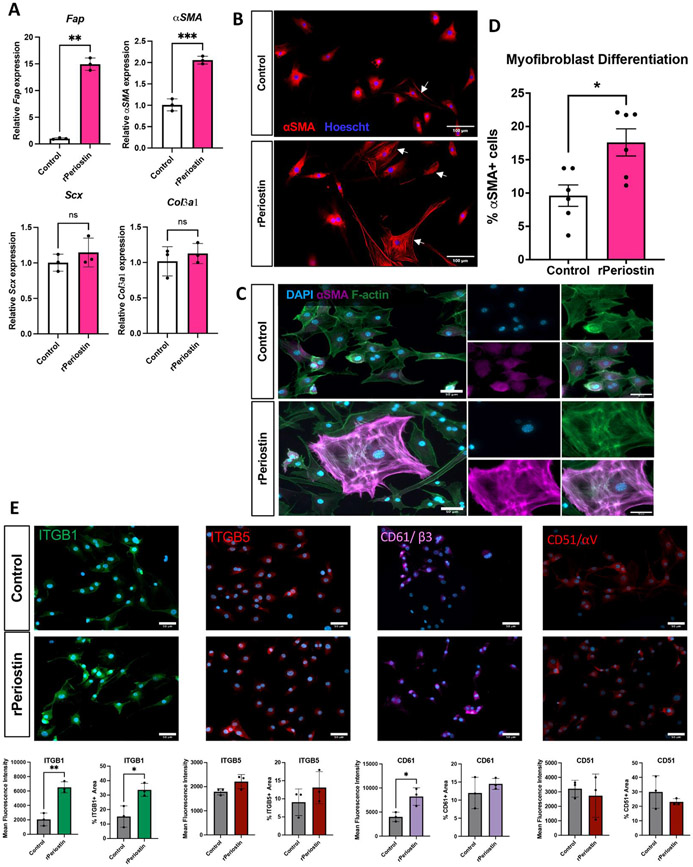
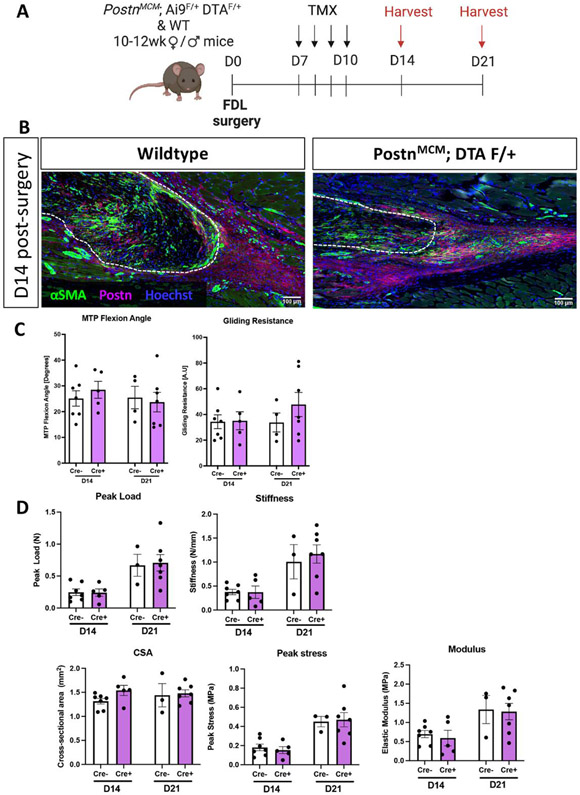
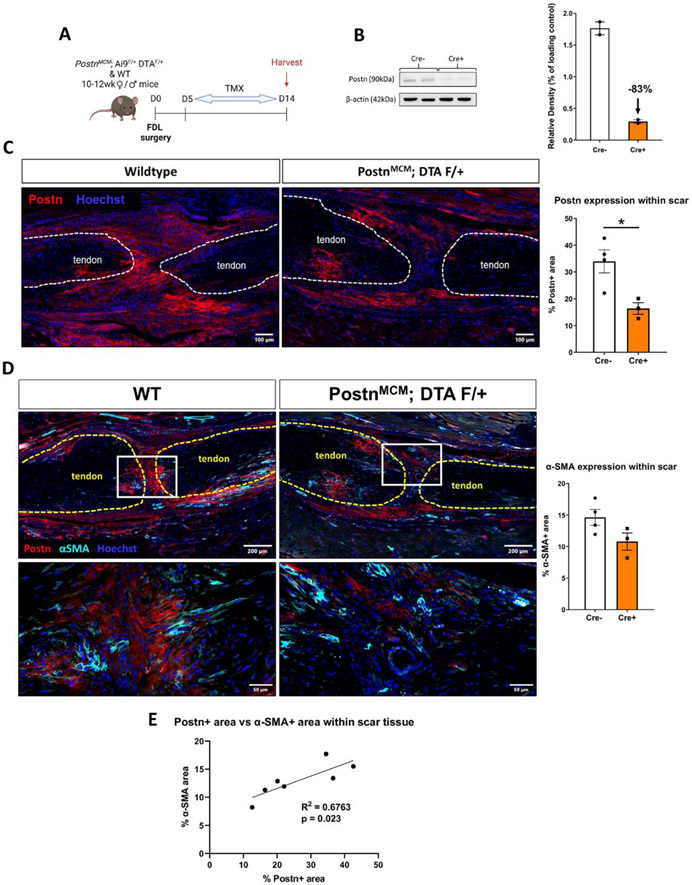
Tendon injuries are a major clinical problem, with poor patient outcomes caused by abundant scar tissue deposition during healing. Myofibroblasts play a critical role in the initial restoration of structural integrity after injury. However, persistent myofibroblast activity drives the transition to fibrotic scar tissue formation. As such, disrupting myofibroblast persistence is a key therapeutic target. While myofibroblasts are typically defined by the presence of αSMA+ stress fibers, αSMA is expressed in other cell types including the vasculature. As such, modulation of myofibroblast dynamics via disruption of αSMA expression is not a translationally tenable approach. Recent work has demonstrated that Periostin-lineage (Postn) cells are a precursor for cardiac fibrosis-associated myofibroblasts. In contrast to this, here we show that Postn cells contribute to a transient αSMA+ myofibroblast population that is required for functional tendon healing, and that Periostin forms a supportive matrix niche that facilitates myofibroblast differentiation and persistence. Collectively, these data identify the Periostin matrix niche as a critical regulator of myofibroblast fate and persistence that could be targeted for therapeutic manipulation to facilitate regenerative tendon healing.
肌腱损伤是一个重大的临床问题,愈合过程中大量瘢痕组织沉积导致患者预后不佳。成肌纤维细胞在损伤后结构完整性的初始恢复中起关键作用。然而,成肌纤维细胞的持续活动会促使向纤维化瘢痕组织形成转变。因此,破坏成肌纤维细胞的持续性是一个关键的治疗靶点。虽然成肌纤维细胞通常由αSMA+应力纤维的存在来定义,但αSMA在包括脉管系统在内的其他细胞类型中也有表达。因此,通过破坏αSMA表达来调节成肌纤维细胞动力学并非一种可行的转化方法。最近的研究表明,骨膜蛋白谱系(Postn)细胞是心脏纤维化相关成肌纤维细胞的前体。与此相反,我们在此表明,Postn细胞促成了功能性肌腱愈合所需的短暂αSMA+成肌纤维细胞群体,并且骨膜蛋白形成了一个支持性的基质微环境,促进成肌纤维细胞的分化和持续性。总的来说,这些数据表明骨膜蛋白基质微环境是成肌纤维细胞命运和持续性的关键调节因子,可作为治疗靶点进行操控,以促进肌腱再生愈合。