Azrieli Faculty of Medicine, Bar Ilan University, Safed, Israel.
Ziv Medical Center, Safed, Israel.
NPJ Biofilms Microbiomes. 2023 Dec 18;9(1):103. doi: 10.1038/s41522-023-00469-2.
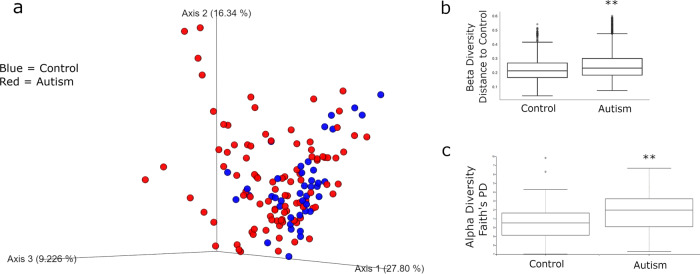
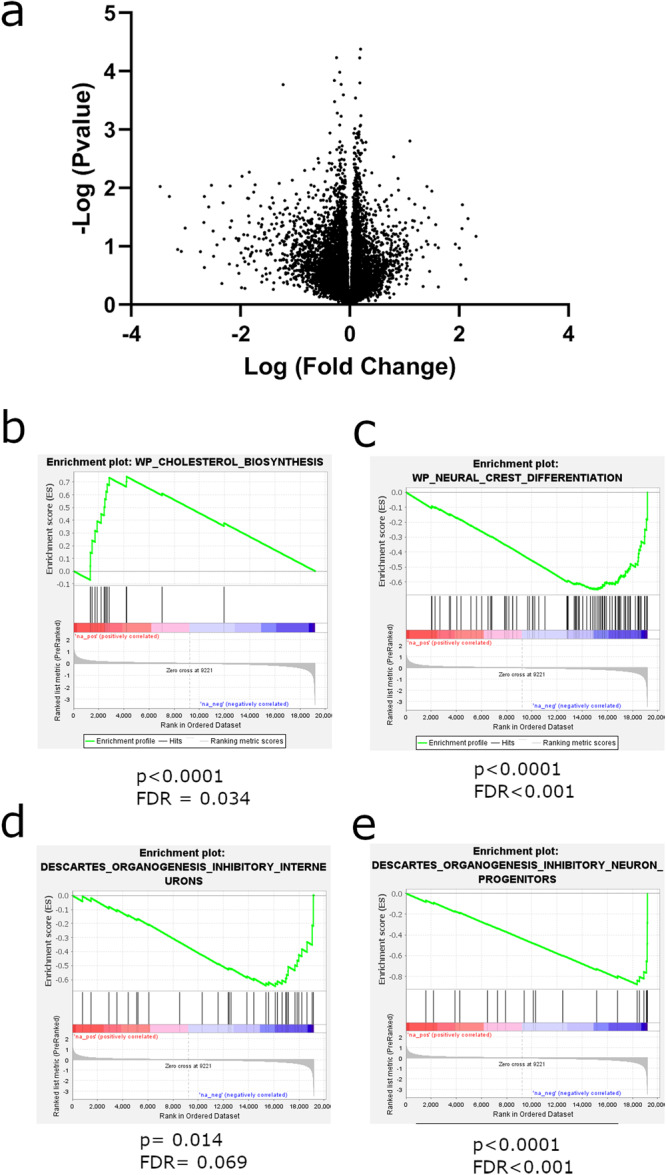
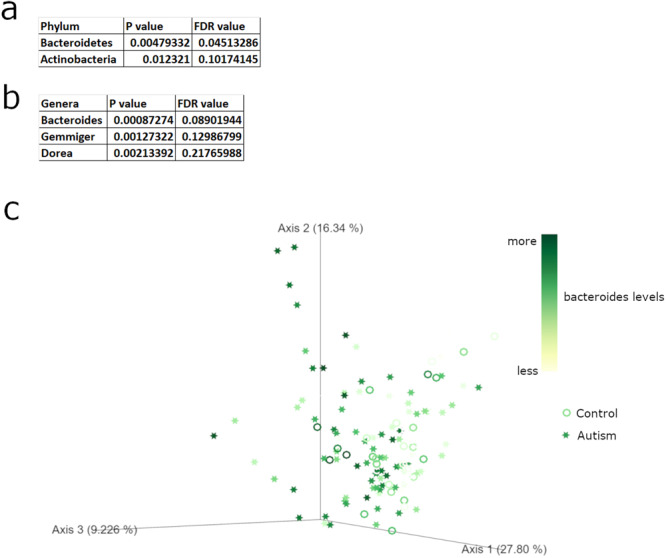
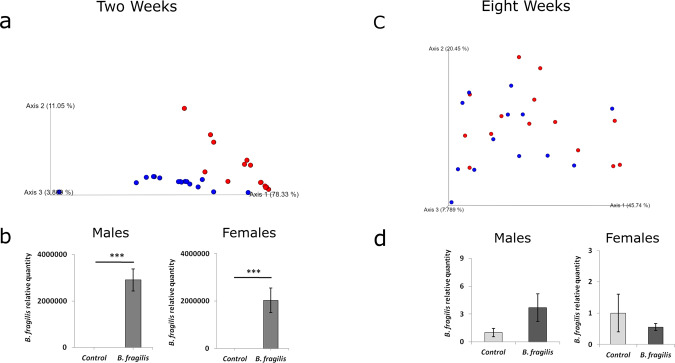
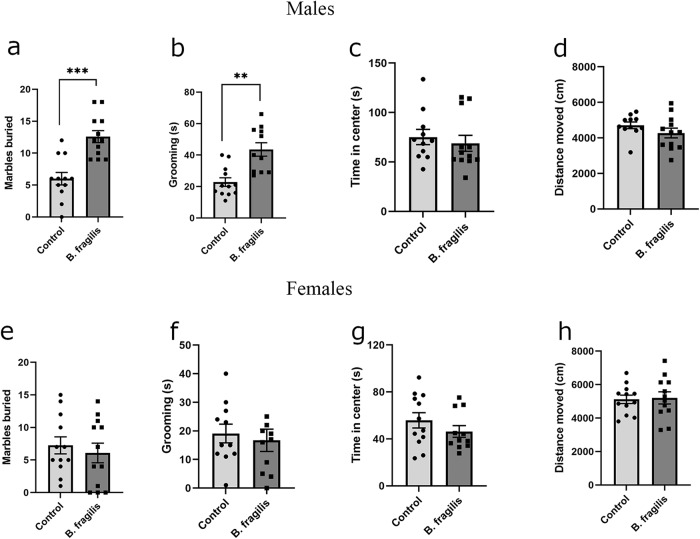
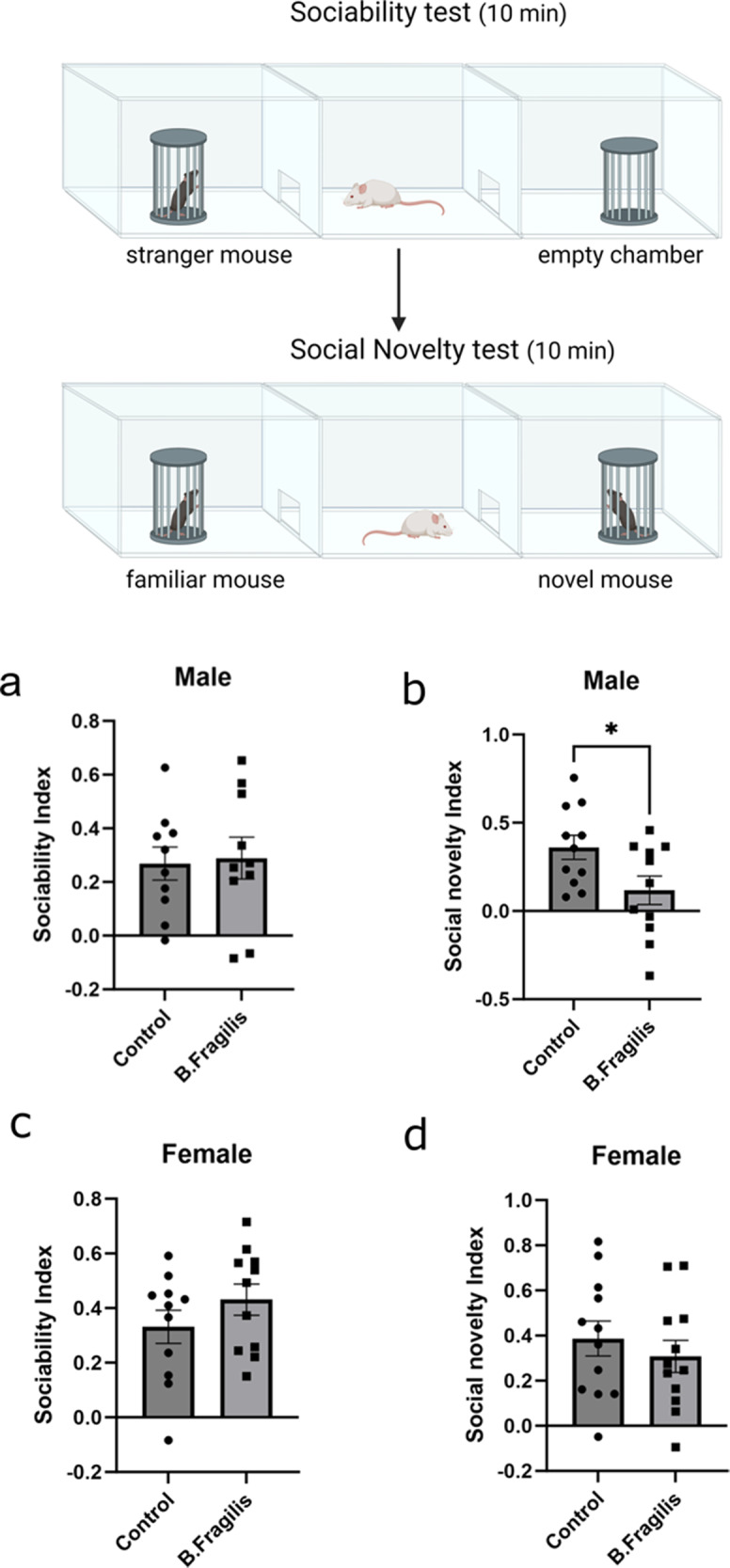
Autism Spectrum Disorder (ASD) is a neurodevelopmental condition which is defined by decreased social communication and the presence of repetitive or stereotypic behaviors. Recent evidence has suggested that the gut-brain axis may be important in neurodevelopment in general and may play a role in ASD in particular. Here, we present a study of the gut microbiome in 96 individuals diagnosed with ASD in Israel, compared to 42 neurotypical individuals. We determined differences in alpha and beta diversity in the microbiome of individuals with ASD and demonstrated that the phylum Bacteroidetes and genus Bacteroides were the most significantly over-represented in individuals with ASD. To understand the possible functional significance of these changes, we treated newborn mice with Bacteroides fragilis at birth. B. fragilis-treated male mice displayed social behavior dysfunction, increased repetitive behaviors, and gene expression dysregulation in the prefrontal cortex, while female mice did not display behavioral deficits. These findings suggest that overabundance of Bacteroides, particularly in early life, may have functional consequences for individuals with ASD.
自闭症谱系障碍(ASD)是一种神经发育障碍,其特征是社交沟通减少和存在重复或刻板的行为。最近的证据表明,肠道-大脑轴在神经发育中可能很重要,并可能在 ASD 中发挥作用。在这里,我们研究了以色列 96 名被诊断为 ASD 的个体和 42 名神经正常个体的肠道微生物组。我们确定了 ASD 个体肠道微生物组中 alpha 和 beta 多样性的差异,并证明了厚壁菌门和拟杆菌属在 ASD 个体中过度表达最显著。为了了解这些变化的可能功能意义,我们在出生时用脆弱拟杆菌处理新生小鼠。脆弱拟杆菌处理的雄性小鼠表现出社交行为功能障碍、重复行为增加和前额叶皮层基因表达失调,而雌性小鼠则没有表现出行为缺陷。这些发现表明,脆弱拟杆菌的过度生长,特别是在生命早期,可能对 ASD 个体有功能影响。