Vincent Obstetrics & Gynecology Department, Massachusetts General Hospital, Boston, MA 02114, USA.
Faculty of Medicine, The Hebrew University of Jerusalem, Jerusalem 91121, Israel.
Cell Rep Med. 2020 Dec 22;1(9):100156. doi: 10.1016/j.xcrm.2020.100156.
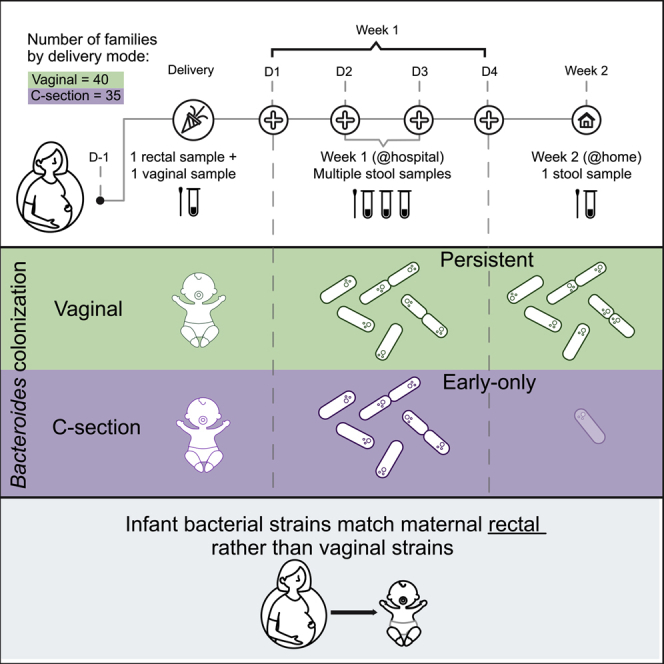
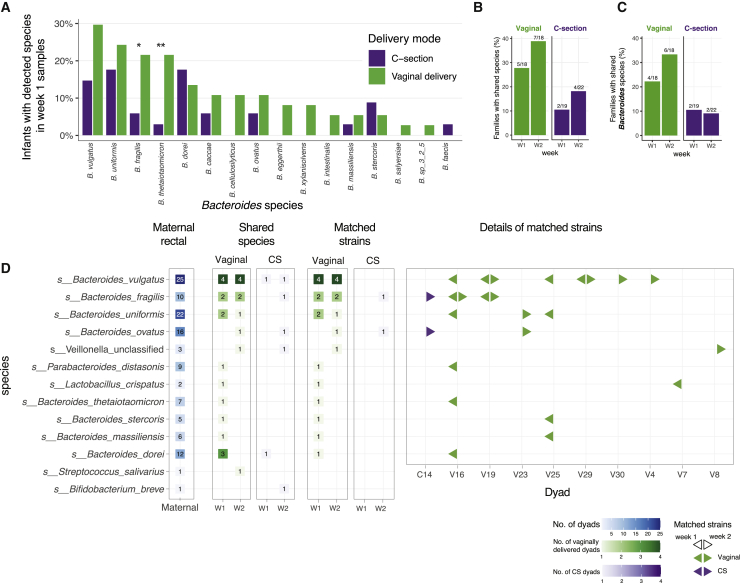
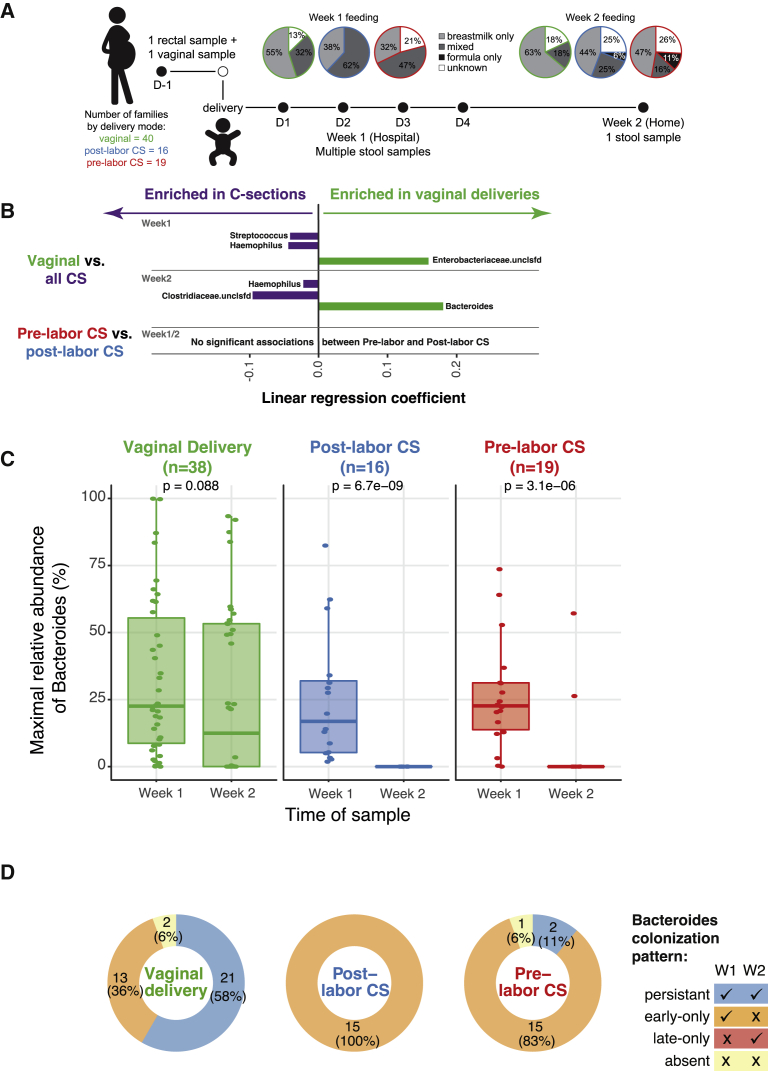
Mode of delivery strongly influences the early infant gut microbiome. Children born by cesarean section (C-section) lack species until 6-18 months of age. One hypothesis is that these differences stem from lack of exposure to the maternal vaginal microbiome. Here, we re-evaluate this hypothesis by comparing the microbial profiles of 75 infants born vaginally or by planned versus emergent C-section. Multiple children born by C-section have a high abundance of in their first few days of life, but at 2 weeks, both C-section groups lack (primarily according to 16S sequencing), despite their difference in exposure to the birth canal. Finally, a comparison of microbial strain profiles between infants and maternal vaginal or rectal samples finds evidence for mother-to-child transmission of rectal rather than vaginal strains. These results suggest differences in colonization stability as an important factor in infant gut microbiome composition rather than birth canal exposure.
分娩方式强烈影响婴儿早期肠道微生物群。通过剖宫产(C -section)出生的儿童直到 6-18 个月大时才会出现 种微生物。一种假设是,这些差异源于缺乏对母体阴道微生物群的接触。在这里,我们通过比较 75 名经阴道或计划剖宫产与紧急剖宫产出生的婴儿的微生物特征,重新评估了这一假设。多个通过 C -section 出生的儿童在生命的头几天就有大量的 存在,但在 2 周时,C -section 组都缺乏 (主要根据 16S 测序),尽管他们暴露于产道的情况不同。最后,将婴儿与母体阴道或直肠样本的微生物菌株特征进行比较,发现了母亲向孩子传播直肠而不是阴道菌株的证据。这些结果表明,定植稳定性的差异是婴儿肠道微生物组组成的一个重要因素,而不是产道暴露。