Ansari Saad, Yan Wen, Lamson Adam, Shelley Michael J, Glaser Matthew A, Betterton Meredith D
Department of Physics, University of Colorado Boulder, Colorado, USA.
Center for Computational Biology, Flatiron Institute, New York, USA.
Front Phys. 2022;10. doi: 10.3389/fphy.2022.897255. Epub 2022 Jun 24.
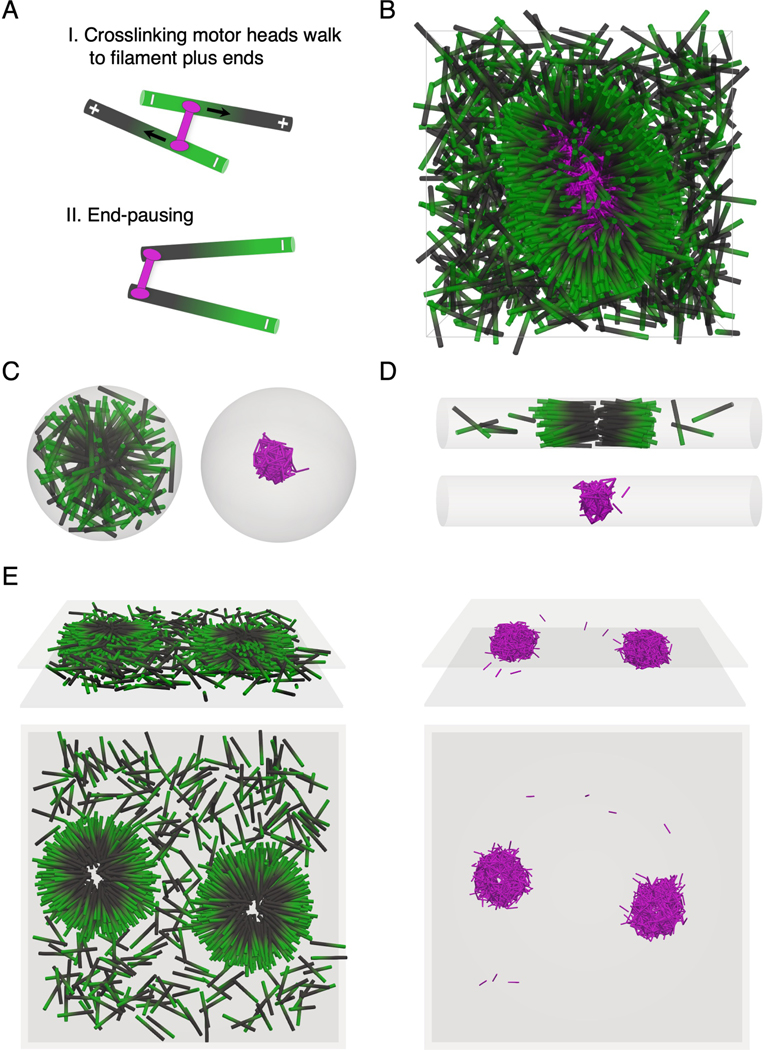
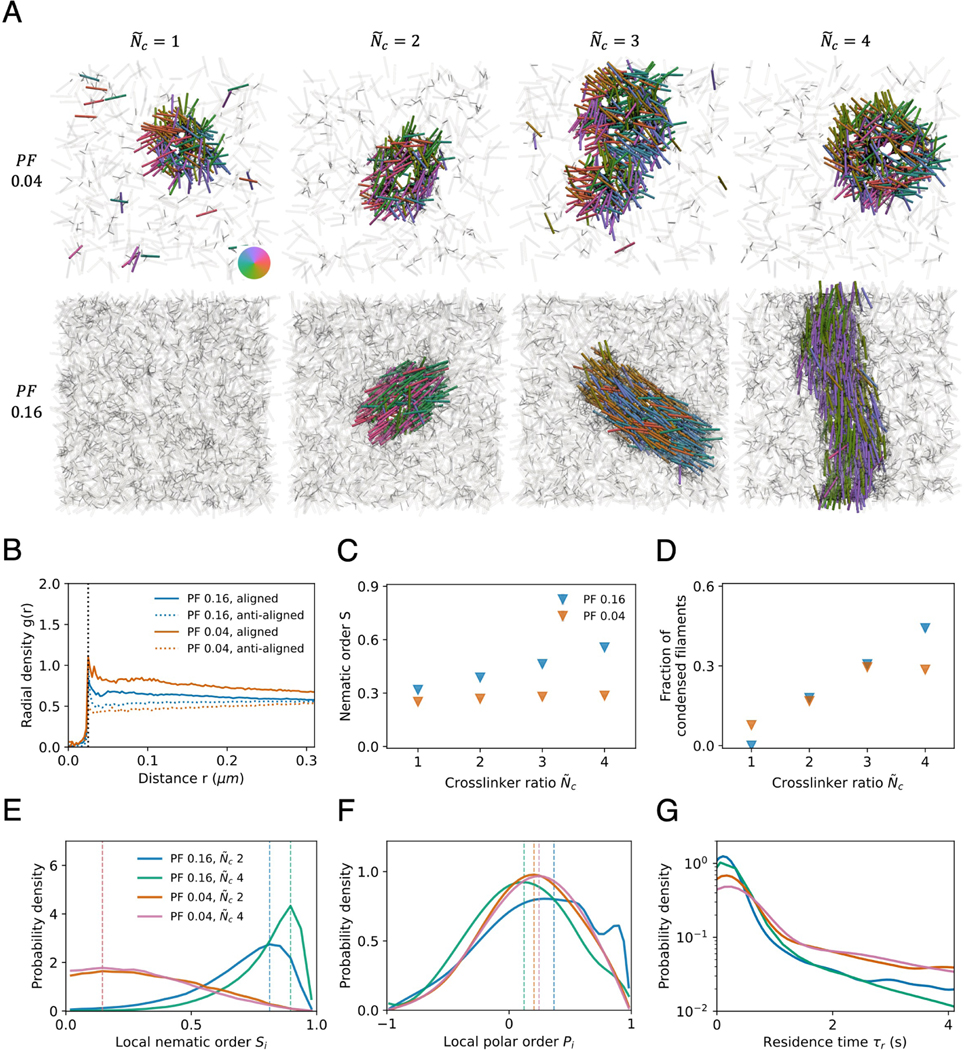
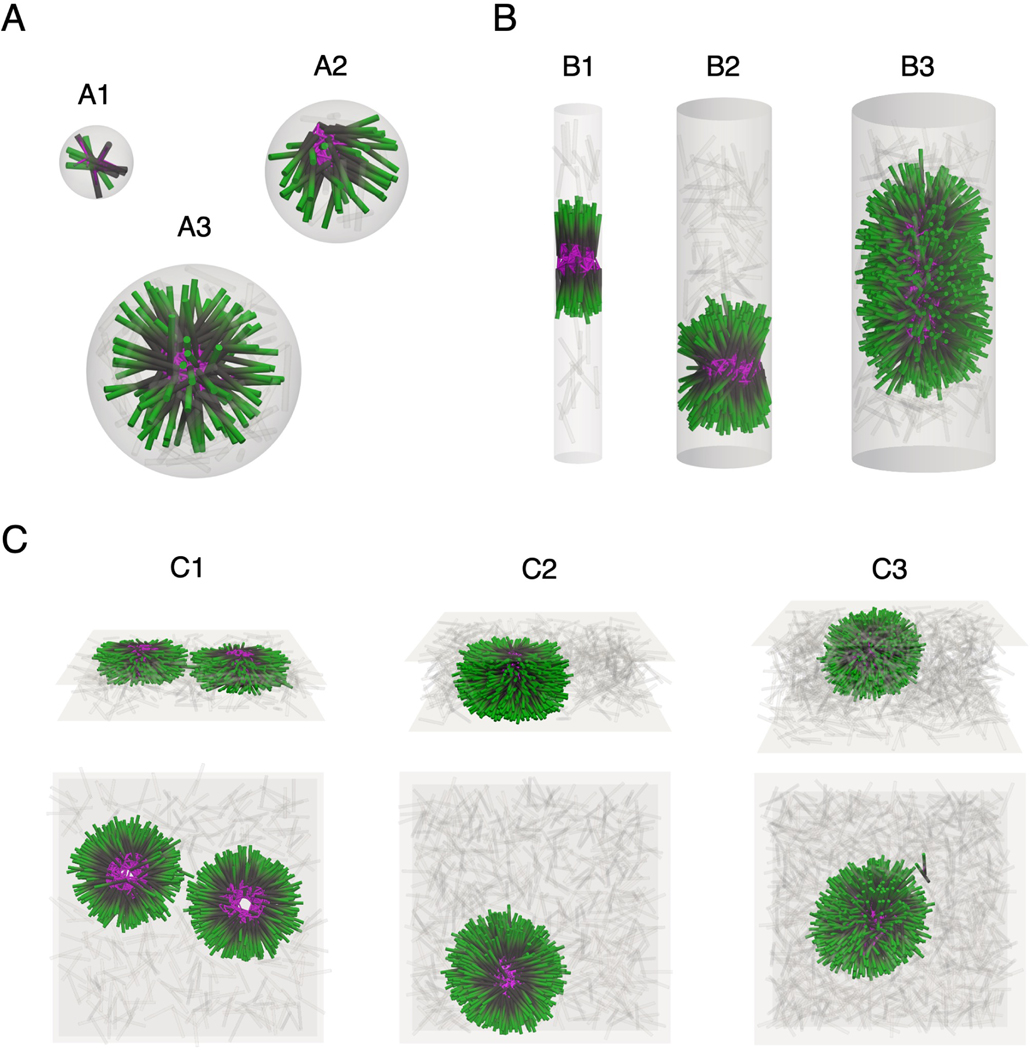
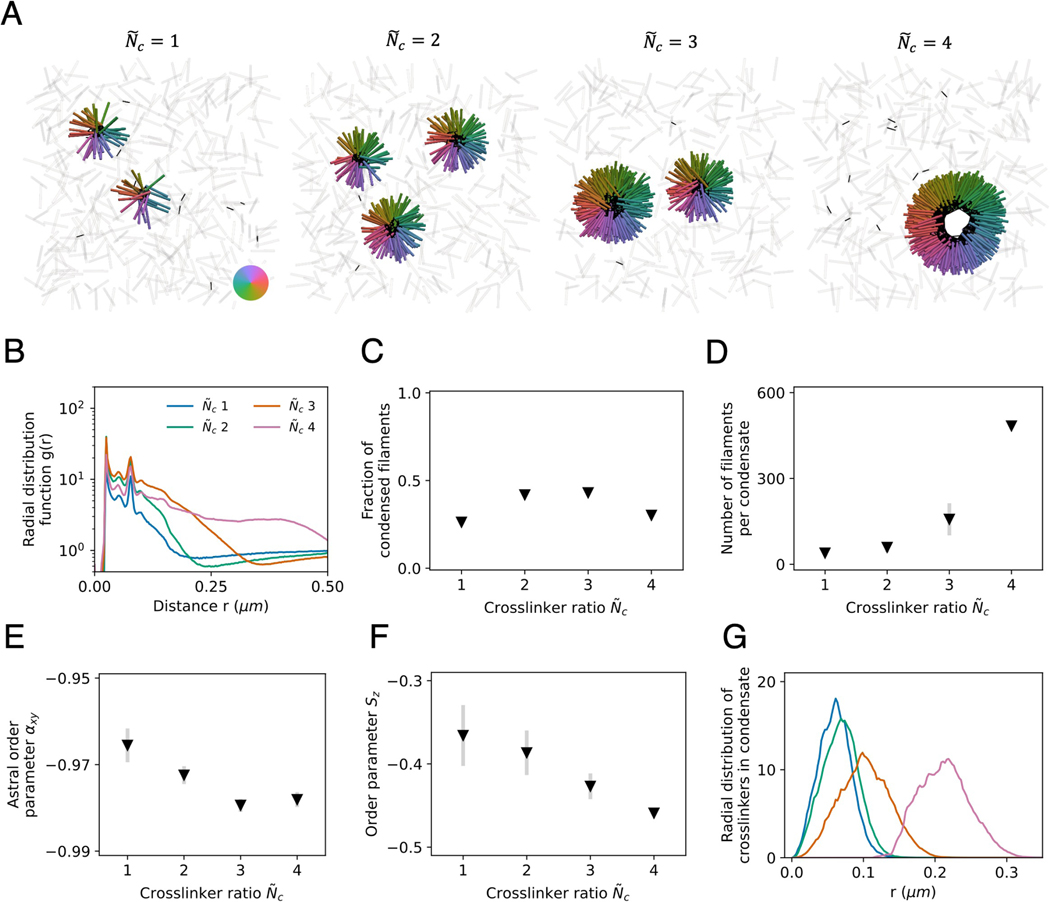
Living systems exhibit self-organization, a phenomenon that enables organisms to perform functions essential for life. The interior of living cells is a crowded environment in which the self-assembly of cytoskeletal networks is spatially constrained by membranes and organelles. Cytoskeletal filaments undergo active condensation in the presence of crosslinking motor proteins. In past studies, confinement has been shown to alter the morphology of active condensates. Here, we perform simulations to explore systems of filaments and crosslinking motors in a variety of confining geometries. We simulate spatial confinement imposed by hard spherical, cylindrical, and planar boundaries. These systems exhibit non-equilibrium condensation behavior where crosslinking motors condense a fraction of the overall filament population, leading to coexistence of vapor and condensed states. We find that the confinement lengthscale modifies the dynamics and condensate morphology. With end-pausing crosslinking motors, filaments self-organize into half asters and fully-symmetric asters under spherical confinement, polarity-sorted bilayers and bottle-brush-like states under cylindrical confinement, and flattened asters under planar confinement. The number of crosslinking motors controls the size and shape of condensates, with flattened asters becoming hollow and ring-like for larger motor number. End pausing plays a key role affecting condensate morphology: systems with end-pausing motors evolve into aster-like condensates while those with non-end-pausing crosslinking motor proteins evolve into disordered clusters and polarity-sorted bundles.
生命系统表现出自我组织能力,这一现象使生物体能够执行生命所必需的功能。活细胞内部是一个拥挤的环境,细胞骨架网络的自组装在空间上受到膜和细胞器的限制。在存在交联运动蛋白的情况下,细胞骨架丝会发生主动凝聚。在过去的研究中,已经表明限制会改变活性凝聚物的形态。在这里,我们进行模拟以探索各种限制几何形状中的丝和交联运动蛋白系统。我们模拟了由硬球形、圆柱形和平面边界施加的空间限制。这些系统表现出非平衡凝聚行为,其中交联运动蛋白凝聚了一部分总丝群体,导致气相和凝聚相共存。我们发现限制长度尺度会改变动力学和凝聚物形态。对于端部暂停的交联运动蛋白,在球形限制下,丝会自组织成半星状体和完全对称的星状体;在圆柱形限制下,会形成极性排序的双层和刷状状态;在平面限制下,会形成扁平的星状体。交联运动蛋白的数量控制着凝聚物的大小和形状,对于较大的运动蛋白数量,扁平的星状体会变成中空的环状。端部暂停在影响凝聚物形态方面起着关键作用:具有端部暂停运动蛋白的系统会演变成星状凝聚物,而具有非端部暂停交联运动蛋白的系统会演变成无序簇和极性排序的束。