Puleri Daniel F, Roychowdhury Sayan, Balogh Peter, Gounley John, Draeger Erik W, Ames Jeff, Adebiyi Adebayo, Chidyagwai Simbarashe, Hernández Benjamín, Lee Seyong, Moore Shirley V, Vetter Jeffrey S, Randles Amanda
Department of Biomedical Engineering, Duke University, Durham, NC, USA.
Mechanical and Industrial Engineering, New Jersey Institute of Technology, Newark, NJ, USA.
Proc IEEE Int Conf Clust Comput. 2022 Sep;2022:230-242. doi: 10.1109/cluster51413.2022.00036. Epub 2022 Oct 18.
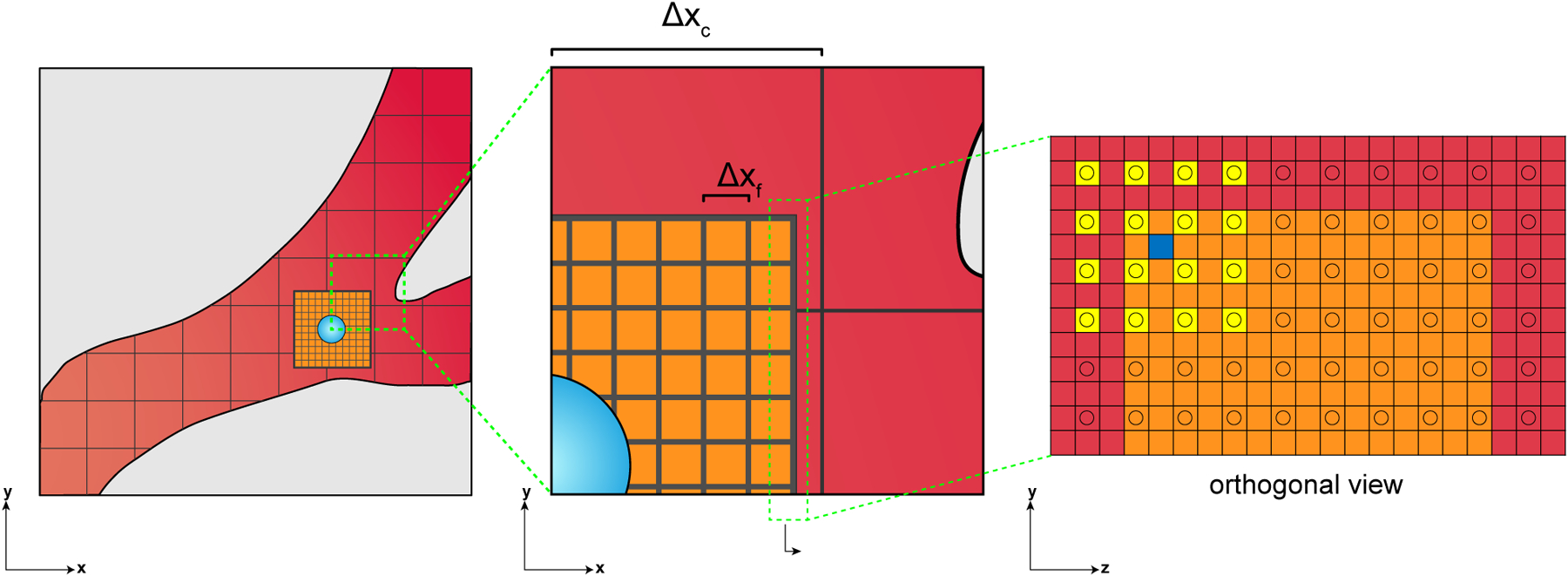
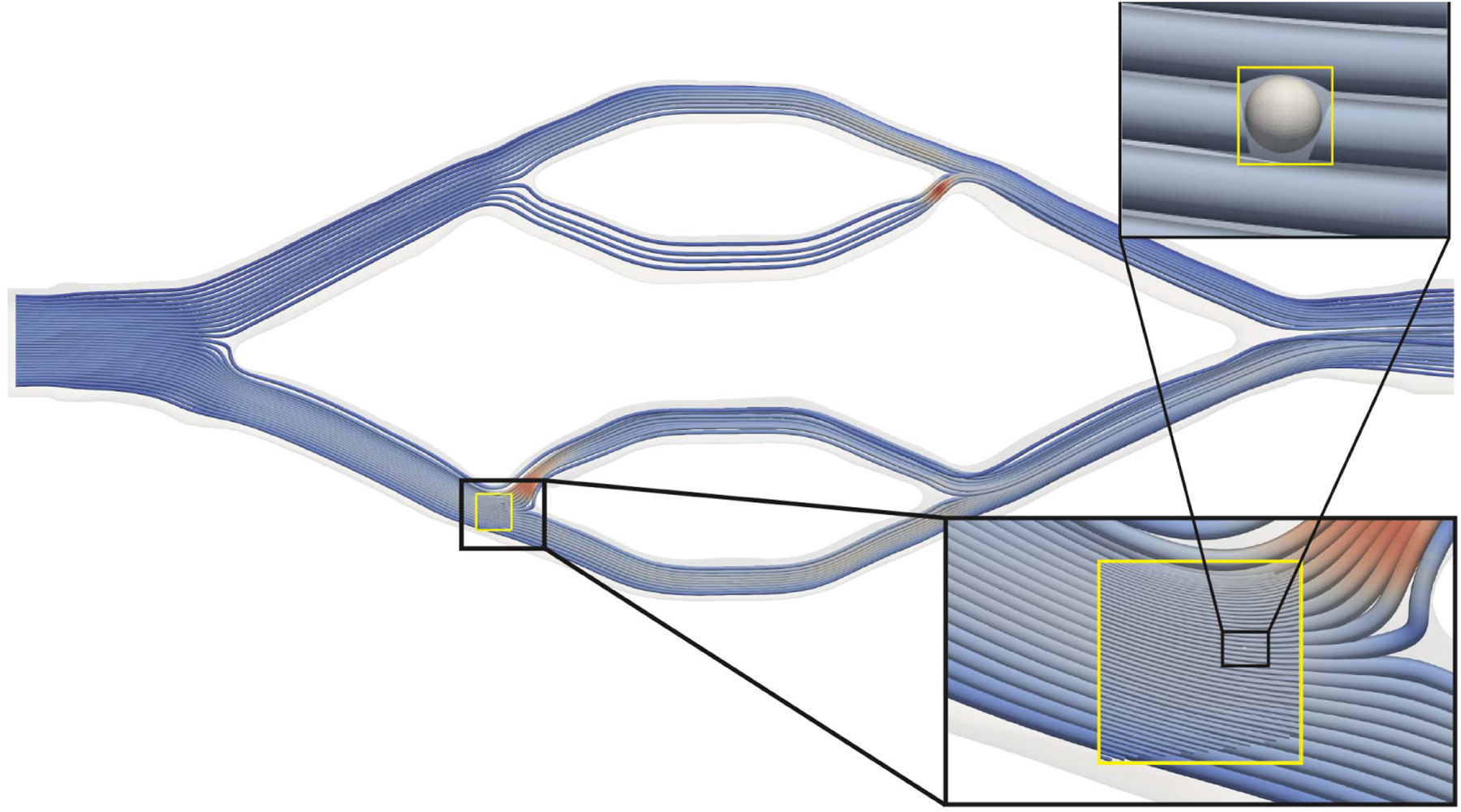
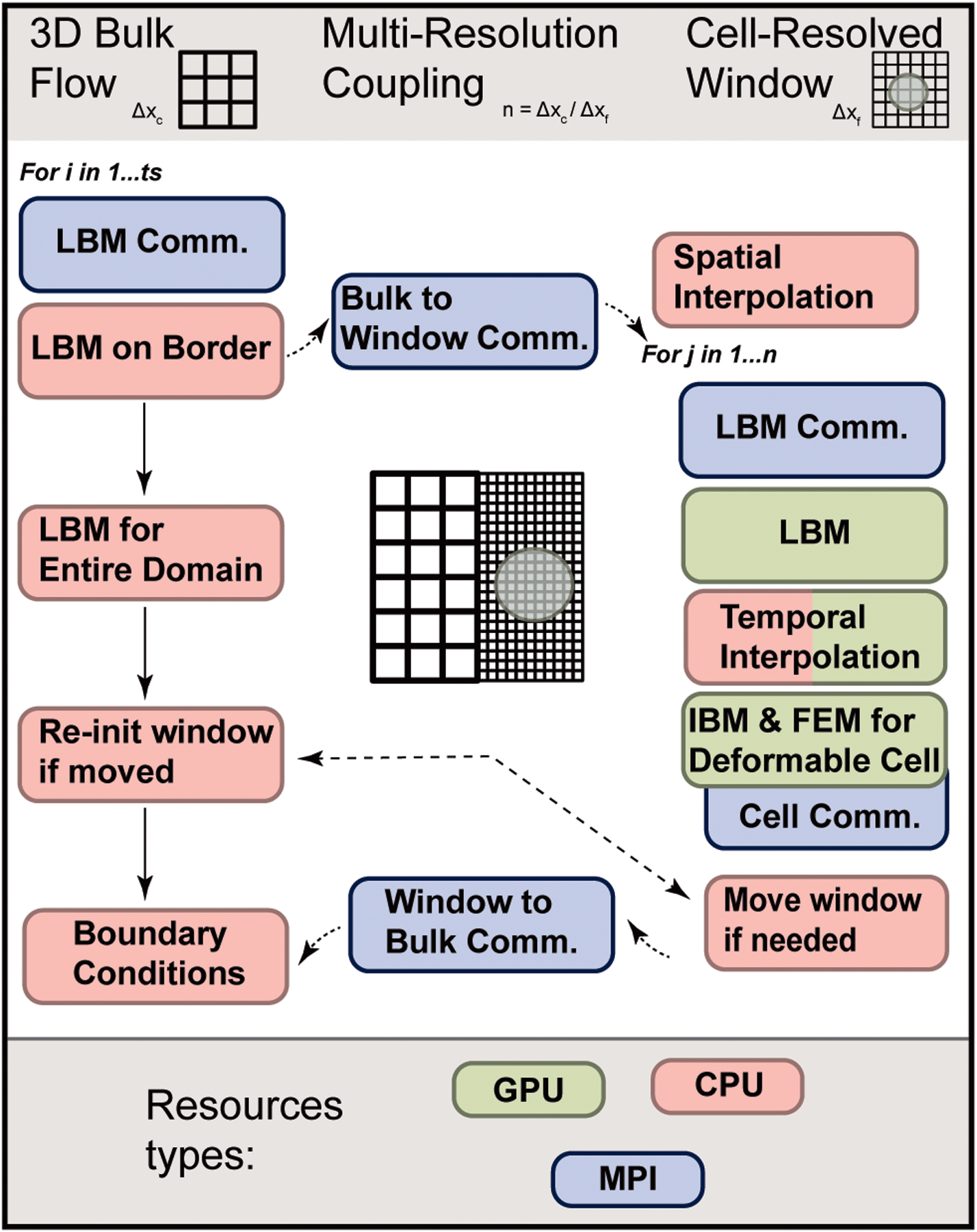
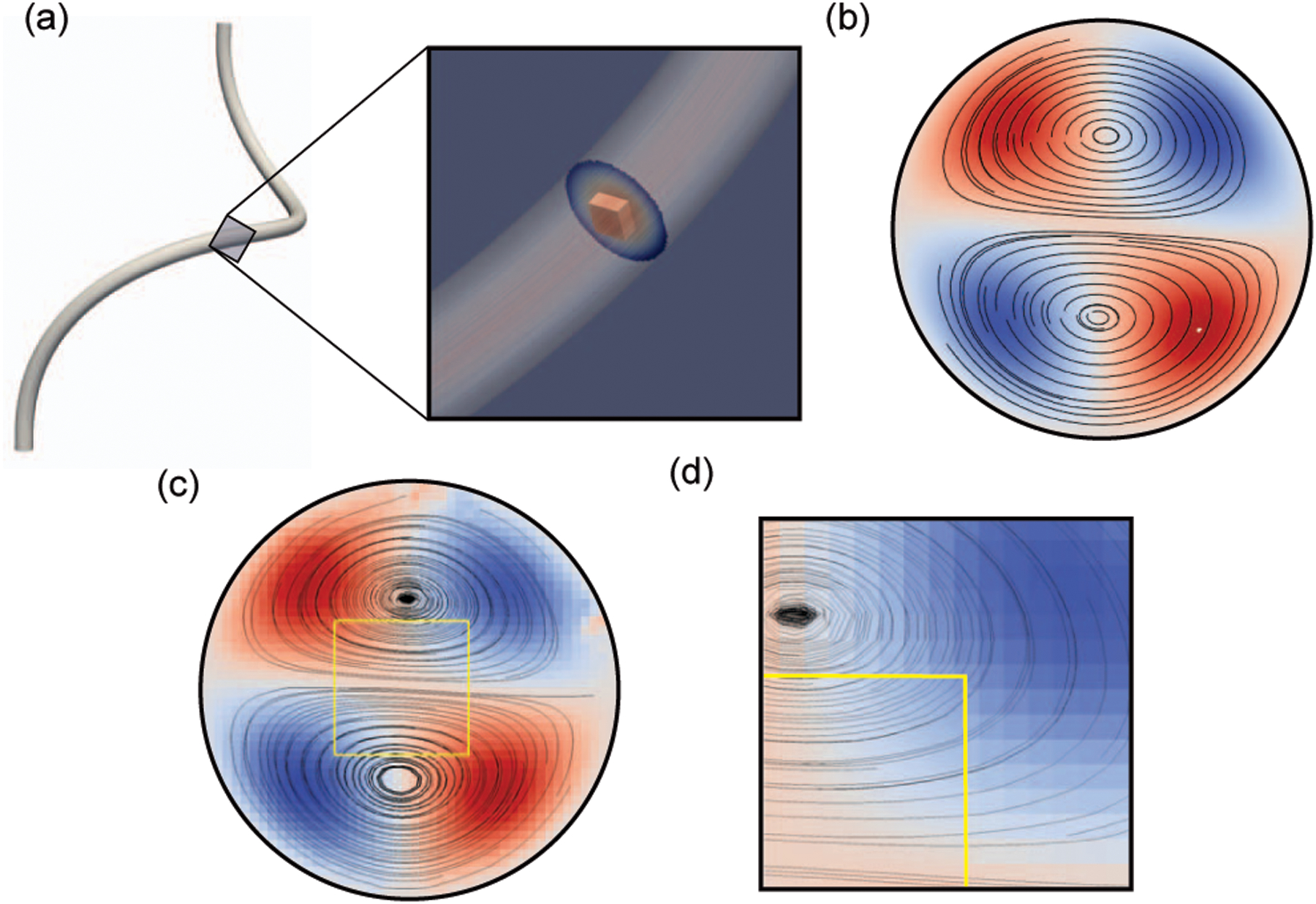
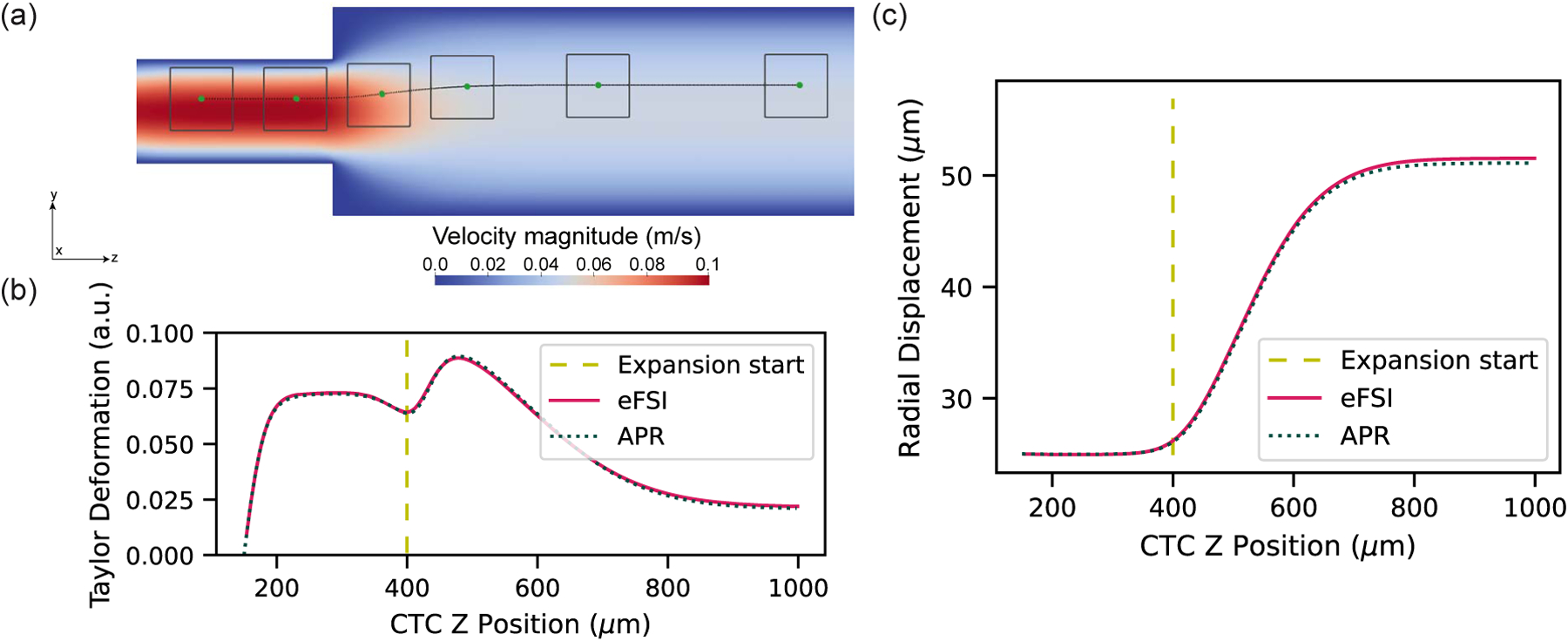
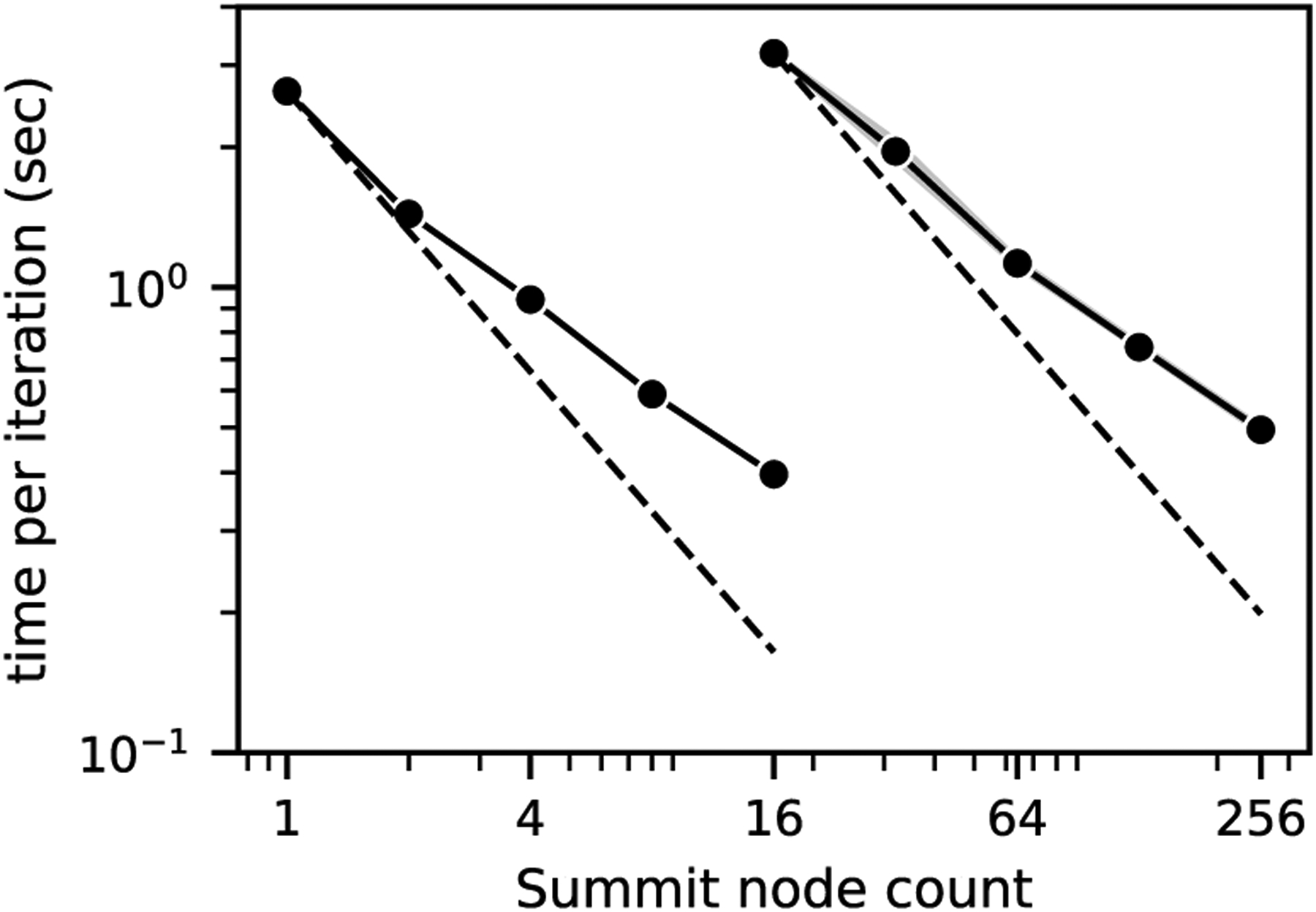
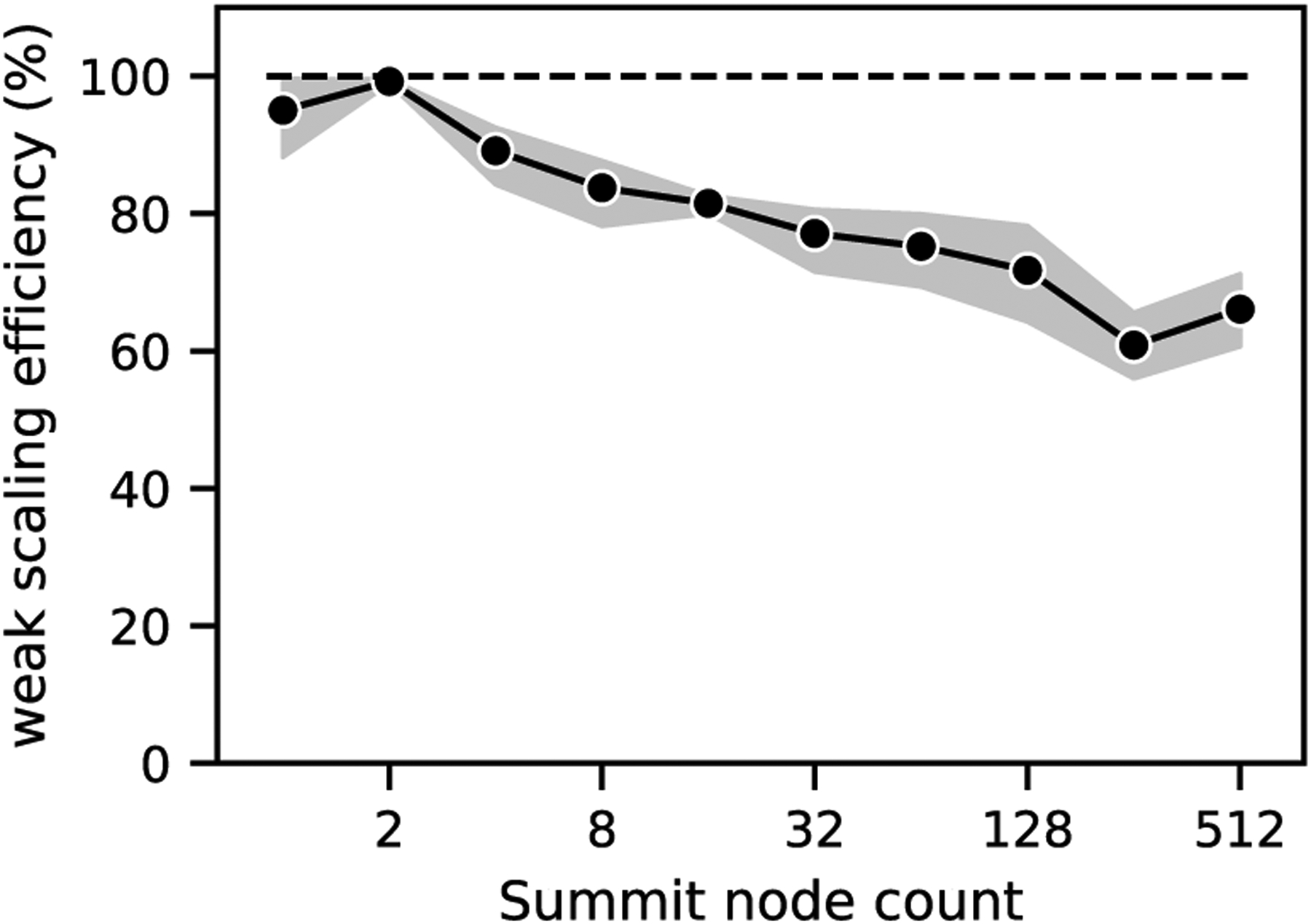
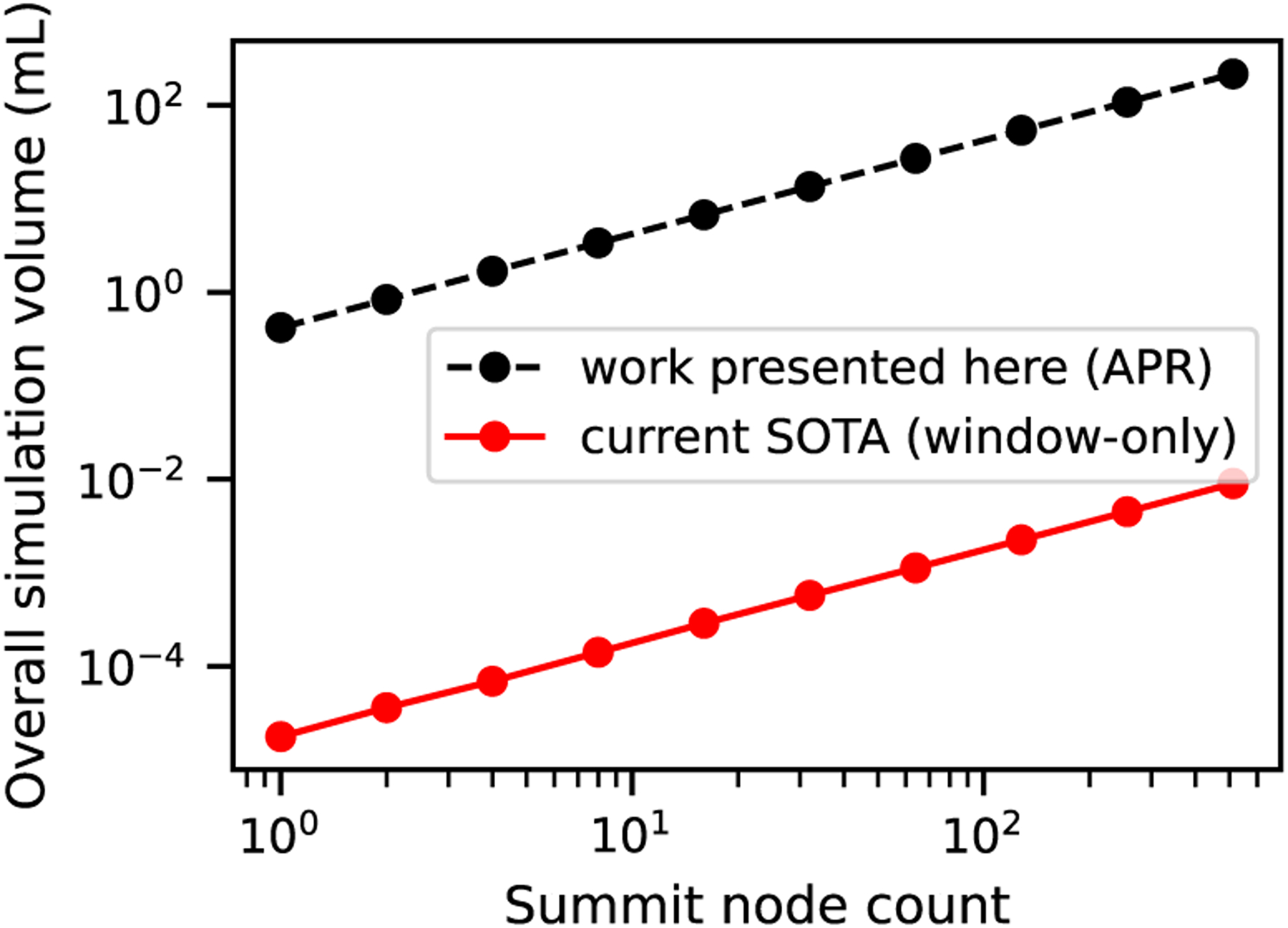
The ability to track simulated cancer cells through the circulatory system, important for developing a mechanistic understanding of metastatic spread, pushes the limits of today's supercomputers by requiring the simulation of large fluid volumes at cellular-scale resolution. To overcome this challenge, we introduce a new adaptive physics refinement (APR) method that captures cellular-scale interaction across large domains and leverages a hybrid CPU-GPU approach to maximize performance. Through algorithmic advances that integrate multi-physics and multi-resolution models, we establish a finely resolved window with explicitly modeled cells coupled to a coarsely resolved bulk fluid domain. In this work we present multiple validations of the APR framework by comparing against fully resolved fluid-structure interaction methods and employ techniques, such as latency hiding and maximizing memory bandwidth, to effectively utilize heterogeneous node architectures. Collectively, these computational developments and performance optimizations provide a robust and scalable framework to enable system-level simulations of cancer cell transport.
通过循环系统追踪模拟癌细胞的能力对于深入理解转移扩散机制至关重要,但这需要在细胞尺度分辨率下模拟大量流体,从而对当今的超级计算机构成了挑战。为了克服这一挑战,我们引入了一种新的自适应物理细化(APR)方法,该方法能够捕捉大尺度域内的细胞尺度相互作用,并利用CPU-GPU混合方法来最大化性能。通过整合多物理和多分辨率模型的算法进步,我们建立了一个精细解析的窗口,其中明确建模的细胞与粗解析的整体流体域相耦合。在这项工作中,我们通过与完全解析的流固相互作用方法进行比较,对APR框架进行了多次验证,并采用了诸如延迟隐藏和最大化内存带宽等技术,以有效利用异构节点架构。总体而言,这些计算发展和性能优化提供了一个强大且可扩展的框架,以实现癌细胞运输的系统级模拟。