Margaryan Kristine, Töpfer Reinhard, Gasparyan Boris, Arakelyan Arsen, Trapp Oliver, Röckel Franco, Maul Erika
Research Group of Plant Genomics, Institute of Molecular Biology of National Academy of Sciences Republic of Armenia (RA), Yerevan, Armenia.
Department of Genetics and Cytology, Yerevan State University, Yerevan, Armenia.
Front Plant Sci. 2023 Dec 8;14:1276764. doi: 10.3389/fpls.2023.1276764. eCollection 2023.
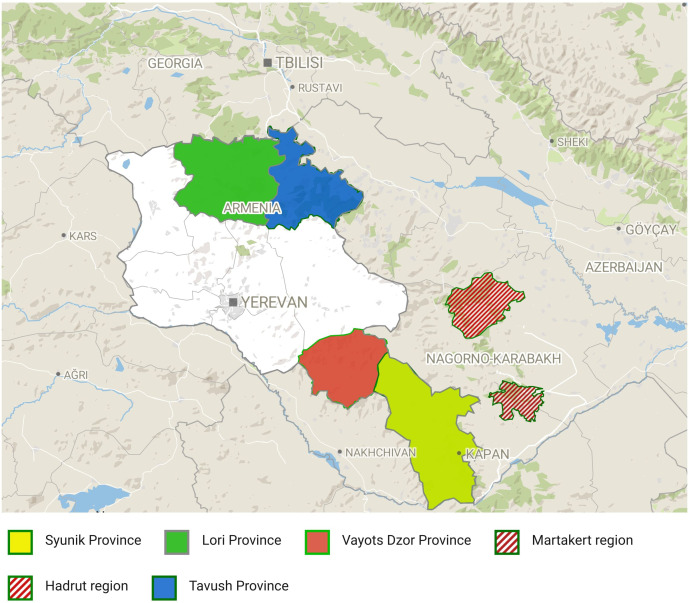
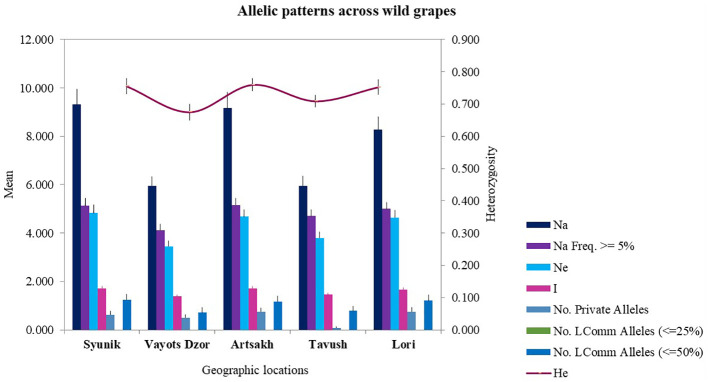
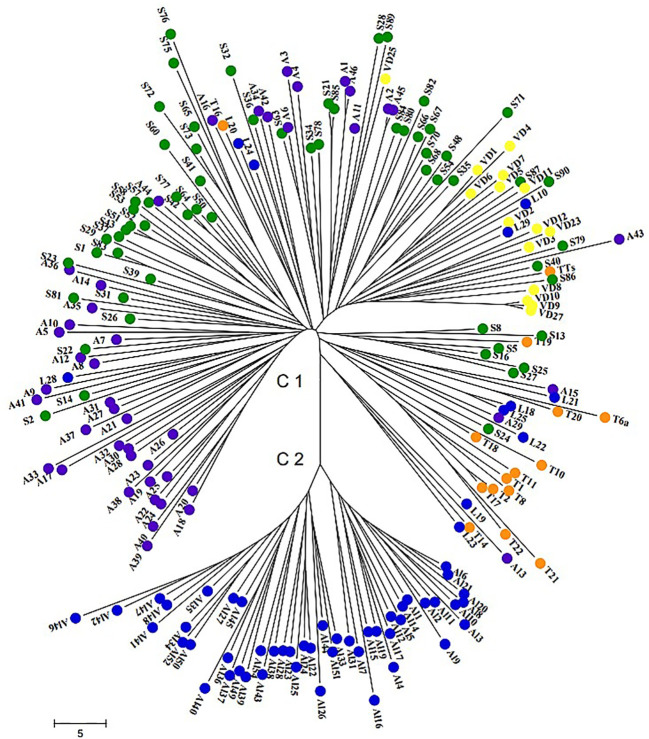
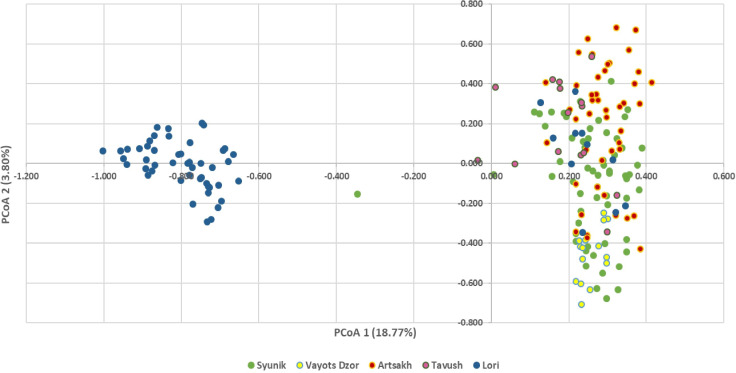
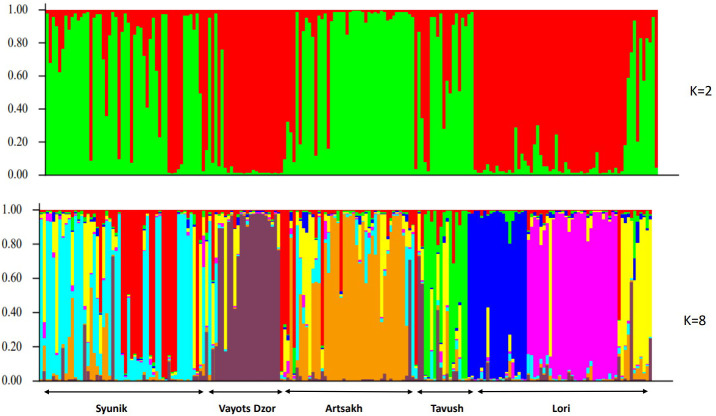
The present study is the first in-depth research evaluating the genetic diversity and potential resistance of Armenian wild grapes utilizing DNA-based markers to understand the genetic signature of this unexplored germplasm. In the proposed research, five geographical regions with known viticultural history were explored. A total of 148 unique wild genotypes were collected and included in the study with 48 wild individuals previously collected as seed. A total of 24 nSSR markers were utilized to establish a fingerprint database to infer information on the population genetic diversity and structure. Three nSSR markers linked to the locus were analyzed to identify potential resistance against powdery mildew. According to molecular fingerprinting data, the Armenian gene pool conserves a high genetic diversity, displaying 292 different alleles with 12.167 allele per loci. The clustering analyses and diversity parameters supported eight genetic groups with 5.6% admixed proportion. The study of genetic polymorphism at the Ren1 locus revealed that 28 wild genotypes carried three R-alleles and 34 wild genotypes carried two R-alleles associated with PM resistance among analyzed 107 wild individuals. This gene pool richness represents an immense reservoir of under-explored genetic diversity and breeding potential. Therefore, continued survey and research efforts are crucial for the conservation, sustainable management, and utilization of Armenian wild grape resources in the face of emerging challenges in viticulture.
本研究是首次利用基于DNA的标记对亚美尼亚野生葡萄的遗传多样性和潜在抗性进行深入研究,以了解这种未开发种质的遗传特征。在所提出的研究中,对五个有已知葡萄栽培历史的地理区域进行了探索。总共收集了148个独特的野生基因型并纳入研究,其中包括之前作为种子收集的48个野生个体。总共使用了24个nSSR标记来建立指纹数据库,以推断有关群体遗传多样性和结构的信息。分析了与该位点连锁的三个nSSR标记,以鉴定对白粉病的潜在抗性。根据分子指纹数据,亚美尼亚基因库保留了高度的遗传多样性,显示出292个不同的等位基因,每个位点平均有12.167个等位基因。聚类分析和多样性参数支持了八个遗传组,混合比例为5.6%。对Ren1位点的遗传多态性研究表明,在分析的107个野生个体中,有28个野生基因型携带三个R等位基因,34个野生基因型携带两个与抗白粉病相关的R等位基因。这种基因库的丰富性代表了一个尚未充分探索的遗传多样性和育种潜力的巨大宝库。因此,面对葡萄栽培中出现的新挑战,持续的调查和研究工作对于亚美尼亚野生葡萄资源的保护、可持续管理和利用至关重要。