National Key Laboratory of Agricultural Microbiology & Hubei Hongshan Laboratory, Huazhong Agricultural University, Wuhan 430000, China; The Cooperative Innovation Center for Sustainable Pig Production, Huazhong Agricultural University, Wuhan 430070, China; College of Veterinary Medicine, Huazhong Agricultural University, Wuhan 430070, China; Key Laboratory of Agricultural Animal Genetics, Breeding and Reproduction Ministry of Education, Huazhong Agricultural University, Wuhan 430070, China.
Key Laboratory of Agricultural Animal Genetics, Breeding and Reproduction Ministry of Education, Huazhong Agricultural University, Wuhan 430070, China.
Virus Res. 2024 Feb;340:199303. doi: 10.1016/j.virusres.2023.199303. Epub 2023 Dec 30.
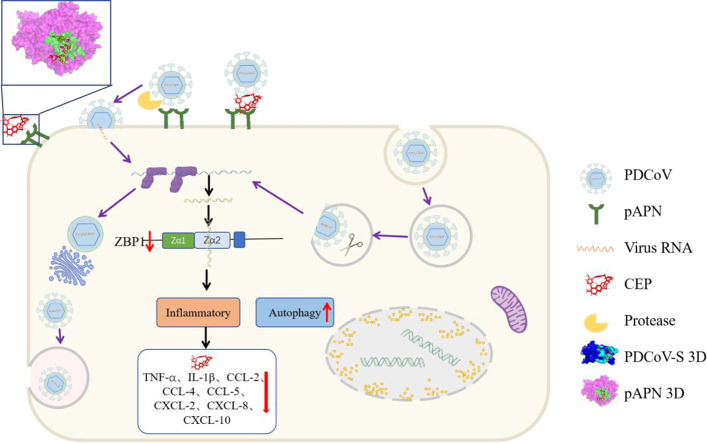
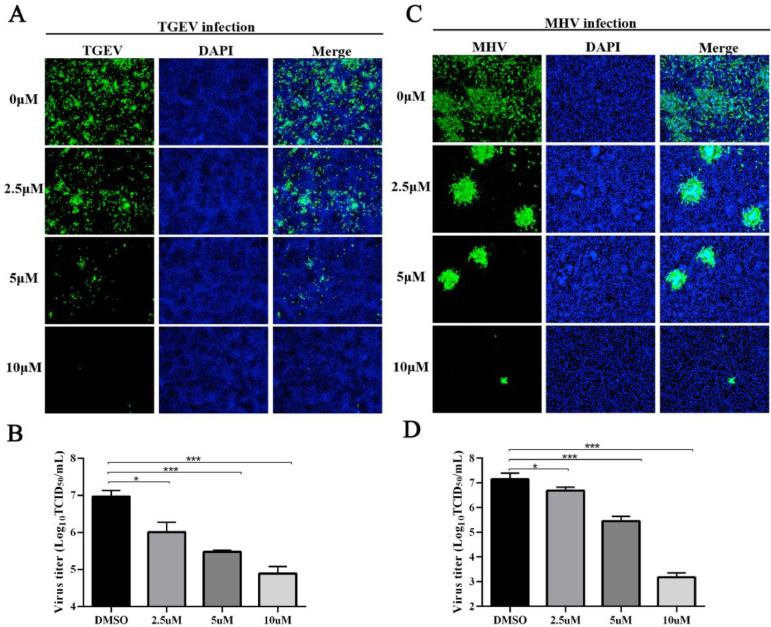
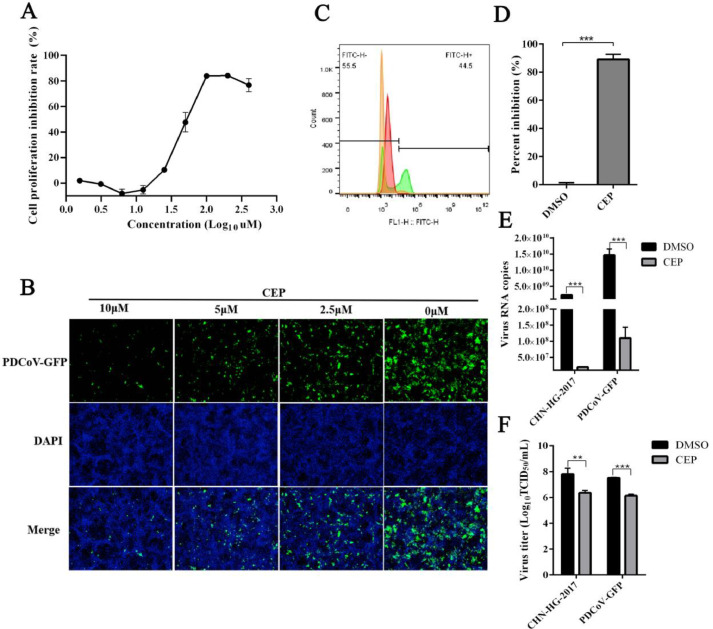
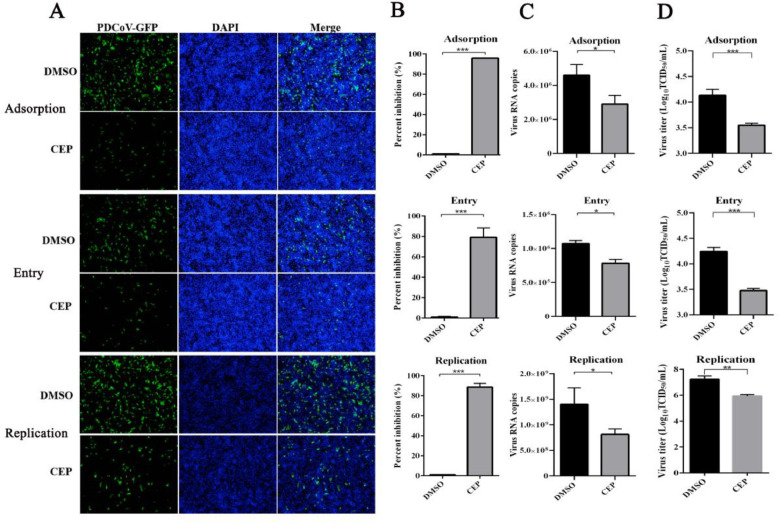
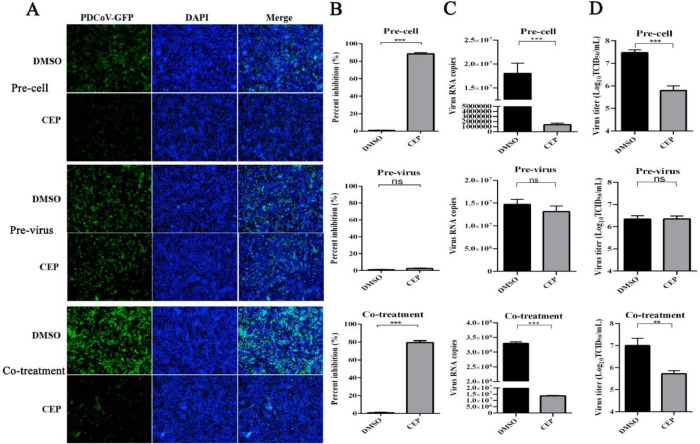
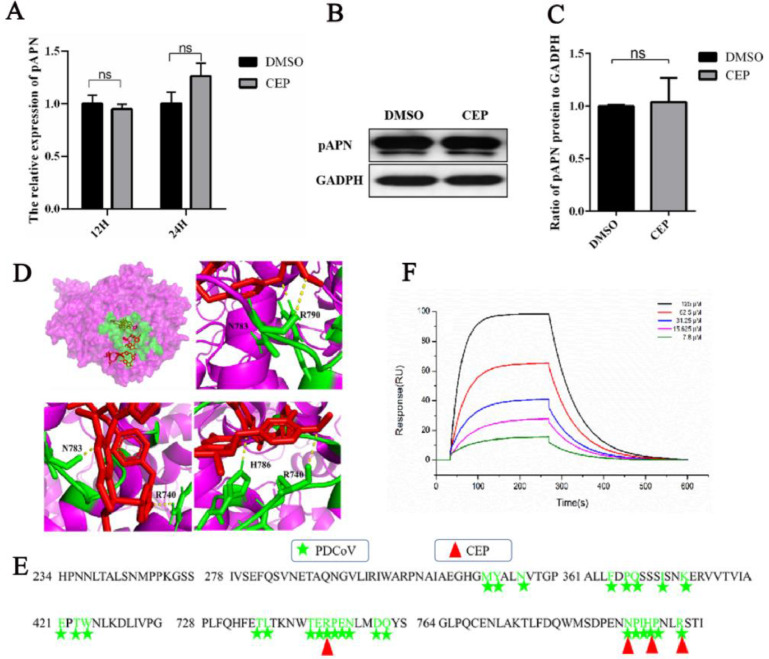
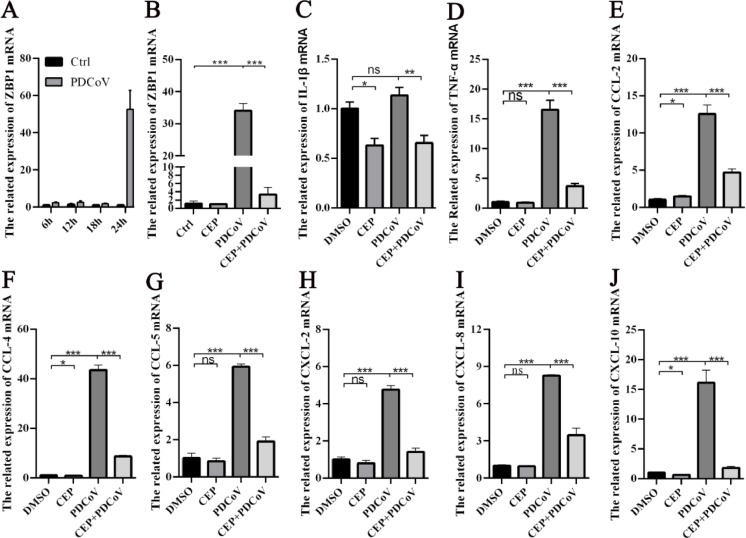
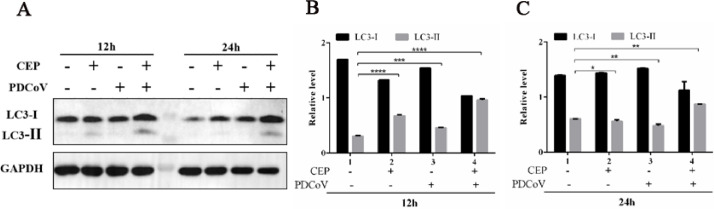
Porcine deltacoronavirus (PDCoV) is an emerging swine enteropathogenic coronavirus (CoV) that mainly causes acute diarrhea/vomiting, dehydration, and mortality in piglets, possessing economic losses and public health concerns. However, there are currently no proven effective antiviral agents against PDCoV. Cepharanthine (CEP) is a naturally occurring alkaloid used as a traditional remedy for radiation-induced symptoms, but its underlying mechanism of CEP against PDCoV has remained elusive. The aim of this study was to investigate the anti-PDCoV effects and mechanisms of CEP in LLC-PK1 cells. The results showed that the antiviral activity of CEP was based on direct action on cells, preventing the virus from attaching to host cells and virus replication. Importantly, Surface Plasmon Resonance (SPR) results showed that CEP has a moderate affinity to PDCoV receptor, porcine aminopeptidase N (pAPN) protein. AutoDock predicted that CEP can form hydrogen bonds with amino acid residues (R740, N783, and R790) in the binding regions of PDCoV and pAPN. In addition, RT-PCR results showed that CEP treatment could significantly reduce the transcription of ZBP1, cytokine (IL-1β and IFN-α) and chemokine genes (CCL-2, CCL-4, CCL-5, CXCL-2, CXCL-8, and CXCL-10) induced by PDCoV. Western blot analysis revealed that CEP could inhibit viral replication by inducing autophagy. In conclusion, our results suggest that the anti-PDCoV activity of CEP is not only relies on competing the virus binding with pAPN, but also affects the proliferation of the virus in vitro by downregulating the excessive immune response caused by the virus and inducing autophagy. CEP emerges as a promising candidate for potential anti-PDCoV therapeutic development.
猪德尔塔冠状病毒 (PDCoV) 是一种新兴的猪肠道致病性冠状病毒 (CoV),主要导致仔猪急性腹泻/呕吐、脱水和死亡,具有经济损失和公共卫生关注。然而,目前尚无针对 PDCoV 的有效抗病毒药物。盐酸千金藤碱 (CEP) 是一种天然存在的生物碱,用作辐射诱导症状的传统疗法,但 CEP 对 PDCoV 的潜在机制仍不清楚。本研究旨在研究 CEP 在 LLC-PK1 细胞中抗 PDCoV 的作用和机制。结果表明,CEP 的抗病毒活性基于对细胞的直接作用,阻止病毒附着于宿主细胞和病毒复制。重要的是,表面等离子体共振 (SPR) 结果表明 CEP 对 PDCoV 受体猪氨肽酶 N (pAPN) 蛋白具有中等亲和力。AutoDock 预测 CEP 可以与 PDCoV 和 pAPN 的结合区域中的氨基酸残基 (R740、N783 和 R790) 形成氢键。此外,RT-PCR 结果表明,CEP 处理可显著降低 PDCoV 诱导的 ZBP1、细胞因子 (IL-1β 和 IFN-α) 和趋化因子基因 (CCL-2、CCL-4、CCL-5、CXCL-2、CXCL-8 和 CXCL-10) 的转录。Western blot 分析表明,CEP 通过诱导自噬抑制病毒复制。总之,我们的结果表明,CEP 的抗 PDCoV 活性不仅依赖于竞争病毒与 pAPN 的结合,还通过下调病毒引起的过度免疫反应和诱导自噬来影响病毒在体外的增殖。CEP 作为一种有前途的抗 PDCoV 治疗候选药物出现。