• 文献检索
  • 文档翻译
  • 深度研究
  • 学术资讯
  • Suppr Zotero 插件Zotero 插件
  • 邀请有礼
  • 套餐&价格
  • 历史记录
应用&插件
Suppr Zotero 插件Zotero 插件浏览器插件Mac 客户端Windows 客户端微信小程序
定价
高级版会员购买积分包购买API积分包
服务
文献检索文档翻译深度研究API 文档MCP 服务
关于我们
关于 Suppr公司介绍联系我们用户协议隐私条款
关注我们

Suppr 超能文献

核心技术专利:CN118964589B侵权必究
粤ICP备2023148730 号-1Suppr @ 2026

文献检索

告别复杂PubMed语法,用中文像聊天一样搜索,搜遍4000万医学文献。AI智能推荐,让科研检索更轻松。

立即免费搜索

文件翻译

保留排版,准确专业,支持PDF/Word/PPT等文件格式,支持 12+语言互译。

免费翻译文档

深度研究

AI帮你快速写综述,25分钟生成高质量综述,智能提取关键信息,辅助科研写作。

立即免费体验

利用新型高分辨率疟疾数据集,通过深度学习转换器模型进行气候信息预测。

Utilizing a novel high-resolution malaria dataset for climate-informed predictions with a deep learning transformer model.

机构信息

Department of Vector Ecology and Environment, Institute of Tropical Medicine (NEKKEN), Nagasaki University, 1-12-4, Sakamoto, Nagasaki City, 852-8523, Japan.

Graduate School of Biomedical Sciences, Nagasaki University, Nagasaki City, Japan.

出版信息

Sci Rep. 2023 Dec 28;13(1):23091. doi: 10.1038/s41598-023-50176-3.

DOI:10.1038/s41598-023-50176-3
PMID:38155182
原文链接:https://pmc.ncbi.nlm.nih.gov/articles/PMC10754862/
Abstract

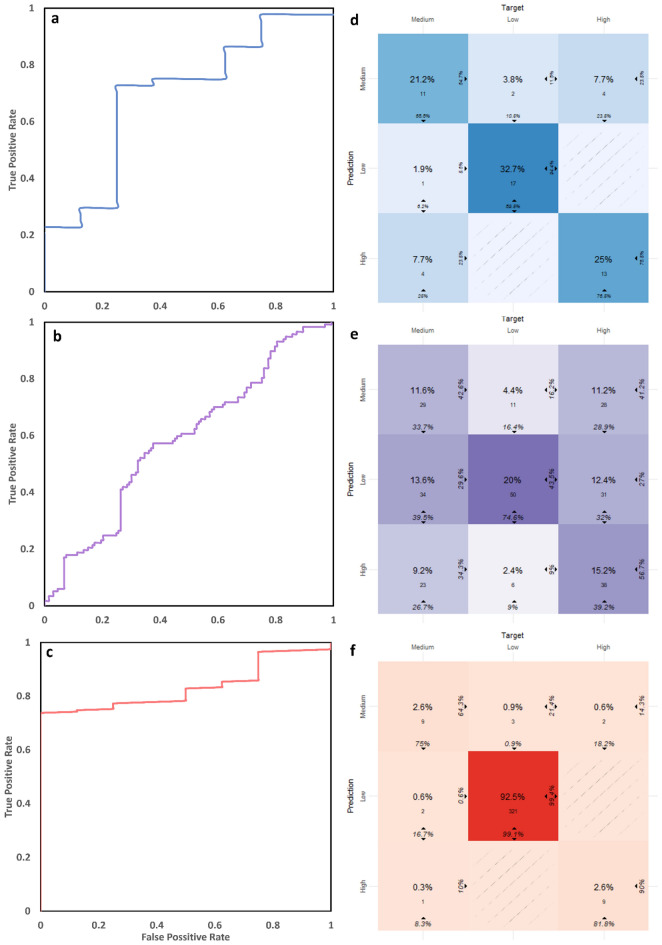
Climatic factors influence malaria transmission via the effect on the Anopheles vector and Plasmodium parasite. Modelling and understanding the complex effects that climate has on malaria incidence can enable important early warning capabilities. Deep learning applications across fields are proving valuable, however the field of epidemiological forecasting is still in its infancy with a lack of applied deep learning studies for malaria in southern Africa which leverage quality datasets. Using a novel high resolution malaria incidence dataset containing 23 years of daily data from 1998 to 2021, a statistical model and XGBOOST machine learning model were compared to a deep learning Transformer model by assessing the accuracy of their numerical predictions. A novel loss function, used to account for the variable nature of the data yielded performance around + 20% compared to the standard MSE loss. When numerical predictions were converted to alert thresholds to mimic use in a real-world setting, the Transformer's performance of 80% according to AUROC was 20-40% higher than the statistical and XGBOOST models and it had the highest overall accuracy of 98%. The Transformer performed consistently with increased accuracy as more climate variables were used, indicating further potential for this prediction framework to predict malaria incidence at a daily level using climate data for southern Africa.

摘要

气候因素通过对疟蚊媒介和疟原虫寄生虫的影响来影响疟疾传播。对气候对疟疾发病率的复杂影响进行建模和理解,可以实现重要的早期预警能力。深度学习在各个领域的应用已经证明了其价值,但是流行病学预测领域仍处于起步阶段,缺乏利用南部非洲高质量数据集的疟疾应用深度学习研究。本研究使用了一个新颖的高分辨率疟疾发病率数据集,该数据集包含了 1998 年至 2021 年 23 年的每日数据,通过评估其数值预测的准确性,比较了统计模型和 XGBOOST 机器学习模型与深度学习 Transformer 模型。使用一种新颖的损失函数,用于说明数据的可变性,与标准均方误差损失相比,性能提高了约 20%。当将数值预测转换为警报阈值以模拟在实际环境中的使用时,Transformer 的 AUROC 为 80%,比统计和 XGBOOST 模型高 20-40%,其整体准确率最高,为 98%。随着使用的气候变量的增加,Transformer 的性能也越来越准确,这表明该预测框架在使用南部非洲气候数据预测每日疟疾发病率方面具有进一步的潜力。

https://cdn.ncbi.nlm.nih.gov/pmc/blobs/2b72/10754862/5bbc36f9954b/41598_2023_50176_Fig7_HTML.jpg
https://cdn.ncbi.nlm.nih.gov/pmc/blobs/2b72/10754862/89179b7c9b97/41598_2023_50176_Fig1_HTML.jpg
https://cdn.ncbi.nlm.nih.gov/pmc/blobs/2b72/10754862/a7f254f11c63/41598_2023_50176_Fig2_HTML.jpg
https://cdn.ncbi.nlm.nih.gov/pmc/blobs/2b72/10754862/ed4df417995c/41598_2023_50176_Fig3_HTML.jpg
https://cdn.ncbi.nlm.nih.gov/pmc/blobs/2b72/10754862/5bdb789162dd/41598_2023_50176_Fig4_HTML.jpg
https://cdn.ncbi.nlm.nih.gov/pmc/blobs/2b72/10754862/a3f07590376c/41598_2023_50176_Fig5_HTML.jpg
https://cdn.ncbi.nlm.nih.gov/pmc/blobs/2b72/10754862/656a472b45ca/41598_2023_50176_Fig6_HTML.jpg
https://cdn.ncbi.nlm.nih.gov/pmc/blobs/2b72/10754862/5bbc36f9954b/41598_2023_50176_Fig7_HTML.jpg
https://cdn.ncbi.nlm.nih.gov/pmc/blobs/2b72/10754862/89179b7c9b97/41598_2023_50176_Fig1_HTML.jpg
https://cdn.ncbi.nlm.nih.gov/pmc/blobs/2b72/10754862/a7f254f11c63/41598_2023_50176_Fig2_HTML.jpg
https://cdn.ncbi.nlm.nih.gov/pmc/blobs/2b72/10754862/ed4df417995c/41598_2023_50176_Fig3_HTML.jpg
https://cdn.ncbi.nlm.nih.gov/pmc/blobs/2b72/10754862/5bdb789162dd/41598_2023_50176_Fig4_HTML.jpg
https://cdn.ncbi.nlm.nih.gov/pmc/blobs/2b72/10754862/a3f07590376c/41598_2023_50176_Fig5_HTML.jpg
https://cdn.ncbi.nlm.nih.gov/pmc/blobs/2b72/10754862/656a472b45ca/41598_2023_50176_Fig6_HTML.jpg
https://cdn.ncbi.nlm.nih.gov/pmc/blobs/2b72/10754862/5bbc36f9954b/41598_2023_50176_Fig7_HTML.jpg

相似文献

1
Utilizing a novel high-resolution malaria dataset for climate-informed predictions with a deep learning transformer model.利用新型高分辨率疟疾数据集,通过深度学习转换器模型进行气候信息预测。
Sci Rep. 2023 Dec 28;13(1):23091. doi: 10.1038/s41598-023-50176-3.
2
A global model of malaria climate sensitivity: comparing malaria response to historic climate data based on simulation and officially reported malaria incidence.疟疾气候敏感性的全球模型:基于模拟和官方报告的疟疾发病率比较疟疾对历史气候数据的响应。
Malar J. 2012 Sep 18;11:331. doi: 10.1186/1475-2875-11-331.
3
Predicting the direct and indirect impacts of climate change on malaria in coastal Kenya.预测气候变化对肯尼亚沿海地区疟疾的直接和间接影响。
PLoS One. 2019 Feb 6;14(2):e0211258. doi: 10.1371/journal.pone.0211258. eCollection 2019.
4
Predicting the impact of climate change on the re-emergence of malaria cases in China using LSTMSeq2Seq deep learning model: a modelling and prediction analysis study.利用 LSTMSeq2Seq 深度学习模型预测气候变化对中国疟疾病例再出现的影响:一项建模和预测分析研究。
BMJ Open. 2022 Mar 31;12(3):e053922. doi: 10.1136/bmjopen-2021-053922.
5
Predicting malaria outbreaks from sea surface temperature variability up to 9 months ahead in Limpopo, South Africa, using machine learning.利用机器学习技术,提前 9 个月预测南非林波波省的海面温度变化引起的疟疾疫情。
Front Public Health. 2022 Aug 25;10:962377. doi: 10.3389/fpubh.2022.962377. eCollection 2022.
6
Distribution of Anopheles vectors and potential malaria transmission stability in Europe and the Mediterranean area under future climate change.未来气候变化下欧洲和地中海地区按蚊媒介的分布和潜在疟疾传播稳定性。
Parasit Vectors. 2019 Jan 8;12(1):18. doi: 10.1186/s13071-018-3278-6.
7
Quantifying climatic and socioeconomic drivers of urban malaria in Surat, India: a statistical spatiotemporal modelling study.量化印度苏拉特城市疟疾的气候和社会经济驱动因素:一项统计时空建模研究。
Lancet Planet Health. 2023 Dec;7(12):e985-e998. doi: 10.1016/S2542-5196(23)00249-8.
8
Exploring the Influence of Daily Climate Variables on Malaria Transmission and Abundance of over Nkomazi Local Municipality, Mpumalanga Province, South Africa.探索南非姆普马兰加省恩科马齐地方市每日气候变量对疟疾传播及疟蚊数量的影响。
J Environ Public Health. 2018 Oct 9;2018:3143950. doi: 10.1155/2018/3143950. eCollection 2018.
9
Malaria smear positivity among Kenyan children peaks at intermediate temperatures as predicted by ecological models.肯尼亚儿童的疟疾涂片阳性率在生态模型预测的中等温度下达到峰值。
Parasit Vectors. 2019 Jun 6;12(1):288. doi: 10.1186/s13071-019-3547-z.
10
Shifting transmission risk for malaria in Africa with climate change: a framework for planning and intervention.气候变化下非洲疟疾传播风险的转移:规划和干预框架。
Malar J. 2020 May 1;19(1):170. doi: 10.1186/s12936-020-03224-6.

引用本文的文献

1
Impact of meteorological factors on the incidence of hand, foot and mouth disease in Ningbo from 2014 to 2019: a causal convolutional neural networks.2014年至2019年气象因素对宁波手足口病发病率的影响:因果卷积神经网络
BMC Public Health. 2025 Jul 11;25(1):2434. doi: 10.1186/s12889-025-23634-y.
2
Spatio-temporal modelling and prediction of malaria incidence in Mozambique using climatic indicators from 2001 to 2018.利用2001年至2018年的气候指标对莫桑比克疟疾发病率进行时空建模与预测
Sci Rep. 2025 Apr 8;15(1):11971. doi: 10.1038/s41598-025-97072-6.
3
Risk factor clusters for non-communicable diseases in adolescents in Eastern Cape, South Africa.

本文引用的文献

1
Predicting malaria outbreaks from sea surface temperature variability up to 9 months ahead in Limpopo, South Africa, using machine learning.利用机器学习技术,提前 9 个月预测南非林波波省的海面温度变化引起的疟疾疫情。
Front Public Health. 2022 Aug 25;10:962377. doi: 10.3389/fpubh.2022.962377. eCollection 2022.
2
Deep learning models for forecasting dengue fever based on climate data in Vietnam.基于越南气候数据的登革热预测深度学习模型。
PLoS Negl Trop Dis. 2022 Jun 13;16(6):e0010509. doi: 10.1371/journal.pntd.0010509. eCollection 2022 Jun.
3
Predicting the impact of climate change on the re-emergence of malaria cases in China using LSTMSeq2Seq deep learning model: a modelling and prediction analysis study.
南非东开普省青少年非传染性疾病的风险因素集群
Health SA. 2025 Jan 15;30:2855. doi: 10.4102/hsag.v30i0.2855. eCollection 2025.
利用 LSTMSeq2Seq 深度学习模型预测气候变化对中国疟疾病例再出现的影响:一项建模和预测分析研究。
BMJ Open. 2022 Mar 31;12(3):e053922. doi: 10.1136/bmjopen-2021-053922.
4
Burden of malaria, impact of interventions and climate variability in Western Ethiopia: an area with large irrigation based farming.埃塞俄比亚西部疟疾负担、干预措施的影响和气候变化:一个以大型灌溉农业为基础的地区。
BMC Public Health. 2022 Jan 29;22(1):196. doi: 10.1186/s12889-022-12571-9.
5
Determining suitable machine learning classifier technique for prediction of malaria incidents attributed to climate of Odisha.确定适合的机器学习分类器技术,用于预测归因于奥里萨邦气候的疟疾事件。
Int J Environ Health Res. 2022 Aug;32(8):1716-1732. doi: 10.1080/09603123.2021.1905782. Epub 2021 Mar 26.
6
Comparing machine learning with case-control models to identify confirmed dengue cases.运用机器学习与病例对照模型比较,以识别确诊登革热病例。
PLoS Negl Trop Dis. 2020 Nov 10;14(11):e0008843. doi: 10.1371/journal.pntd.0008843. eCollection 2020 Nov.
7
Large-scale multivariate forecasting models for Dengue - LSTM versus random forest regression.登革热的大规模多变量预测模型-LSTM 与随机森林回归。
Spat Spatiotemporal Epidemiol. 2020 Nov;35:100372. doi: 10.1016/j.sste.2020.100372. Epub 2020 Aug 28.
8
LSTM based prediction of malaria abundances using big data.基于长短期记忆网络(LSTM)的大数据疟疾丰度预测。
Comput Biol Med. 2020 Sep;124:103859. doi: 10.1016/j.compbiomed.2020.103859. Epub 2020 Jul 12.
9
Forecast of Dengue Cases in 20 Chinese Cities Based on the Deep Learning Method.基于深度学习方法的 20 个中国城市登革热病例预测。
Int J Environ Res Public Health. 2020 Jan 10;17(2):453. doi: 10.3390/ijerph17020453.
10
A novel model for malaria prediction based on ensemble algorithms.基于集成算法的疟疾预测新模型。
PLoS One. 2019 Dec 26;14(12):e0226910. doi: 10.1371/journal.pone.0226910. eCollection 2019.