Cellular and Molecular Biology Research Center, Health Research Institute, Babol University of Medical Sciences, Babol, Iran.
Infectious Diseases and Tropical Medicine Research Center, Health Research Institute, Babol University of Medical Sciences, Babol, Iran.
BMC Infect Dis. 2024 Jan 6;24(1):55. doi: 10.1186/s12879-023-08939-w.
The aim of the present study was to compare the epidemiological patterns of severe acute respiratory syndrome coronavirus 2 (SARS-CoV2) infections, hospitalizations, deaths, and duration of hospitalization during the fourth, fifth and sixth epidemic waves of coronavirus disease 2019 (COVID-19) in Iran.
A multicenter retrospective observational study was conducted on hospitalized patients in four hospitals in the Babol district of northern Iran. The study periods were during the fourth, fifth, and sixth waves of the epidemic in Iran, (March 2021 to March 2022). A total of 13,312 patients with suspected COVID-19 were included. Patient demographics, medical history, length of hospital stay, and clinical outcomes were obtained from the hospital information system. Data on the cycle threshold (Ct) and SARS-CoV2 variant were collected for SARS-CoV2-positive cases.
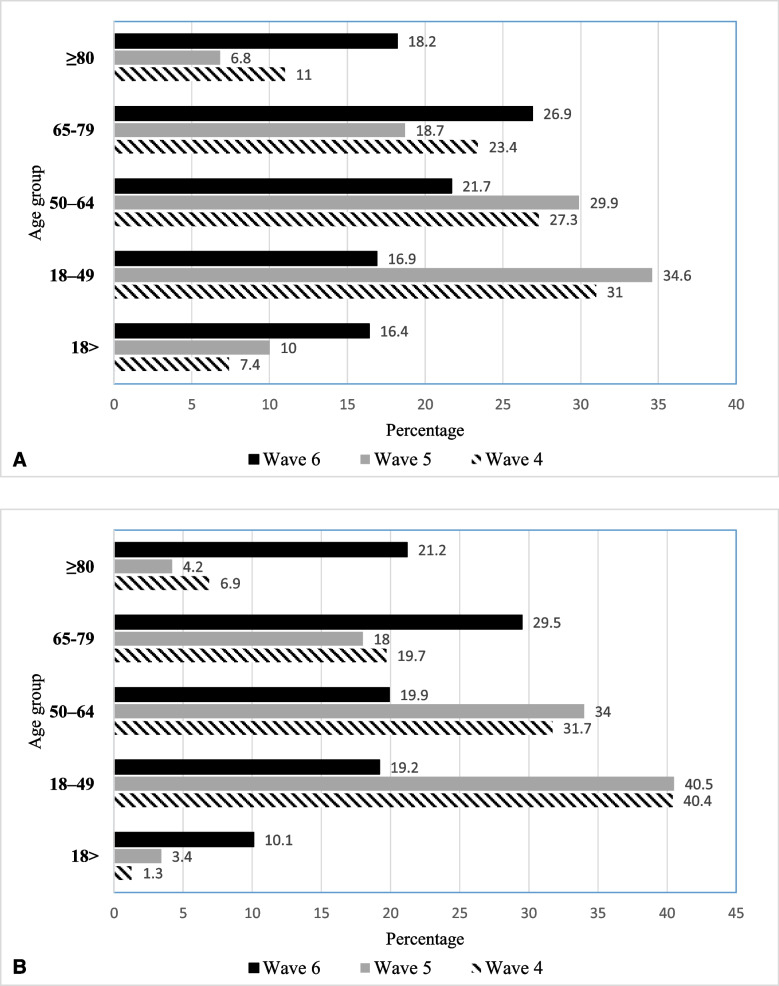
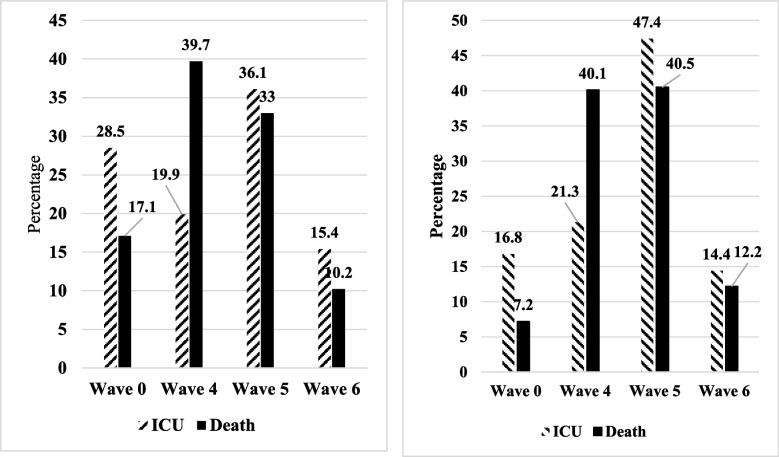
The highest number of hospitalized patients was reported during the fifth (Delta) wave (5231; 39.3%), while the lowest number of hospitalized patients was reported during the sixth (Omicron) wave (2143; 16.1%). In total, 6459 (48.5%) out of 13,312 hospitalized patients with suspected COVID-19 had a positive rRT-PCR result. The fifth (Delta) wave had the highest number of SARS-CoV2 rRT-PCR-positive hospitalized patients (3573, 55.3%), while the sixth (Omicron) wave had the lowest number (835, 12.9%). Moreover, 238 (3.7%) patients with laboratory-confirmed COVID-19 died. The hospital mortality rate was 6.8% in the fourth (Alpha) wave, which reduced to 2.7 and 3.5% in the fifth (Delta) and sixth (Omicron) waves, respectively (p < 0.001).
This is the most comprehensive study evaluating the epidemiologic characteristics of laboratory-confirmed SARS-CoV2 cases in Iran during the Alpha, Delta, and Omicron waves. The highest number of SARS-CoV2-positive hospitalized patients was in the fifth wave of COVID-19 (dominance of the Delta variant), while the sixth wave (dominance of the Omicron variant) had the lowest number. Comorbidities were similar, and cardiovascular disease, diabetes, kidney disease, and hypertension were the main risk factors in all waves.
本研究旨在比较伊朗 2019 年冠状病毒病(COVID-19)第四、五、六波期间严重急性呼吸综合征冠状病毒 2(SARS-CoV2)感染、住院、死亡和住院时间的流行病学模式。
对伊朗北部巴博勒区四家医院住院患者进行了一项多中心回顾性观察研究。研究期间为伊朗第四波(2021 年 3 月至 2022 年 3 月)、第五波(Delta 变体)和第六波(Omicron 变体)。共纳入 13312 例疑似 COVID-19 患者。从医院信息系统中获取患者人口统计学、病史、住院时间和临床结局。对 SARS-CoV2 阳性病例收集循环阈值(Ct)和 SARS-CoV2 变体数据。
第五波(Delta 变体)报告的住院患者人数最多(5231 例,39.3%),而第六波(Omicron 变体)报告的住院患者人数最少(2143 例,16.1%)。在 13312 例疑似 COVID-19 的住院患者中,共有 6459 例(48.5%)的 rRT-PCR 检测结果为阳性。第五波(Delta 变体)SARS-CoV2 rRT-PCR 阳性住院患者人数最多(3573 例,55.3%),第六波(Omicron 变体)人数最少(835 例,12.9%)。此外,有 238 例(3.7%)实验室确诊 COVID-19 患者死亡。第四波(Alpha 变体)的住院死亡率为 6.8%,第五波(Delta 变体)和第六波(Omicron 变体)分别降至 2.7%和 3.5%(p<0.001)。
这是评估伊朗在 Alpha、Delta 和 Omicron 波期间实验室确诊 SARS-CoV2 病例的最全面的研究。第五波 COVID-19(Delta 变体占主导地位)住院 SARS-CoV2 阳性患者人数最多,而第六波(Omicron 变体占主导地位)人数最少。合并症相似,心血管疾病、糖尿病、肾脏疾病和高血压是所有波的主要危险因素。