Diniță Alin, Ripeanu Razvan George, Ilincă Costin Nicolae, Cursaru Diana, Matei Dănuța, Naim Ramadan Ibrahim, Tănase Maria, Portoacă Alexandra Ileana
Mechanical Engineering Department, Petroleum-Gas University of Ploiești, 100680 Ploiesti, Romania.
Polymers (Basel). 2023 Dec 19;16(1):2. doi: 10.3390/polym16010002.
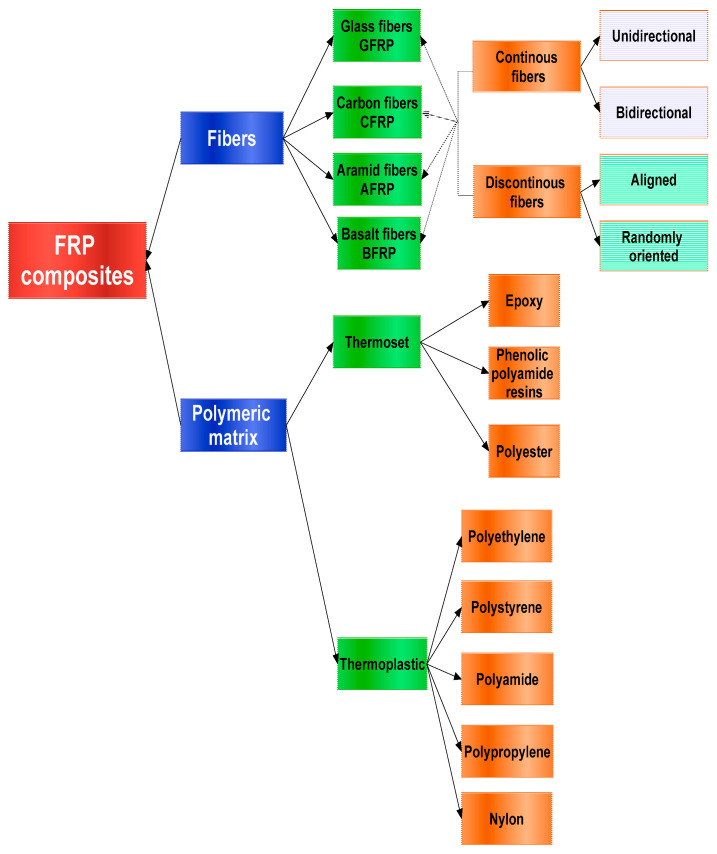
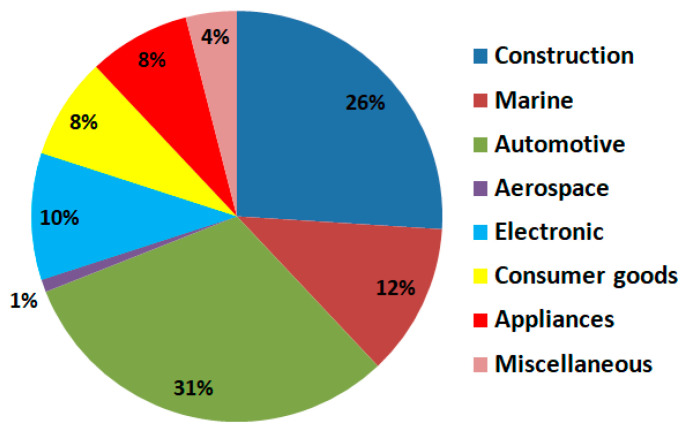
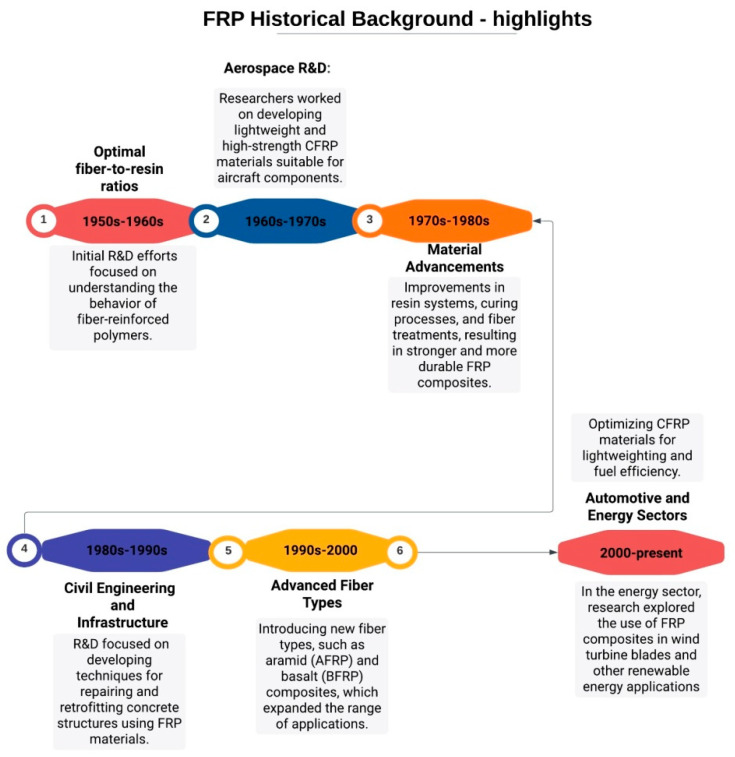
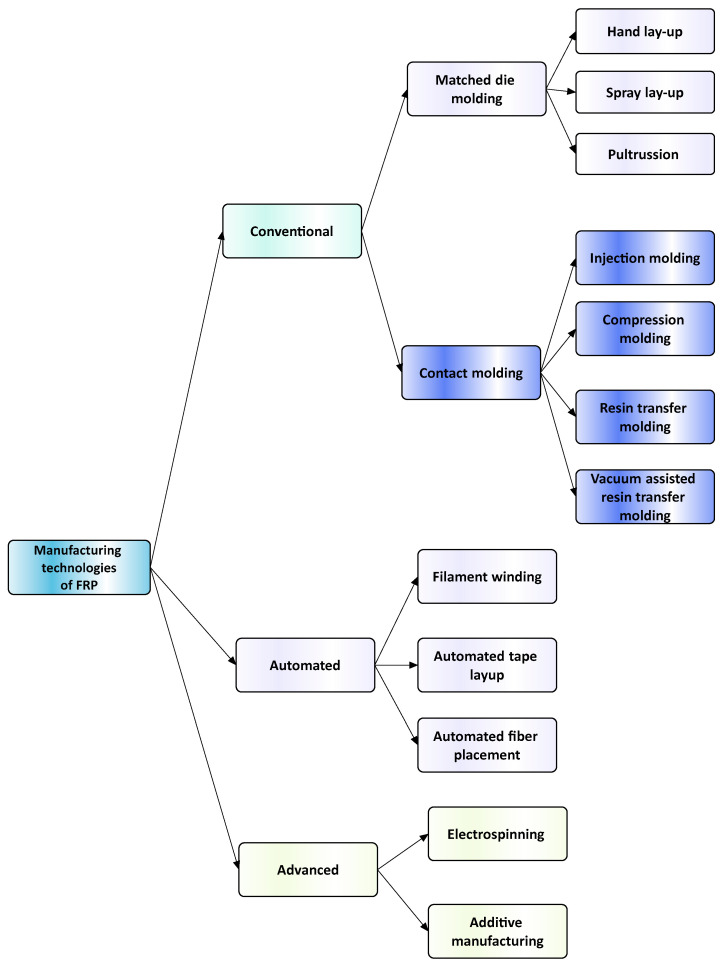
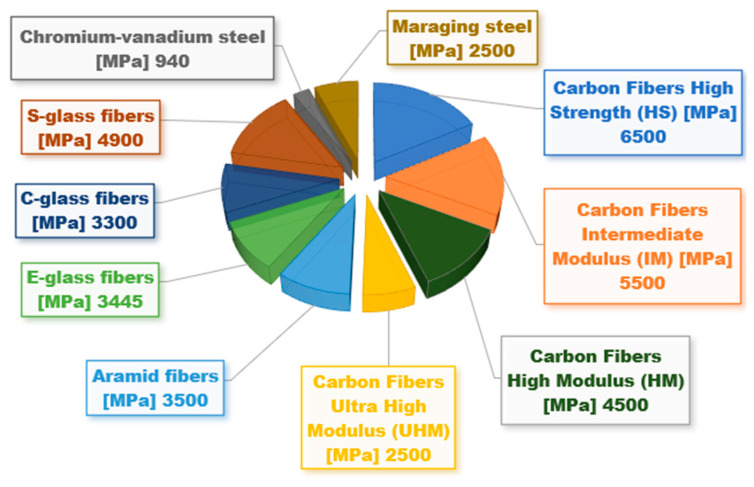
Composites made from fiber-reinforced polymers (FRPs) are a crucial and highly adaptable category of materials widely utilized in numerous fields. Their flexibility and the range of criteria for classification enable the creation of tailored solutions to address distinct requirements in sectors such as civil engineering, aerospace, automotive, and marine, among others. The distinguishing characteristics of FRP composites include the type of reinforcing fiber used, the composition of the matrix material, the employed manufacturing process, the orientation of the fibers, and the specific end-use application. These classification variables offer engineers a versatile structure to determine and select the most appropriate materials and production techniques for their specific needs. Furthermore, the present study aims to reunite the criteria of classification for FRPs and specific manufacturing technologies of FRPs, such as conventional ones (matched die molding, contact molding), automated ones (filament winding, tape lay-up, and fiber placement), and advanced ones (electrospinning and additive manufacturing),with the chronological development of FRPs, insights on material characteristics, and comprehensive design guidelines based on their behavior in different environments of use.
由纤维增强聚合物(FRP)制成的复合材料是一类至关重要且高度通用的材料,广泛应用于众多领域。它们的灵活性以及多种分类标准使得能够创建定制化解决方案,以满足土木工程、航空航天、汽车和船舶等领域的不同需求。FRP复合材料的显著特征包括所使用的增强纤维类型、基体材料的组成、采用的制造工艺、纤维的取向以及具体的最终用途。这些分类变量为工程师提供了一个通用的结构,以便根据他们的特定需求确定并选择最合适的材料和生产技术。此外,本研究旨在将FRP的分类标准与FRP的特定制造技术(如传统技术(匹配模塑、接触模塑)、自动化技术(纤维缠绕、带铺层和纤维铺放)以及先进技术(静电纺丝和增材制造))与FRP的按时间顺序发展、材料特性见解以及基于它们在不同使用环境中的行为的综合设计指南结合起来。