Cecyn Marianna Nogueira, Abrahao Karina Possa
Departamento de Psicobiologia, Escola Paulista de Medicina, Universidade Federal de São Paulo, São Paulo, SP, Brazil.
IBRO Neurosci Rep. 2023 Jul 28;15:143-148. doi: 10.1016/j.ibneur.2023.07.003. eCollection 2023 Dec.
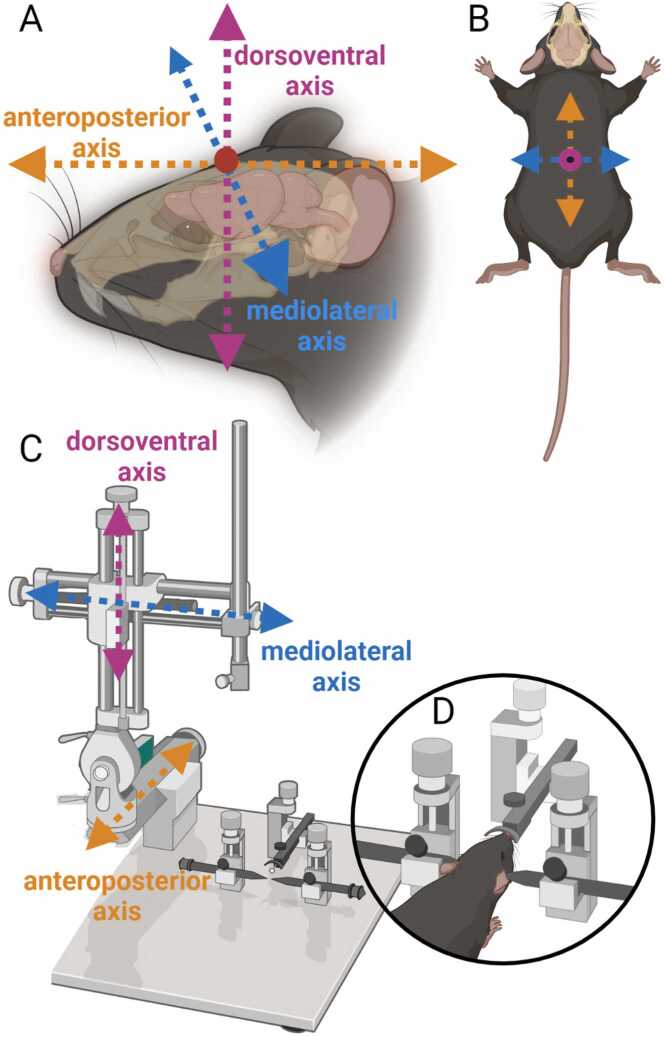
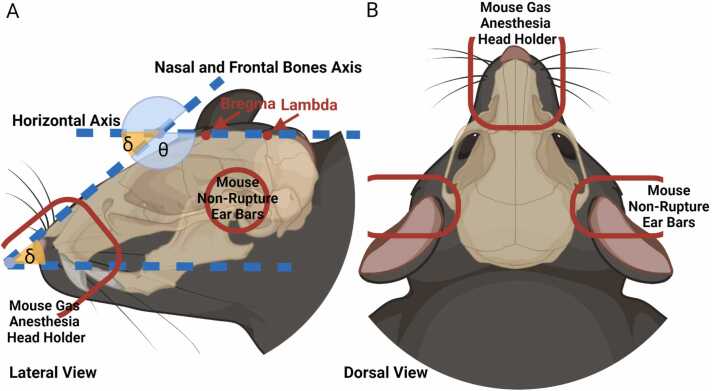
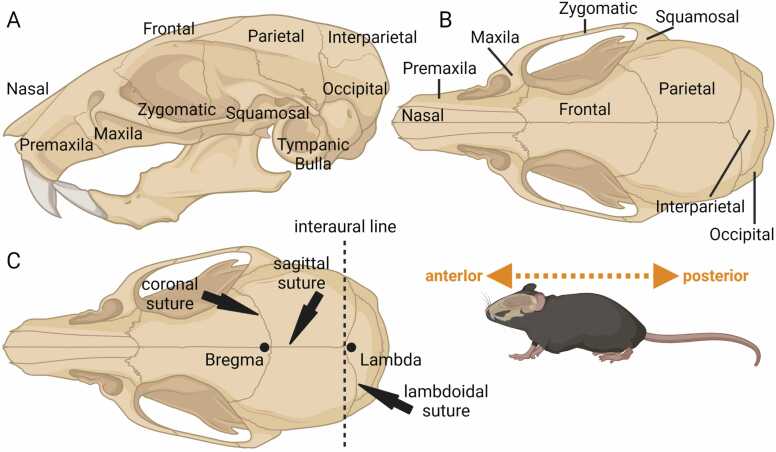
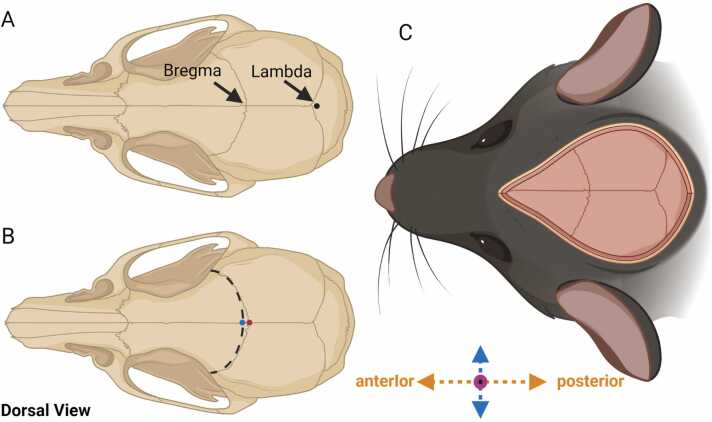
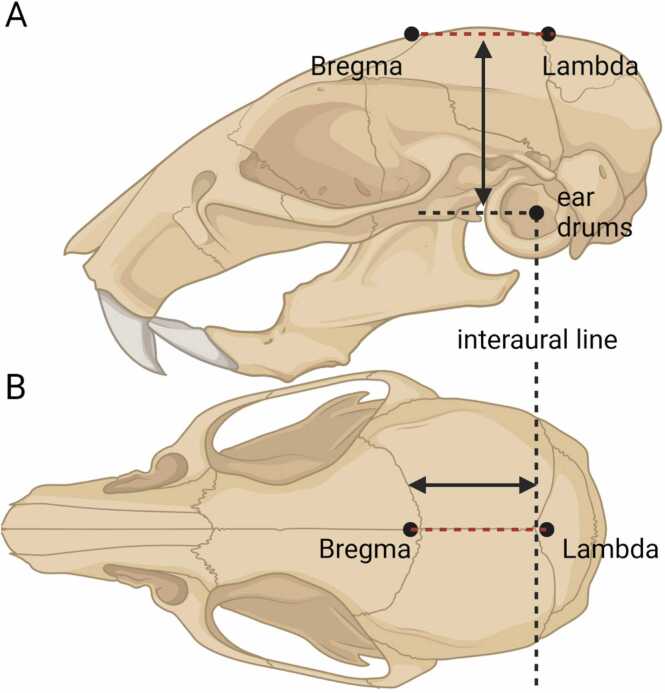
The advent of the stereotaxic apparatus developed by Clarke and Horsley revolutionized neuroscience research, enabling precise 3D navigation along the skull mediolateral, anteroposterior, and dorsoventral axes. In rodents, the Bregma is widely used as the origin reference point for the stereotaxic coordinates, but the specific procedure for its measurement varies among different laboratories. Notably, the renowned brain atlas developed by Paxinos and Franklin lacks explicit instructions on the Bregma determination. Recent studies have found discrepancies in skull and brain landmark measurements. This review describes the commonly used brain atlases and highlights the limitations in accurately measuring the stereotaxic coordinates. In addition, we propose alternative and more reliable approaches to measure the Bregma. It is imperative to address the misconceptions about the accuracy of stereotaxic surgeries, as it can significantly impact a substantial portion of neuroscience research.
克拉克(Clarke)和霍斯利(Horsley)开发的立体定位仪的出现彻底改变了神经科学研究,使沿着颅骨的内外侧、前后和背腹轴进行精确的三维导航成为可能。在啮齿动物中,前囟被广泛用作立体定位坐标的原点参考点,但不同实验室测量它的具体程序有所不同。值得注意的是,帕西诺斯(Paxinos)和富兰克林(Franklin)编写的著名脑图谱缺乏关于前囟确定的明确说明。最近的研究发现颅骨和脑地标测量存在差异。本综述描述了常用的脑图谱,并强调了准确测量立体定位坐标的局限性。此外,我们提出了测量前囟的替代且更可靠的方法。必须解决关于立体定向手术准确性的误解,因为它会对很大一部分神经科学研究产生重大影响。