Pai Amruta, Santiago Rony, Glantz Namino, Bevier Wendy, Barua Souptik, Sabharwal Ashutosh, Kerr David
Electrical and Computer Engineering, Rice University, Houston, TX, USA.
Sansum Diabetes Research Institute, Santa Barbara, CA, USA.
NPJ Digit Med. 2024 Jan 11;7(1):7. doi: 10.1038/s41746-023-00985-7.
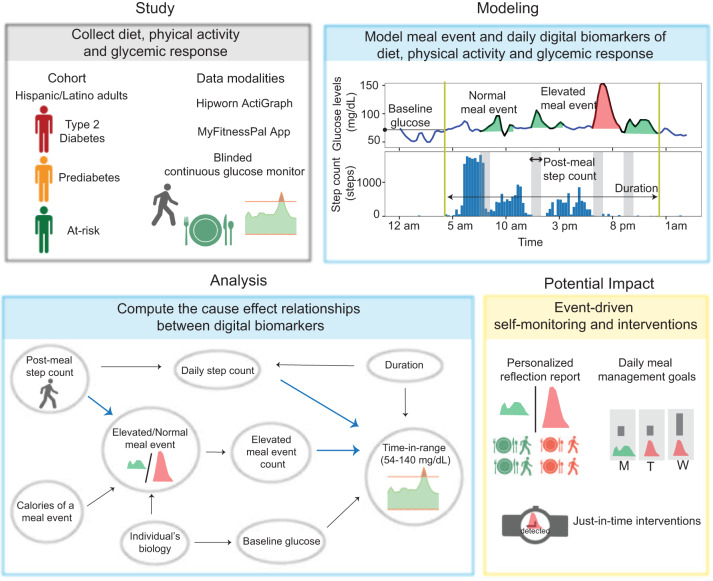
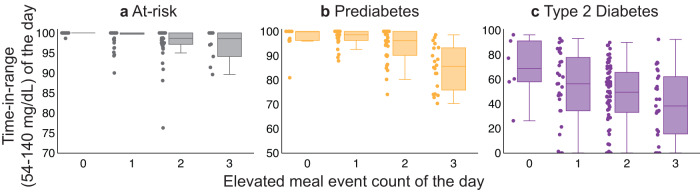
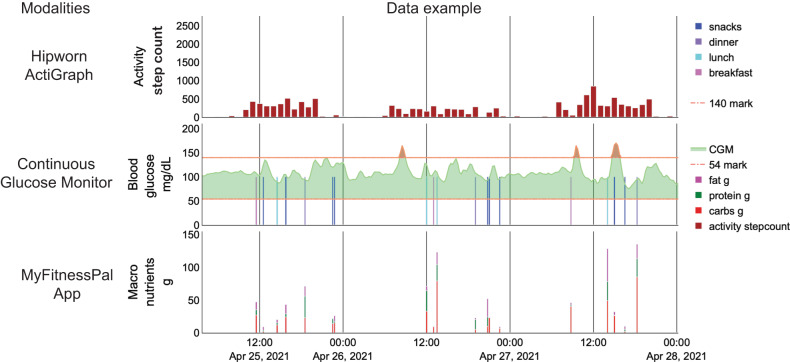
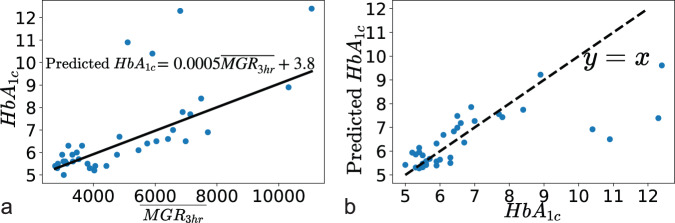
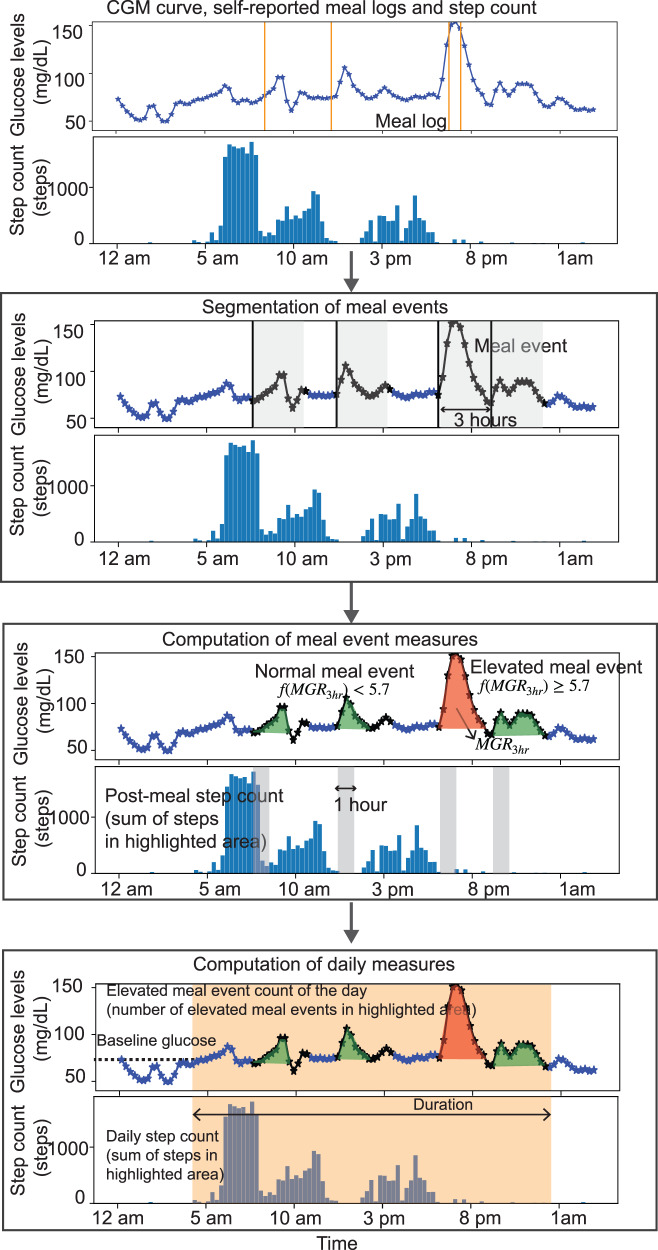
Digital phenotyping refers to characterizing human bio-behavior through wearables, personal devices, and digital health technologies. Digital phenotyping in populations facing a disproportionate burden of type 2 diabetes (T2D) and health disparities continues to lag compared to other populations. Here, we report our study demonstrating the application of multimodal digital phenotyping, i.e., the simultaneous use of CGM, physical activity monitors, and meal tracking in Hispanic/Latino individuals with or at risk of T2D. For 14 days, 36 Hispanic/Latino adults (28 female, 14 with non-insulin treated T2D) wore a continuous glucose monitor (CGM) and a physical activity monitor (Actigraph) while simultaneously logging meals using the MyFitnessPal app. We model meal events and daily digital biomarkers representing diet, physical activity choices, and corresponding glycemic response. We develop a digital biomarker for meal events that differentiates meal events into normal and elevated categories. We examine the contribution of daily digital biomarkers of elevated meal event count and step count on daily time-in-range 54-140 mg/dL (TIR) and average glucose. After adjusting for step count, a change in elevated meal event count from zero to two decreases TIR by 4.0% (p = 0.003). An increase in 1000 steps in post-meal step count also reduces the meal event glucose response by 641 min mg/dL (p = 0.0006) and reduces the odds of an elevated meal event by 55% (p < 0.0001). The proposed meal event digital biomarkers may provide an opportunity for non-pharmacologic interventions for Hispanic/Latino adults facing a disproportionate burden of T2D.
数字表型分析是指通过可穿戴设备、个人设备和数字健康技术来描述人类的生物行为。与其他人群相比,面临2型糖尿病(T2D)和健康差异负担过重的人群中的数字表型分析仍较为滞后。在此,我们报告了一项研究,该研究展示了多模态数字表型分析的应用,即在患有T2D或有T2D风险的西班牙裔/拉丁裔个体中同时使用连续血糖监测(CGM)、身体活动监测器和饮食追踪。在14天的时间里,36名西班牙裔/拉丁裔成年人(28名女性,14名非胰岛素治疗的T2D患者)佩戴连续血糖监测仪(CGM)和身体活动监测器(Actigraph),同时使用MyFitnessPal应用程序记录饮食。我们对代表饮食、身体活动选择和相应血糖反应的饮食事件和每日数字生物标志物进行建模。我们开发了一种用于饮食事件的数字生物标志物,可将饮食事件分为正常和升高两类。我们研究了饮食事件计数升高和步数的每日数字生物标志物对每日血糖在54-140mg/dL范围内的时间(TIR)和平均血糖的影响。在调整步数后,饮食事件计数升高从零增加到两个会使TIR降低4.0%(p = 0.003)。餐后步数增加1000步也会使饮食事件的血糖反应降低641分钟·mg/dL(p = 0.0006),并使饮食事件升高的几率降低55%(p < 0.0001)。所提出的饮食事件数字生物标志物可能为面临T2D过重负担的西班牙裔/拉丁裔成年人提供非药物干预的机会。