
恶性胸腔积液:当前的认识和治疗方法。
Malignant pleural effusion: current understanding and therapeutic approach.
机构信息
Department of Biomedical Sciences and Public Health, Università Politecnica delle Marche, Ancona Via Conca 71, Ancona, 60126, Italy.
Department of Respiratory Medicine, Sheffield Teaching Hospitals, University of Sheffield, Sheffield, UK.
出版信息
Respir Res. 2024 Jan 19;25(1):47. doi: 10.1186/s12931-024-02684-7.
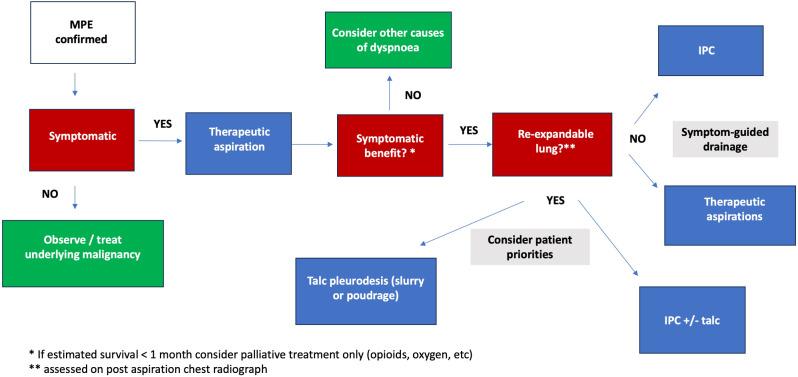
Malignant pleural effusion (MPE) is a common complication of thoracic and extrathoracic malignancies and is associated with high mortality and elevated costs to healthcare systems. Over the last decades the understanding of pathophysiology mechanisms, diagnostic techniques and optimal treatment intervention in MPE have been greatly advanced by recent high-quality research, leading to an ever less invasive diagnostic approach and more personalized management. Despite a number of management options, including talc pleurodesis, indwelling pleural catheters and combinations of the two, treatment for MPE remains symptom directed and centered around drainage strategy. In the next future, because of a better understanding of underlying tumor biology together with more sensitive molecular diagnostic techniques, it is likely that combined diagnostic and therapeutic procedures allowing near total outpatient management of MPE will become popular. This article provides a review of the current advances, new discoveries and future directions in the pathophysiology, diagnosis and management of MPE.
恶性胸腔积液(MPE)是胸部和胸外恶性肿瘤的常见并发症,与高死亡率和医疗系统成本增加有关。在过去的几十年中,通过最近的高质量研究,对 MPE 的病理生理学机制、诊断技术和最佳治疗干预措施有了更深入的了解,从而导致了诊断方法的侵入性越来越小,管理也更加个性化。尽管有许多治疗选择,包括滑石粉胸膜固定术、留置胸腔导管以及两者的组合,但 MPE 的治疗仍然是针对症状的,以引流策略为中心。在未来,由于对肿瘤生物学基础的更好理解以及更敏感的分子诊断技术,联合诊断和治疗程序有望在门诊环境下对 MPE 进行近乎全面的管理。本文综述了 MPE 的病理生理学、诊断和管理方面的最新进展、新发现和未来方向。

 Zotero 插件