Grigoletto Ilaria, García Salas Patricia, Valli Enrico, Bendini Alessandra, Ferioli Federico, Pasini Federica, Sánchez Villasclaras Sebastián, García-Ruiz Roberto, Gallina Toschi Tullia
Department of Agricultural and Food Sciences, Alma Mater Studiorum-Università di Bologna, Piazza Gabriele Goidanich 60, 47521 Cesena, Italy.
University Institute of Research on Olive Groves and Olive Oils, GEOLIT Science and Technology Park, University of Jaen, 236 Mengibar, Spain.
Foods. 2024 Jan 16;13(2):285. doi: 10.3390/foods13020285.
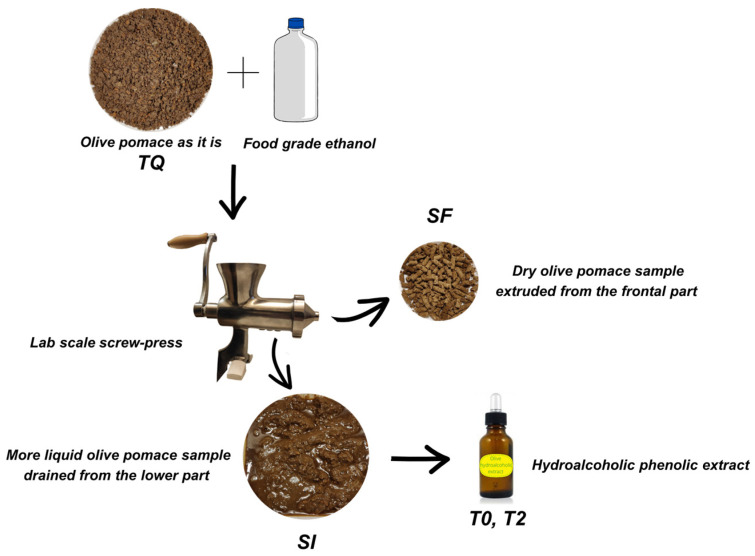
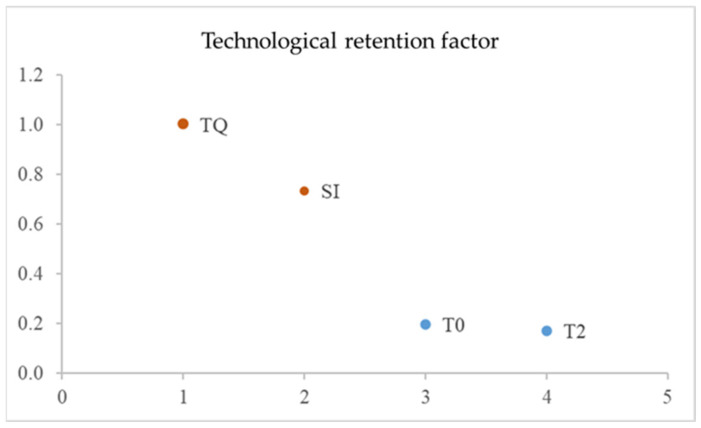
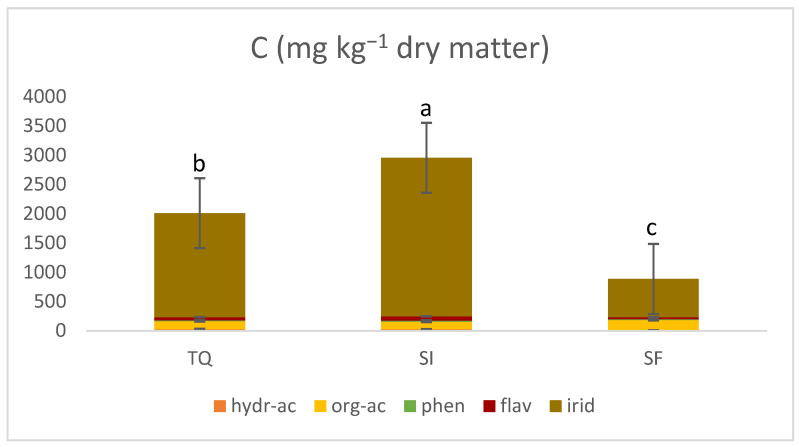
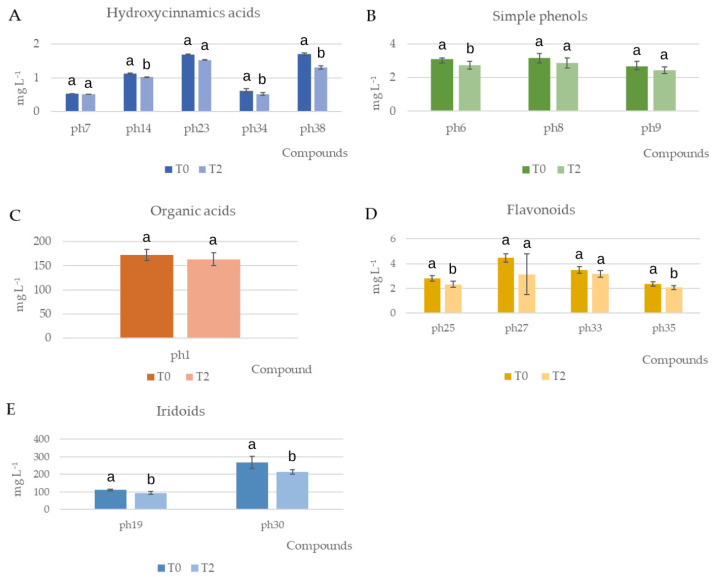
Olive pomace results from the production of olive oil. Even if olive pomace represents a potential environmental problem, it contains phenolic compounds, which are widely recognized for their beneficial properties for human health. In this study, an innovative and sustainable technological approach to extract phenolic compounds from fresh olive pomace, based on food-grade solvent instead of those usually adopted, is investigated. Characterization and shelf-life evaluation of the hydroalcoholic extracts obtained from the procedure developed for different industrial purposes were also carried out. The phenolic fractions of the different samples were studied with the Folin-Ciocâlteu method to quantify that the total reducing molecules and HPLC-MS/MS analysis was used to define the profile through the identification and quantification of 42 compounds, belonging to five chemical families. Regarding shelf-life, the hydroalcoholic extract showed no significant reduction in phenolic content, for both instrumental evaluations, retaining most of the phenolic compounds present in the raw material; negative attributes were not perceived by sensory evaluation. Thus, these lab-scale results can be the starting point to develop a procedure that is suitable for a real olive mill, representing a valorization strategy in a circular economy and the perspective of new business models.
橄榄果渣是橄榄油生产的副产品。尽管橄榄果渣可能会带来潜在的环境问题,但它含有酚类化合物,这些化合物因其对人体健康的有益特性而广为人知。在本研究中,我们探索了一种创新且可持续的技术方法,该方法基于食品级溶剂而非通常采用的溶剂,从新鲜橄榄果渣中提取酚类化合物。我们还对从为不同工业目的开发的工艺中获得的水醇提取物进行了表征和保质期评估。使用福林-酚法研究了不同样品的酚类组分,以量化总还原分子,并用高效液相色谱-质谱/质谱分析通过鉴定和定量属于五个化学家族的42种化合物来确定其成分。关于保质期,无论是仪器评估还是感官评估,水醇提取物的酚类含量均未出现显著下降,提取物保留了原料中存在的大部分酚类化合物,且未察觉到负面特性。因此,这些实验室规模的结果可以作为开发适用于实际橄榄油厂的工艺的起点,这代表了循环经济中的一种增值策略以及新商业模式的前景。