Department of Radiology, The Xuzhou Hospital Affiliated to Jiangsu University, Xu Zhou, Jiang Su, 221004, People's Republic of China.
Department of Thoracic Surgery, Xuzhou Cancer Hospital, Xuzhou, 221000, People's Republic of China.
J Cardiothorac Surg. 2024 Jan 23;19(1):19. doi: 10.1186/s13019-024-02498-0.
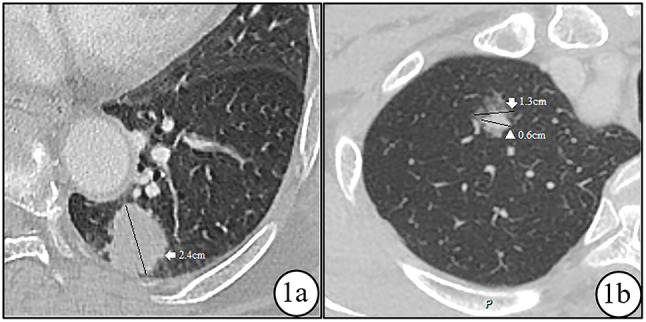
The consolidation tumor ratio (CTR) is a predictor of invasiveness in peripheral T1N0M0 lung adenocarcinoma. However, its association with spread through air spaces (STAS) remains largely unexplored. We aimed to explore the correlation between the CTR of primary tumors and STAS in peripheral T1N0M0 lung adenocarcinoma.
We collected data from patients who underwent surgery for malignant lung neoplasms between January and November 2022. Univariate and multivariate analyses following propensity-score matching with sex, age, BMI, were performed to identify the independent risk factors for STAS. The incidence of STAS was compared based on pulmonary nodule type. A smooth fitting curve between CTR and STAS was produced by the generalized additive model (GAM) and a multiple regression model was established using CTR and STAS to determine the dose-response relationship and calculate the odds ratio (OR) and 95% confidence interval (CI).
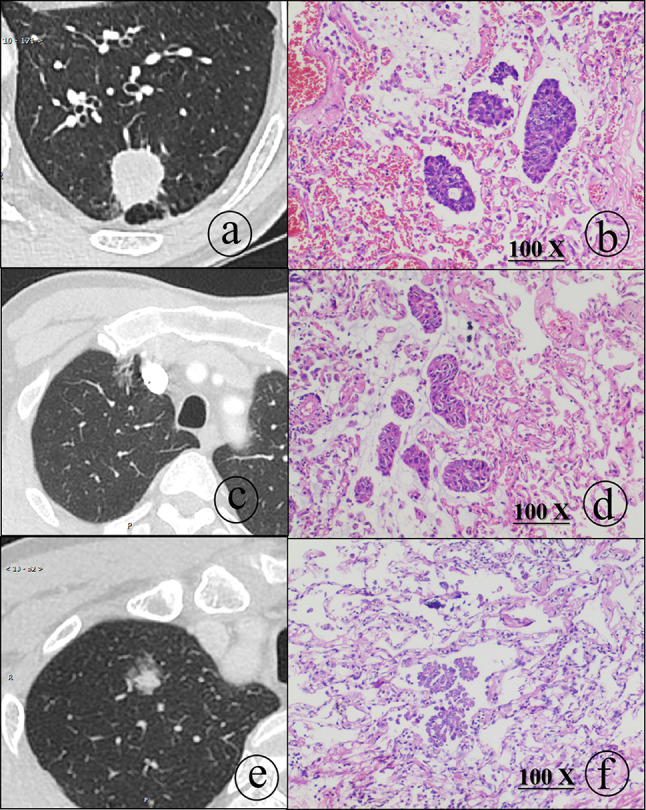
17 (14.5%) were diagnosed with STAS. The univariate analysis demonstrated that the history of the diabetes, size of solid components, spiculation, pleural indentation, pulmonary nodule type, consolidation/tumor ratio of the primary tumor were statistically significant between the STAS-positive and STAS-negative groups following propensity-score matching(p = 0.047, 0.049, 0.030, 0.006, 0.026, and < 0.001, respectively), and multivariate analysis showed that the pleural indentation was independent risk factors for STAS (with p-value and 95% CI of 0.043, (8.543-68.222)). Moreover, the incidence of STAS in the partially solid nodule was significantly different from that in the solid nodule and ground-glass nodule (Pearson Chi-Square = 7.49, p = 0.024). Finally, the smooth fitting curve showed that CTR tended to be linearly associated with STAS by GAM, and the multivariate regression model based on CTR showed an OR value of 1.24 and a p-value of 0.015.
In peripheral stage IA lung adenocarcinoma, the risk of STAS was increased with the solid component of the primary tumor. The pleural indentation of the primary tumor could be used as a predictor in evaluating the risk of the STAS.
在 T1N0M0 期周围型肺腺癌中,肿瘤实变率(CTR)是侵袭性的预测因子。然而,其与气腔内播散(STAS)的相关性仍在很大程度上尚未得到探索。我们旨在探讨 T1N0M0 期周围型肺腺癌中,原发肿瘤 CTR 与 STAS 之间的相关性。
我们收集了 2022 年 1 月至 11 月期间因恶性肺肿瘤接受手术的患者的数据。采用倾向性评分匹配,对性别、年龄、BMI 进行单因素和多因素分析,以确定 STAS 的独立危险因素。根据肺结节类型比较 STAS 的发生率。通过广义加性模型(GAM)生成 CTR 与 STAS 之间的平滑拟合曲线,并建立多回归模型,以确定剂量反应关系并计算比值比(OR)和 95%置信区间(CI)。
17 例(14.5%)诊断为 STAS。单因素分析表明,在经过倾向性评分匹配后,STAS 阳性组与 STAS 阴性组之间,糖尿病史、实性成分大小、分叶征、胸膜凹陷征、肺结节类型、原发肿瘤的实变/肿瘤比值具有统计学意义(p=0.047、0.049、0.030、0.006、0.026 和 <0.001),多因素分析表明胸膜凹陷征是 STAS 的独立危险因素(p 值和 95%CI 为 0.043,(8.543-68.222))。此外,部分实性结节的 STAS 发生率与实性结节和磨玻璃结节显著不同(Pearson Chi-Square=7.49,p=0.024)。最后,GAM 显示的平滑拟合曲线表明,CTR 与 STAS 呈线性相关,基于 CTR 的多变量回归模型显示 OR 值为 1.24,p 值为 0.015。
在 I 期周围型肺腺癌中,原发肿瘤实性成分的增加会增加 STAS 的风险。原发肿瘤的胸膜凹陷征可作为评估 STAS 风险的预测因子。