• 文献检索
  • 文档翻译
  • 深度研究
  • 学术资讯
  • Suppr Zotero 插件Zotero 插件
  • 邀请有礼
  • 套餐&价格
  • 历史记录
应用&插件
Suppr Zotero 插件Zotero 插件浏览器插件Mac 客户端Windows 客户端微信小程序
定价
高级版会员购买积分包购买API积分包
服务
文献检索文档翻译深度研究API 文档MCP 服务
关于我们
关于 Suppr公司介绍联系我们用户协议隐私条款
关注我们

Suppr 超能文献

核心技术专利:CN118964589B侵权必究
粤ICP备2023148730 号-1Suppr @ 2026

文献检索

告别复杂PubMed语法,用中文像聊天一样搜索,搜遍4000万医学文献。AI智能推荐,让科研检索更轻松。

立即免费搜索

文件翻译

保留排版,准确专业,支持PDF/Word/PPT等文件格式,支持 12+语言互译。

免费翻译文档

深度研究

AI帮你快速写综述,25分钟生成高质量综述,智能提取关键信息,辅助科研写作。

立即免费体验

基于机器学习的模型预测接受冠状动脉血运重建的冠心病患者中风风险。

Machine learning-based models for prediction of the risk of stroke in coronary artery disease patients receiving coronary revascularization.

机构信息

Department of Neurology, The Second Hospital of Dalian Medical University, Dalian, Liaoning, China.

Department of Neurology, Shenyang First People's Hospital, Shenyang, Liaoning, China.

出版信息

PLoS One. 2024 Feb 8;19(2):e0296402. doi: 10.1371/journal.pone.0296402. eCollection 2024.

DOI:10.1371/journal.pone.0296402
PMID:38330052
原文链接:https://pmc.ncbi.nlm.nih.gov/articles/PMC10852291/
Abstract

BACKGROUND

To construct several prediction models for the risk of stroke in coronary artery disease (CAD) patients receiving coronary revascularization based on machine learning methods.

METHODS

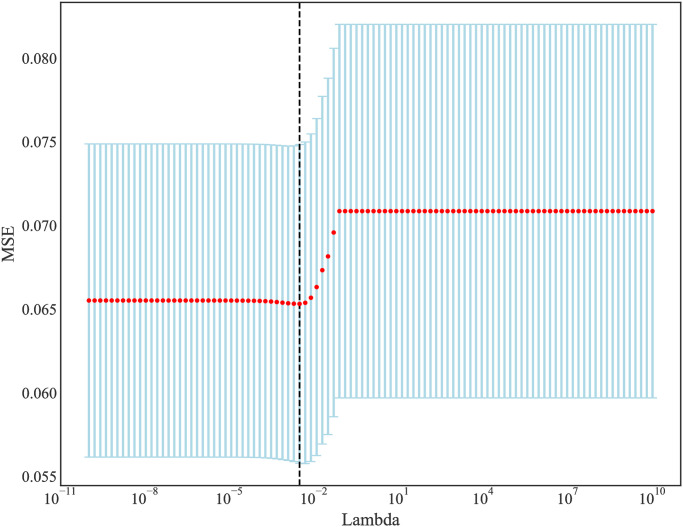
In total, 5757 CAD patients receiving coronary revascularization admitted to ICU in Medical Information Mart for Intensive Care IV (MIMIC-IV) were included in this cohort study. All the data were randomly split into the training set (n = 4029) and testing set (n = 1728) at 7:3. Pearson correlation analysis and least absolute shrinkage and selection operator (LASSO) regression model were applied for feature screening. Variables with Pearson correlation coefficient<9 were included, and the regression coefficients were set to 0. Features more closely related to the outcome were selected from the 10-fold cross-validation, and features with non-0 Coefficent were retained and included in the final model. The predictive values of the models were evaluated by sensitivity, specificity, area under the curve (AUC), accuracy, and 95% confidence interval (CI).

RESULTS

The Catboost model presented the best predictive performance with the AUC of 0.831 (95%CI: 0.811-0.851) in the training set, and 0.760 (95%CI: 0.722-0.798) in the testing set. The AUC of the logistic regression model was 0.789 (95%CI: 0.764-0.814) in the training set and 0.731 (95%CI: 0.686-0.776) in the testing set. The results of Delong test revealed that the predictive value of the Catboost model was significantly higher than the logistic regression model (P<0.05). Charlson Comorbidity Index (CCI) was the most important variable associated with the risk of stroke in CAD patients receiving coronary revascularization.

CONCLUSION

The Catboost model was the optimal model for predicting the risk of stroke in CAD patients receiving coronary revascularization, which might provide a tool to quickly identify CAD patients who were at high risk of postoperative stroke.

摘要

背景

基于机器学习方法,构建冠状动脉疾病(CAD)患者接受冠状动脉血运重建术后发生中风风险的几种预测模型。

方法

本队列研究纳入了 5757 例在医疗信息重症监护室 IV(MIMIC-IV)接受冠状动脉血运重建术的 CAD 患者。所有数据在 7:3 时随机分为训练集(n=4029)和测试集(n=1728)。采用 Pearson 相关分析和最小绝对值收缩选择算子(LASSO)回归模型进行特征筛选。纳入 Pearson 相关系数<9 的变量,将回归系数设置为 0。从 10 折交叉验证中选择与结局更相关的特征,保留非 0 系数的特征并纳入最终模型。通过敏感性、特异性、曲线下面积(AUC)、准确性和 95%置信区间(CI)评估模型的预测值。

结果

Catboost 模型在训练集的 AUC 为 0.831(95%CI:0.811-0.851),在测试集的 AUC 为 0.760(95%CI:0.722-0.798),预测性能最佳。逻辑回归模型在训练集的 AUC 为 0.789(95%CI:0.764-0.814),在测试集的 AUC 为 0.731(95%CI:0.686-0.776)。Delong 检验结果表明,Catboost 模型的预测价值明显高于逻辑回归模型(P<0.05)。Charlson 合并症指数(CCI)是与接受冠状动脉血运重建术的 CAD 患者中风风险最相关的重要变量。

结论

Catboost 模型是预测 CAD 患者接受冠状动脉血运重建术后中风风险的最优模型,可能为快速识别术后发生中风风险较高的 CAD 患者提供一种工具。

https://cdn.ncbi.nlm.nih.gov/pmc/blobs/26e9/10852291/db6359802739/pone.0296402.g009.jpg
https://cdn.ncbi.nlm.nih.gov/pmc/blobs/26e9/10852291/0e0395d58317/pone.0296402.g001.jpg
https://cdn.ncbi.nlm.nih.gov/pmc/blobs/26e9/10852291/adaefeb64948/pone.0296402.g002.jpg
https://cdn.ncbi.nlm.nih.gov/pmc/blobs/26e9/10852291/fd8e476b1212/pone.0296402.g003.jpg
https://cdn.ncbi.nlm.nih.gov/pmc/blobs/26e9/10852291/eea38a48d771/pone.0296402.g004.jpg
https://cdn.ncbi.nlm.nih.gov/pmc/blobs/26e9/10852291/a36e461bb548/pone.0296402.g005.jpg
https://cdn.ncbi.nlm.nih.gov/pmc/blobs/26e9/10852291/4a8fb7120d48/pone.0296402.g006.jpg
https://cdn.ncbi.nlm.nih.gov/pmc/blobs/26e9/10852291/42cecf95c497/pone.0296402.g007.jpg
https://cdn.ncbi.nlm.nih.gov/pmc/blobs/26e9/10852291/447f957d8219/pone.0296402.g008.jpg
https://cdn.ncbi.nlm.nih.gov/pmc/blobs/26e9/10852291/db6359802739/pone.0296402.g009.jpg
https://cdn.ncbi.nlm.nih.gov/pmc/blobs/26e9/10852291/0e0395d58317/pone.0296402.g001.jpg
https://cdn.ncbi.nlm.nih.gov/pmc/blobs/26e9/10852291/adaefeb64948/pone.0296402.g002.jpg
https://cdn.ncbi.nlm.nih.gov/pmc/blobs/26e9/10852291/fd8e476b1212/pone.0296402.g003.jpg
https://cdn.ncbi.nlm.nih.gov/pmc/blobs/26e9/10852291/eea38a48d771/pone.0296402.g004.jpg
https://cdn.ncbi.nlm.nih.gov/pmc/blobs/26e9/10852291/a36e461bb548/pone.0296402.g005.jpg
https://cdn.ncbi.nlm.nih.gov/pmc/blobs/26e9/10852291/4a8fb7120d48/pone.0296402.g006.jpg
https://cdn.ncbi.nlm.nih.gov/pmc/blobs/26e9/10852291/42cecf95c497/pone.0296402.g007.jpg
https://cdn.ncbi.nlm.nih.gov/pmc/blobs/26e9/10852291/447f957d8219/pone.0296402.g008.jpg
https://cdn.ncbi.nlm.nih.gov/pmc/blobs/26e9/10852291/db6359802739/pone.0296402.g009.jpg

相似文献

1
Machine learning-based models for prediction of the risk of stroke in coronary artery disease patients receiving coronary revascularization.基于机器学习的模型预测接受冠状动脉血运重建的冠心病患者中风风险。
PLoS One. 2024 Feb 8;19(2):e0296402. doi: 10.1371/journal.pone.0296402. eCollection 2024.
2
Machine learning insight into the role of imaging and clinical variables for the prediction of obstructive coronary artery disease and revascularization: An exploratory analysis of the CONSERVE study.机器学习洞察影像学和临床变量在预测阻塞性冠状动脉疾病和血运重建中的作用:CONSERVE 研究的探索性分析。
PLoS One. 2020 Jun 25;15(6):e0233791. doi: 10.1371/journal.pone.0233791. eCollection 2020.
3
The prediction of in-hospital mortality in chronic kidney disease patients with coronary artery disease using machine learning models.应用机器学习模型预测伴有冠状动脉疾病的慢性肾脏病患者的院内死亡率。
Eur J Med Res. 2023 Jan 18;28(1):33. doi: 10.1186/s40001-023-00995-x.
4
Prediction of Hidden Coronary Artery Disease Using Machine Learning in Patients With Acute Ischemic Stroke.基于机器学习预测急性缺血性脑卒中患者隐匿性冠状动脉疾病。
Neurology. 2022 Jul 5;99(1):e55-e65. doi: 10.1212/WNL.0000000000200576. Epub 2022 Apr 25.
5
Interpretable machine learning for 28-day all-cause in-hospital mortality prediction in critically ill patients with heart failure combined with hypertension: A retrospective cohort study based on medical information mart for intensive care database-IV and eICU databases.用于预测心力衰竭合并高血压重症患者28天全因院内死亡率的可解释机器学习:一项基于重症监护医学信息集市数据库-IV和电子重症监护病房数据库的回顾性队列研究
Front Cardiovasc Med. 2022 Oct 12;9:994359. doi: 10.3389/fcvm.2022.994359. eCollection 2022.
6
Prediction model of in-hospital mortality in intensive care unit patients with cardiac arrest: a retrospective analysis of MIMIC -IV database based on machine learning.基于机器学习的 MIMIC-IV 数据库中 ICU 心搏骤停患者院内死亡率预测模型:回顾性分析。
BMC Anesthesiol. 2023 May 25;23(1):178. doi: 10.1186/s12871-023-02138-5.
7
Can Predictive Modeling Tools Identify Patients at High Risk of Prolonged Opioid Use After ACL Reconstruction?预测模型工具能否识别 ACL 重建术后阿片类药物使用时间延长的高风险患者?
Clin Orthop Relat Res. 2020 Jul;478(7):0-1618. doi: 10.1097/CORR.0000000000001251.
8
Construction and validation of machine learning models for sepsis prediction in patients with acute pancreatitis.构建并验证用于预测急性胰腺炎患者脓毒症的机器学习模型。
BMC Surg. 2023 Sep 1;23(1):267. doi: 10.1186/s12893-023-02151-y.
9
Interpretable machine learning for predicting 28-day all-cause in-hospital mortality for hypertensive ischemic or hemorrhagic stroke patients in the ICU: a multi-center retrospective cohort study with internal and external cross-validation.用于预测重症监护病房中高血压性缺血性或出血性中风患者28天全因院内死亡率的可解释机器学习:一项具有内部和外部交叉验证的多中心回顾性队列研究
Front Neurol. 2023 Aug 8;14:1185447. doi: 10.3389/fneur.2023.1185447. eCollection 2023.
10
Machine learning of clinical variables and coronary artery calcium scoring for the prediction of obstructive coronary artery disease on coronary computed tomography angiography: analysis from the CONFIRM registry.基于临床变量和冠状动脉钙化评分的机器学习用于预测冠状动脉计算机断层扫描血管造影中的阻塞性冠状动脉疾病:来自CONFIRM注册研究的分析
Eur Heart J. 2020 Jan 14;41(3):359-367. doi: 10.1093/eurheartj/ehz565.

引用本文的文献

1
Optimized feature selection and advanced machine learning for stroke risk prediction in revascularized coronary artery disease patients.优化特征选择与先进机器学习用于预测冠状动脉疾病血运重建患者的卒中风险
BMC Med Inform Decis Mak. 2025 Jul 24;25(1):276. doi: 10.1186/s12911-025-03116-2.
2
Application of Artificial Intelligence in Acute Ischemic Stroke: A Scoping Review.人工智能在急性缺血性卒中中的应用:一项范围综述
Neurointervention. 2024 Mar;20(1):4-14. doi: 10.5469/neuroint.2025.00052. Epub 2025 Feb 18.

本文引用的文献

1
Machine learning-based markers for CAD.基于机器学习的冠心病标志物
Lancet. 2023 Jul 15;402(10397):183. doi: 10.1016/S0140-6736(23)01062-0.
2
Use of machine learning to identify risk factors for coronary artery disease.利用机器学习识别冠心病的危险因素。
PLoS One. 2023 Apr 14;18(4):e0284103. doi: 10.1371/journal.pone.0284103. eCollection 2023.
3
Machine Learning Diffuse Optical Tomography Using Extreme Gradient Boosting and Genetic Programming.使用极端梯度提升和遗传编程的机器学习漫射光学层析成像
Bioengineering (Basel). 2023 Mar 21;10(3):382. doi: 10.3390/bioengineering10030382.
4
Mortality of patients with ST-segment-elevation myocardial infarction without standard modifiable risk factors among patients without known coronary artery disease: Age-stratified and sex-related analysis from nationwide readmissions database 2010-2014.2010 - 2014年全国再入院数据库中无已知冠状动脉疾病患者中无标准可改变风险因素的ST段抬高型心肌梗死患者的死亡率:年龄分层及性别相关分析
Am J Prev Cardiol. 2023 Feb 24;14:100474. doi: 10.1016/j.ajpc.2023.100474. eCollection 2023 Jun.
5
A Coronary CT Angiography Radiomics Model to Identify Vulnerable Plaque and Predict Cardiovascular Events.一种用于识别易损斑块并预测心血管事件的冠状动脉CT血管造影放射组学模型。
Radiology. 2023 Apr;307(2):e221693. doi: 10.1148/radiol.221693. Epub 2023 Feb 14.
6
Association between lactate-to-albumin ratio and 28-days all-cause mortality in patients with acute pancreatitis: A retrospective analysis of the MIMIC-IV database.乳酸/白蛋白比值与急性胰腺炎患者 28 天全因死亡率的关系:对 MIMIC-IV 数据库的回顾性分析。
Front Immunol. 2022 Dec 14;13:1076121. doi: 10.3389/fimmu.2022.1076121. eCollection 2022.
7
Application of machine learning techniques for predicting survival in ovarian cancer.机器学习技术在卵巢癌生存预测中的应用。
BMC Med Inform Decis Mak. 2022 Dec 30;22(1):345. doi: 10.1186/s12911-022-02087-y.
8
Machine Learning Models for Data-Driven Prediction of Diabetes by Lifestyle Type.基于生活方式类型的数据驱动糖尿病预测的机器学习模型。
Int J Environ Res Public Health. 2022 Nov 15;19(22):15027. doi: 10.3390/ijerph192215027.
9
Use of random forest machine learning algorithm to predict short term outcomes following posterior cervical decompression with instrumented fusion.应用随机森林机器学习算法预测后路颈椎减压融合术后的短期转归。
J Clin Neurosci. 2023 Jan;107:167-171. doi: 10.1016/j.jocn.2022.10.029. Epub 2022 Nov 12.
10
Prevalence of coronary artery disease and its risk factors in Majmaah City, Kingdom of Saudi Arabia.沙特阿拉伯王国马吉马市冠状动脉疾病及其危险因素的患病率
Front Cardiovasc Med. 2022 Sep 8;9:943611. doi: 10.3389/fcvm.2022.943611. eCollection 2022.