Lee Hyerim, Choi Eung Ho, Shin Jung U, Kim Tae-Gyun, Oh Jooyoung, Shin Bokyoung, Sim Jung Yeon, Shin Jaeyong, Kim Meelim
Department of Psychology, College of Liberal Arts, Yonsei University, Seoul, Republic of Korea.
Department of Dermatology, Yonsei University Wonju College of Medicine, Wonju, Republic of Korea.
JMIR Form Res. 2024 Feb 9;8:e51225. doi: 10.2196/51225.
User engagement is crucial for digital therapeutics (DTx) effectiveness; due to variations in the conceptualization of engagement and intervention design, assessment and retention of engagement remain challenging.
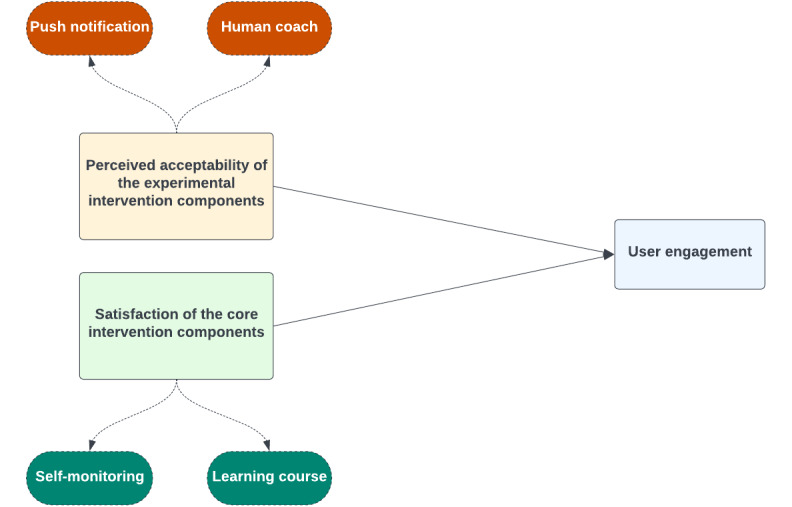
We investigated the influence of the perceived acceptability of experimental intervention components and satisfaction with core intervention components in DTx on user engagement, while also identifying potential barriers and facilitators to user engagement.
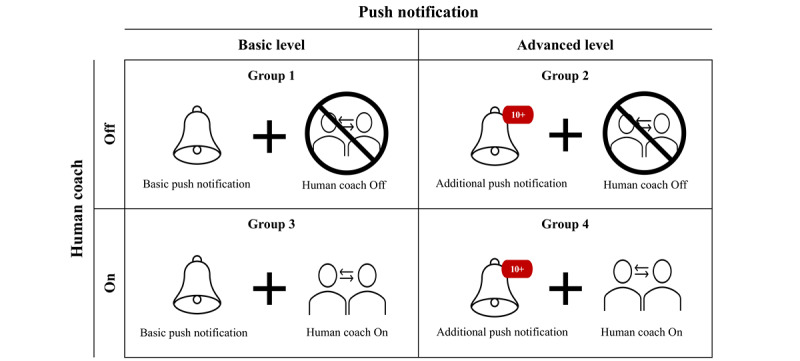
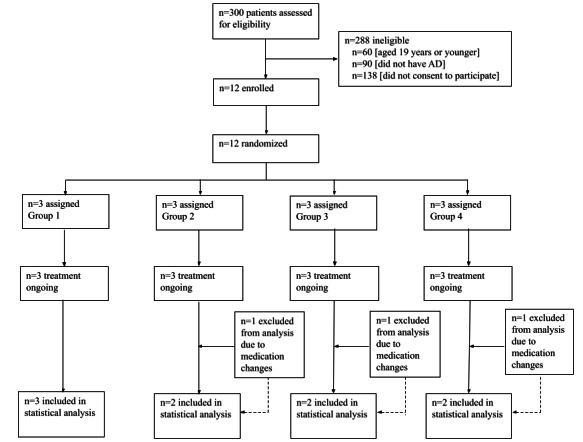
We conducted a mixed methods study with a 2 × 2 factorial design, involving 12 outpatients with atopic dermatitis. Participants were randomized into 4 experimental groups based on push notification ("basic" or "advanced") and human coach ("on" or "off") experimental intervention components. All participants engaged in self-monitoring and learning courses as core intervention components within an app-based intervention over 8 weeks. Data were collected through in-app behavioral data, physician- and self-reported questionnaires, and semistructured interviews assessed at baseline, 4 weeks, and 8 weeks. Descriptive statistics and thematic analysis were used to evaluate user engagement, perceived acceptability of experimental intervention components (ie, push notification and human coach), satisfaction with core intervention components (ie, self-monitoring and learning courses), and intervention effectiveness through clinical outcomes.
The primary outcome indicated that group 4, provided with "advanced-level push notifications" and a "human coach," showed higher completion rates for self-monitoring forms and learning courses compared to the predetermined threshold of clinical significance. Qualitative data analysis revealed three key themes: (1) perceived acceptability of the experimental intervention components, (2) satisfaction with the core intervention components, and (3) suggestions for improvement in the overall intervention program. Regarding clinical outcomes, the Perceived Stress Scale and Dermatology Life Quality Index scores presented the highest improvement in group 4.
These findings will help refine the intervention and inform the design of a subsequent randomized trial to test its effectiveness. Furthermore, this design may serve as a model for broadly examining and optimizing overall engagement in DTx and for future investigation into the complex relationship between engagement and clinical outcomes.
Clinical Research Information Service KCT0007675; http://tinyurl.com/2m8rjrmv.
用户参与度对于数字疗法(DTx)的有效性至关重要;由于参与度概念以及干预设计、评估和维持方面存在差异,参与度的评估和维持仍然具有挑战性。
我们研究了数字疗法中实验性干预组件的感知可接受性和对核心干预组件的满意度对用户参与度的影响,同时还确定了用户参与度的潜在障碍和促进因素。
我们采用了2×2析因设计的混合方法研究,纳入了12名特应性皮炎门诊患者。参与者根据推送通知(“基础”或“高级”)和人工指导(“开启”或“关闭”)实验性干预组件被随机分为4个实验组。所有参与者在为期8周的基于应用程序的干预中,将自我监测和学习课程作为核心干预组件。通过应用程序内行为数据、医生报告和自我报告问卷以及在基线、4周和8周时进行的半结构化访谈收集数据。使用描述性统计和主题分析来评估用户参与度、实验性干预组件(即推送通知和人工指导)的感知可接受性、对核心干预组件(即自我监测和学习课程)的满意度以及通过临床结果评估的干预效果。
主要结果表明,第4组,即接受“高级推送通知”和“人工指导”的组,与预先设定的临床意义阈值相比,自我监测表格和学习课程的完成率更高。定性数据分析揭示了三个关键主题:(1)实验性干预组件的感知可接受性,(2)对核心干预组件的满意度,以及(3)对整体干预方案改进的建议。关于临床结果,第4组的感知压力量表和皮肤病生活质量指数得分改善最为显著。
这些发现将有助于完善干预措施,并为后续随机试验的设计提供信息,以测试其有效性。此外,这种设计可作为一个模型,用于广泛检查和优化数字疗法中的整体参与度,以及未来对参与度与临床结果之间复杂关系的研究。
韩国临床研究信息服务中心KCT0007675;http://tinyurl.com/2m8rjrmv 。