Iqbal Talha, Khalid Aaleen, Ullah Ihsan
Insight SFI Research Centre for Data Analytics, University of Galway, Galway, H91 TK33 Ireland.
School of Computer Science, University of Galway, Galway, H91 TK33 Ireland.
J Real Time Image Process. 2024;21(2):31. doi: 10.1007/s11554-023-01411-7. Epub 2024 Feb 10.
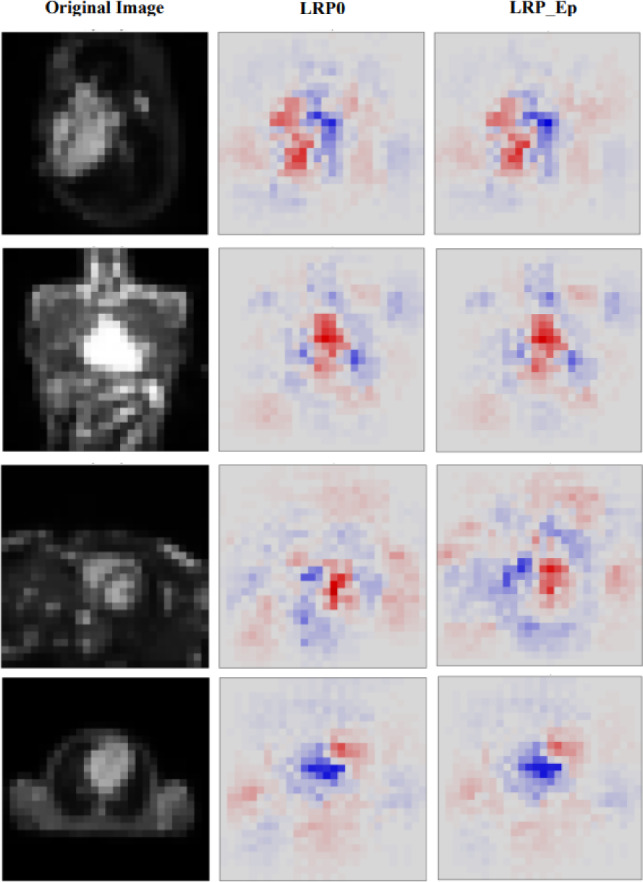
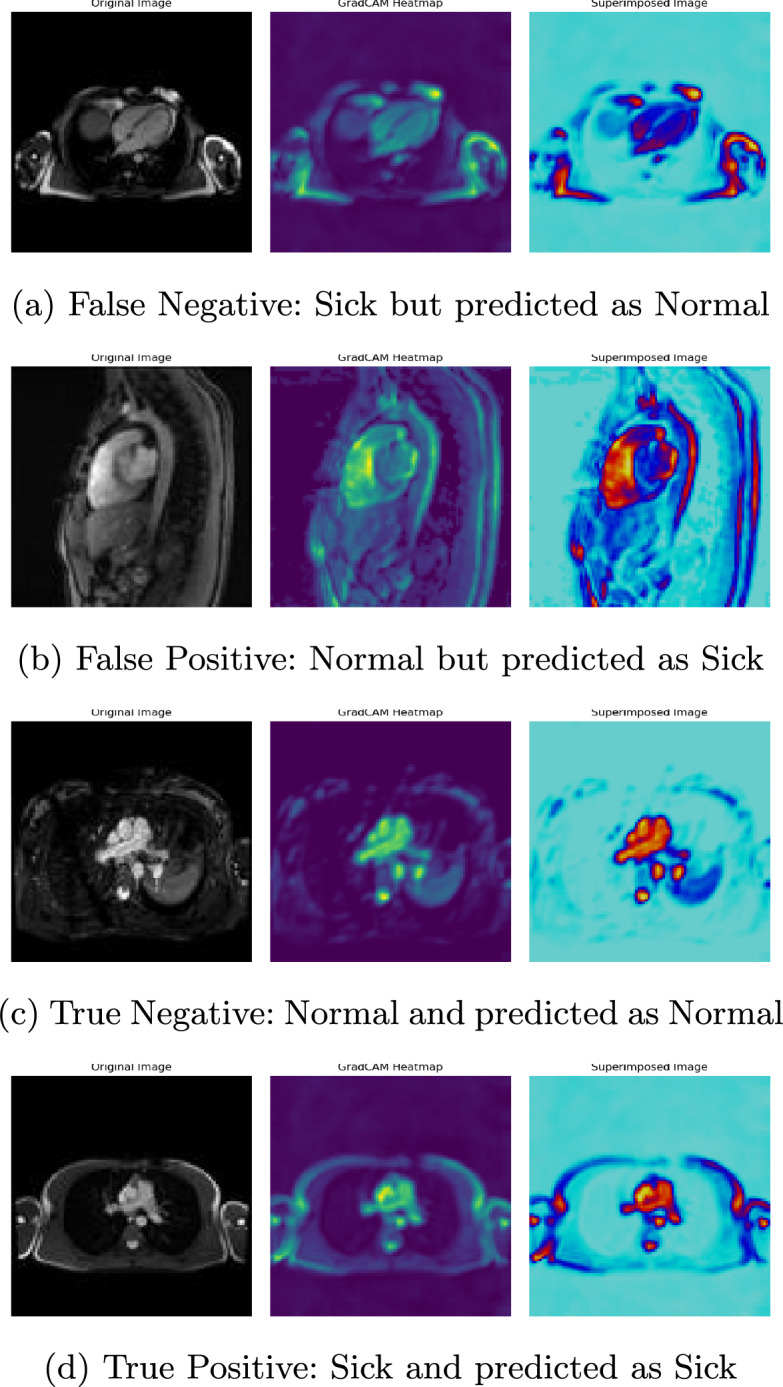
In certain healthcare settings, such as emergency or critical care units, where quick and accurate real-time analysis and decision-making are required, the healthcare system can leverage the power of artificial intelligence (AI) models to support decision-making and prevent complications. This paper investigates the optimization of healthcare AI models based on time complexity, hyper-parameter tuning, and XAI for a classification task. The paper highlights the significance of a lightweight convolutional neural network (CNN) for analysing and classifying Magnetic Resonance Imaging (MRI) in real-time and is compared with CNN-RandomForest (CNN-RF). The role of hyper-parameter is also examined in finding optimal configurations that enhance the model's performance while efficiently utilizing the limited computational resources. Finally, the benefits of incorporating the XAI technique (e.g. GradCAM and Layer-wise Relevance Propagation) in providing transparency and interpretable explanations of AI model predictions, fostering trust, and error/bias detection are explored. Our inference time on a MacBook laptop for 323 test images of size 100x100 is only 2.6 sec, which is merely 8 milliseconds per image while providing comparable classification accuracy with the ensemble model of CNN-RF classifiers. Using the proposed model, clinicians/cardiologists can achieve accurate and reliable results while ensuring patients' safety and answering questions imposed by the General Data Protection Regulation (GDPR). The proposed investigative study will advance the understanding and acceptance of AI systems in connected healthcare settings.
在某些医疗环境中,如急诊或重症监护病房,需要快速准确的实时分析和决策,医疗系统可以利用人工智能(AI)模型的力量来支持决策并预防并发症。本文针对一个分类任务,研究了基于时间复杂度、超参数调整和可解释人工智能(XAI)的医疗AI模型优化。本文强调了轻量级卷积神经网络(CNN)在实时分析和分类磁共振成像(MRI)方面的重要性,并将其与CNN-随机森林(CNN-RF)进行了比较。还研究了超参数在寻找优化配置中的作用,这些配置可在有效利用有限计算资源的同时提高模型性能。最后,探讨了纳入XAI技术(如GradCAM和逐层相关传播)在提供AI模型预测的透明度和可解释性解释、增强信任以及错误/偏差检测方面的好处。我们在MacBook笔记本电脑上对323张100x100大小的测试图像的推理时间仅为2.6秒,即每张图像仅8毫秒,同时与CNN-RF分类器的集成模型提供了相当的分类准确率。使用所提出的模型,临床医生/心脏病专家可以在确保患者安全并回答《通用数据保护条例》(GDPR)提出的问题的同时,获得准确可靠的结果。所提出的调查研究将促进在互联医疗环境中对AI系统的理解和接受。