Orbivirus Research, The Pirbright Institute, Woking, United Kingdom.
Department of Biology, University of York, York, United Kingdom.
Front Immunol. 2024 Jan 31;15:1328820. doi: 10.3389/fimmu.2024.1328820. eCollection 2024.
Bluetongue virus (BTV) is an arthropod-borne that is almost solely transmitted by biting midges and causes a globally important haemorrhagic disease, bluetongue (BT), in susceptible ruminants. Infection with BTV is characterised by immunosuppression and substantial lymphopenia at peak viraemia in the host.
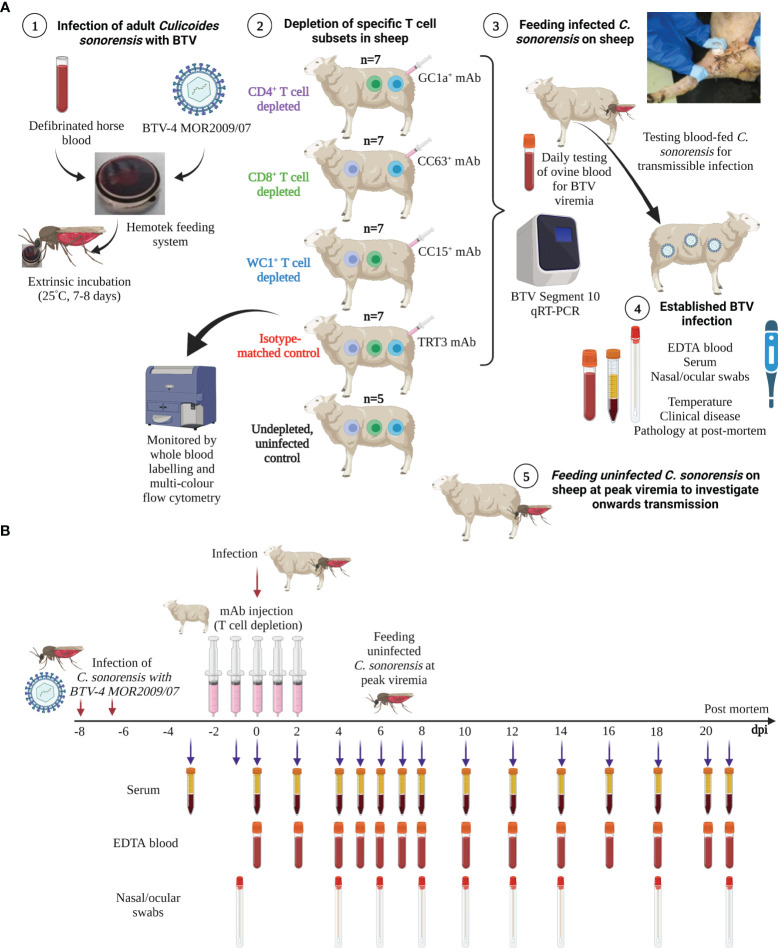
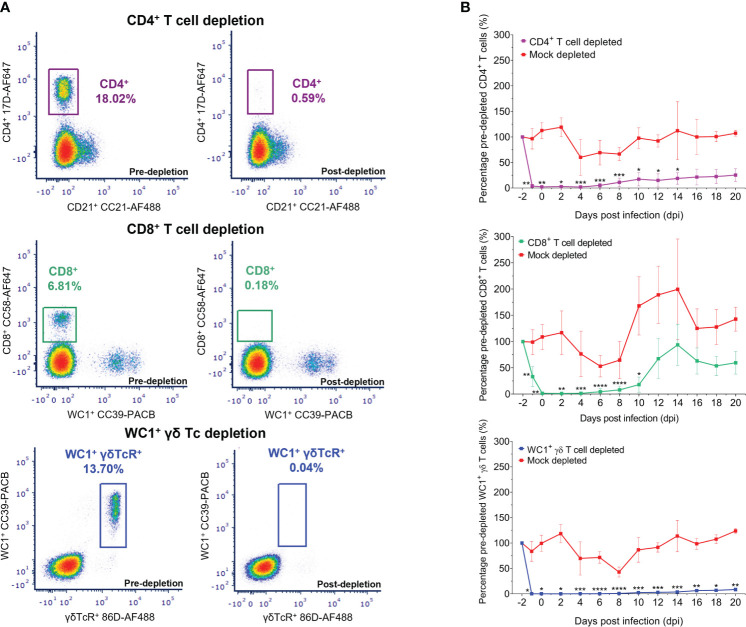
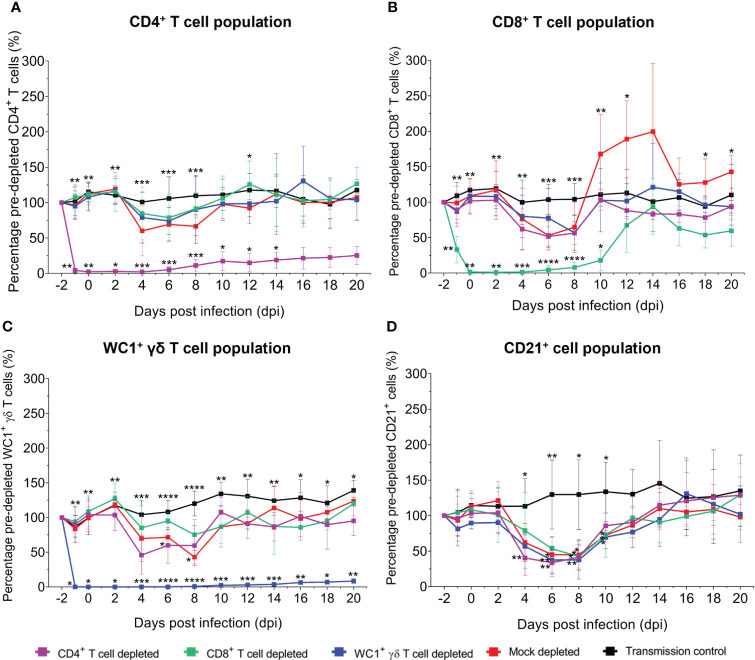
In this study, the role of cell-mediated immunity and specific T-cell subsets in BTV pathogenesis, clinical outcome, viral dynamics, immune protection, and onwards transmission to a susceptible vector is defined in unprecedented detail for the first time, using an arboviral infection model system that closely mirrors natural infection and transmission of BTV. Individual circulating CD4, CD8, or WC1 γδ T-cell subsets in sheep were depleted through the administration of specific monoclonal antibodies.
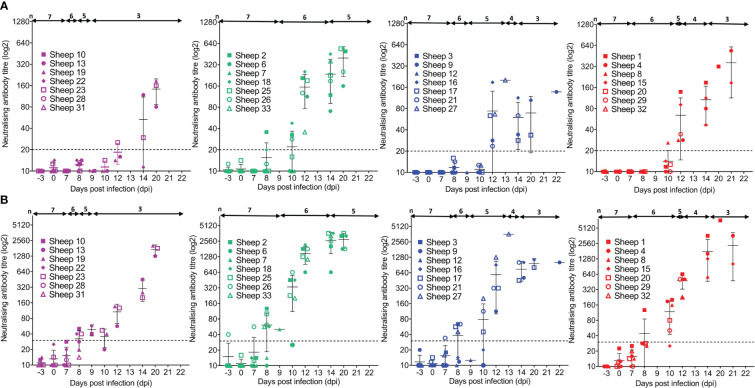
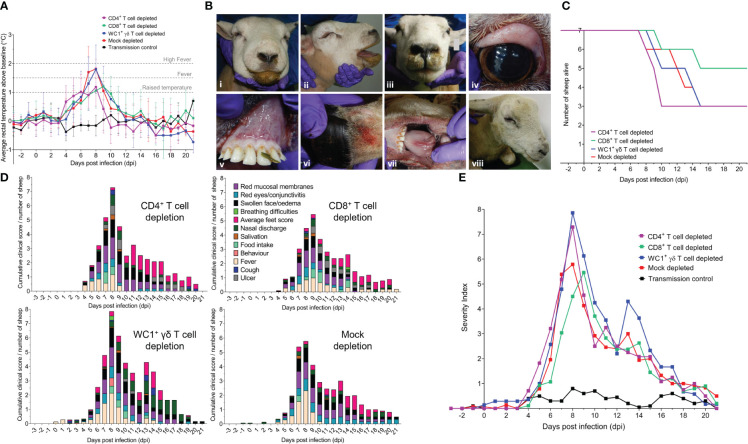
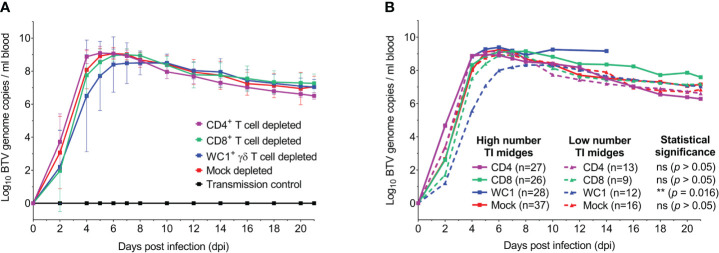
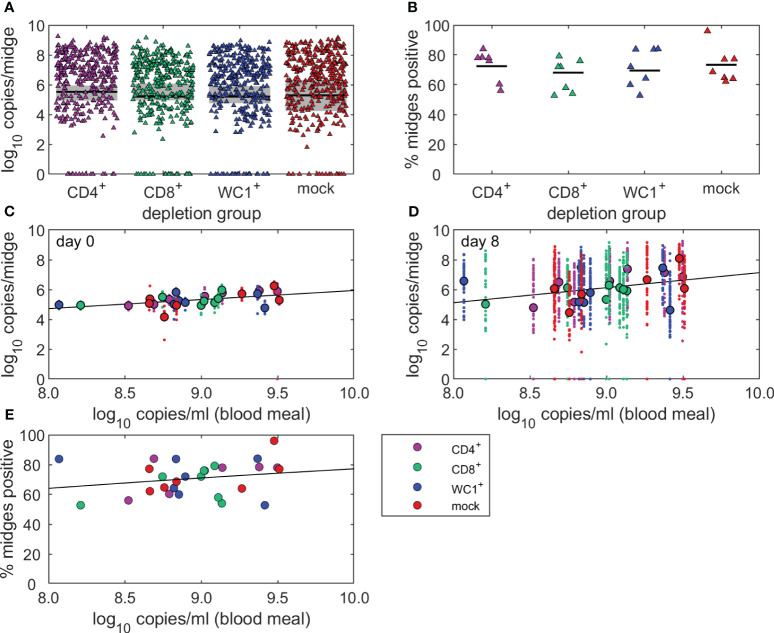
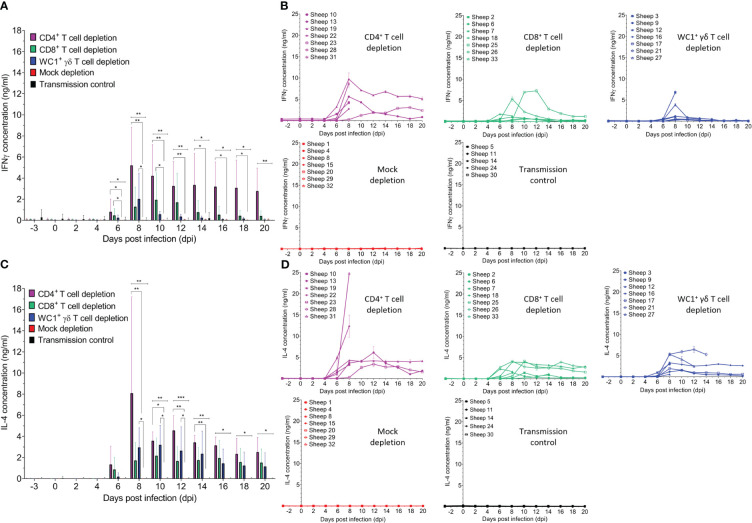
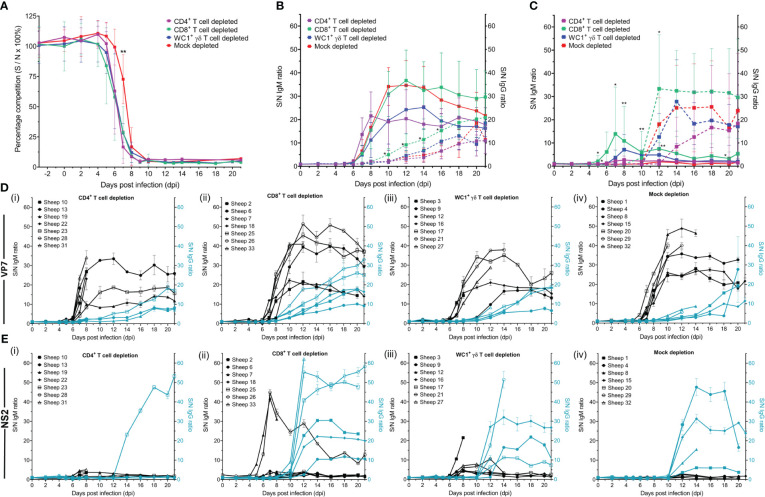
The absence of cytotoxic CD8 T cells was consistently associated with less severe clinical signs of BT, whilst the absence of CD4 and WC1 γδ T cells both resulted in an increased clinical severity. The absence of CD4 T cells also impaired both a timely protective neutralising antibody response and the production of IgG antibodies targeting BTV non-structural protein, NS2, highlighting that the CD4 T-cell subset is important for a timely protective immune response. T cells did not influence viral replication characteristics, including onset/dynamics of viraemia, shedding, or onwards transmission of BTV to . We also highlight differences in T-cell dependency for the generation of immunoglobulin subclasses targeting BTV NS2 and the structural protein, VP7.
This study identifies a diverse repertoire of T-cell functions during BTV infection in sheep, particularly in inducing specific anti-viral immune responses and disease manifestation, and will support more effective vaccination strategies.
蓝舌病病毒(BTV)是一种虫媒病毒,几乎完全由吸血蠓传播,导致易感反刍动物发生一种具有全球重要意义的出血性疾病——蓝舌病(BT)。BTV 感染的特征是宿主在病毒血症高峰期发生免疫抑制和大量淋巴细胞减少。
本研究首次前所未有地详细定义了细胞介导免疫和特定 T 细胞亚群在 BTV 发病机制、临床结果、病毒动力学、免疫保护以及向易感媒介传播中的作用,使用的是一种虫媒病毒感染模型系统,该系统非常接近 BTV 的自然感染和传播。通过施用特异性单克隆抗体,绵羊中循环的 CD4、CD8 或 WC1 γδ T 细胞亚群的个体被耗尽。
细胞毒性 CD8 T 细胞的缺失始终与 BT 的临床症状较轻相关,而 CD4 和 WC1 γδ T 细胞的缺失均导致临床严重程度增加。CD4 T 细胞的缺失也损害了及时产生保护性中和抗体反应和针对 BTV 非结构蛋白 NS2 的 IgG 抗体的产生,突出表明 CD4 T 细胞亚群对及时产生保护性免疫反应很重要。T 细胞对病毒复制特征没有影响,包括病毒血症的发生/动态、脱落或 BTV 向媒介的继续传播。我们还强调了针对 BTV NS2 和结构蛋白 VP7 产生免疫球蛋白亚类的 T 细胞依赖性的差异。
本研究在绵羊的 BTV 感染中确定了 T 细胞功能的多样化谱,特别是在诱导针对病毒的特异性免疫反应和疾病表现方面,这将支持更有效的疫苗接种策略。