Department of Cellular and Molecular Biology, National Institute of Research and Development for Biological Sciences, Bucharest, Romania.
Faculty of Chemical Engineering and Biotechnologies, University "Politehnica" of Bucharest, Bucharest, Romania.
PLoS One. 2024 Feb 15;19(2):e0297803. doi: 10.1371/journal.pone.0297803. eCollection 2024.
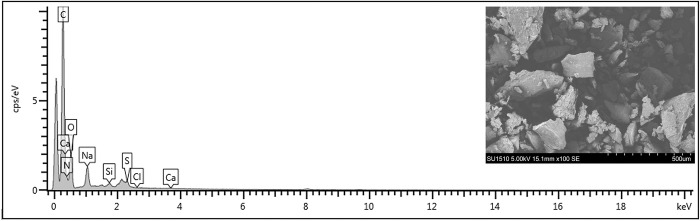
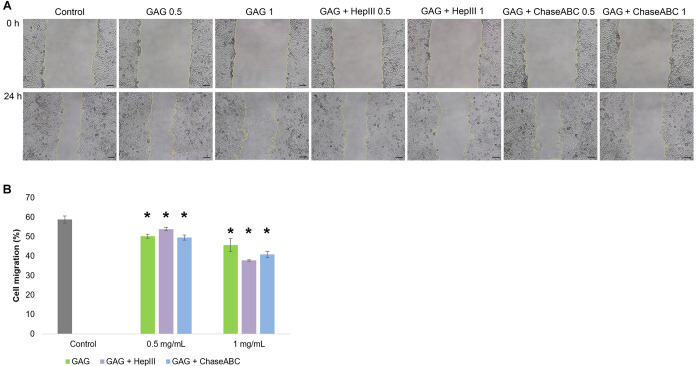
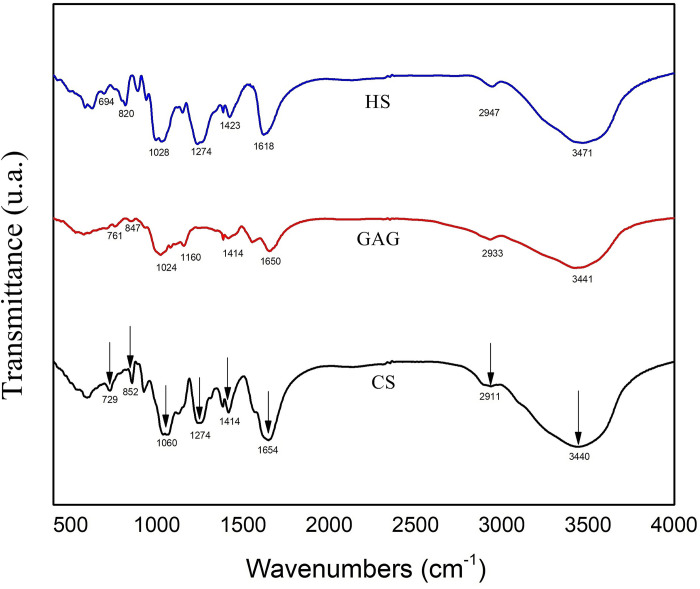
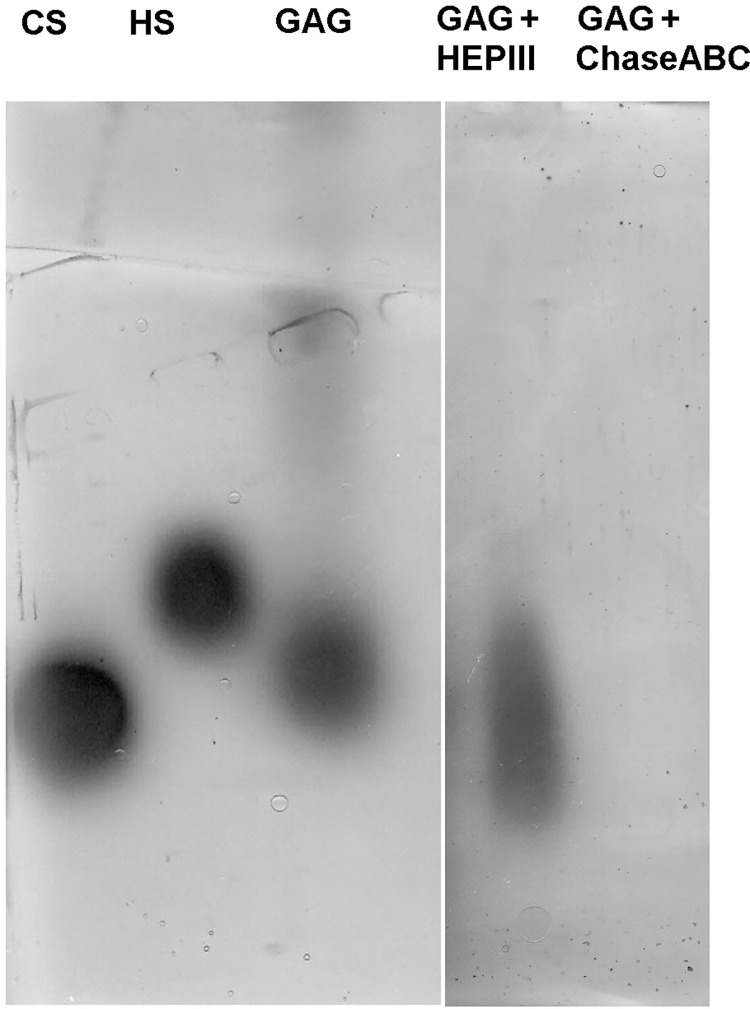
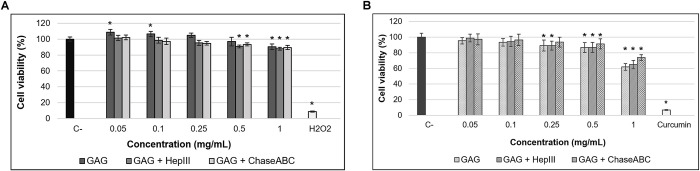
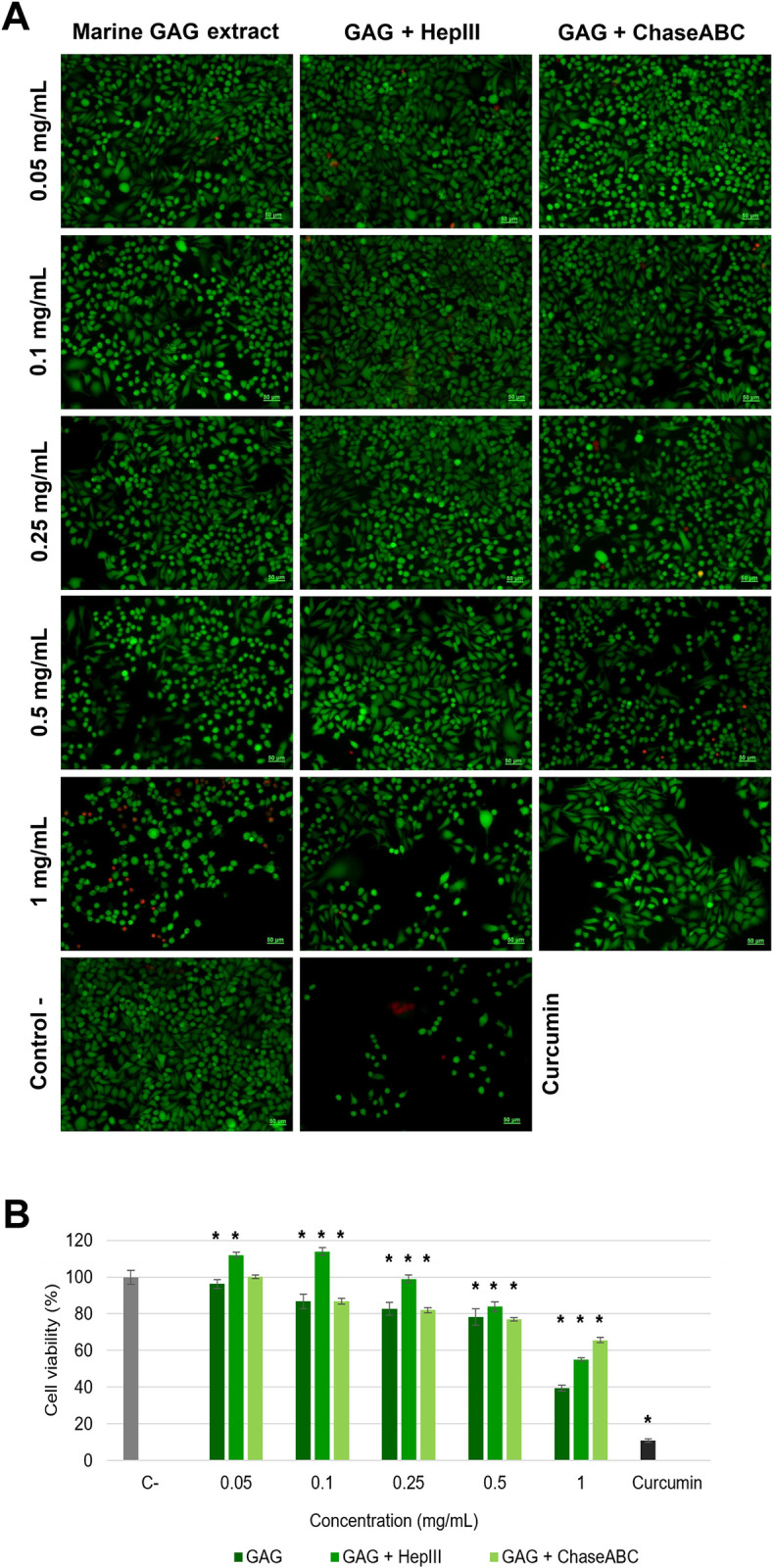
Marine glycosaminoglycans (GAG) isolated from different invertebrates, such as molluscs, starfish or jellyfish, have been described as unique molecules with important pharmacological applications. Scarce information is available on GAG extract from Rapana venosa marine snail. The aim of this study was to isolate a GAG extract from R. venosa marine snail and to investigate its physicochemical, antioxidant and antiproliferative properties for further biomedical use. The morphology, chemical and elemental composition of the extract were established as well as the sulfate content and N- to O-sulfation ratio. Fourier transform infrared (FTIR) spectra indicated that GAG extract presented similar structural characteristics to bovine heparan sulfate and chondroitin sulfate. The pattern of extract migration in agarose gel electrophoresis and specific digestion with chondroitinase ABC and heparinase III indicated the presence of a mixture of chondroitin sulfate-type GAG, as main component, and heparan sulfate-type GAG. Free radical scavenging and ferric ion reducing assays showed that GAG extract had high antioxidant activity, which slightly decreased after enzymatic treatment. In vitro MTT and Live/Dead assays showed that GAG extract had the ability to inhibit cell proliferation in human Hep-2 cell cultures, at cytocompatible concentrations in normal NCTC clone L929 fibroblasts. This capacity decreased after enzymatic digestion, in accordance to the antioxidant activity of the products. Tumoral cell migration was also inhibited by GAG extract and its digestion products. Overall, GAG extract from R. venosa marine snail exhibited antioxidant and antiproliferative activities, suggesting its potential use as novel bioactive compound for biomedical applications.
从不同的无脊椎动物中分离出的海洋糖胺聚糖(GAG),如软体动物、海星或水母,已被描述为具有重要药理应用的独特分子。关于来自 Rapana venosa 海洋蜗牛的 GAG 提取物的信息很少。本研究的目的是从 R. venosa 海洋蜗牛中分离出 GAG 提取物,并研究其理化性质、抗氧化和抗增殖特性,以进一步用于生物医学用途。确定了提取物的形态、化学和元素组成,以及硫酸根含量和 N 到 O 的硫酸化比值。傅里叶变换红外(FTIR)光谱表明,GAG 提取物具有与牛肝素硫酸盐和软骨素硫酸盐相似的结构特征。琼脂糖凝胶电泳中提取物的迁移模式以及用软骨素酶 ABC 和肝素酶 III 的特异性消化表明,存在以软骨素硫酸盐型 GAG 为主的混合物,和肝素硫酸盐型 GAG。自由基清除和铁离子还原测定表明,GAG 提取物具有高抗氧化活性,经酶处理后略有下降。体外 MTT 和 Live/Dead 测定表明,GAG 提取物能够抑制人 Hep-2 细胞培养物中的细胞增殖,在正常 NCTC 克隆 L929 成纤维细胞中的细胞相容性浓度下。与产物的抗氧化活性一致,酶消化后这种能力下降。GAG 提取物及其消化产物还抑制肿瘤细胞迁移。总的来说,来自 Rapana venosa 海洋蜗牛的 GAG 提取物表现出抗氧化和抗增殖活性,表明其具有作为新型生物活性化合物用于生物医学应用的潜力。