WHO Collaborating Centre for Arbovirus and Viral Hemorrhagic Fevers, Virology Department, Pasteur Institute, Dakar 12900, Senegal.
Epidemiology, Clinical Research & Data Science, Pasteur Institute, Dakar 12900, Senegal.
Viruses. 2024 Feb 19;16(2):315. doi: 10.3390/v16020315.
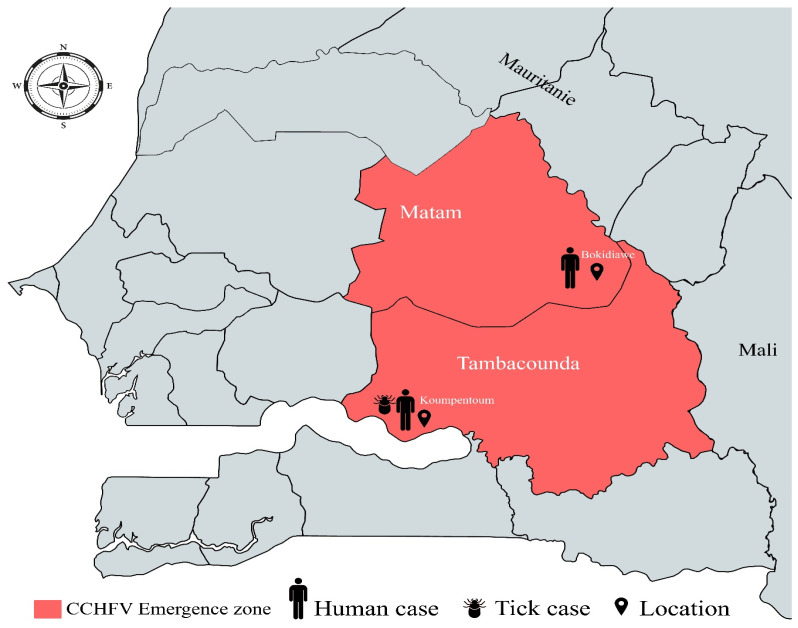
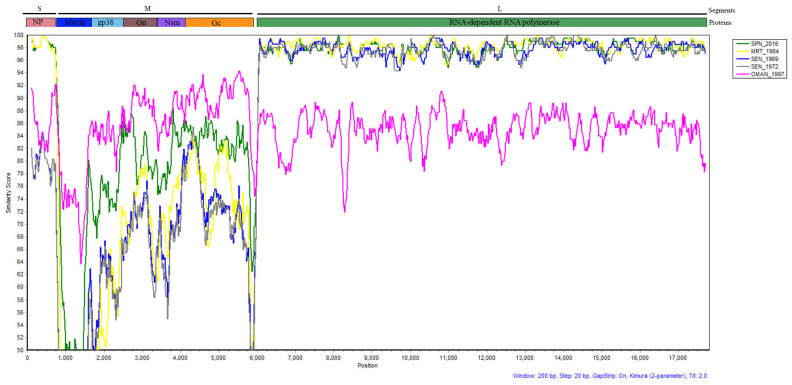
Crimean-Congo hemorrhagic fever (CCHF), the most widespread tick-borne viral human infection, poses a threat to global health. In this study, clinical samples collected through national surveillance systems were screened for acute CCHF virus (CCHFV) infection using RT-PCR and for exposure using ELISA. For any CCHF-positive sample, livestock and tick samples were also collected in the neighborhood of the confirmed case and tested using ELISA and RT-PCR, respectively. Genome sequencing and phylogenetic analyses were also performed on samples with positive RT-PCR results. In Eastern Senegal, two human cases and one tick positive for CCHF were identified and a seroprevalence in livestock ranging from 9.33% to 45.26% was detected. Phylogenetic analyses revealed that the human strain belonged to genotype I based on the available L segment. However, the tick strain showed a reassortant profile, with the L and M segments belonging to genotype I and the S segment belonging to genotype III. Our data also showed that our strains clustered with strains isolated in different countries, including Mauritania. Therefore, our findings confirmed the high genetic variability inside the CCHF genotypes and their introduction to Senegal from other countries. They also indicate an increasing CCHF threat in Senegal and emphasize the need to reinforce surveillance using a one-health approach.
克里米亚-刚果出血热(CCHF)是最广泛流行的蜱传病毒性人类感染,对全球健康构成威胁。在这项研究中,通过国家监测系统收集的临床样本,使用 RT-PCR 进行急性 CCHF 病毒(CCHFV)感染筛查,并使用 ELISA 进行暴露筛查。对于任何 CCHF 阳性样本,还在确诊病例附近采集了牲畜和蜱样本,并分别使用 ELISA 和 RT-PCR 进行测试。对具有阳性 RT-PCR 结果的样本进行了基因组测序和系统发育分析。在塞内加尔东部,发现了两例人类病例和一例 CCHF 阳性蜱,同时还检测到牲畜中的血清阳性率为 9.33%至 45.26%。系统发育分析显示,根据现有 L 片段,人类株属于基因型 I。然而,蜱株显示出一种重组特征,L 和 M 片段属于基因型 I,而 S 片段属于基因型 III。我们的数据还表明,我们的菌株与包括毛里塔尼亚在内的不同国家分离的菌株聚类。因此,我们的研究结果证实了 CCHF 基因型内部的高遗传变异性,以及它们从其他国家引入塞内加尔。它们还表明,CCHF 在塞内加尔的威胁日益增加,强调需要采用一种“同一健康”方法加强监测。