Burgess Diana J, Hagel Campbell Emily M, Branson Mariah, Calvert Collin, Evans Roni, Allen Kelli D, Bangerter Ann, Cross Lee J S, Driscoll Mary A, Hennessy Sierra, Ferguson John E, Friedman Jessica K, Matthias Marianne S, Meis Laura A, Polusny Melissa A, Taylor Stephanie L, Taylor Brent C
VA HSR&D Center for Care Delivery and Outcomes Research, Minneapolis VA Health Care System, Minneapolis, Minnesota, USA.
Department of Medicine, University of Minnesota Medical School, Minneapolis, Minnesota, USA.
Womens Health Rep (New Rochelle). 2024 Feb 12;5(1):82-92. doi: 10.1089/whr.2023.0086. eCollection 2024.
Although studies have documented higher rates of chronic pain among women Veterans compared to men Veterans, there remains a lack of comprehensive information about potential contributors to these disparities.
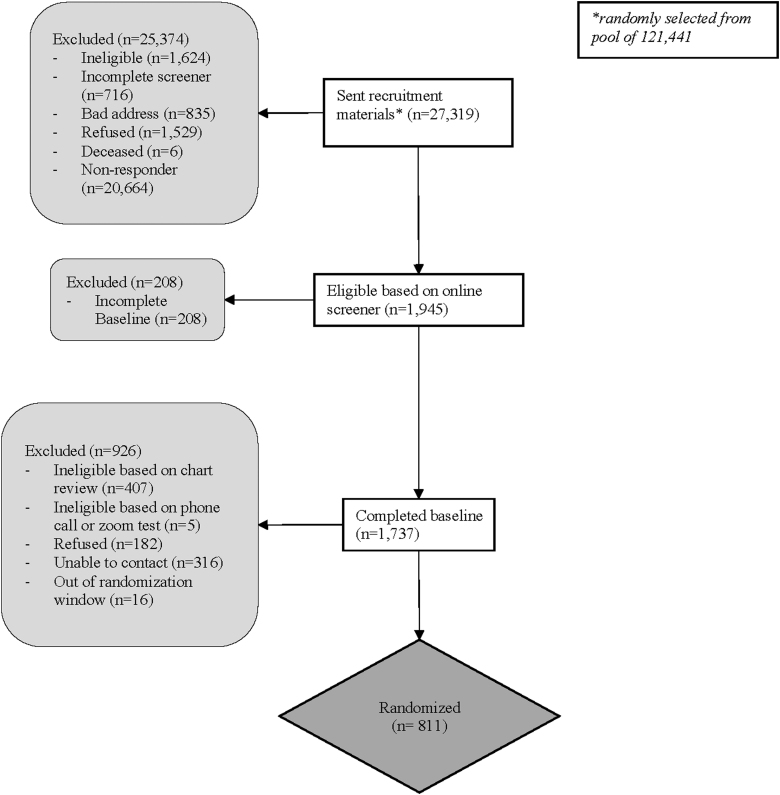
This study examined gender differences in chronic pain and its contributors among 419 men and 392 women Veterans, enrolled in a mindfulness trial for chronic pain. We conducted descriptive analyses summarizing distributions of baseline measures, obtained by survey and through the electronic health record. Comparisons between genders were conducted using chi-square tests for categorical variables and -tests for continuous measures.
Compared to men, women Veterans were more likely to have chronic overlapping pain conditions and had higher levels of pain interference and intensity. Women had higher prevalence of psychiatric and sleep disorder diagnoses, greater levels of depression, anxiety, post-traumatic stress disorder, fatigue, sleep disturbance, stress and pain catastrophizing, and lower levels of pain self-efficacy and participation in social roles and activities. However, women were less likely to smoke or have a substance abuse disorder and used more nonpharmacological pain treatment modalities.
Among Veterans seeking treatment for chronic pain, women differed from men in their type of pain, had greater pain intensity and interference, and had greater prevalence and higher levels of many known biopsychosocial contributors to pain. Results point to the need for pain treatment that addresses the comprehensive needs of women Veterans.
Clinical Trial Registration Number: NCT04526158. Patient enrollment began on December 4, 2020.
尽管研究表明,与男性退伍军人相比,女性退伍军人的慢性疼痛发生率更高,但对于这些差异的潜在影响因素仍缺乏全面信息。
本研究调查了419名男性退伍军人和392名女性退伍军人在慢性疼痛及其影响因素方面的性别差异,这些退伍军人参加了一项针对慢性疼痛的正念试验。我们进行了描述性分析,总结了通过调查和电子健康记录获得的基线测量分布情况。使用卡方检验对分类变量进行性别比较,使用t检验对连续测量进行性别比较。
与男性相比,女性退伍军人更有可能患有慢性重叠疼痛疾病,疼痛干扰和强度水平更高。女性在精神疾病和睡眠障碍诊断方面的患病率更高,抑郁、焦虑、创伤后应激障碍、疲劳、睡眠障碍、压力和疼痛灾难化程度更高,疼痛自我效能以及参与社会角色和活动的水平更低。然而,女性吸烟或患有物质滥用障碍的可能性较小,并且使用更多的非药物疼痛治疗方式。
在寻求慢性疼痛治疗的退伍军人中,女性在疼痛类型、疼痛强度和干扰方面与男性不同,并且在许多已知的疼痛生物心理社会影响因素方面患病率更高、水平更高。结果表明需要一种能够满足女性退伍军人综合需求的疼痛治疗方法。
临床试验注册号:NCT04526158。患者招募于2020年12月4日开始。