Emerg Infect Dis. 2024 Mar;30(3):510-518. doi: 10.3201/eid3003.230786.
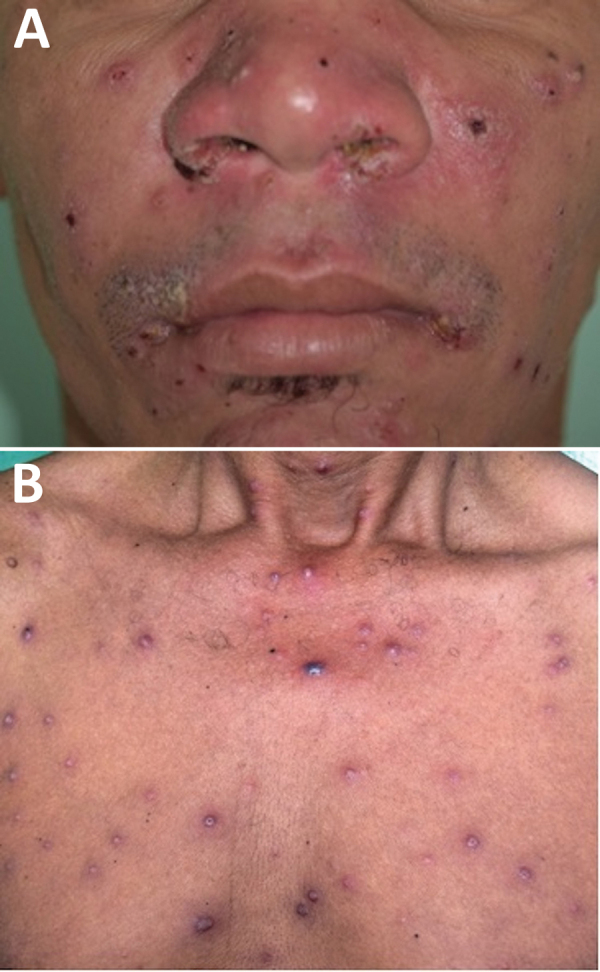
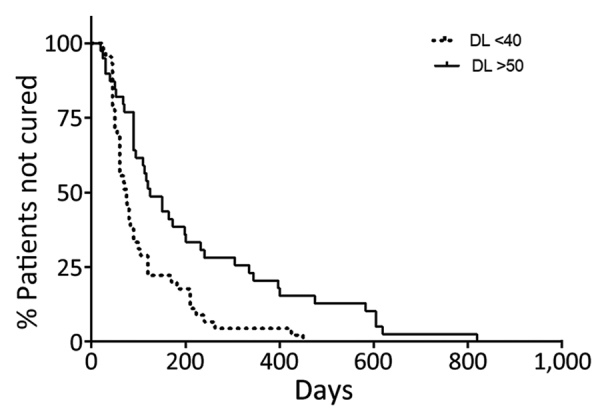
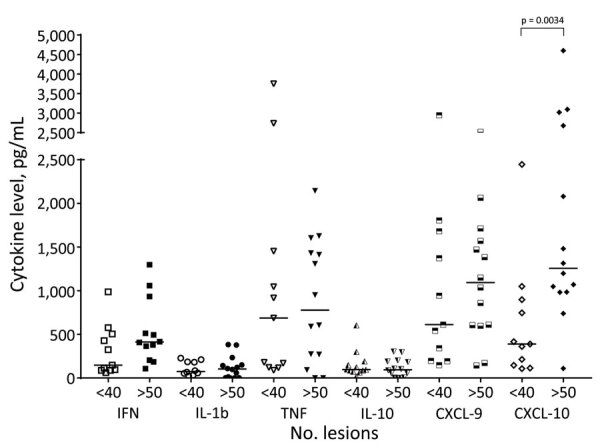
Disseminated leishmaniasis (DL) is an emergent severe disease manifesting with multiple lesions. To determine the relationship between immune response and clinical and therapeutic outcomes, we studied 101 DL and 101 cutaneous leishmaniasis (CL) cases and determined cytokines and chemokines in supernatants of mononuclear cells stimulated with leishmania antigen. Patients were treated with meglumine antimoniate (20 mg/kg) for 20 days (CL) or 30 days (DL); 19 DL patients were instead treated with amphotericin B, miltefosine, or miltefosine and meglumine antimoniate. High levels of chemokine ligand 9 were associated with more severe DL. The cure rate for meglumine antimoniate was low for both DL (44%) and CL (60%), but healing time was longer in DL (p = 0.003). The lowest cure rate (22%) was found in DL patients with >100 lesions. However, meglumine antimoniate/miltefosine treatment cured all DL patients who received it; therefore, that combination should be considered as first choice therapy.
播散性利什曼病(DL)是一种严重的疾病,表现为多个病灶。为了确定免疫反应与临床和治疗结果之间的关系,我们研究了 101 例 DL 和 101 例皮肤利什曼病(CL)病例,并测定了用利什曼抗原刺激单核细胞培养上清液中的细胞因子和趋化因子。患者接受葡甲胺锑(20mg/kg)治疗 20 天(CL)或 30 天(DL);19 例 DL 患者接受两性霉素 B、米替福新或米替福新和葡甲胺锑治疗。趋化因子配体 9 水平高与更严重的 DL 相关。葡甲胺锑治疗 DL(44%)和 CL(60%)的治愈率均较低,但 DL 的愈合时间较长(p=0.003)。病变>100 个的 DL 患者的治愈率最低(22%)。然而,接受该治疗的所有 DL 患者均被葡甲胺锑/米替福新治愈;因此,该联合治疗应被视为首选治疗。