Institute for Computational Medicine, NYU Langone Health, New York, NY, USA.
Institute for Systems Genetics, NYU Langone Health, New York, NY, USA.
Nature. 2024 Feb;626(8001):1042-1048. doi: 10.1038/s41586-024-07095-8. Epub 2024 Feb 28.
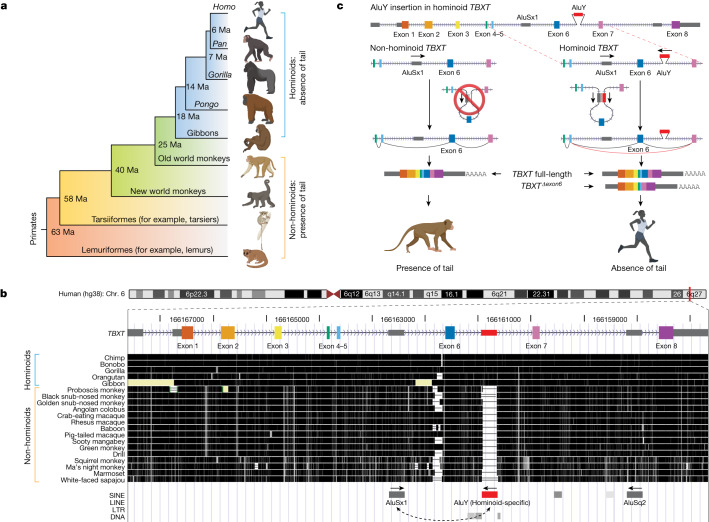
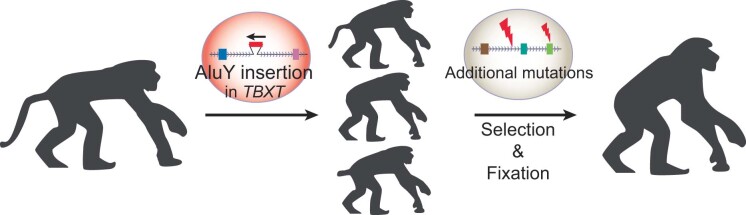
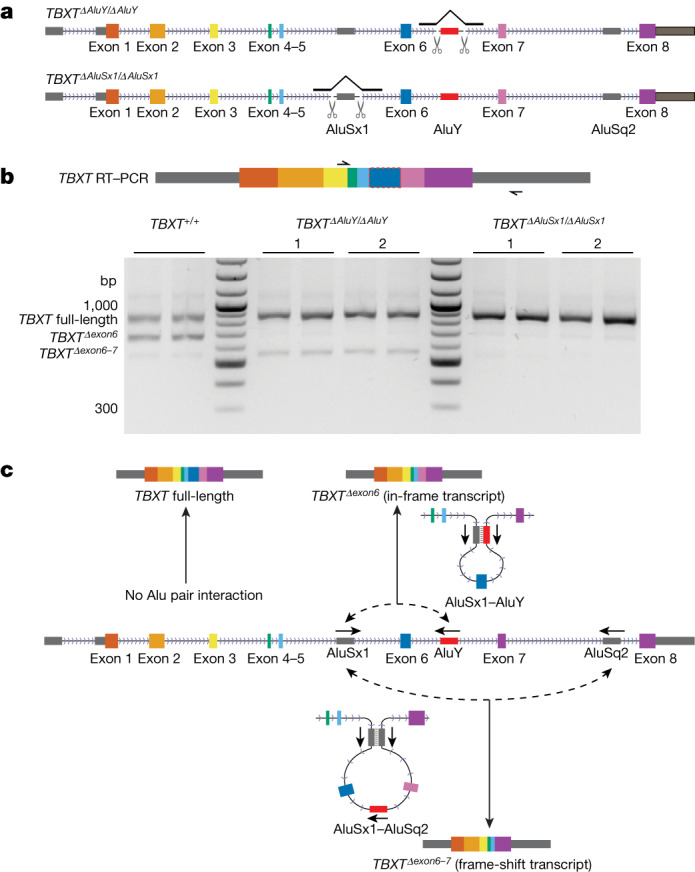
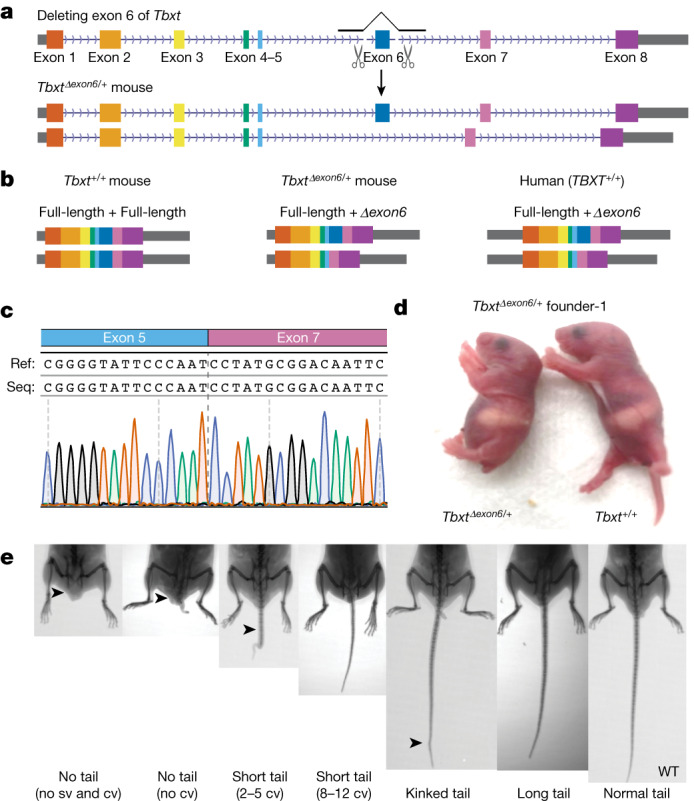
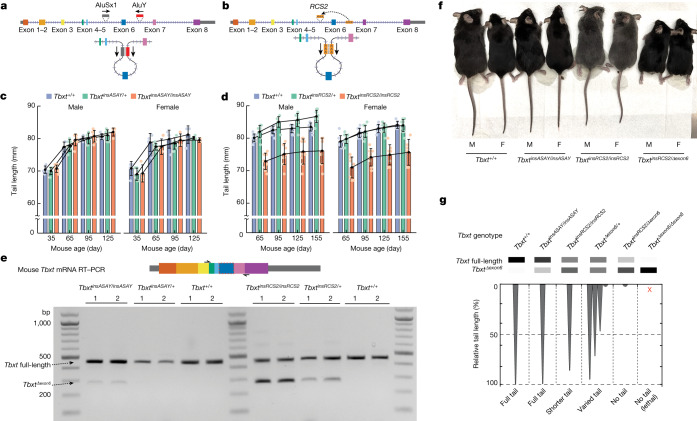
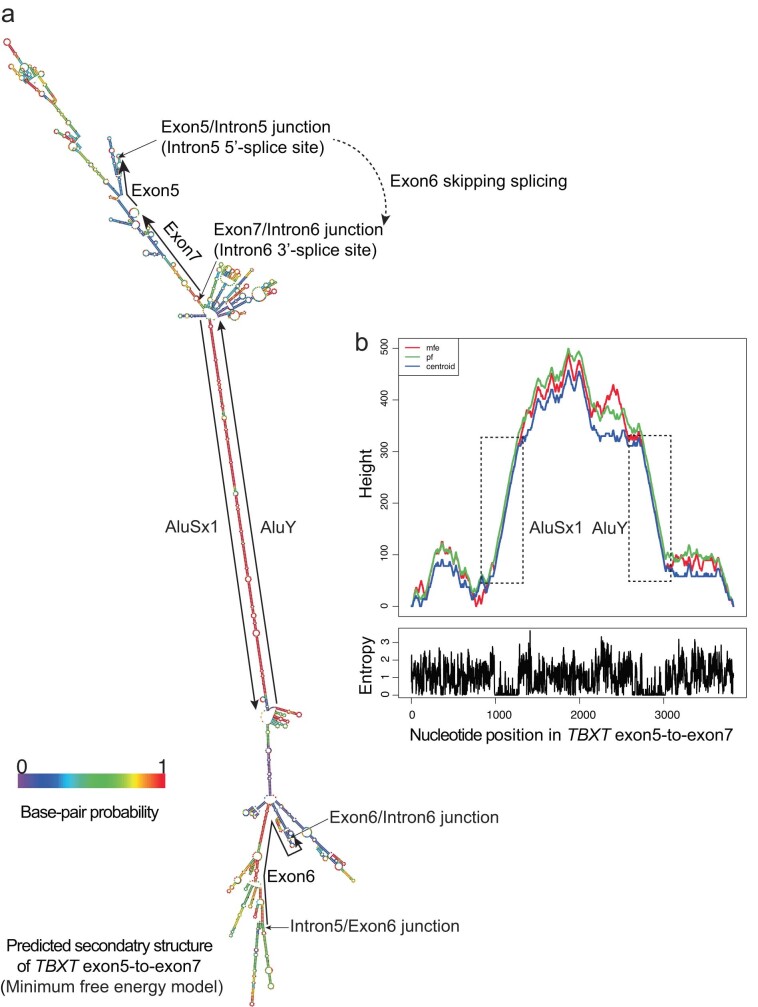
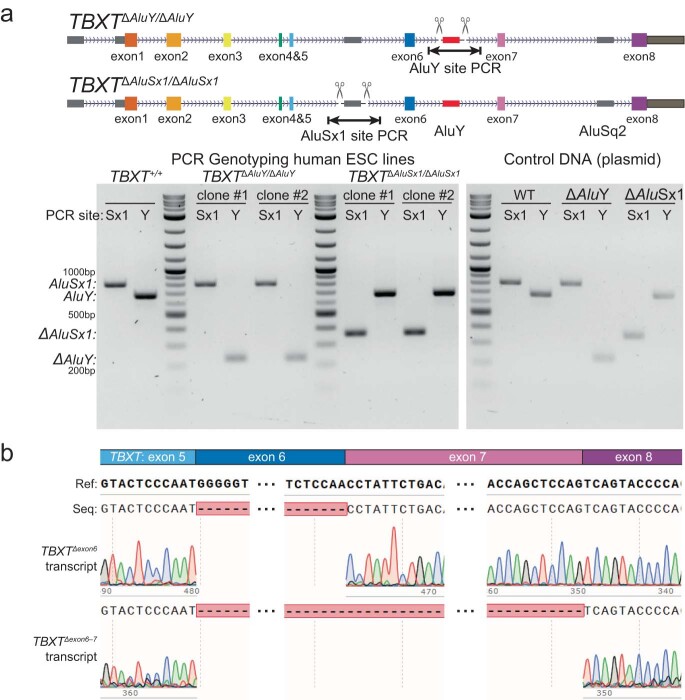
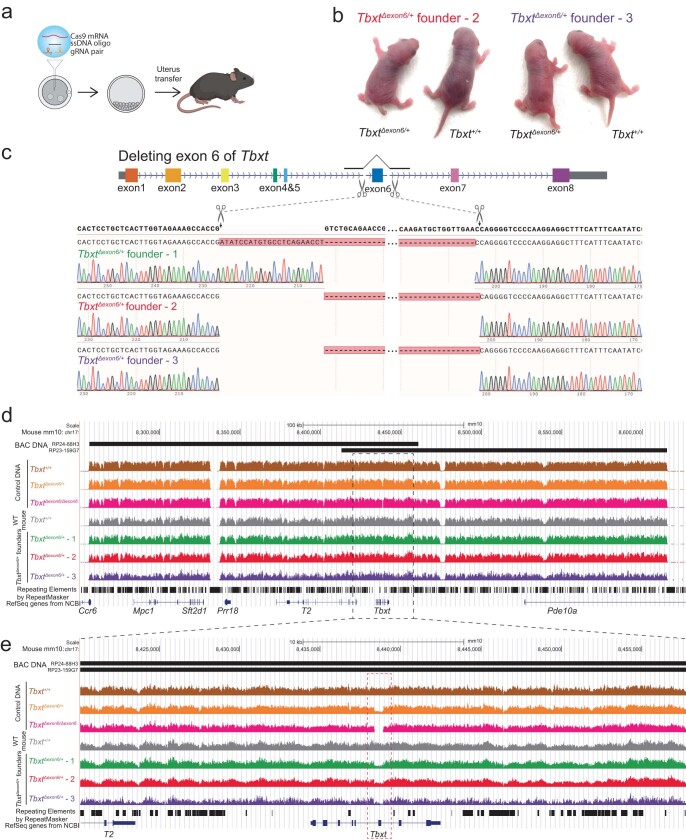
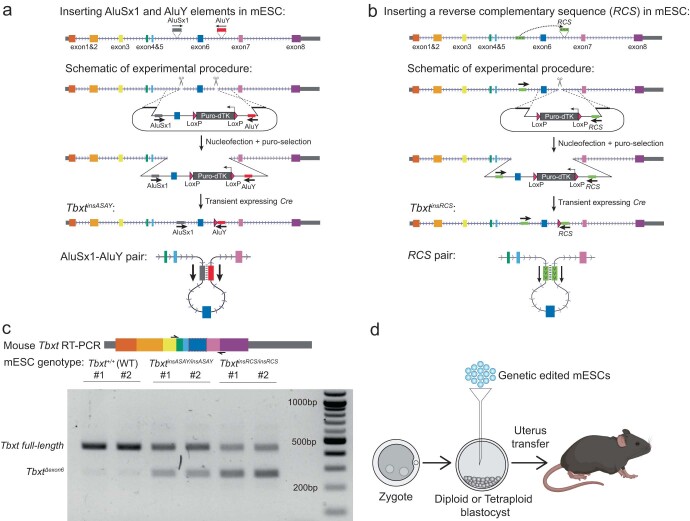
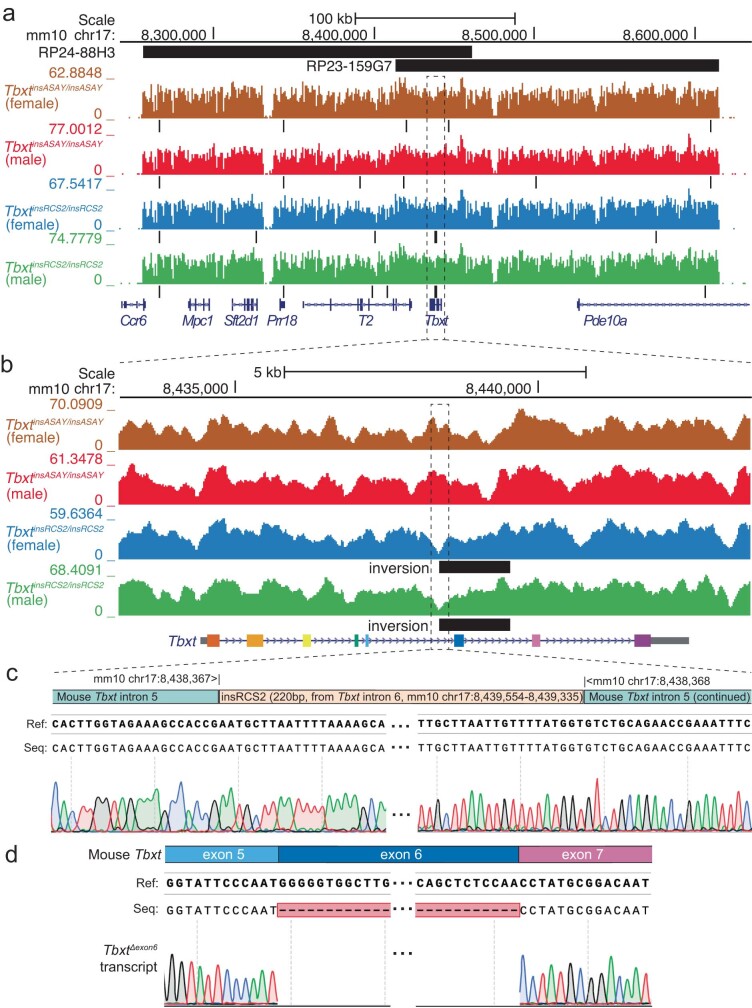
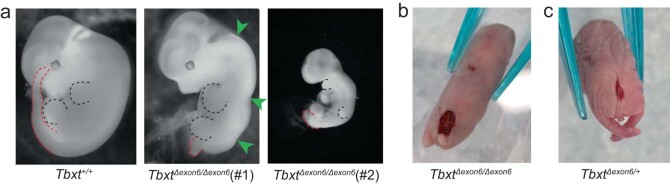
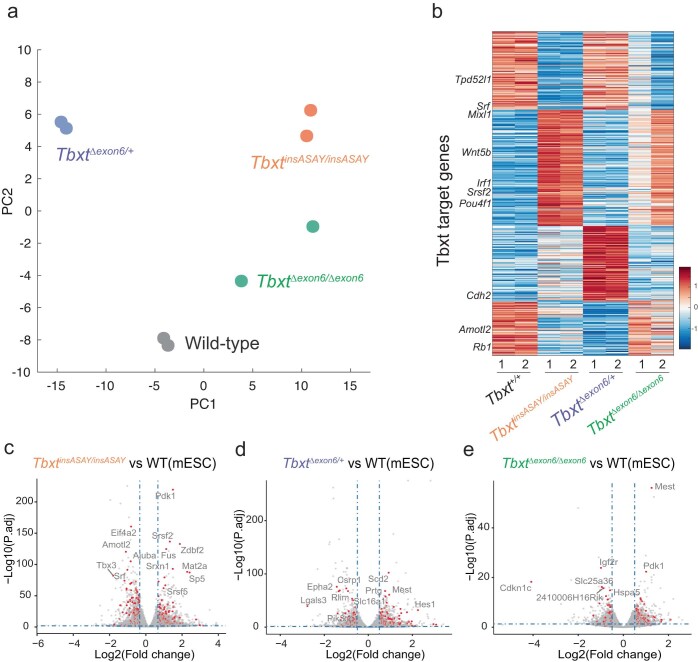
The loss of the tail is among the most notable anatomical changes to have occurred along the evolutionary lineage leading to humans and to the 'anthropomorphous apes', with a proposed role in contributing to human bipedalism. Yet, the genetic mechanism that facilitated tail-loss evolution in hominoids remains unknown. Here we present evidence that an individual insertion of an Alu element in the genome of the hominoid ancestor may have contributed to tail-loss evolution. We demonstrate that this Alu element-inserted into an intron of the TBXT gene-pairs with a neighbouring ancestral Alu element encoded in the reverse genomic orientation and leads to a hominoid-specific alternative splicing event. To study the effect of this splicing event, we generated multiple mouse models that express both full-length and exon-skipped isoforms of Tbxt, mimicking the expression pattern of its hominoid orthologue TBXT. Mice expressing both Tbxt isoforms exhibit a complete absence of the tail or a shortened tail depending on the relative abundance of Tbxt isoforms expressed at the embryonic tail bud. These results support the notion that the exon-skipped transcript is sufficient to induce a tail-loss phenotype. Moreover, mice expressing the exon-skipped Tbxt isoform develop neural tube defects, a condition that affects approximately 1 in 1,000 neonates in humans. Thus, tail-loss evolution may have been associated with an adaptive cost of the potential for neural tube defects, which continue to affect human health today.
尾巴的消失是人类和“类人猿”进化过程中最显著的解剖结构变化之一,据推测与人类两足行走的进化有关。然而,导致人科动物尾巴消失的遗传机制尚不清楚。在这里,我们提出证据表明,Alu 元件在人科动物祖先基因组中的单个插入可能促成了尾巴的消失进化。我们证明,这个插入到 TBXT 基因内含子中的 Alu 元件与编码在反向基因组方向上的相邻祖先 Alu 元件配对,并导致人科动物特有的选择性剪接事件。为了研究这种剪接事件的影响,我们生成了多个表达全长和外显子跳跃同种型的 Tbxt 的小鼠模型,模拟其同源物 TBXT 的表达模式。表达两种 Tbxt 同种型的小鼠表现出完全没有尾巴或尾巴缩短,这取决于在胚胎尾巴芽中表达的 Tbxt 同种型的相对丰度。这些结果支持了外显子跳跃转录本足以诱导尾巴消失表型的观点。此外,表达外显子跳跃 Tbxt 同种型的小鼠会出现神经管缺陷,这种情况在人类中大约每 1000 个新生儿中就有 1 个受到影响。因此,尾巴的消失进化可能与神经管缺陷的潜在适应成本有关,这种情况至今仍影响着人类的健康。