• 文献检索
  • 文档翻译
  • 深度研究
  • 学术资讯
  • Suppr Zotero 插件Zotero 插件
  • 邀请有礼
  • 套餐&价格
  • 历史记录
应用&插件
Suppr Zotero 插件Zotero 插件浏览器插件Mac 客户端Windows 客户端微信小程序
定价
高级版会员购买积分包购买API积分包
服务
文献检索文档翻译深度研究API 文档MCP 服务
关于我们
关于 Suppr公司介绍联系我们用户协议隐私条款
关注我们

Suppr 超能文献

核心技术专利:CN118964589B侵权必究
粤ICP备2023148730 号-1Suppr @ 2026

文献检索

告别复杂PubMed语法,用中文像聊天一样搜索,搜遍4000万医学文献。AI智能推荐,让科研检索更轻松。

立即免费搜索

文件翻译

保留排版,准确专业,支持PDF/Word/PPT等文件格式,支持 12+语言互译。

免费翻译文档

深度研究

AI帮你快速写综述,25分钟生成高质量综述,智能提取关键信息,辅助科研写作。

立即免费体验

面孔失认症:脸盲及其与神经障碍的关联

Prosopagnosia: face blindness and its association with neurological disorders.

作者信息

Josephs Kennedy A, Josephs Keith A

机构信息

Department of Neurology, Mayo Clinic, Rochester, MN 55905, USA.

出版信息

Brain Commun. 2024 Jan 5;6(1):fcae002. doi: 10.1093/braincomms/fcae002. eCollection 2024.

DOI:10.1093/braincomms/fcae002
PMID:38419734
原文链接:https://pmc.ncbi.nlm.nih.gov/articles/PMC10901275/
Abstract

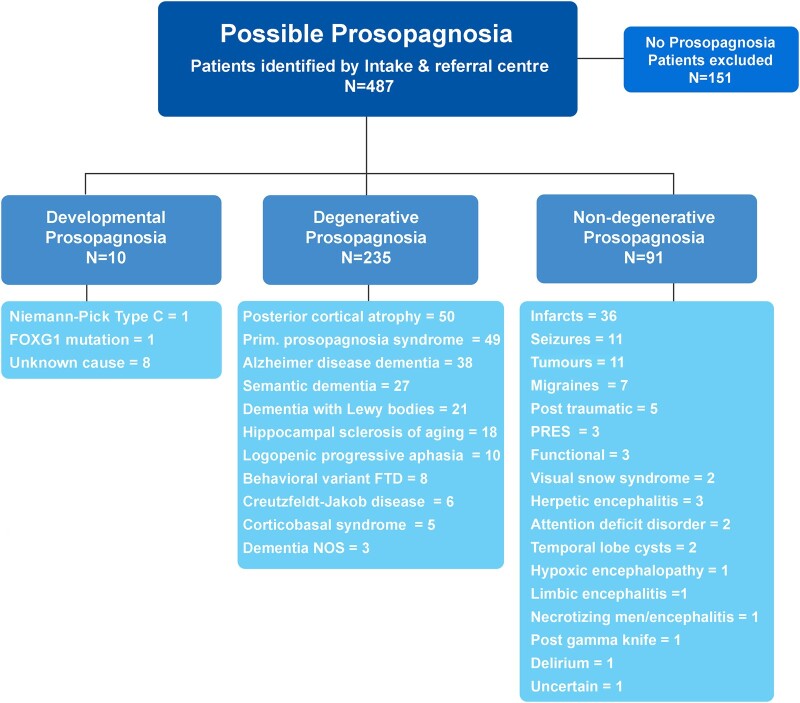
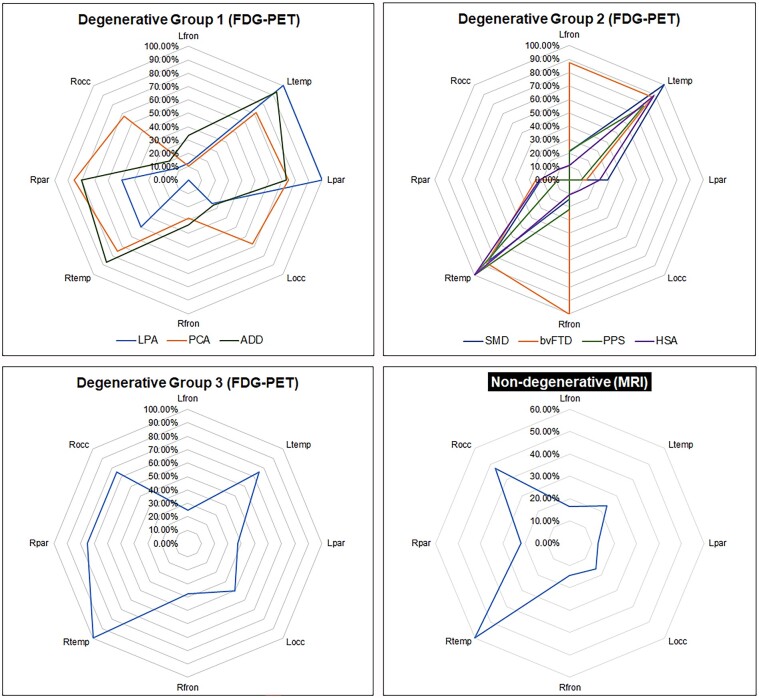
Loss of facial recognition or prosopagnosia has been well-recognized for over a century. It has been categorized as developmental or acquired depending on whether the onset is in early childhood or beyond, and acquired cases can have degenerative or non-degenerative aetiologies. Prosopagnosia has been linked to involvement of the fusiform gyri, mainly in the right hemisphere. The literature on prosopagnosia comprises case reports and small case series. We aim to assess demographic, clinical and imaging characteristics and neurological and neuropathological disorders associated with a diagnosis of prosopagnosia in a large cohort. Patients were categorized as developmental versus acquired; those with acquired prosopagnosia were further subdivided into degenerative versus non-degenerative, based on neurological aetiology. We assessed regional involvement on [F] fluorodeoxyglucose-PET and MRI of the right and left frontal, temporal, parietal and occipital lobes. The Intake and Referral Center at the Mayo Clinic identified 487 patients with possible prosopagnosia, of which 336 met study criteria for probable or definite prosopagnosia. Ten patients, 80.0% male, had developmental prosopagnosia including one with Niemann-Pick type C and another with a forkhead box G1 gene mutation. Of the 326 with acquired prosopagnosia, 235 (72.1%) were categorized as degenerative, 91 (27.9%) as non-degenerative. The most common degenerative diagnoses were posterior cortical atrophy, primary prosopagnosia syndrome, Alzheimer's disease dementia and semantic dementia, with each diagnosis accounting for >10% of this group. The most common non-degenerative diagnoses were infarcts (ischaemic and haemorrhagic), epilepsy-related and primary brain tumours, each accounting for >10%. We identified a group of patients with non-degenerative transient prosopagnosia in which facial recognition loss improved or resolved over time. These patients had migraine-related prosopagnosia, posterior reversible encephalopathy syndrome, delirium, hypoxic encephalopathy and ischaemic infarcts. On [F] fluorodeoxyglucose-PET, the temporal lobes proved to be the most frequently affected regions in 117 patients with degenerative prosopagnosia, while in 82 patients with non-degenerative prosopagnosia, MRI revealed the right temporal and right occipital lobes as most affected by a focal lesion. The most common pathological findings in those with degenerative prosopagnosia were frontotemporal lobar degeneration with hippocampal sclerosis and mixed Alzheimer's and Lewy body disease pathology. In this large case series of patients diagnosed with prosopagnosia, we observed that facial recognition loss occurs across a wide range of acquired degenerative and non-degenerative neurological disorders, most commonly in males with developmental prosopagnosia. The right temporal and occipital lobes, and connecting fusiform gyrus, are key areas. Multiple different pathologies cause degenerative prosopagnosia.

摘要

面部识别障碍或面孔失认症已被人们熟知了一个多世纪。根据发病时间是在儿童早期还是之后,它被分为发育性或后天性,后天性病例的病因可以是退行性或非退行性的。面孔失认症与梭状回的受累有关,主要是右侧半球。关于面孔失认症的文献包括病例报告和小病例系列。我们旨在评估一大群被诊断为面孔失认症患者的人口统计学、临床和影像学特征以及相关的神经和神经病理学疾病。患者被分为发育性和后天性;后天性面孔失认症患者根据神经病因进一步细分为退行性和非退行性。我们评估了右侧和左侧额叶、颞叶、顶叶和枕叶在[F]氟脱氧葡萄糖正电子发射断层扫描(PET)和磁共振成像(MRI)上的受累情况。梅奥诊所的接诊和转诊中心识别出487例可能患有面孔失认症的患者,其中336例符合可能或确诊面孔失认症的研究标准。10例患者患有发育性面孔失认症,男性占80.0%,其中1例患有尼曼-匹克C型病,另1例有叉头框G1基因突变。在326例后天性面孔失认症患者中,235例(72.1%)被归类为退行性,91例(27.9%)为非退行性。最常见的退行性诊断是后部皮质萎缩、原发性面孔失认症综合征、阿尔茨海默病性痴呆和语义性痴呆,每种诊断在该组中所占比例均超过10%。最常见的非退行性诊断是梗死(缺血性和出血性)、癫痫相关疾病和原发性脑肿瘤,每种诊断所占比例均超过10%。我们识别出一组非退行性短暂性面孔失认症患者,其面部识别能力的丧失会随着时间的推移而改善或消失。这些患者患有偏头痛相关性面孔失认症、后部可逆性脑病综合征、谵妄、缺氧性脑病和缺血性梗死。在[F]氟脱氧葡萄糖PET检查中,117例退行性面孔失认症患者中,颞叶被证明是最常受累的区域,而在82例非退行性面孔失认症患者中,MRI显示右侧颞叶和右侧枕叶受局灶性病变影响最大。退行性面孔失认症患者最常见的病理发现是伴有海马硬化的额颞叶变性以及混合性阿尔茨海默病和路易体病病理改变。在这个被诊断为面孔失认症的大型病例系列中,我们观察到面部识别能力丧失发生在广泛的后天性退行性和非退行性神经疾病中,最常见于患有发育性面孔失认症的男性。右侧颞叶和枕叶以及相连的梭状回是关键区域。多种不同的病理改变导致退行性面孔失认症。

https://cdn.ncbi.nlm.nih.gov/pmc/blobs/03e9/10901275/ce10a309b582/fcae002f5.jpg
https://cdn.ncbi.nlm.nih.gov/pmc/blobs/03e9/10901275/16cc75eff780/fcae002_ga.jpg
https://cdn.ncbi.nlm.nih.gov/pmc/blobs/03e9/10901275/9e9032aebb1a/fcae002f1.jpg
https://cdn.ncbi.nlm.nih.gov/pmc/blobs/03e9/10901275/79b0612d8814/fcae002f2.jpg
https://cdn.ncbi.nlm.nih.gov/pmc/blobs/03e9/10901275/b1f245c3302b/fcae002f3.jpg
https://cdn.ncbi.nlm.nih.gov/pmc/blobs/03e9/10901275/ebe334fd3c12/fcae002f4.jpg
https://cdn.ncbi.nlm.nih.gov/pmc/blobs/03e9/10901275/ce10a309b582/fcae002f5.jpg
https://cdn.ncbi.nlm.nih.gov/pmc/blobs/03e9/10901275/16cc75eff780/fcae002_ga.jpg
https://cdn.ncbi.nlm.nih.gov/pmc/blobs/03e9/10901275/9e9032aebb1a/fcae002f1.jpg
https://cdn.ncbi.nlm.nih.gov/pmc/blobs/03e9/10901275/79b0612d8814/fcae002f2.jpg
https://cdn.ncbi.nlm.nih.gov/pmc/blobs/03e9/10901275/b1f245c3302b/fcae002f3.jpg
https://cdn.ncbi.nlm.nih.gov/pmc/blobs/03e9/10901275/ebe334fd3c12/fcae002f4.jpg
https://cdn.ncbi.nlm.nih.gov/pmc/blobs/03e9/10901275/ce10a309b582/fcae002f5.jpg

相似文献

1
Prosopagnosia: face blindness and its association with neurological disorders.面孔失认症:脸盲及其与神经障碍的关联
Brain Commun. 2024 Jan 5;6(1):fcae002. doi: 10.1093/braincomms/fcae002. eCollection 2024.
2
Right Fusiform Gyrus Infarct with Acute Prosopagnosia.右侧梭状回梗死伴急性面孔失认症。
Acta Neurol Taiwan. 2022 Dec 30;31(4):186-187.
3
Structure and function in acquired prosopagnosia: lessons from a series of 10 patients with brain damage.后天性面孔失认症的结构与功能:来自10例脑损伤患者系列研究的经验教训
J Neuropsychol. 2008 Mar;2(1):197-225. doi: 10.1348/174866407x214172.
4
[Neurological disease and facial recognition].[神经疾病与面部识别]
Brain Nerve. 2012 Jul;64(7):799-813.
5
Understanding the functional neuroanatomy of acquired prosopagnosia.了解获得性面孔失认症的功能性神经解剖学。
Neuroimage. 2007 Apr 1;35(2):836-52. doi: 10.1016/j.neuroimage.2006.09.051. Epub 2007 Feb 14.
6
A clinical-radiological framework of the right temporal variant of frontotemporal dementia.右颞叶额颞痴呆的临床放射学框架。
Brain. 2020 Sep 1;143(9):2831-2843. doi: 10.1093/brain/awaa225.
7
Prosopagnosia in the context of right handedness, left hemisphere perinatal stroke, epileptogenic cyst, and focal epilepsy: A pre-surgical case report.右利手、左侧半球围产期卒中、致痫性囊肿及局灶性癫痫背景下的面孔失认症:一例术前病例报告
Epilepsy Behav Rep. 2024 Aug 11;28:100706. doi: 10.1016/j.ebr.2024.100706. eCollection 2024.
8
[False recognition of faces associated with fronto-temporal dementia with prosopagnosia].[与伴有面孔失认的额颞叶痴呆相关的面孔错误识别]
Rev Neurol (Paris). 2005 Sep;161(8-9):804-16. doi: 10.1016/s0035-3787(05)85139-2.
9
Isolated Prosopagnosia Caused by Damage to the Right Inferior Longitudinal Fasciculus: A Case Report.右侧下纵束损伤所致孤立性面孔失认症:一例报告
J Nippon Med Sch. 2025 May 21;92(2):220-224. doi: 10.1272/jnms.JNMS.2025_92-202. Epub 2024 Jun 18.
10
Prosopagnosia as unusual presentation of semantic dementia: a case study.面孔失认症作为语义性痴呆的罕见表现:一项病例研究。
Acta Clin Belg. 2016 Oct;71(5):356-358. doi: 10.1080/17843286.2016.1216260. Epub 2016 Aug 4.

本文引用的文献

1
Diffuse argyrophilic grain disease with TDP-43 proteinopathy and neuronal intermediate filament inclusion disease: FTLD with mixed tau, TDP-43 and FUS pathologies.弥漫性嗜银颗粒病伴 TDP-43 蛋白病和神经元中间丝包涵体病:伴有混合 tau、TDP-43 和 FUS 病理学的 FTLD。
Acta Neuropathol Commun. 2023 Jul 6;11(1):109. doi: 10.1186/s40478-023-01611-z.
2
Comprehensive Update and Review of Clinical and Imaging Features of SMART Syndrome.SMART 综合征的临床与影像学特征的全面更新与综述。
AJNR Am J Neuroradiol. 2023 Jun;44(6):626-633. doi: 10.3174/ajnr.A7859. Epub 2023 May 4.
3
The many faces of globular glial tauopathy: A clinical and imaging study.
球形神经胶质纤维tau 病的多面性:一项临床和影像学研究。
Eur J Neurol. 2023 Feb;30(2):321-333. doi: 10.1111/ene.15603. Epub 2022 Nov 1.
4
Prosopagnosia following nonlanguage dominant inferior temporal lobe low-grade glioma resection in which the inferior longitudinal fasciculus was disrupted preoperatively: illustrative case.非语言优势侧颞下回低级别胶质瘤切除术后出现面孔失认症,术前下纵束中断:病例报告
J Neurosurg Case Lessons. 2021 Sep 6;2(10):CASE21277. doi: 10.3171/CASE21277.
5
Right temporal degeneration and socioemotional semantics: semantic behavioural variant frontotemporal dementia.右侧颞叶退化与社会情绪语义学:语义行为变异额颞叶痴呆。
Brain. 2022 Nov 21;145(11):4080-4096. doi: 10.1093/brain/awac217.
6
Atypical Case of VV1 Creutzfeldt-Jakob Disease Subtype: Case Report.VV1型克雅氏病亚型非典型病例:病例报告
Front Neurol. 2022 May 9;13:875370. doi: 10.3389/fneur.2022.875370. eCollection 2022.
7
Posterior cortical atrophy phenotypic heterogeneity revealed by decoding F-FDG-PET.通过解读F-FDG-PET揭示的后皮质萎缩表型异质性
Brain Commun. 2021 Aug 19;3(4):fcab182. doi: 10.1093/braincomms/fcab182. eCollection 2021.
8
Prosopagnosia and disorders of face processing.面容失认症和面部加工障碍。
Handb Clin Neurol. 2021;178:175-193. doi: 10.1016/B978-0-12-821377-3.00006-4.
9
Neurobehavioral Characteristics of FDG-PET Defined Right-Dominant Semantic Dementia: A Longitudinal Study.右优势型语义性痴呆的 FDG-PET 定义的神经行为特征:一项纵向研究。
Dement Geriatr Cogn Disord. 2021;50(1):17-28. doi: 10.1159/000513979. Epub 2021 Mar 23.
10
Biomarkers and diagnostic guidelines for sporadic Creutzfeldt-Jakob disease.散发性克雅氏病的生物标志物和诊断指南。
Lancet Neurol. 2021 Mar;20(3):235-246. doi: 10.1016/S1474-4422(20)30477-4.