School of Public Health, North China University of Science and Technology, Tangshan, 063000, China.
Clinical Medical Research Center for Women and Children Diseases, Key Laboratory of Birth Regulation and Control Technology of National Health Commission of China, Shandong Provincial Maternal and Child Health Care Hospital Affiliated to Qingdao University, Jinan, 250001, China.
Cell Commun Signal. 2024 Mar 1;22(1):156. doi: 10.1186/s12964-024-01521-0.
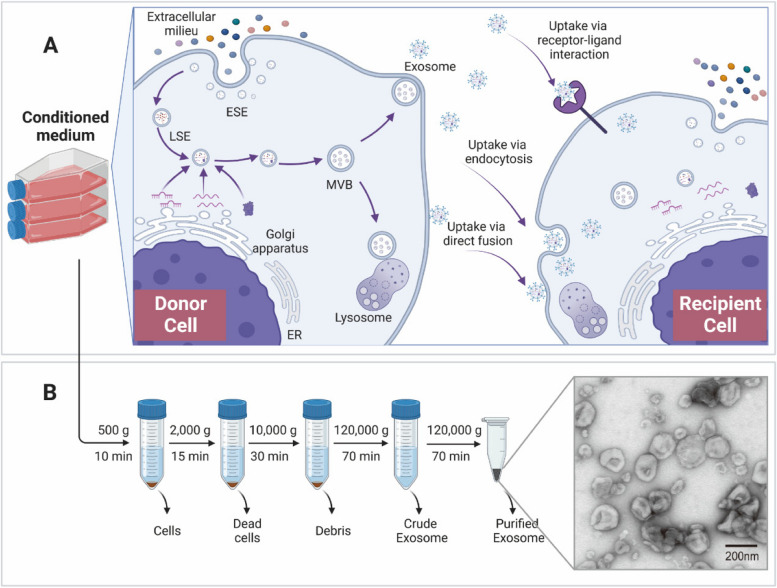
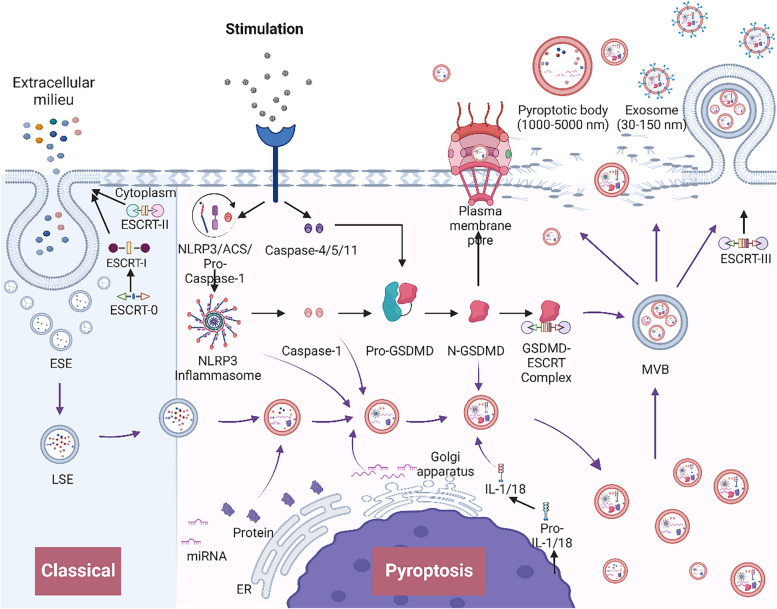
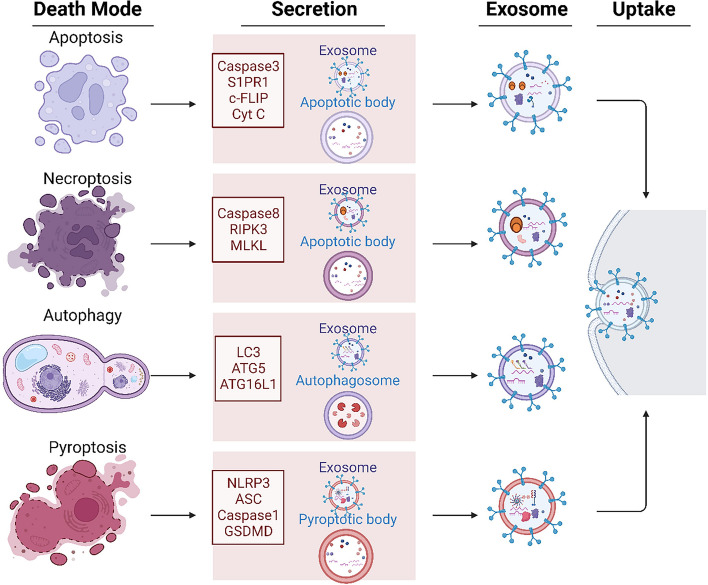
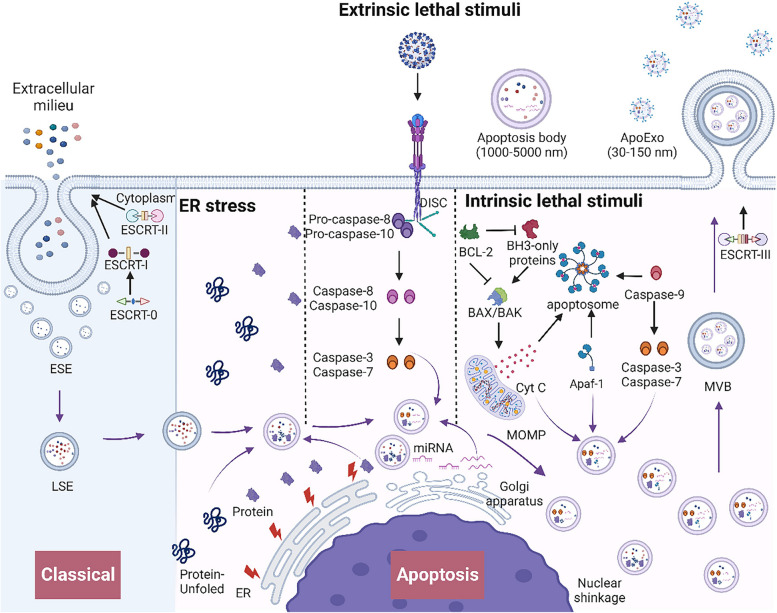
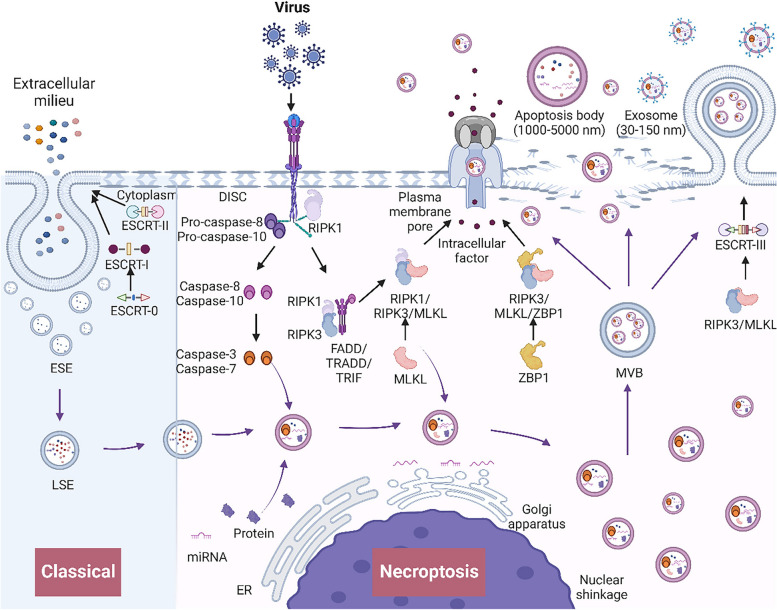
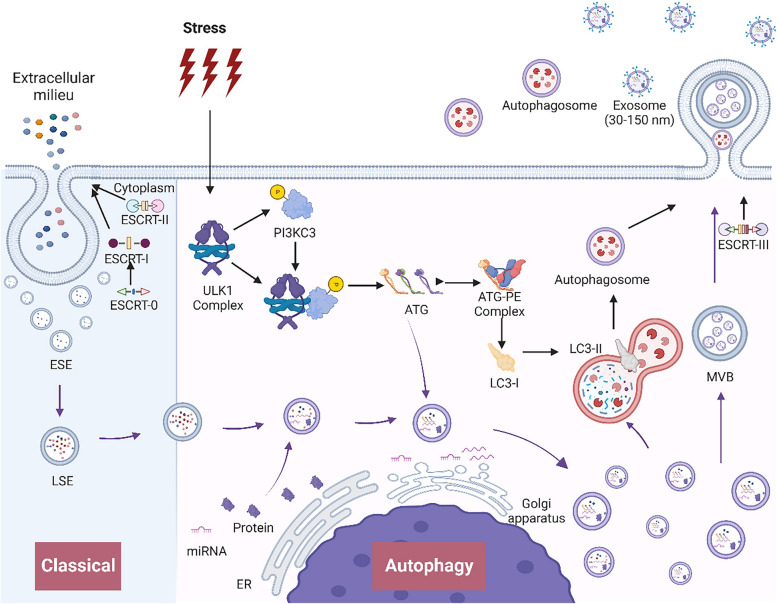
Exosomes are nanoscale extracellular vesicles present in bodily fluids that mediate intercellular communication by transferring bioactive molecules, thereby regulating a range of physiological and pathological processes. Exosomes can be secreted from nearly all cell types, and the biological function of exosomes is heterogeneous and depends on the donor cell type and state. Recent research has revealed that the levels of exosomes released from the endosomal system increase in cells undergoing programmed cell death. These exosomes play crucial roles in diseases, such as inflammation, tumors, and autoimmune diseases. However, there is currently a lack of systematic research on the differences in the biogenesis, secretion mechanisms, and composition of exosomes under different programmed cell death modalities. This review underscores the potential of exosomes as vital mediators of programmed cell death processes, highlighting the interconnection between exosome biosynthesis and the regulatory mechanisms governing cell death processes. Furthermore, we accentuate the prospect of leveraging exosomes for the development of innovative biomarkers and therapeutic strategies across various diseases.
外泌体是存在于体液中的纳米级细胞外囊泡,通过传递生物活性分子来介导细胞间通讯,从而调节一系列生理和病理过程。外泌体可以由几乎所有类型的细胞分泌,其外泌体的生物学功能具有异质性,并且取决于供体细胞类型和状态。最近的研究表明,在经历程序性细胞死亡的细胞中,从内体系统释放的外泌体水平增加。这些外泌体在炎症、肿瘤和自身免疫性疾病等疾病中发挥着关键作用。然而,目前对于不同程序性细胞死亡方式下外泌体的生物发生、分泌机制和组成的差异,还缺乏系统的研究。本综述强调了外泌体作为程序性细胞死亡过程的重要介质的潜力,突出了外泌体生物合成与调控细胞死亡过程的机制之间的联系。此外,我们还强调了利用外泌体开发各种疾病创新生物标志物和治疗策略的前景。