Faculty of Nursing, Umm al- Qura University, Makkah, Saudi Arabia.
Department of Medical Laboratory Sciences, College of Applied Medical Sciences, Prince Sattam bin Abdulaziz University, Al-Kharj, 11942, Saudi Arabia.
BMC Endocr Disord. 2024 Mar 1;24(1):26. doi: 10.1186/s12902-024-01556-x.
Accumulating evidence has suggested that dietary polyphenols may be protective against metabolic syndrome (MetS); however, the available evidence is contradictory. The aim of this meta-analysis was to assess the association between dietary intake of polyphenols and the odds of MetS.
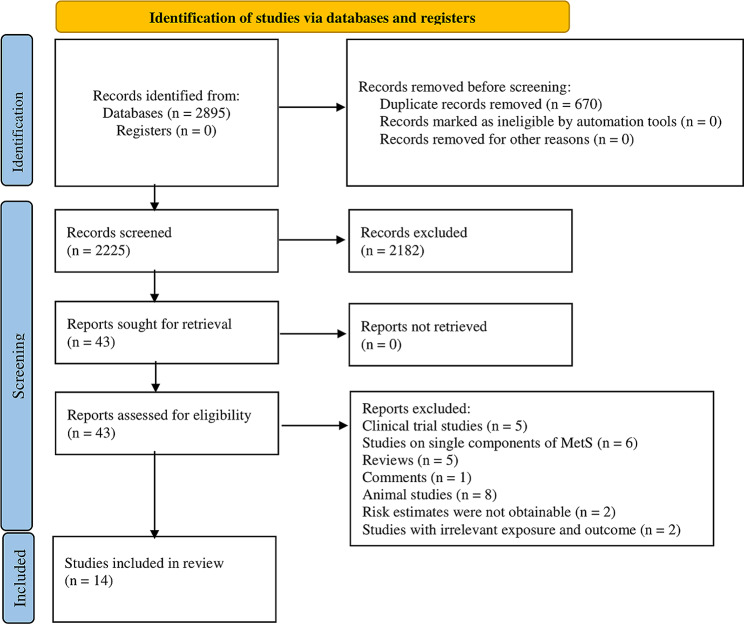
The PubMed and Scopus databases were systematically searched to obtain eligible studies. The risk of MetS for the highest versus the lowest intakes of total, subclasses and individual polyphenols were examined by pooling odds ratios (OR) and 95% confidence intervals (95%CI) using the random effects model.
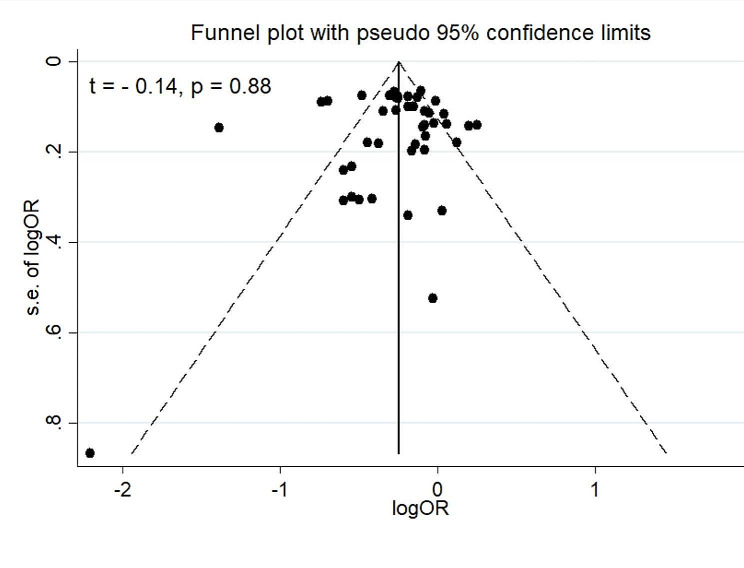
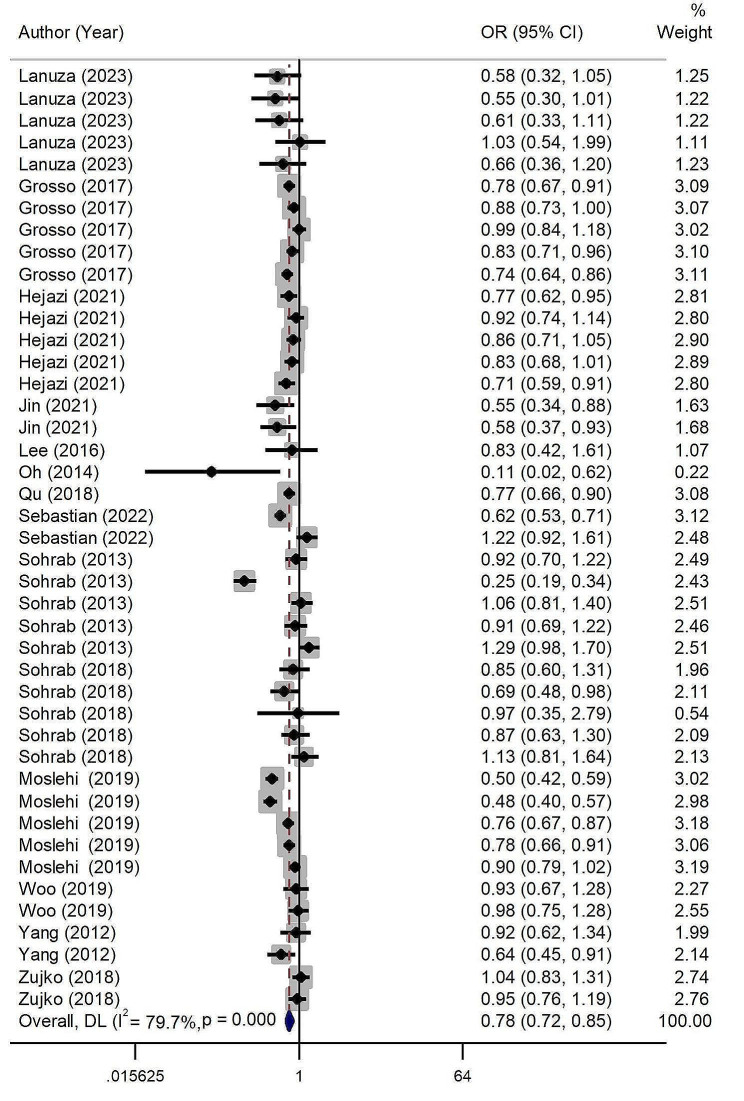
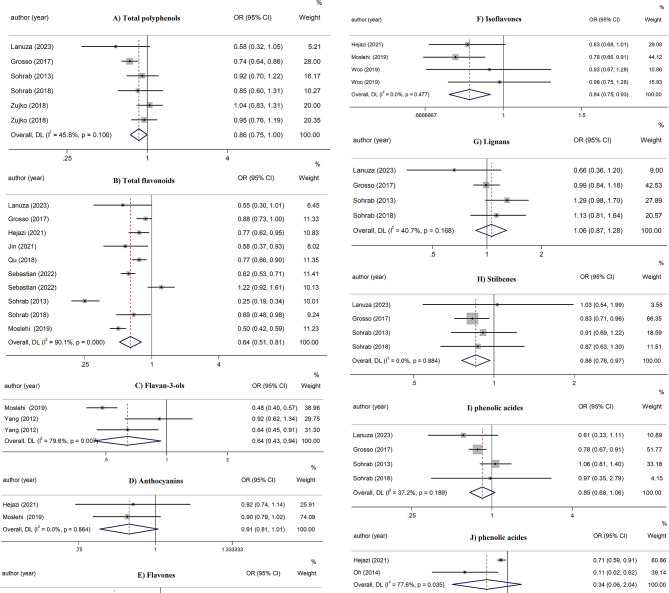
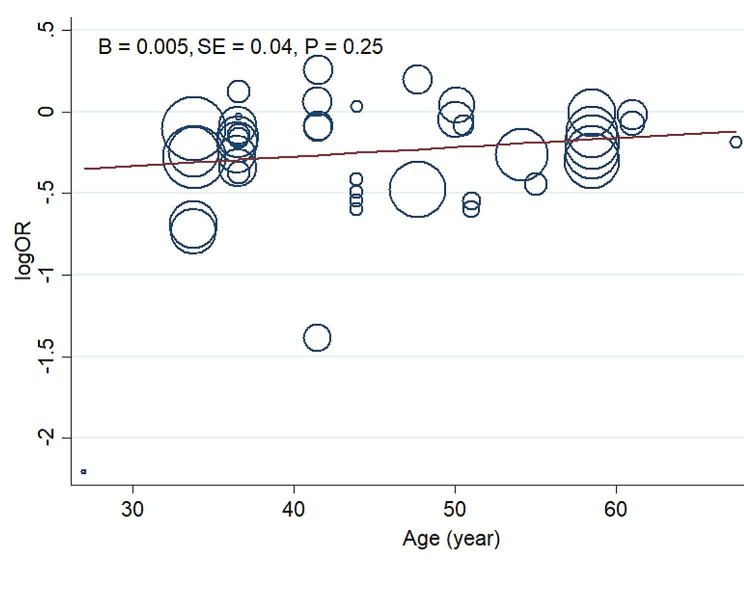
A total of 14 studies (6 cohort and 8 cross-sectional studies) involving a total of 50,366 participants with 10,879 cases of MetS were included. When various polyphenol compounds were pooled, they were significantly related to a 22% decreased odds of MetS (([5 studies]; OR: 0.78; 95%CI: 0.72-0.85). Higher intakes of total flavonoids (([9 studies]; OR: 0.78; 95%CI: 0.72-0.85), flavan-3-ols (([2 studies]; OR: 0.64; 95%CI: 0.43-0.94), isoflavones (([3 studies]; OR: 0.84; 95%CI: 0.75-0.93), stilbenes (([4 studies]; OR: 0.86; 95%CI: 0.76-0.97), flavones (([2 studies]; OR: 0.79; 95%CI: 0.71-0.89), and quercetin (([2 studies]; OR: 0.63; 95%CI: 0.43-0.93) were also significantly associated with a decreased risk of MetS. The associations were not modified by the age of the participants. No association was found for total polyphenols, phenolic acids, lignans, anthocyanins, and flavonols.
The results of this meta-analysis supported that higher polyphenol intake can lower the risk of MetS.
越来越多的证据表明,膳食多酚可能对代谢综合征(MetS)有保护作用;然而,现有证据存在矛盾。本荟萃分析的目的是评估膳食多酚摄入量与 MetS 风险之间的关系。
系统检索 PubMed 和 Scopus 数据库以获取合格研究。使用随机效应模型,通过汇总优势比(OR)和 95%置信区间(95%CI)来检查总多酚、亚类和个体多酚摄入量最高与最低时 MetS 的风险。
共纳入 14 项研究(6 项队列研究和 8 项横断面研究),共涉及 50366 名参与者和 10879 例 MetS 病例。当汇总各种多酚化合物时,它们与 MetS 发生的几率降低 22%显著相关([5 项研究];OR:0.78;95%CI:0.72-0.85)。总黄酮类化合物摄入量较高([9 项研究];OR:0.78;95%CI:0.72-0.85)、黄烷-3-醇([2 项研究];OR:0.64;95%CI:0.43-0.94)、异黄酮([3 项研究];OR:0.84;95%CI:0.75-0.93)、白藜芦醇([4 项研究];OR:0.86;95%CI:0.76-0.97)、黄酮类化合物([2 项研究];OR:0.79;95%CI:0.71-0.89)和槲皮素([2 项研究];OR:0.63;95%CI:0.43-0.93)也与 MetS 风险降低显著相关。这些关联不受参与者年龄的影响。总多酚、酚酸、木脂素、花青素和类黄酮没有关联。
本荟萃分析的结果支持较高的多酚摄入量可以降低 MetS 的风险。