Honoki Kanya, Tsujiuchi Toshifumi, Kishi Shingo, Kuniyasu Hiroki
Dept. Of Orthopedic Oncology & Reconstructive Medicine, Nara Medical University, Japan.
Dept. of Life Sciences, Kindai University, Japan.
J Cancer. 2024 Feb 4;15(7):1786-1804. doi: 10.7150/jca.92844. eCollection 2024.
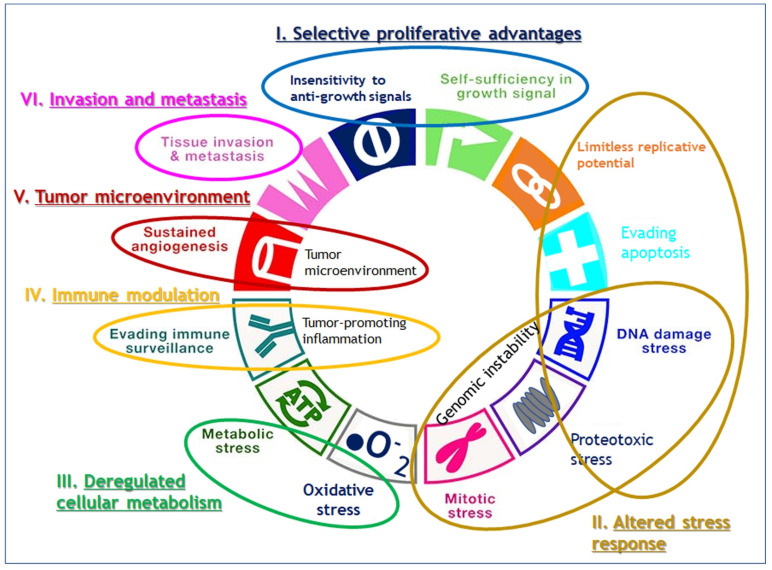
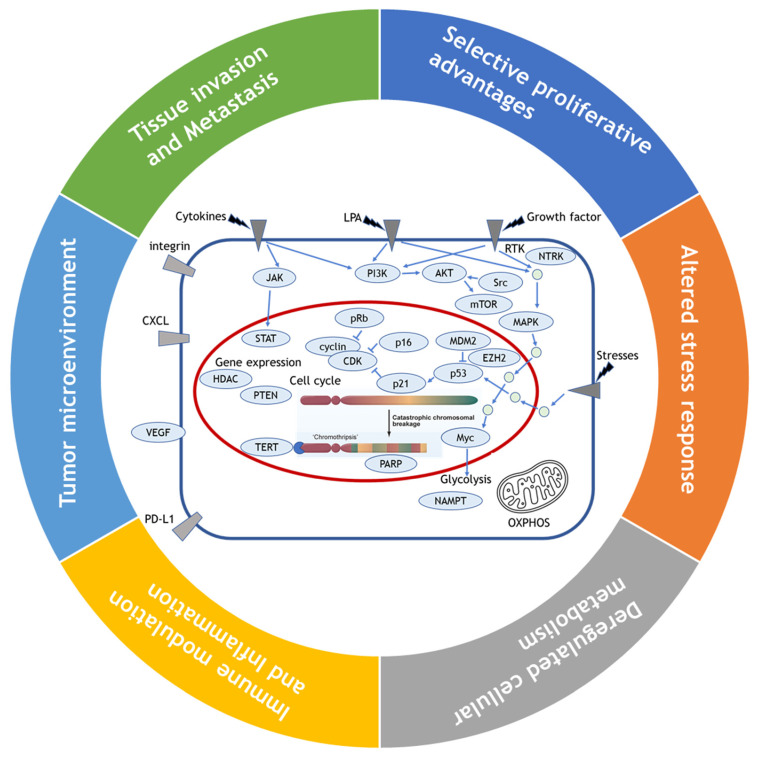
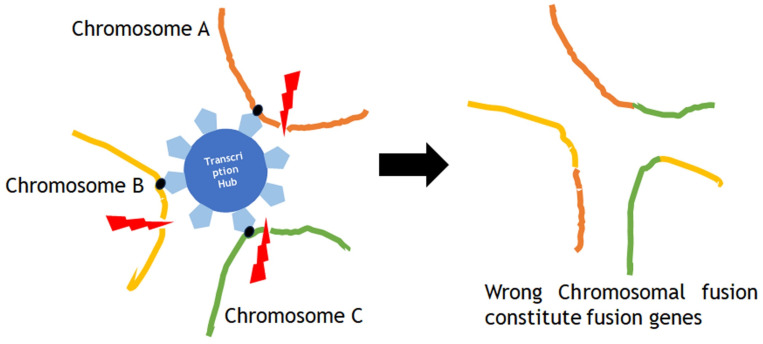
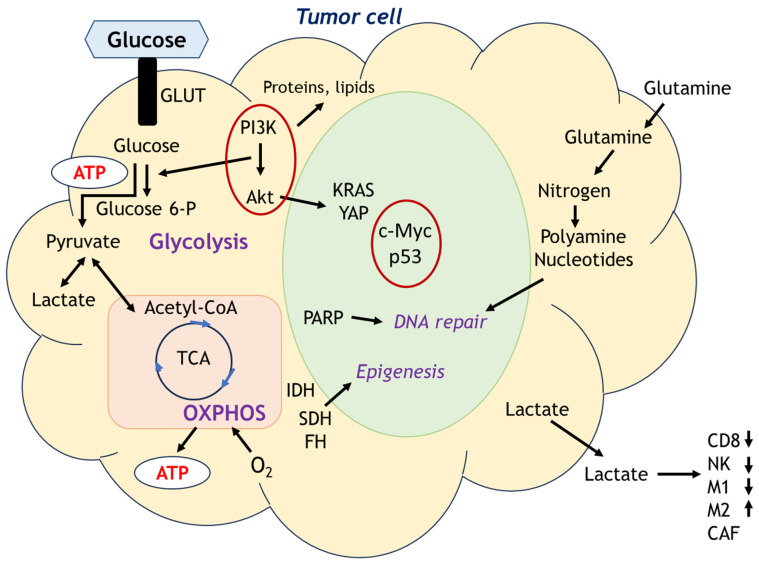
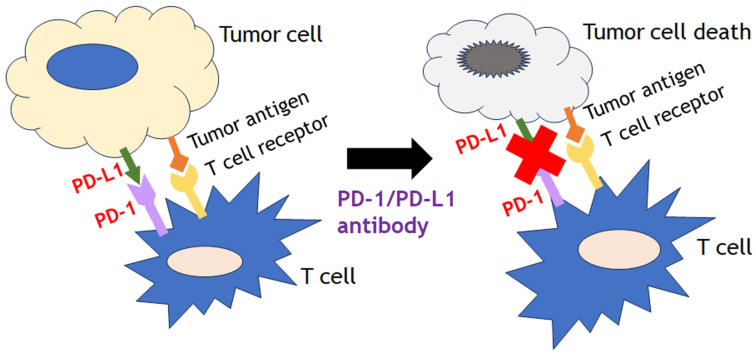
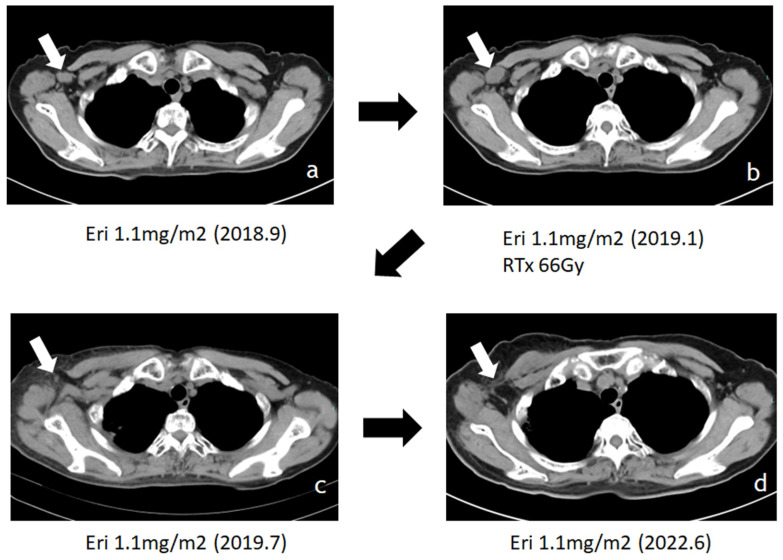
There is no doubt that anyone who has participated in cancer care or research has once read the 'Hallmarks of Cancer' papers published by Hanahan and Weinberg in 2001 and 2011. They initially defined the six qualities of cancer cells as cancer hallmarks in 2001, but expanded that to 11 as a next generation in 2011. In their papers, they discussed the potential treatment strategies against cancer corresponding to each of the 11 hallmarks, and to date, proposed therapies that target genes and signaling pathways associated with each of these hallmarks have guided a trail that cancer treatments should take, some of which are now used as standard in clinical practice and some of which have yet to progress that far. Along with the recent advances in cancer research such as genomic analysis with next generation sequencing, they can be reconverged to an alternative six categories defined as selective proliferative advantages, altered stress response, deregulated cellular metabolism, immune modulation and inflammation, tumor microenvironment, tissue invasion and metastasis. In this paper, we will overview the current state of these alternative hallmarks and their corresponding treatments in the current sarcoma practice, then discuss the future direction of sarcoma treatment.
毫无疑问,任何参与癌症护理或研究的人都曾读过哈纳汉和温伯格在2001年及2011年发表的“癌症特征”论文。他们在2001年最初将癌细胞的六种特性定义为癌症特征,但在2011年将其扩展至11种作为新一代特征。在他们的论文中,他们讨论了针对这11种特征中每一种的潜在癌症治疗策略,迄今为止,针对与这些特征中每一种相关的基因和信号通路的靶向治疗方法为癌症治疗应遵循的路径提供了指引,其中一些现已在临床实践中用作标准治疗方法,而一些则尚未取得如此进展。随着癌症研究的最新进展,如下一代测序的基因组分析,它们可以重新归纳为六个不同类别,即选择性增殖优势、应激反应改变、细胞代谢失调、免疫调节与炎症、肿瘤微环境、组织侵袭和转移。在本文中,我们将概述这些替代特征的当前状态及其在当前肉瘤治疗实践中的相应治疗方法,然后讨论肉瘤治疗的未来方向。