Research Center for Veterinary Science, Research Organization for Health, National Research and Innovation Agency, West Java, Indonesia.
Animal Production and Health Laboratory, Joint FAO/IAEA Centre of Nuclear Techniques in Food and Agriculture, Department of Nuclear Sciences and Applications, International Atomic Energy Agency, Wagramer Strasse 5, A-1400, Vienna, P.O. Box 100, Austria.
BMC Genomics. 2024 Mar 4;25(1):240. doi: 10.1186/s12864-024-10169-6.
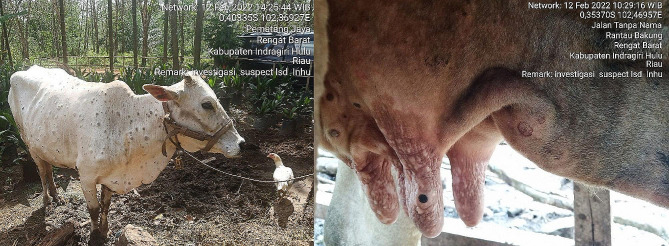
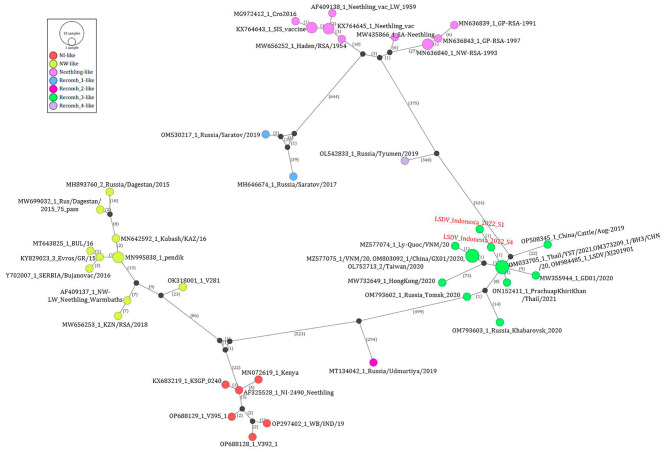
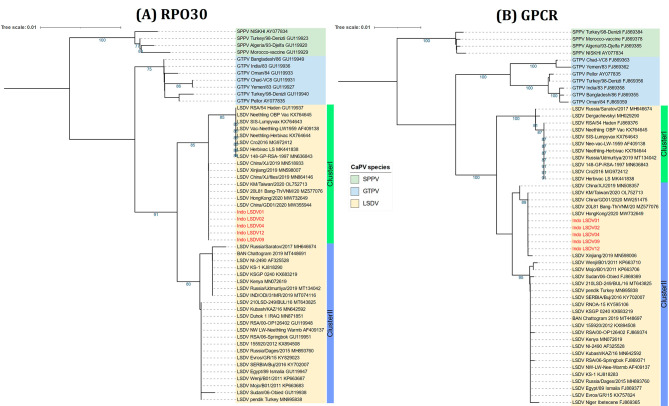
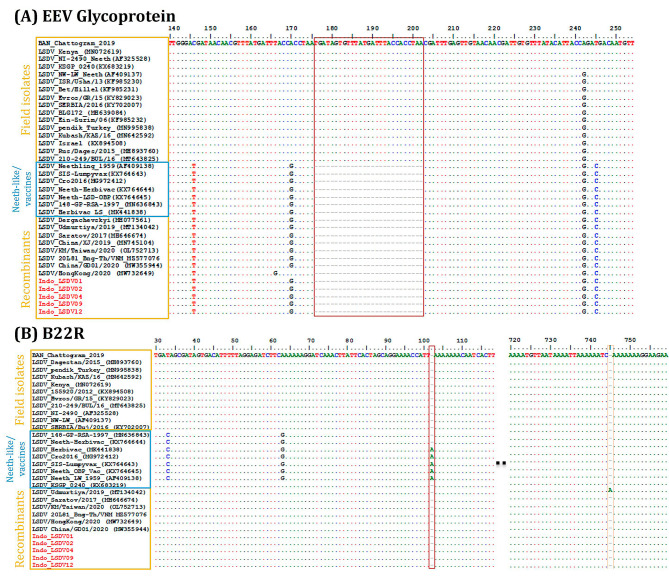
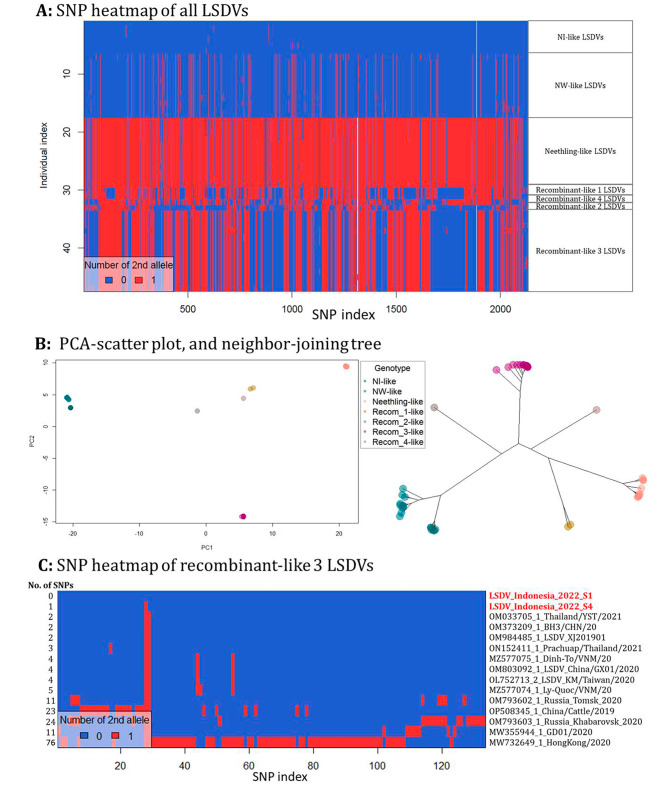
Lumpy skin disease (LSD) is a transboundary viral disease of cattle and water buffaloes caused by the LSD virus, leading to high morbidity, low mortality, and a significant economic impact. Initially endemic to Africa only, LSD has spread to the Middle East, Europe, and Asia in the past decade. The most effective control strategy for LSD is the vaccination of cattle with live-attenuated LSDV vaccines. Consequently, the emergence of two groups of LSDV strains in Asian countries, one closely related to the ancient Kenyan LSDV isolates and the second made of recombinant viruses with a backbone of Neethling-vaccine and field isolates, emphasized the need for constant molecular surveillance. This current study investigated the first outbreak of LSD in Indonesia in 2022. Molecular characterization of the isolate circulating in the country based on selected LSDV-marker genes: RPO30, GPCR, EEV glycoprotein gene, and B22R, as well as whole genome analysis using several analytical tools, indicated the Indonesia LSDV isolate as a recombinant of LSDV_Neethling_vaccine_LW_1959 and LSDV_NI-2490. The analysis clustered the Indonesia_LSDV with the previously reported LSDV recombinants circulating in East and Southeast Asia, but different from the recombinant viruses in Russia and the field isolates in South-Asian countries. Additionally, this study has demonstrated alternative accurate ways of LSDV whole genome analysis and clustering of isolates, including the recombinants, instead of whole-genome phylogenetic tree analysis. These data will strengthen our understanding of the pathogens' origin, the extent of their spread, and determination of suitable control measures required.
牛结节疹病(Lumpy skin disease,LSD)是一种由 LSD 病毒引起的牛和水牛的跨国界病毒性疾病,导致高发病率、低死亡率和重大经济影响。最初仅在非洲流行,在过去十年中,LSD 已传播到中东、欧洲和亚洲。LSD 的最有效控制策略是用减毒 LSDV 疫苗对牛进行接种。因此,亚洲国家出现了两组 LSDV 毒株,一组与古老的肯尼亚 LSDV 分离株密切相关,另一组由 Neethling 疫苗和田间分离株的骨架组成的重组病毒组成,这强调了需要不断进行分子监测。本研究调查了 2022 年印度尼西亚首次暴发的 LSD。根据选定的 LSDV 标记基因:RPO30、GPCR、EEV 糖蛋白基因和 B22R,对该国流行的分离株进行分子特征分析,以及使用几种分析工具对全基因组进行分析,表明印度尼西亚 LSDV 分离株是 LSDV_Neethling_vaccine_LW_1959 和 LSDV_NI-2490 的重组体。分析将印度尼西亚_LSDV 与先前在东亚和东南亚流行的 LSDV 重组体聚类,但与俄罗斯的重组病毒和南亚国家的田间分离株不同。此外,本研究还证明了替代的 LSDV 全基因组分析和分离株聚类的准确方法,包括重组体,而不是全基因组系统发育树分析。这些数据将加强我们对病原体起源、传播范围以及确定所需的适当控制措施的理解。