• 文献检索
  • 文档翻译
  • 深度研究
  • 学术资讯
  • Suppr Zotero 插件Zotero 插件
  • 邀请有礼
  • 套餐&价格
  • 历史记录
应用&插件
Suppr Zotero 插件Zotero 插件浏览器插件Mac 客户端Windows 客户端微信小程序
定价
高级版会员购买积分包购买API积分包
服务
文献检索文档翻译深度研究API 文档MCP 服务
关于我们
关于 Suppr公司介绍联系我们用户协议隐私条款
关注我们

Suppr 超能文献

核心技术专利:CN118964589B侵权必究
粤ICP备2023148730 号-1Suppr @ 2026

文献检索

告别复杂PubMed语法,用中文像聊天一样搜索,搜遍4000万医学文献。AI智能推荐,让科研检索更轻松。

立即免费搜索

文件翻译

保留排版,准确专业,支持PDF/Word/PPT等文件格式,支持 12+语言互译。

免费翻译文档

深度研究

AI帮你快速写综述,25分钟生成高质量综述,智能提取关键信息,辅助科研写作。

立即免费体验

一种工程化的细菌共生体可实现对蜜蜂肠道环境的非侵入性生物传感。

An engineered bacterial symbiont allows noninvasive biosensing of the honey bee gut environment.

机构信息

Department of Fundamental Microbiology, University of Lausanne, Lausanne, Switzerland.

出版信息

PLoS Biol. 2024 Mar 5;22(3):e3002523. doi: 10.1371/journal.pbio.3002523. eCollection 2024 Mar.

DOI:10.1371/journal.pbio.3002523
PMID:38442124
原文链接:https://pmc.ncbi.nlm.nih.gov/articles/PMC10914260/
Abstract

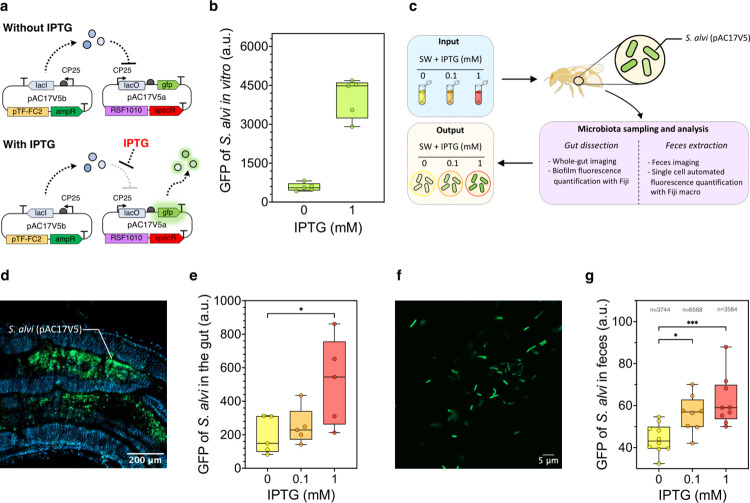
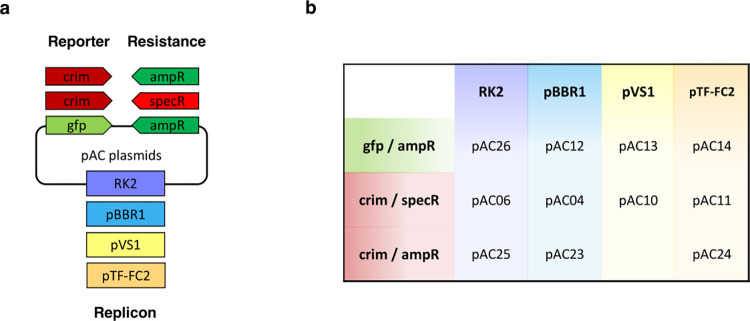
The honey bee is a powerful model system to probe host-gut microbiota interactions, and an important pollinator species for natural ecosystems and for agriculture. While bacterial biosensors can provide critical insight into the complex interplay occurring between a host and its associated microbiota, the lack of methods to noninvasively sample the gut content, and the limited genetic tools to engineer symbionts, have so far hindered their development in honey bees. Here, we built a versatile molecular tool kit to genetically modify symbionts and reported for the first time in the honey bee a technique to sample their feces. We reprogrammed the native bee gut bacterium Snodgrassella alvi as a biosensor for IPTG, with engineered cells that stably colonize the gut of honey bees and report exposure to the molecules in a dose-dependent manner through the expression of a fluorescent protein. We showed that fluorescence readout can be measured in the gut tissues or noninvasively in the feces. These tools and techniques will enable rapid building of engineered bacteria to answer fundamental questions in host-gut microbiota research.

摘要

蜜蜂是研究宿主-肠道微生物群相互作用的有力模式生物,也是自然生态系统和农业的重要传粉媒介。虽然细菌生物传感器可以为宿主与其相关微生物群之间发生的复杂相互作用提供重要的见解,但缺乏非侵入性采样肠道内容物的方法,以及用于工程共生体的有限遗传工具,迄今为止,它们在蜜蜂中的发展受到了阻碍。在这里,我们构建了一个多功能的分子工具包,用于遗传修饰共生体,并首次在蜜蜂中报告了一种采样其粪便的技术。我们将本土蜜蜂肠道细菌 Snodgrassella alvi 重新编程为 IPTG 的生物传感器,经过工程改造的细胞可以稳定地定植于蜜蜂肠道,并通过表达荧光蛋白以剂量依赖的方式报告暴露于这些分子。我们表明,荧光读数可以在肠道组织中或非侵入性地在粪便中测量。这些工具和技术将使构建工程细菌能够快速回答宿主-肠道微生物群研究中的基本问题。
https://cdn.ncbi.nlm.nih.gov/pmc/blobs/f0c1/10914260/9e1f0aa4a415/pbio.3002523.g005.jpg
https://cdn.ncbi.nlm.nih.gov/pmc/blobs/f0c1/10914260/6d70731f94b0/pbio.3002523.g001.jpg
https://cdn.ncbi.nlm.nih.gov/pmc/blobs/f0c1/10914260/c61ad741079a/pbio.3002523.g002.jpg
https://cdn.ncbi.nlm.nih.gov/pmc/blobs/f0c1/10914260/9d8493b4a85f/pbio.3002523.g003.jpg
https://cdn.ncbi.nlm.nih.gov/pmc/blobs/f0c1/10914260/522943d1bc52/pbio.3002523.g004.jpg
https://cdn.ncbi.nlm.nih.gov/pmc/blobs/f0c1/10914260/9e1f0aa4a415/pbio.3002523.g005.jpg
https://cdn.ncbi.nlm.nih.gov/pmc/blobs/f0c1/10914260/6d70731f94b0/pbio.3002523.g001.jpg
https://cdn.ncbi.nlm.nih.gov/pmc/blobs/f0c1/10914260/c61ad741079a/pbio.3002523.g002.jpg
https://cdn.ncbi.nlm.nih.gov/pmc/blobs/f0c1/10914260/9d8493b4a85f/pbio.3002523.g003.jpg
https://cdn.ncbi.nlm.nih.gov/pmc/blobs/f0c1/10914260/522943d1bc52/pbio.3002523.g004.jpg
https://cdn.ncbi.nlm.nih.gov/pmc/blobs/f0c1/10914260/9e1f0aa4a415/pbio.3002523.g005.jpg

相似文献

1
An engineered bacterial symbiont allows noninvasive biosensing of the honey bee gut environment.一种工程化的细菌共生体可实现对蜜蜂肠道环境的非侵入性生物传感。
PLoS Biol. 2024 Mar 5;22(3):e3002523. doi: 10.1371/journal.pbio.3002523. eCollection 2024 Mar.
2
One-step genome engineering in bee gut bacterial symbionts.一步法基因组工程在蜜蜂肠道共生菌中。
mBio. 2024 Sep 11;15(9):e0139224. doi: 10.1128/mbio.01392-24. Epub 2024 Aug 6.
3
Field-Realistic Tylosin Exposure Impacts Honey Bee Microbiota and Pathogen Susceptibility, Which Is Ameliorated by Native Gut Probiotics.田间实际泰乐菌素暴露会影响蜜蜂的微生物群和病原体易感性,而原生肠道益生菌可改善这种情况。
Microbiol Spectr. 2021 Sep 3;9(1):e0010321. doi: 10.1128/Spectrum.00103-21. Epub 2021 Jun 23.
4
High temperatures augment inhibition of parasites by a honey bee gut symbiont.高温增强了蜜蜂肠道共生菌对寄生虫的抑制作用。
Appl Environ Microbiol. 2023 Oct 31;89(10):e0102323. doi: 10.1128/aem.01023-23. Epub 2023 Oct 4.
5
Host-derived organic acids enable gut colonization of the honey bee symbiont Snodgrassella alvi.宿主源有机酸使蜜蜂共生菌斯氏诺氏菌得以在肠道中定植。
Nat Microbiol. 2024 Feb;9(2):477-489. doi: 10.1038/s41564-023-01572-y. Epub 2024 Jan 15.
6
Engineered gut symbiont inhibits microsporidian parasite and improves honey bee survival.工程化肠道共生体抑制微孢子虫寄生虫并提高蜜蜂存活率。
Proc Natl Acad Sci U S A. 2023 Jun 20;120(25):e2220922120. doi: 10.1073/pnas.2220922120. Epub 2023 Jun 12.
7
Deep Divergence and Genomic Diversification of Gut Symbionts of Neotropical Stingless Bees.肠共生菌的深度分歧与基因多样化:新热带无刺蜂研究
mBio. 2023 Apr 25;14(2):e0353822. doi: 10.1128/mbio.03538-22. Epub 2023 Mar 20.
8
Impact of Glyphosate on the Honey Bee Gut Microbiota: Effects of Intensity, Duration, and Timing of Exposure.草甘膦对蜜蜂肠道微生物群的影响:暴露强度、持续时间和时间的作用
mSystems. 2020 Jul 28;5(4):e00268-20. doi: 10.1128/mSystems.00268-20.
9
Honey bee genetics shape the strain-level structure of gut microbiota in social transmission.蜜蜂遗传学塑造了社会传播中肠道微生物组的菌株水平结构。
Microbiome. 2021 Nov 17;9(1):225. doi: 10.1186/s40168-021-01174-y.
10
Fecal transplant allows transmission of the gut microbiota in honey bees.粪便移植可使肠道微生物群在蜜蜂中传播。
mSphere. 2024 Sep 25;9(9):e0026224. doi: 10.1128/msphere.00262-24. Epub 2024 Aug 19.

引用本文的文献

1
Deciphering microbial spatial organization: insights from synthetic and engineered communities.解读微生物空间组织:来自合成和工程群落的见解。
ISME Commun. 2025 Jun 27;5(1):ycaf107. doi: 10.1093/ismeco/ycaf107. eCollection 2025 Jan.
2
How many plasmids can bacteria carry? A synthetic biology perspective.细菌能携带多少质粒?从合成生物学角度看。
Open Biol. 2025 Jul;15(7):240378. doi: 10.1098/rsob.240378. Epub 2025 Jul 30.
3
Host specificity of gut microbiota associated with social bees: patterns and processes.与群居蜜蜂相关的肠道微生物群的宿主特异性:模式与过程

本文引用的文献

1
Fecal transplant allows transmission of the gut microbiota in honey bees.粪便移植可使肠道微生物群在蜜蜂中传播。
mSphere. 2024 Sep 25;9(9):e0026224. doi: 10.1128/msphere.00262-24. Epub 2024 Aug 19.
2
Single-step genome engineering in the bee gut symbiont .蜜蜂肠道共生菌的单步基因组工程
bioRxiv. 2023 Sep 20:2023.09.19.558440. doi: 10.1101/2023.09.19.558440.
3
Non-invasive monitoring of microbiota and host metabolism using secondary electrospray ionization-mass spectrometry.利用二次电喷雾电离-质谱技术进行微生物组和宿主代谢的非侵入性监测。
Microbiol Mol Biol Rev. 2025 Jun 25;89(2):e0008023. doi: 10.1128/mmbr.00080-23. Epub 2025 Mar 20.
4
Fecal transplant allows transmission of the gut microbiota in honey bees.粪便移植可使肠道微生物群在蜜蜂中传播。
mSphere. 2024 Sep 25;9(9):e0026224. doi: 10.1128/msphere.00262-24. Epub 2024 Aug 19.
5
One-step genome engineering in bee gut bacterial symbionts.一步法基因组工程在蜜蜂肠道共生菌中。
mBio. 2024 Sep 11;15(9):e0139224. doi: 10.1128/mbio.01392-24. Epub 2024 Aug 6.
6
Engineering Gut Symbionts: A Way to Promote Bee Growth?工程化肠道共生菌:促进蜜蜂生长的一种方法?
Insects. 2024 May 19;15(5):369. doi: 10.3390/insects15050369.
Cell Rep Methods. 2023 Jul 26;3(8):100539. doi: 10.1016/j.crmeth.2023.100539. eCollection 2023 Aug 28.
4
Engineered symbiotic bacteria interfering Nosema redox system inhibit microsporidia parasitism in honeybees.工程共生菌干扰 Nosema 氧化还原系统抑制蜜蜂微孢子虫寄生
Nat Commun. 2023 May 20;14(1):2778. doi: 10.1038/s41467-023-38498-2.
5
Profiling the human intestinal environment under physiological conditions.在生理条件下描绘人体肠道环境。
Nature. 2023 May;617(7961):581-591. doi: 10.1038/s41586-023-05989-7. Epub 2023 May 10.
6
Honey bee functional genomics using symbiont-mediated RNAi.利用共生体介导的 RNAi 进行蜜蜂功能基因组学研究。
Nat Protoc. 2023 Mar;18(3):902-928. doi: 10.1038/s41596-022-00778-4. Epub 2022 Dec 2.
7
The expanding value of long-term studies of individuals in the wild.对野生动物个体进行长期研究的价值不断提升。
Nat Ecol Evol. 2022 Dec;6(12):1799-1801. doi: 10.1038/s41559-022-01940-7.
8
Noninvasive assessment of gut function using transcriptional recording sentinel cells.使用转录记录哨细胞无创评估肠道功能。
Science. 2022 May 13;376(6594):eabm6038. doi: 10.1126/science.abm6038.
9
Grand Challenges in Understanding Gut Microbes.理解肠道微生物的重大挑战。
Front Microbiol. 2021 Oct 5;12:752829. doi: 10.3389/fmicb.2021.752829. eCollection 2021.
10
Engineered acetoacetate-inducible whole-cell biosensors based on the AtoSC two-component system.基于 AtoSC 双组分系统的工程化乙酰乙酸诱导型全细胞生物传感器。
Biotechnol Bioeng. 2021 Nov;118(11):4278-4289. doi: 10.1002/bit.27897. Epub 2021 Aug 9.