Frontiers science center for molecular design breeding, Key Laboratory of Crop Heterosis Utilization (MOE), China Agricultural University, Beijing, 100193, China.
Nat Commun. 2024 Mar 7;15(1):2097. doi: 10.1038/s41467-024-46419-0.
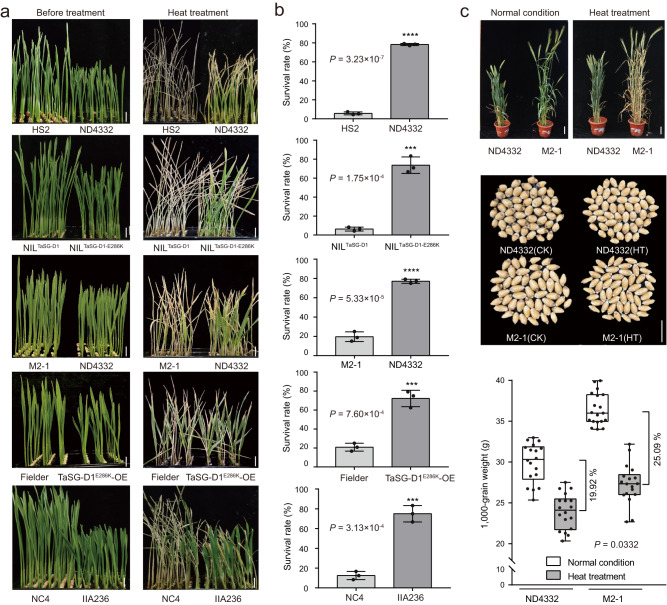
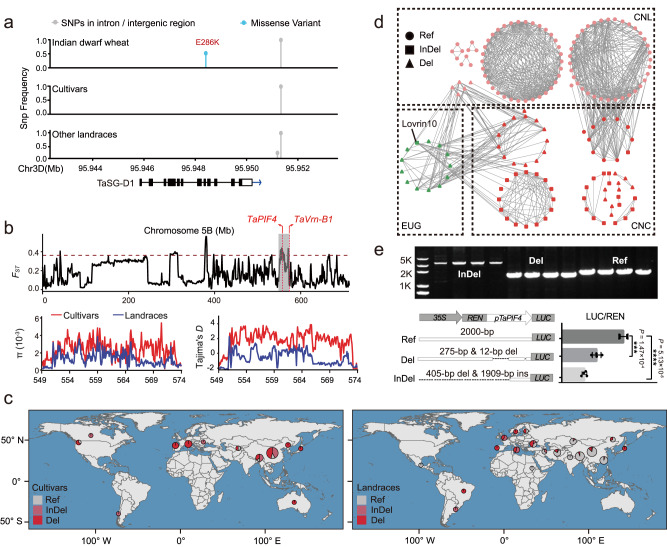
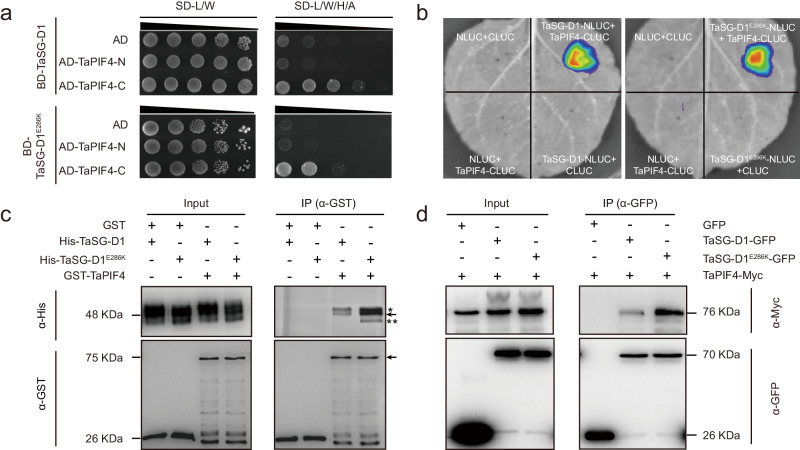
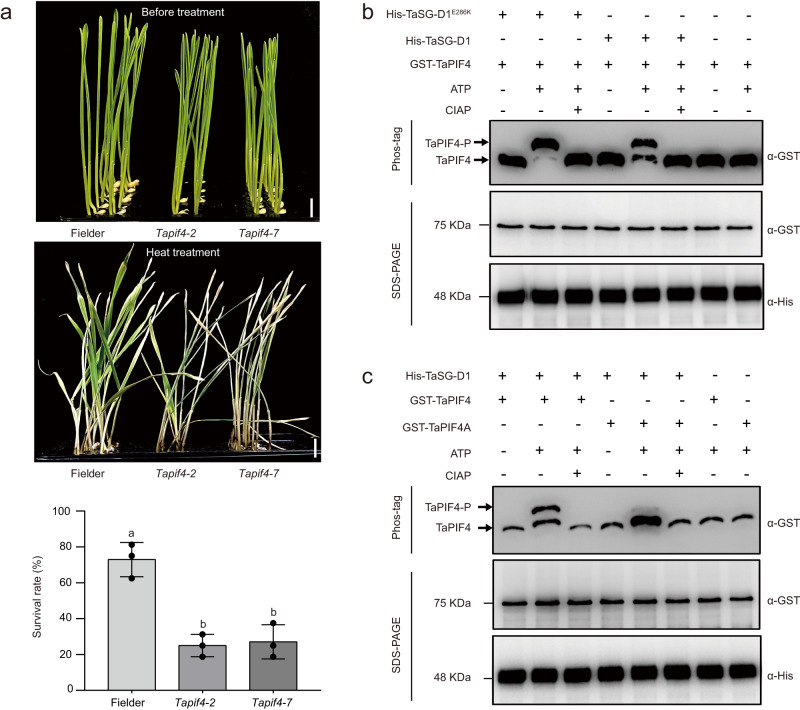
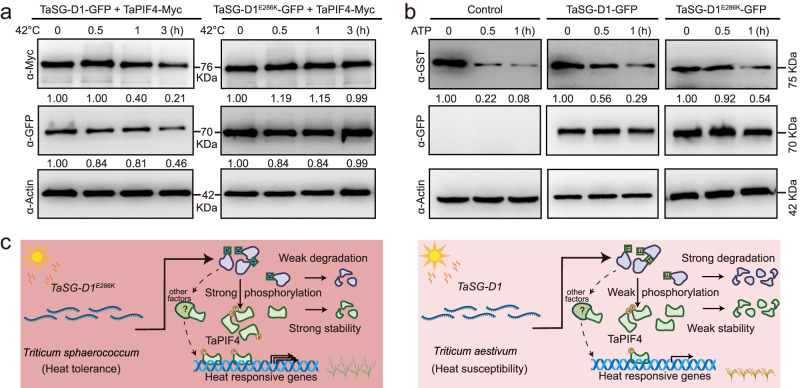
Heat stress threatens global wheat (Triticum aestivum) production, causing dramatic yield losses worldwide. Identifying heat tolerance genes and comprehending molecular mechanisms are essential. Here, we identify a heat tolerance gene, TaSG-D1, in Indian dwarf wheat (Triticum sphaerococcum), which encodes an STKc_GSK3 kinase. TaSG-D1 improves heat tolerance compared to TaSG-D1 by enhancing phosphorylation and stability of downstream target TaPIF4 under heat stress condition. Additionally, we reveal evolutionary footprints of TaPIF4 during wheat selective breeding in China, that is, InDels predominantly occur in the TaPIF4 promoter of Chinese modern wheat cultivars and result in decreased expression level of TaPIF4 in response to heat stress. These sequence variations with negative effect on heat tolerance are mainly introduced from European germplasm. Our study provides insight into heat stress response mechanisms and proposes a potential strategy to improve wheat heat tolerance in future.
热应激威胁着全球小麦(Triticum aestivum)的生产,导致全球范围内产量的大幅下降。鉴定耐热基因和理解分子机制至关重要。在这里,我们在印度矮小麦(Triticum sphaerococcum)中鉴定出一个耐热基因 TaSG-D1,它编码一个 STKc_GSK3 激酶。与 TaSG-D1 相比,TaSG-D1 通过在热应激条件下增强下游靶标 TaPIF4 的磷酸化和稳定性来提高耐热性。此外,我们揭示了小麦在中国选择育种过程中 TaPIF4 的进化足迹,即在现代中国小麦品种中 TaPIF4 的启动子中主要发生 InDels,导致 TaPIF4 的表达水平在应对热应激时降低。这些对耐热性有负面影响的序列变异主要来自欧洲种质资源。我们的研究提供了对热应激反应机制的深入了解,并提出了一种潜在的策略,以提高未来小麦的耐热性。