Department of Gastroenterology, CHA Bundang Medical Center, CHA University School of Medicine, 59 Yatap-ro, Bundang-gu, Seongnam, 13496, South Korea.
Institute of Basic Medical Sciences, CHA University School of Medicine, Seongnam, 13496, South Korea.
Stem Cell Res Ther. 2024 Mar 7;15(1):69. doi: 10.1186/s13287-024-03678-4.
A significant unmet need in inflammatory bowel disease is the lack of anti-fibrotic agents targeting intestinal fibrosis. This study aimed to investigate the anti-fibrogenic properties and mechanisms of the conditioned medium (CM) from human umbilical cord/placenta-derived mesenchymal stem cells (UC/PL-MSC-CM) in a murine intestinal fibrosis model and human primary intestinal myofibroblasts (HIMFs).
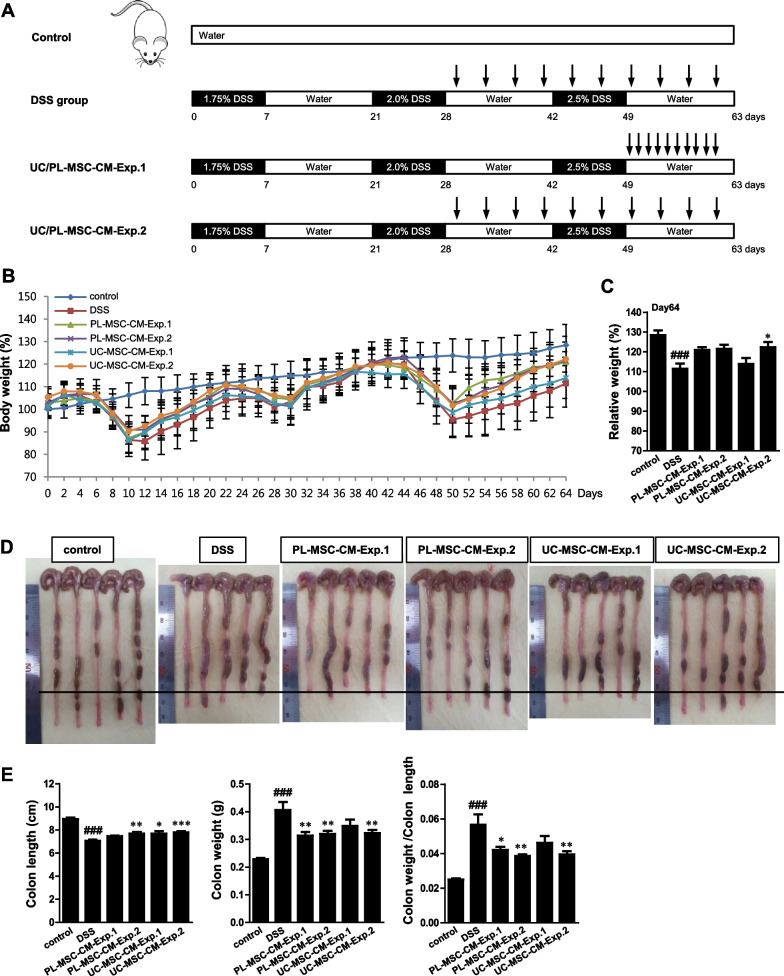
UC/PL-MSC-CM was concentrated 15-fold using a 3 kDa cut-off filter. C57BL/6 mice aged 7 weeks old were randomly assigned to one of four groups: (1) control, (2) dextran sulfate sodium (DSS), (3) DSS + CM (late-phase treatment), and (4) DSS + CM (early-phase treatment). Chronic DSS colitis and intestinal fibrosis was induced by three cycles of DSS administration. One DSS cycle consisted of 7 days of oral DSS administration (1.75%, 2%, and 2.5% DSS), followed by 14 days of drinking water. UC/PL-MSC-CM was intraperitoneally administered in the late phase (from day 50, 10 times) or early phase (from day 29, 10 times) of DSS cycles. HIMFs were treated with TGF-β1 and co-treated with UC/PL-MSC-CM (10% of culture media) in the cellular model.
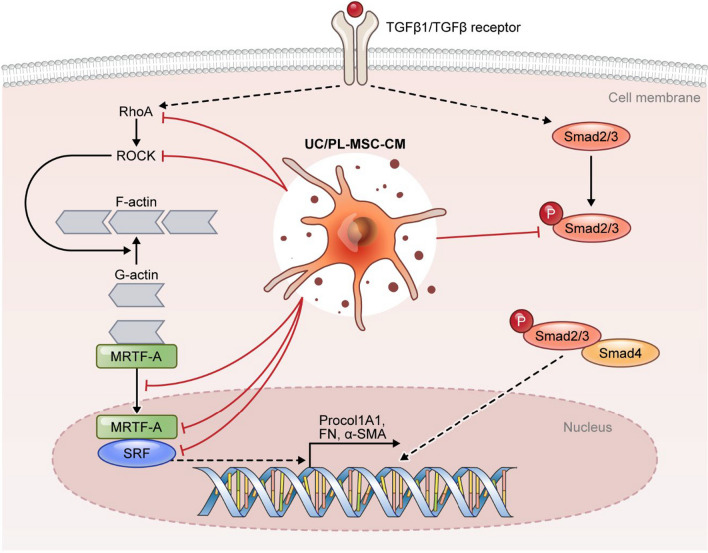
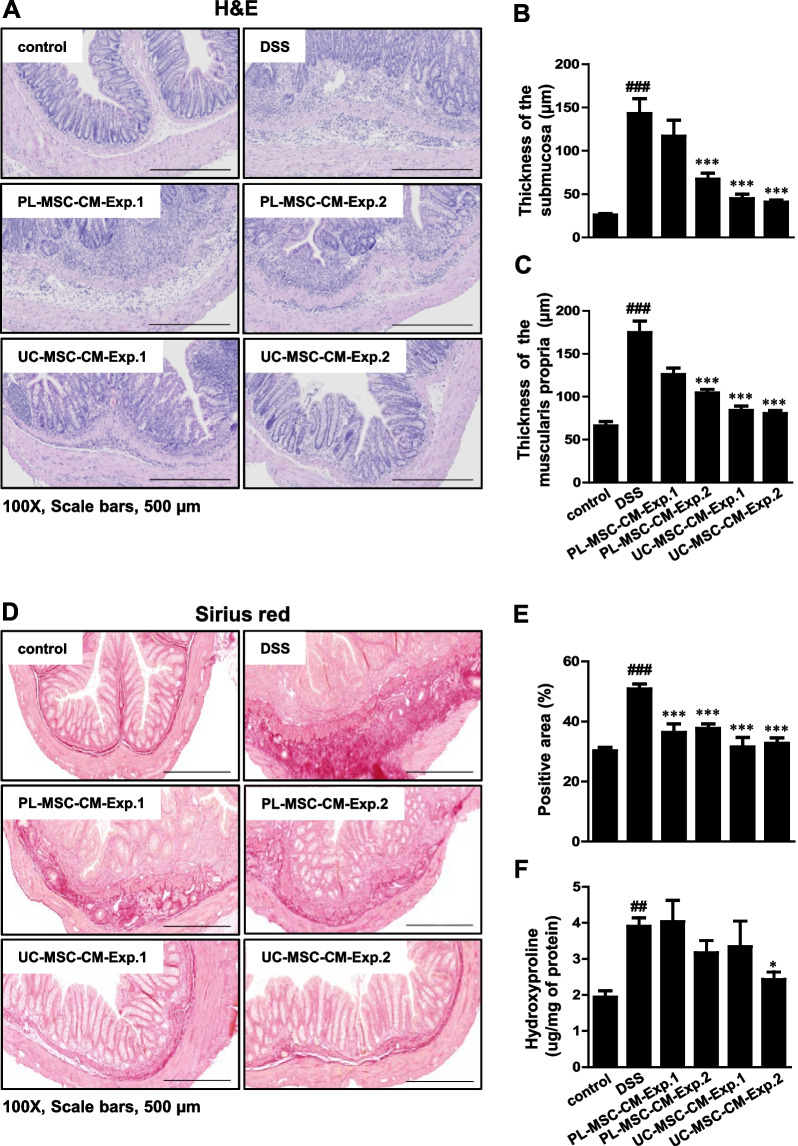
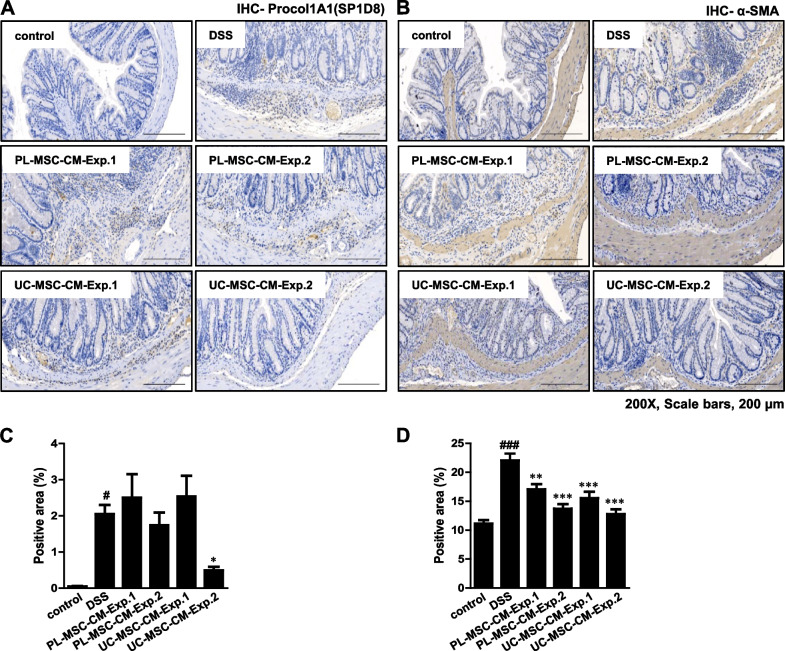
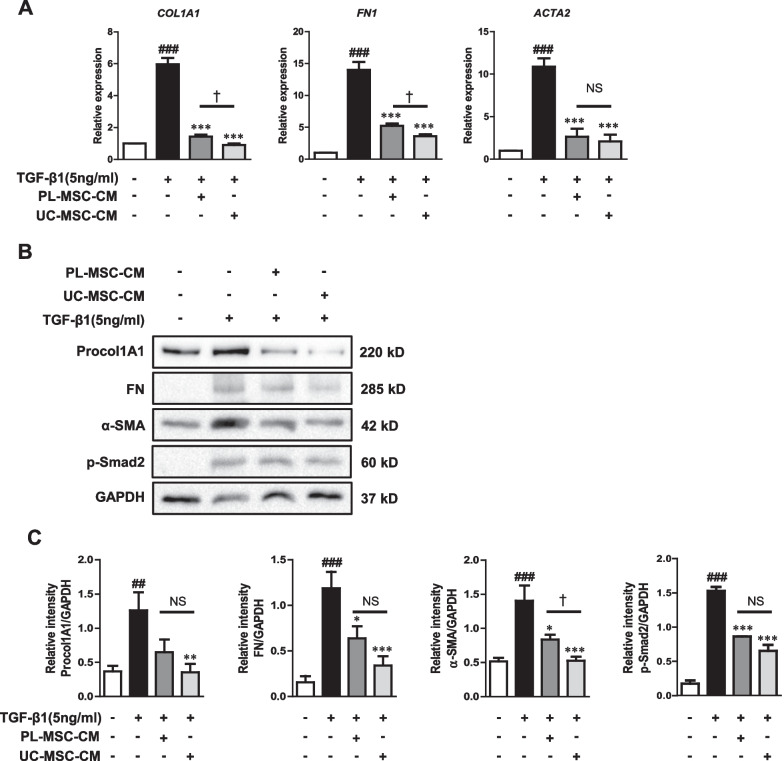
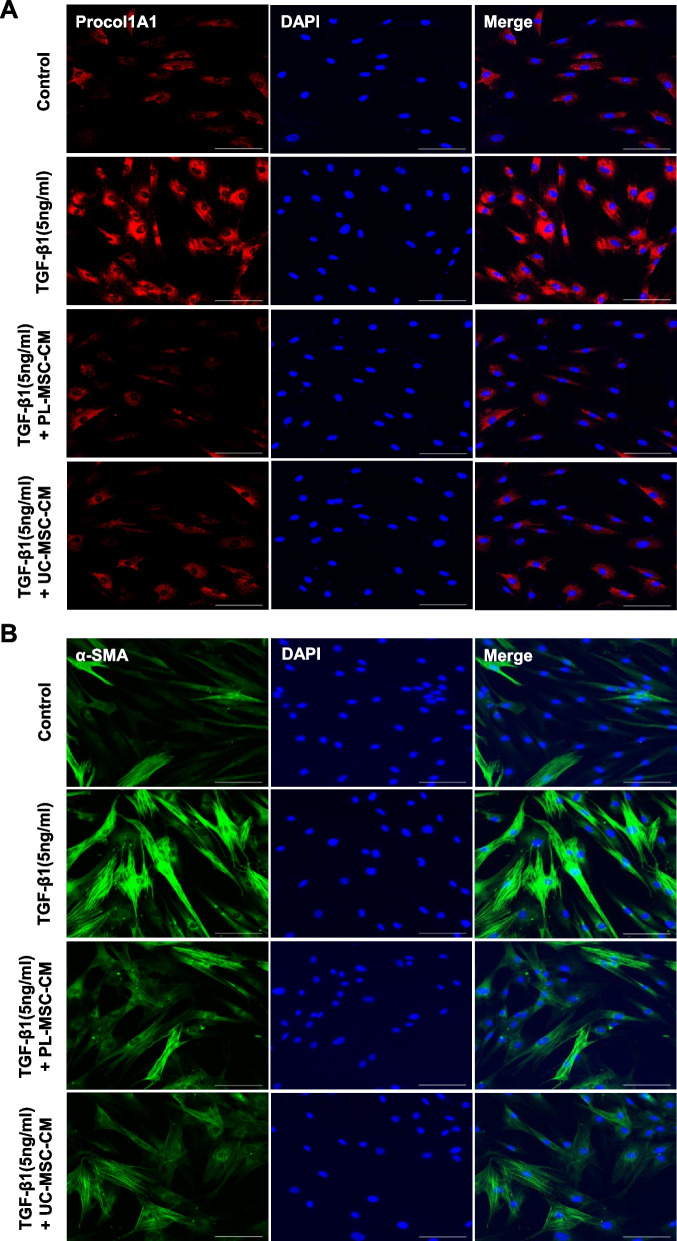
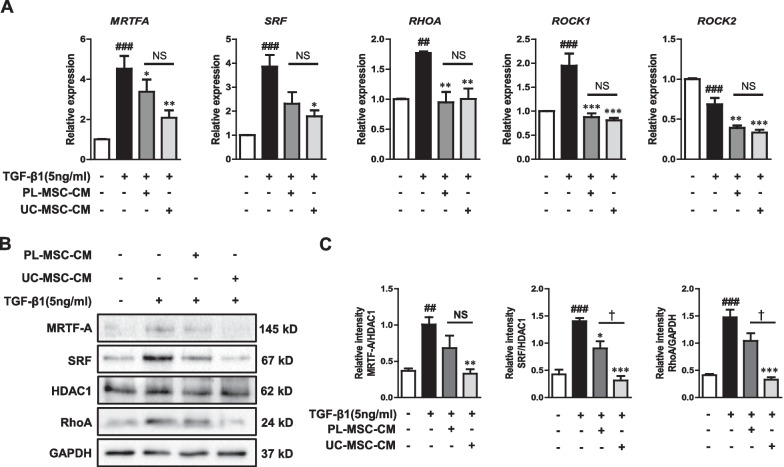
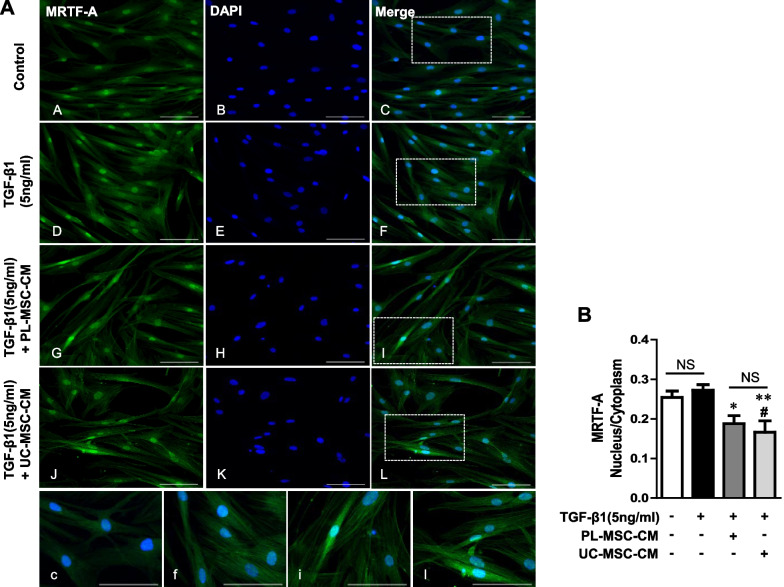
In the animal study, UC/PL-MSC-CM reduced submucosa/muscularis propria thickness and collagen deposition, which improved intestinal fibrosis in chronic DSS colitis. The UC/PL-MSC-CM significantly reduced the expressions of procollagen1A1 and α-smooth muscle actin, which DSS significantly elevated. The anti-fibrogenic effect was more apparent in the UC-MSC-CM or early-phase treatment model. The UC/PL-MSC-CM reduced procollagen1A1, fibronectin, and α-smooth muscle actin expression in HIMFs in the cellular model. The UC/PL-MSC-CM downregulated fibrogenesis by suppressing RhoA, MRTF-A, and SRF expression.
Human UC/PL-MSC-CM inhibits TGF-β1-induced fibrogenic activation in HIMFs by blocking the Rho/MRTF/SRF pathway and chronic DSS colitis-induced intestinal fibrosis. Thus, it may be regarded as a novel candidate for stem cell-based therapy of intestinal fibrosis.
炎症性肠病的一个显著未满足的需求是缺乏针对肠道纤维化的抗纤维化药物。本研究旨在研究人脐带/胎盘间充质干细胞(UC/PL-MSC)条件培养基(CM)在小鼠肠道纤维化模型和人原代肠道肌成纤维细胞(HIMFs)中的抗纤维化特性和机制。
使用 3 kDa 截止过滤器浓缩 UC/PL-MSC-CM 15 倍。7 周龄 C57BL/6 小鼠随机分为四组:(1)对照组,(2)葡聚糖硫酸钠(DSS)组,(3)DSS+CM(晚期治疗)组,和(4)DSS+CM(早期治疗)组。通过三个周期的 DSS 给药诱导慢性 DSS 结肠炎和肠道纤维化。一个 DSS 周期包括 7 天的口服 DSS 给药(1.75%、2%和 2.5% DSS),然后是 14 天的饮用水。在 DSS 周期的晚期(第 50 天,10 次)或早期(第 29 天,10 次)腹腔内给予 UC/PL-MSC-CM。在细胞模型中,用 TGF-β1 处理 HIMFs,并与 UC/PL-MSC-CM(培养基的 10%)共同处理。
在动物研究中,UC/PL-MSC-CM 降低了黏膜下/肌层厚度和胶原沉积,改善了慢性 DSS 结肠炎中的肠道纤维化。UC/PL-MSC-CM 显著降低了 DSS 显著升高的前胶原 1A1 和 α-平滑肌肌动蛋白的表达。在 UC-MSC-CM 或早期治疗模型中,抗纤维化作用更为明显。UC/PL-MSC-CM 在细胞模型中降低了 HIMFs 中前胶原 1A1、纤维连接蛋白和 α-平滑肌肌动蛋白的表达。UC/PL-MSC-CM 通过抑制 RhoA、MRTF-A 和 SRF 的表达来下调纤维化。
人 UC/PL-MSC-CM 通过阻断 Rho/MRTF/SRF 通路和慢性 DSS 结肠炎诱导的肠道纤维化,抑制 TGF-β1 诱导的 HIMFs 纤维化激活。因此,它可能被视为肠道纤维化基于干细胞治疗的一种新的候选药物。