Laguna Juan Carlos, García-Pardo Miguel, Alessi Joao, Barrios Carlos, Singh Navneet, Al-Shamsi Humaid O, Loong Herbert, Ferriol Miquel, Recondo Gonzalo, Mezquita Laura
Medical Oncology Department, Hospital Clinic of Barcelona, Barcelona, Spain.
Laboratory of Translational Genomics and Targeted Therapies in Solid Tumors, IDIBAPS, Barcelona, Spain.
Ther Adv Med Oncol. 2024 Mar 6;16:17588359241231260. doi: 10.1177/17588359241231260. eCollection 2024.
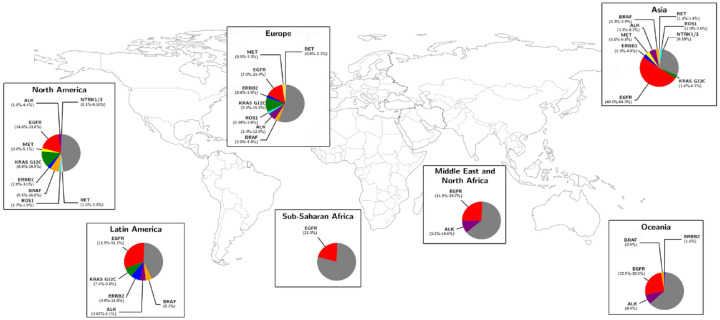
Lung cancer poses a global health challenge and stands as the leading cause of cancer-related deaths worldwide. However, its incidence, mortality, and characteristics are not uniform across all regions worldwide. Understanding the factors contributing to this diversity is crucial in a prevalent disease where most cases are diagnosed in advanced stages. Hence, prevention and early diagnosis emerge as the most efficient strategies to enhance outcomes. In Western societies, tobacco consumption constitutes the primary risk factor for lung cancer, accounting for up to 90% of cases. In other geographic locations, different significant factors play a fundamental role in disease development, such as individual genetic predisposition, or exposure to other carcinogens such as radon gas, environmental pollution, occupational exposures, or specific infectious diseases. Comprehensive clinical and molecular characterization of lung cancer in recent decades has enabled us to distinguish different subtypes of lung cancer with distinct phenotypes, genotypes, immunogenicity, treatment responses, and survival rates. The ultimate goal is to prevent and individualize lung cancer management in each community and improve patient outcomes.
肺癌是一项全球性的健康挑战,是全球癌症相关死亡的主要原因。然而,其发病率、死亡率和特征在全球所有地区并不一致。在这种大多数病例在晚期才被诊断出来的常见疾病中,了解造成这种多样性的因素至关重要。因此,预防和早期诊断成为改善治疗结果的最有效策略。在西方社会,烟草消费是肺癌的主要危险因素,占病例的90%。在其他地理位置,不同的重要因素在疾病发展中起根本作用,如个体遗传易感性,或接触其他致癌物,如氡气、环境污染、职业暴露或特定传染病。近几十年来对肺癌进行的全面临床和分子特征分析使我们能够区分具有不同表型、基因型、免疫原性、治疗反应和生存率的不同肺癌亚型。最终目标是在每个社区预防肺癌并实现个体化管理,改善患者治疗结果。