Joint Laboratory for Translational Cancer Research of Chinese Medicine of the Ministry of Education of the People's Republic of China, Guangdong-Hong Kong-Macau Joint Lab on Chinese Medicine and Immune Disease Research, International Institute for Translational Chinese Medicine, Guangzhou University of Chinese Medicine, Guangzhou, 510006, China.
State Key Laboratory of Quality Research in Chinese Medicine, Macau University of Science and Technology, Macau, China.
Acta Pharmacol Sin. 2024 Jun;45(6):1224-1236. doi: 10.1038/s41401-023-01206-3. Epub 2024 Mar 11.
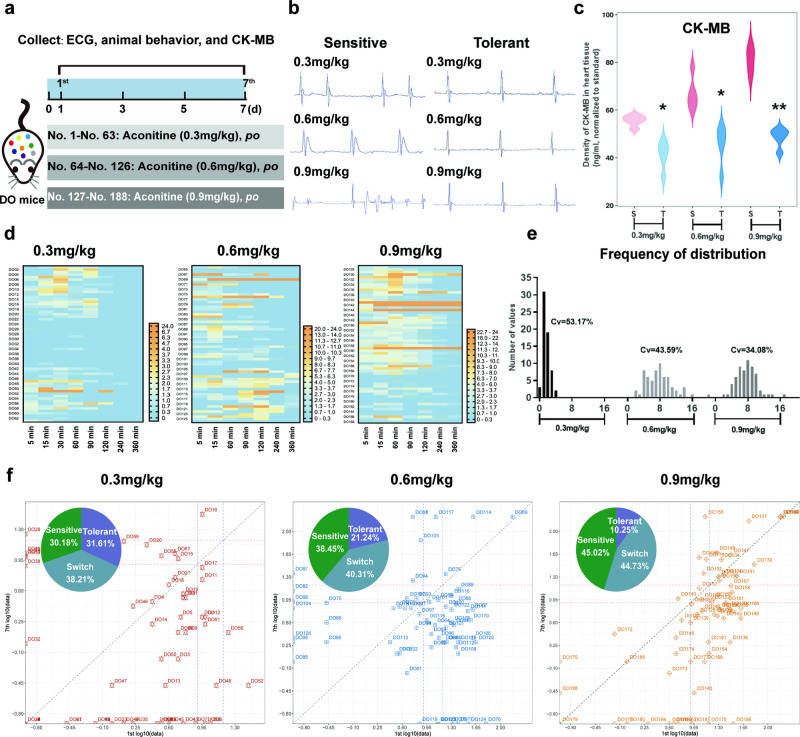
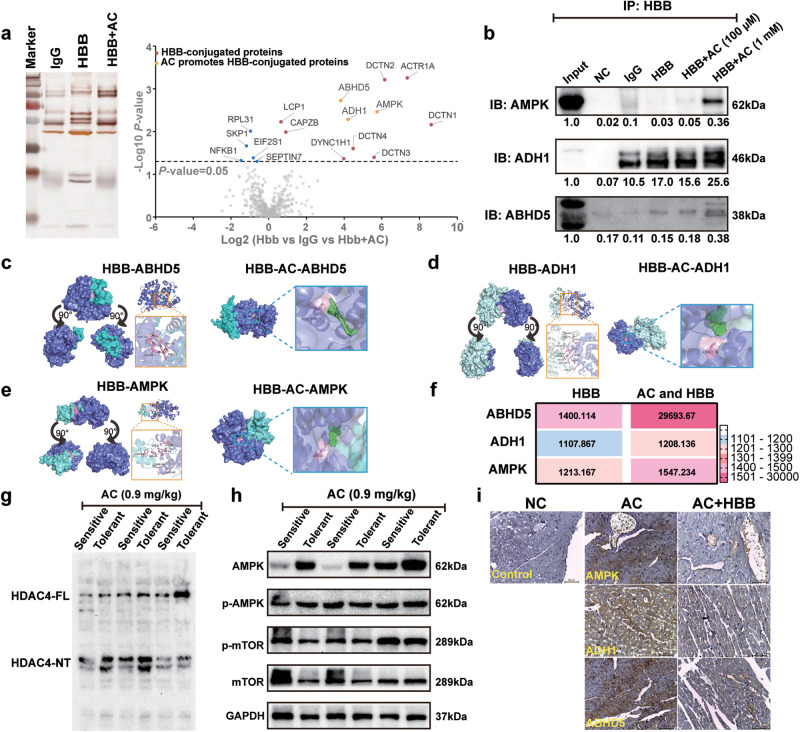
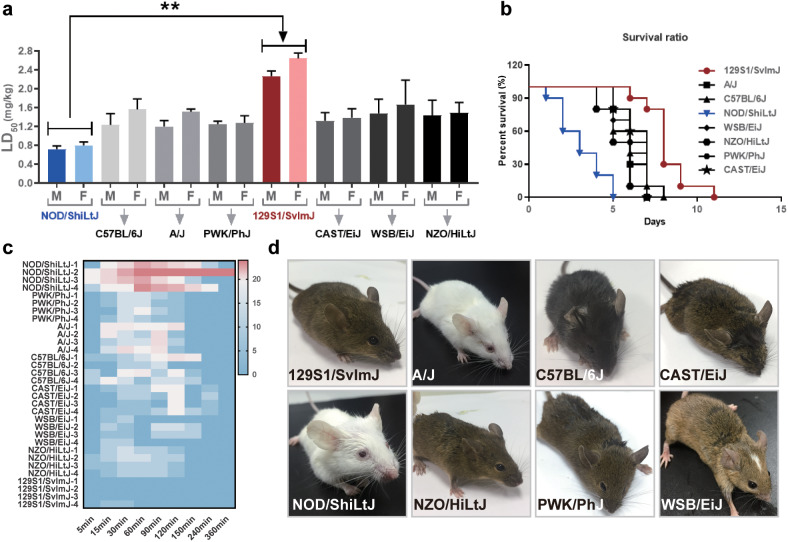
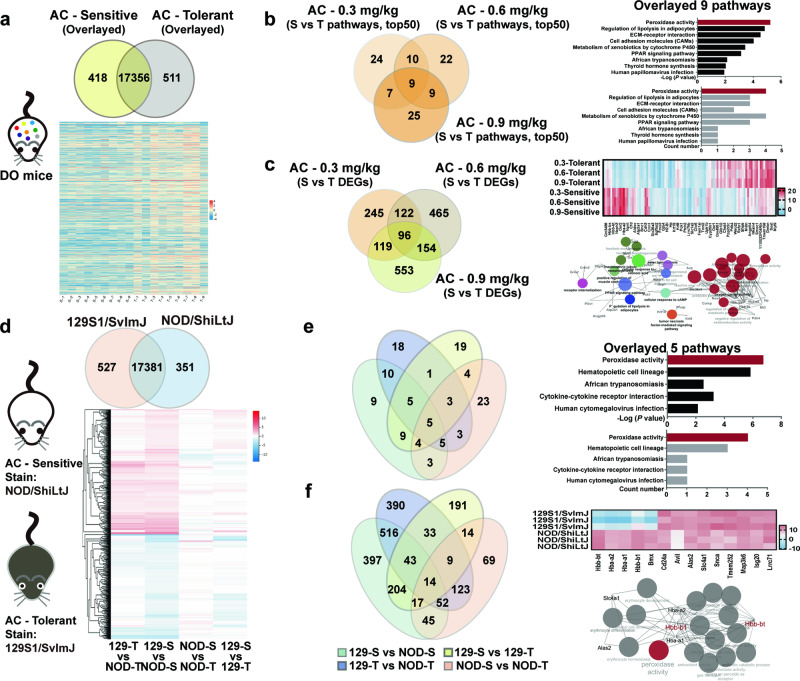
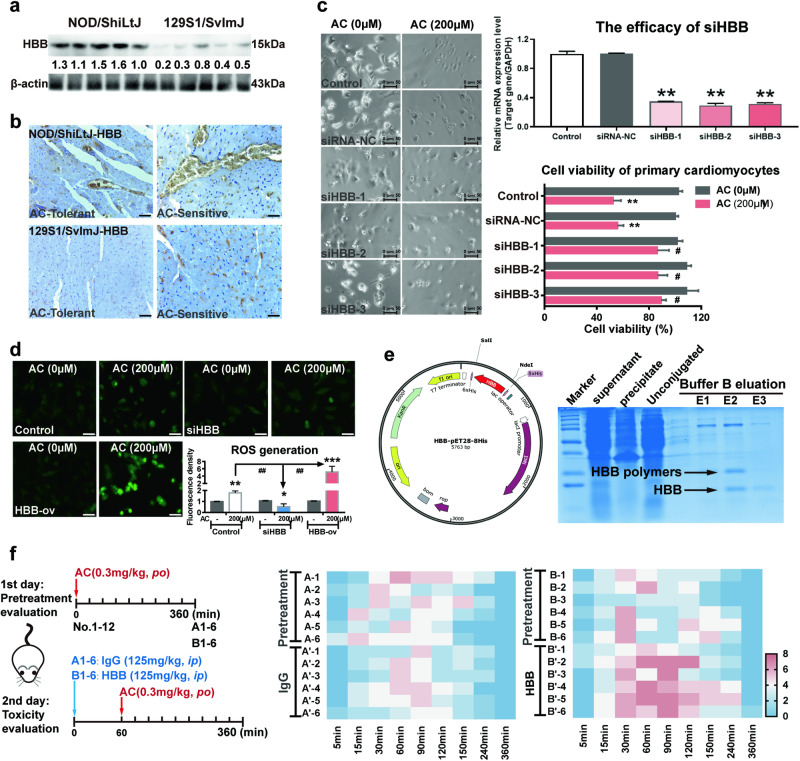
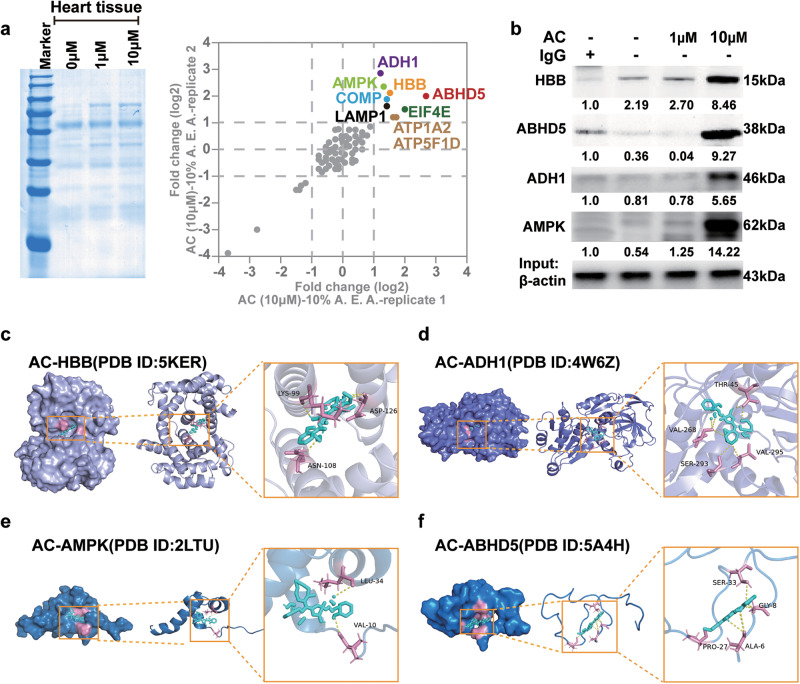
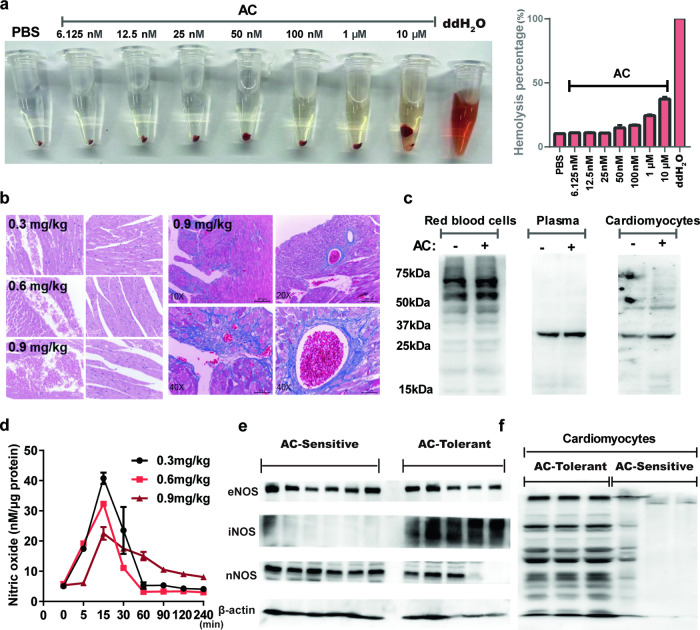
The root of Aconitum carmichaelii Debx. (Fuzi) is an herbal medicine used in China that exerts significant efficacy in rescuing patients from severe diseases. A key toxic compound in Fuzi, aconitine (AC), could trigger unpredictable cardiotoxicities with high-individualization, thus hinders safe application of Fuzi. In this study we investigated the individual differences of AC-induced cardiotoxicities, the biomarkers and underlying mechanisms. Diversity Outbred (DO) mice were used as a genetically heterogeneous model for mimicking individualization clinically. The mice were orally administered AC (0.3, 0.6, 0.9 mg· kg ·d) for 7 d. We found that AC-triggered cardiotoxicities in DO mice shared similar characteristics to those observed in clinic patients. Most importantly, significant individual differences were found in DO mice (variation coefficients: 34.08%-53.17%). RNA-sequencing in AC-tolerant and AC-sensitive mice revealed that hemoglobin subunit beta (HBB), a toxic-responsive protein in blood with 89% homology to human, was specifically enriched in AC-sensitive mice. Moreover, we found that HBB overexpression could significantly exacerbate AC-induced cardiotoxicity while HBB knockdown markedly attenuated cell death of cardiomyocytes. We revealed that AC could trigger hemolysis, and specifically bind to HBB in cell-free hemoglobin (cf-Hb), which could excessively promote NO scavenge and decrease cardioprotective S-nitrosylation. Meanwhile, AC bound to HBB enhanced the binding of HBB to ABHD5 and AMPK, which correspondingly decreased HDAC-NT generation and led to cardiomyocytes death. This study not only demonstrates HBB achievement a novel target of AC in blood, but provides the first clue for HBB as a novel biomarker in determining the individual differences of Fuzi-triggered cardiotoxicity.
乌头(Fuzi)的根是中国使用的一种草药,在抢救重症患者方面具有显著疗效。乌头中的关键毒性化合物乌头碱(AC)可引发不可预测的心脏毒性,具有高度个体化特征,从而阻碍了 Fuzi 的安全应用。在这项研究中,我们研究了 AC 诱导的心脏毒性的个体差异、生物标志物和潜在机制。多态性远交(DO)小鼠被用作模拟临床个体化的遗传异质性模型。将小鼠口服给予 AC(0.3、0.6、0.9mg·kg·d),持续 7 天。我们发现 DO 小鼠中 AC 引发的心脏毒性具有与临床患者相似的特征。最重要的是,在 DO 小鼠中发现了显著的个体差异(变异系数:34.08%-53.17%)。在 AC 耐受和 AC 敏感小鼠中进行的 RNA 测序显示,血红蛋白亚基β(HBB)是血液中的一种毒性反应蛋白,与人类具有 89%的同源性,在 AC 敏感小鼠中特异性富集。此外,我们发现 HBB 过表达可显著加重 AC 诱导的心脏毒性,而 HBB 敲低可显著减轻心肌细胞的细胞死亡。我们揭示了 AC 可引发溶血,并特异性结合细胞游离血红蛋白(cf-Hb)中的 HBB,这可过度促进 NO 清除并减少心脏保护型 S-亚硝基化。同时,AC 与 HBB 的结合增强了 HBB 与 ABHD5 和 AMPK 的结合,相应地降低了 HDAC-NT 的生成并导致心肌细胞死亡。这项研究不仅证明了 HBB 是血液中 AC 的一个新靶点,而且为 HBB 作为确定 Fuzi 引发的心脏毒性个体差异的新型生物标志物提供了第一个线索。