Bragard Claude, Baptista Paula, Chatzivassiliou Elisavet, Di Serio Francesco, Gonthier Paolo, Jaques Miret Josep Anton, Justesen Annemarie Fejer, MacLeod Alan, Magnusson Christer Sven, Milonas Panagiotis, Navas-Cortes Juan A, Parnell Stephen, Potting Roel, Reignault Philippe Lucien, Stefani Emilio, Thulke Hans-Hermann, Vicent Civera Antonio, Yuen Jonathan, Zappalà Lucia, Mally Richard, Czwienczek Ewelina, Gobbi Alex, López Mercadal Júlia, Maiorano Andrea, Mosbach-Schulz Olaf, Pautasso Marco, Rossi Eugenio, Stancanelli Giuseppe, Tramontini Sara, Van der Werf Wopke
EFSA J. 2024 Mar 12;22(3):e8498. doi: 10.2903/j.efsa.2024.8498. eCollection 2024 Mar.
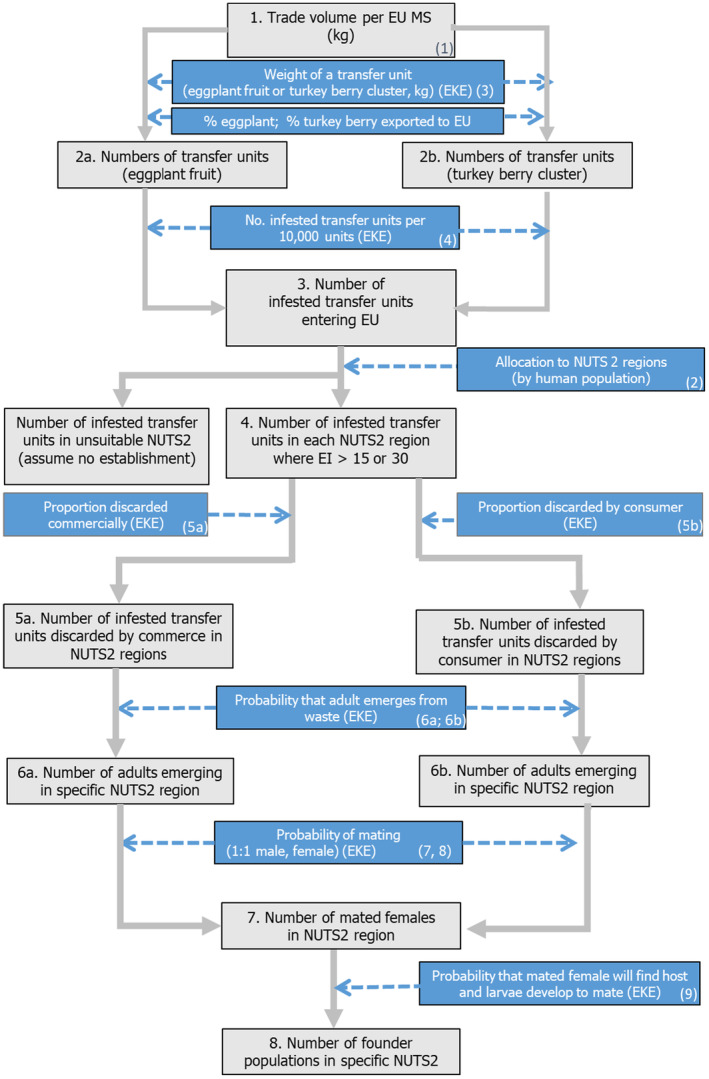
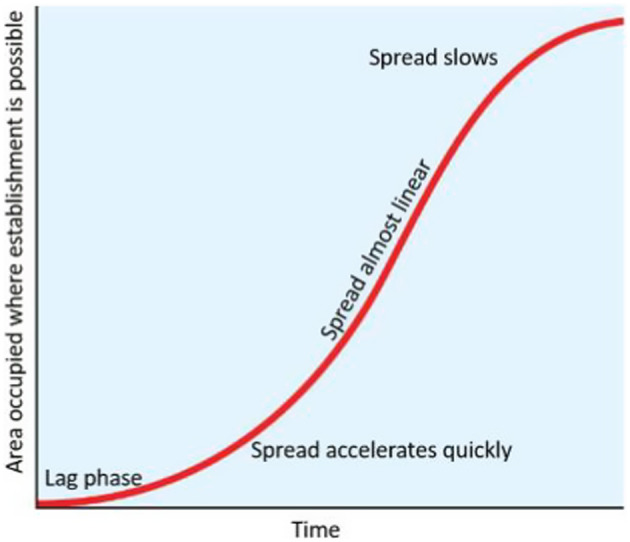
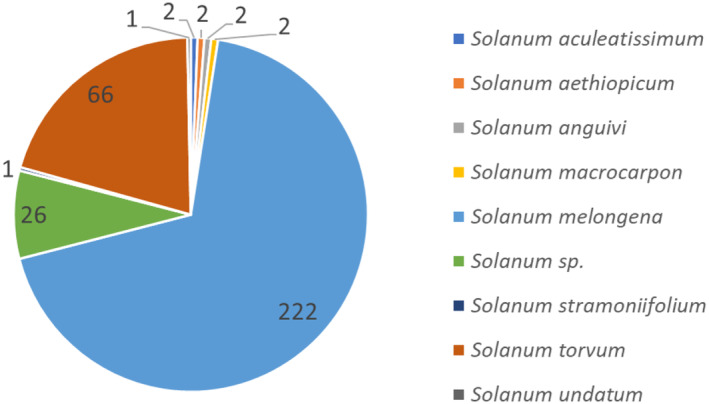
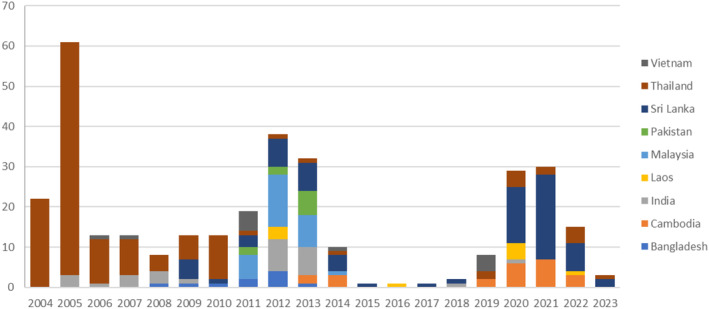
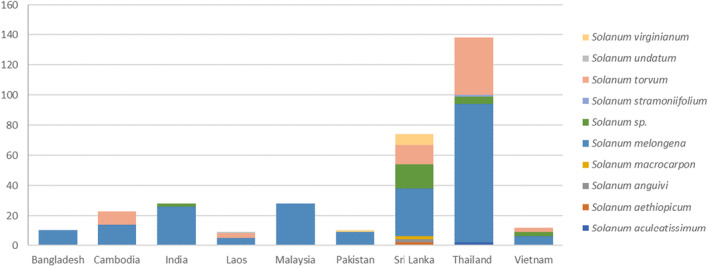
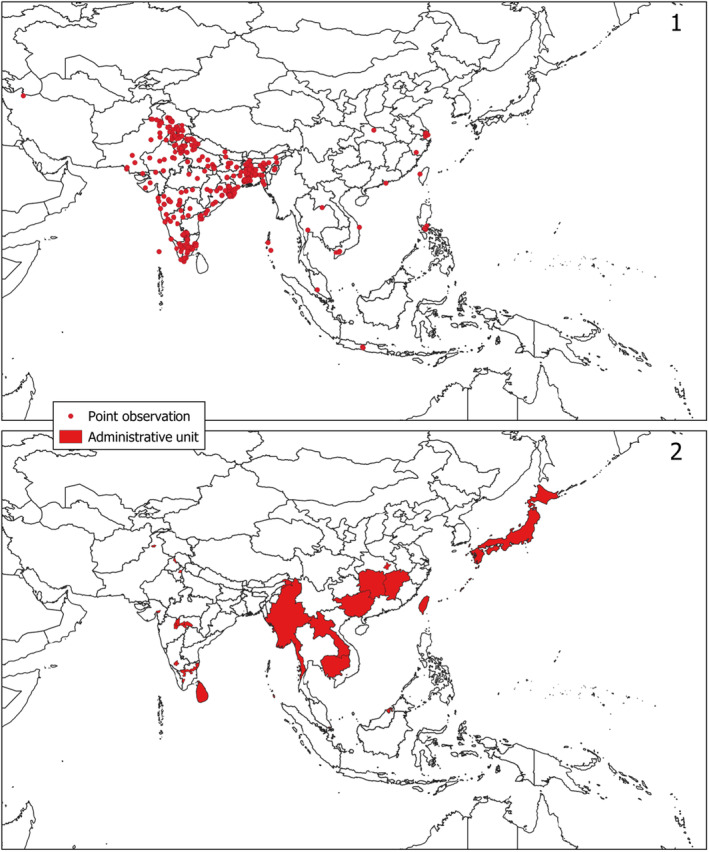
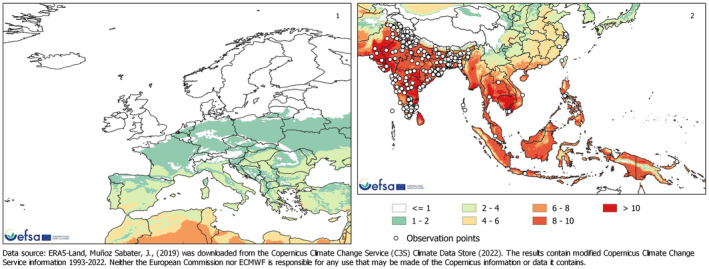
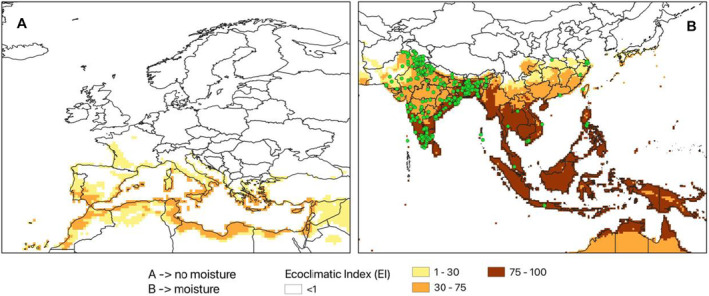
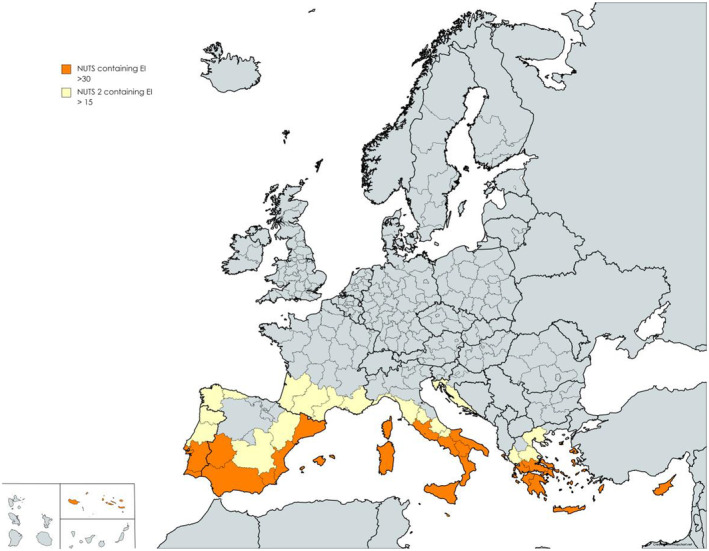
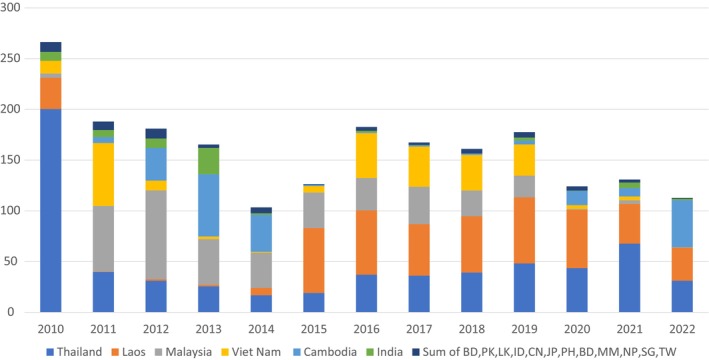
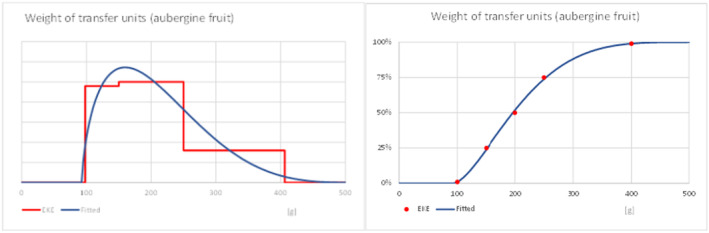
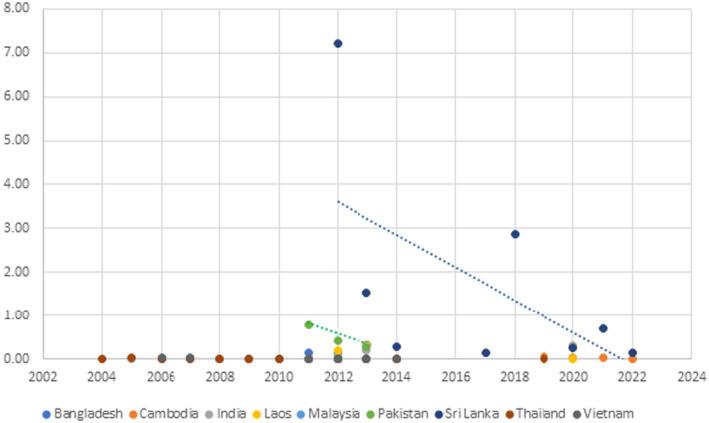
Following a request from the European Commission, the EFSA Panel on Plant Health performed a quantitative risk assessment of (Lepidoptera: Crambidae), the eggplant fruit and shoot borer, for the EU. The assessment focused on potential pathways for entry, climatic conditions favouring establishment, spread and impact. Options for risk reduction are discussed but effectiveness was not quantified. is a key pest of eggplant (aubergine/brinjal) in the Indian subcontinent and occurs throughout most of southern Asia with records mostly from India and Bangladesh. The main pathway of entry is fruit of solanaceous plants, primarily exotic varieties of eggplant, and turkey berry, The trade in both commodities from Asia is small but nevertheless dwarfs the trade in other fruits from Asia (). Other fruits were therefore not further assessed as potential pathways. The trade in eggplant from Asia consists of special fruit types and caters mostly to niche markets in the EU, while most eggplant consumed in Europe is produced in southern European and northern African countries, where does not occur. Using expert knowledge elicitation (EKE) and pathway modelling, the Panel estimated that approximately 3-670 infested fruit (90% certainty range, CR) of or fruit bunches of enter into regions of the EU that are suitable for establishment each year. Based on CLIMEX modelling, and using two possible thresholds of ecoclimatic index (EI) to indicate uncertainty in establishment potential, climates favouring establishment occur mostly in southern Europe, where, based on human population, approximately 14% of the imported produce is distributed across NUTS2 regions where EI ≥ 30; or 23% of the produce is distributed where EI ≥ 15. Escape of adult moths occurs mostly from consumer waste. By analysing results of different scenarios for the proportion of and in the trade, and considering uncertainties in the climatic suitability of southern Europe, adult moth emergence in areas suitable for establishment is expected to vary between 84 individuals per year and one individual per 40 years (based on 90% CR in different scenarios). In the baseline scenario, 25% of the solanaceous fruit from Asia is 75% is and EI ≥ 30 is required for establishment. After accounting for the chances of mating, host finding and establishment, the probability of a mated female establishing a founder population in the EU is less than 1 in 100,000 to about 1 event per 622 years (90% CR in baseline scenario). The waiting time until the first establishment is then 622 to more than 100,000 years (CR). If such a founder population were established, the moth is estimated to spread at a rate of 0.65-7.0 km per year after a lag phase of 5-92 years. The impact of the insect on the production of eggplant is estimated to be 0.67%-13% (CR) if growers take no specific action against the insect and 0.13%-1.9% if they do take targeted actions. Tomato () and potato () are hosts of , but the insect does not develop to maturity in tomato fruit, and it does not feed on potato tubers under field conditions; hence, damage to potato can only occur due to feeding on shoots. Tomato and potato are not preferred hosts; nevertheless, impact can occur if populations of are high and preferred hosts are not available. The Panel did not assess this damage due to insufficient information.
应欧盟委员会的要求,欧洲食品安全局植物健康小组对茄实夜蛾(鳞翅目:草螟科)进行了欧盟层面的定量风险评估。该评估聚焦于其进入欧盟的潜在途径、有利于定殖、扩散及造成影响的气候条件。文中讨论了降低风险的措施,但未对其有效性进行量化。茄实夜蛾是印度次大陆茄子(紫茄/茄子)的主要害虫,在亚洲大部分地区均有发生,记录大多来自印度和孟加拉国。其主要进入途径是茄科植物的果实,主要是外来品种的茄子以及刺天茄,从亚洲进口这两种商品的贸易量虽小,但仍使来自亚洲的其他茄科果实贸易量相形见绌(此处原文括号内容缺失)。因此,未将其他茄科果实作为潜在途径作进一步评估。来自亚洲的茄子贸易包括特殊果实类型,主要面向欧盟的小众市场,而欧洲消费的大部分茄子产自南欧和北非国家,这些地区没有茄实夜蛾。通过专家知识获取(EKE)和途径建模,该小组估计,每年约有3 - 670个受茄实夜蛾侵染的果实或刺天茄果串进入欧盟适合其定殖的地区(90%置信区间,CR)。基于CLIMEX模型,并使用两个可能的生态气候指数(EI)阈值来表明定殖潜力的不确定性,有利于定殖的气候主要出现在南欧,根据人口分布,在那里约14%的进口农产品分布在EI≥30的NUTS2区域;或23%的农产品分布在EI≥15的区域。成虫蛾的逃逸主要源于消费者丢弃的废弃物。通过分析贸易中茄实夜蛾和刺天茄所占比例的不同情景结果,并考虑南欧气候适宜性的不确定性,预计在适合定殖的地区成虫蛾的出现数量每年在84只到每40年1只之间(基于不同情景下的90%置信区间)。在基准情景下,来自亚洲的茄科果实中25%是刺天茄,75%是茄子,定殖需要EI≥30。在考虑交配、寻找寄主和定殖的可能性后,一只已交配雌蛾在欧盟建立初始种群的概率小于十万分之一至约每622年发生1次(基准情景下的90%置信区间)。首次定殖的等待时间则为622年至超过十万年(置信区间)。如果这样一个初始种群得以建立,预计该蛾在经历5 - 92年的滞后期后,每年扩散速度为0.65 - 7.0千米。如果种植者不对该害虫采取特定行动,估计该昆虫对茄子产量的影响为0.67% - 13%(置信区间);如果采取针对性行动,影响为0.13% - 1.9%。番茄(番茄)和马铃薯(马铃薯)是茄实夜蛾的寄主,但该昆虫在番茄果实中无法发育至成熟,且在田间条件下不以马铃薯块茎为食;因此,对马铃薯的损害仅可能因取食嫩枝而发生。番茄和马铃薯并非其偏好寄主;然而,如果茄实夜蛾种群数量众多且没有偏好寄主,仍可能造成影响。由于信息不足,该小组未评估这种损害。