• 文献检索
  • 文档翻译
  • 深度研究
  • 学术资讯
  • Suppr Zotero 插件Zotero 插件
  • 邀请有礼
  • 套餐&价格
  • 历史记录
应用&插件
Suppr Zotero 插件Zotero 插件浏览器插件Mac 客户端Windows 客户端微信小程序
定价
高级版会员购买积分包购买API积分包
服务
文献检索文档翻译深度研究API 文档MCP 服务
关于我们
关于 Suppr公司介绍联系我们用户协议隐私条款
关注我们

Suppr 超能文献

核心技术专利:CN118964589B侵权必究
粤ICP备2023148730 号-1Suppr @ 2026

文献检索

告别复杂PubMed语法,用中文像聊天一样搜索,搜遍4000万医学文献。AI智能推荐,让科研检索更轻松。

立即免费搜索

文件翻译

保留排版,准确专业,支持PDF/Word/PPT等文件格式,支持 12+语言互译。

免费翻译文档

深度研究

AI帮你快速写综述,25分钟生成高质量综述,智能提取关键信息,辅助科研写作。

立即免费体验

评估随着进口切花玫瑰而传入欧盟的可能性。

Assessment of the probability of introduction of into the European Union with import of cut roses.

作者信息

Bragard Claude, Baptista Paula, Chatzivassiliou Elisavet, Di Serio Francesco, Gonthier Paolo, Jaques Miret Josep Anton, Fejer Justesen Annemarie, MacLeod Alan, Magnusson Christer Sven, Navas-Cortes Juan A, Parnell Stephen, Potting Roel, Reignault Philippe Lucien, Stefani Emilio, Thulke Hans-Hermann, Vicent Civera Antonio, Van der Werf Wopke, Yuen Jonathan, Zappalà Lucia, Gutierrez Andrew Paul, Loomans Antoon, Ponti Luigi, Crotta Matteo, Maiorano Andrea, Mosbach-Schulz Olaf, Rossi Eugenio, Stancanelli Giuseppe, Milonas Panagiotis

出版信息

EFSA J. 2023 Oct 19;21(10):e08107. doi: 10.2903/j.efsa.2023.8107. eCollection 2023 Oct.

DOI:10.2903/j.efsa.2023.8107
PMID:37869253
原文链接:https://pmc.ncbi.nlm.nih.gov/articles/PMC10585611/
Abstract

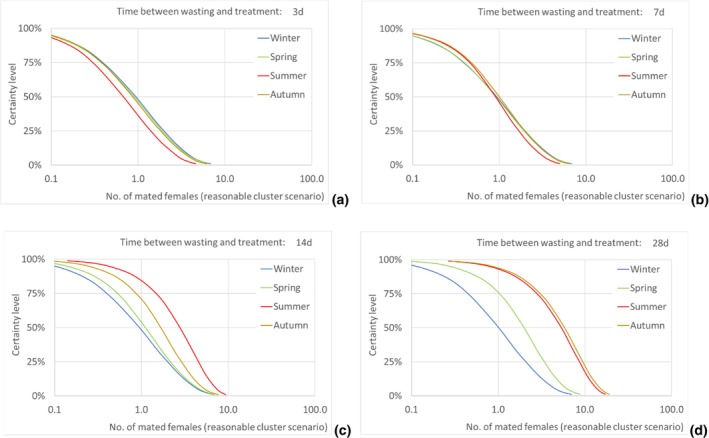
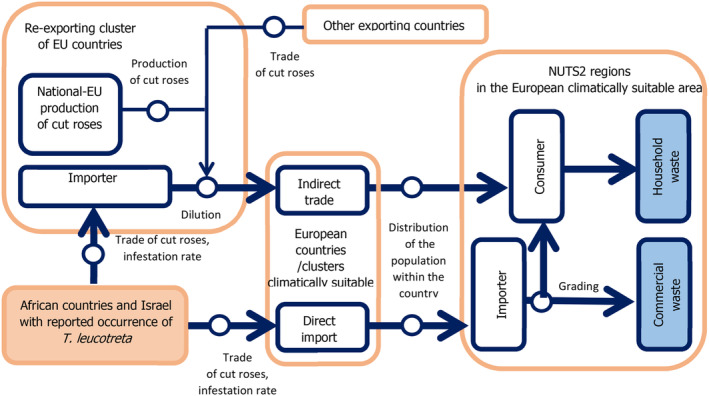
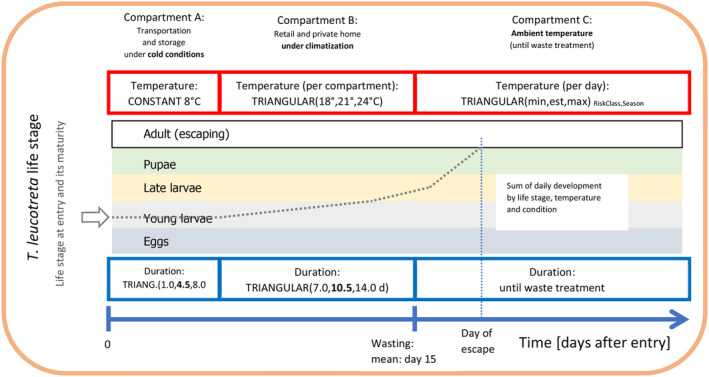
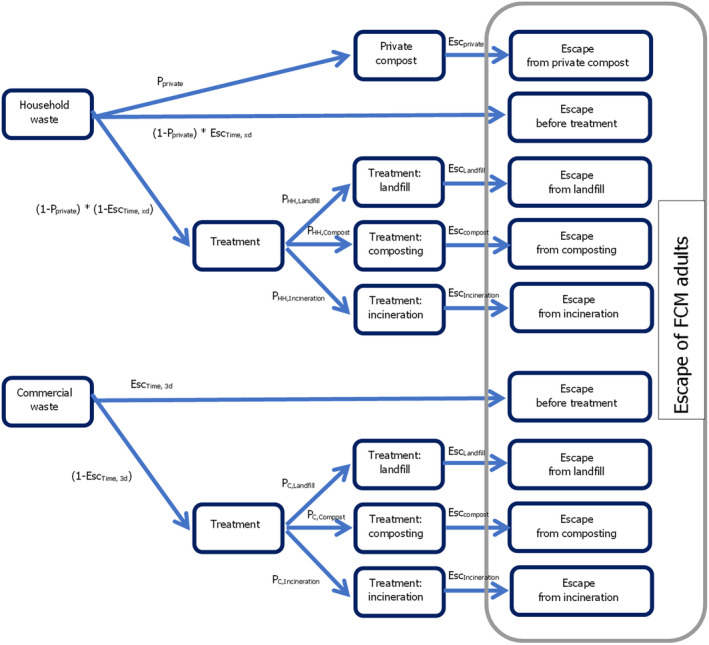
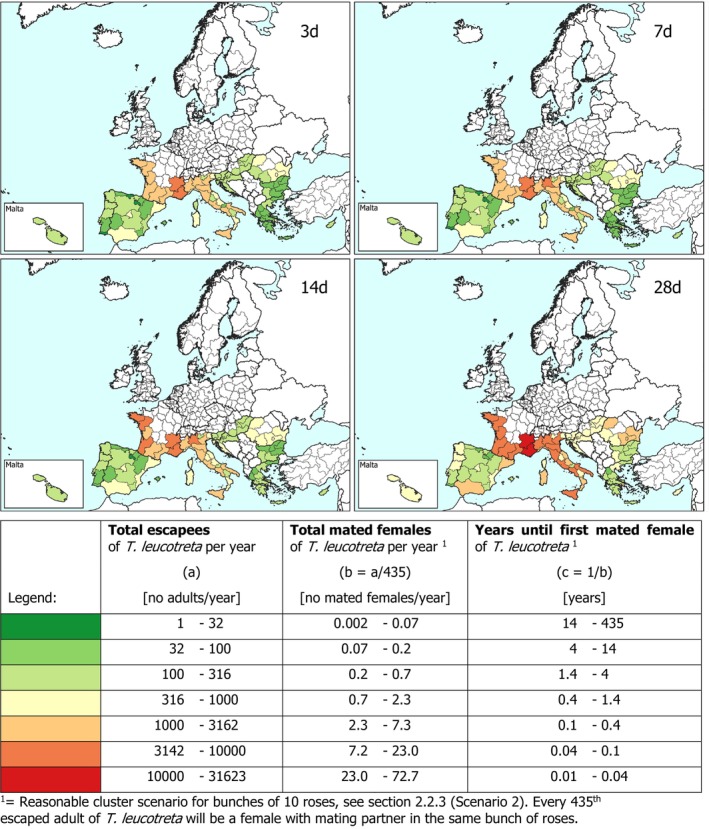
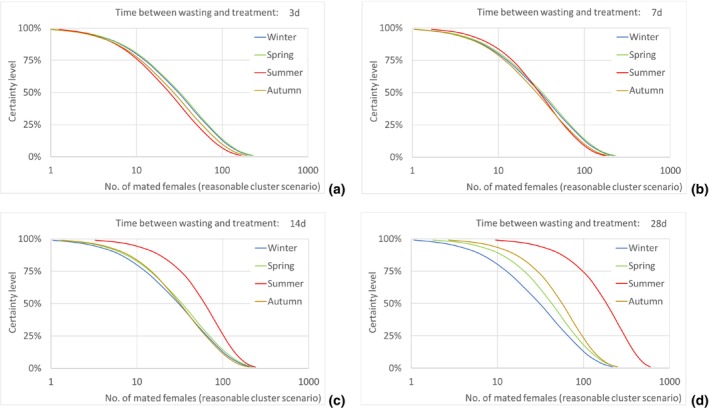
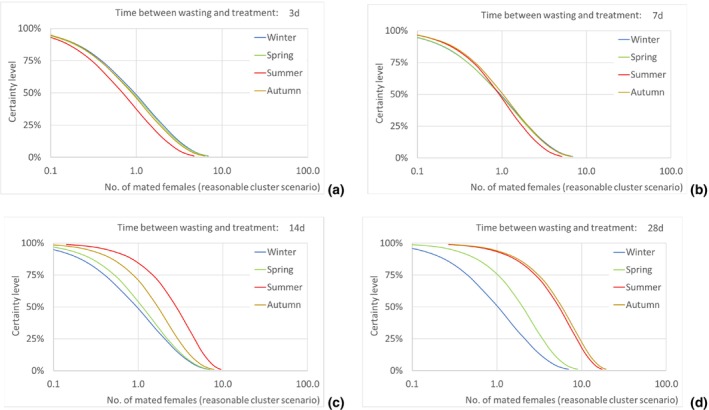
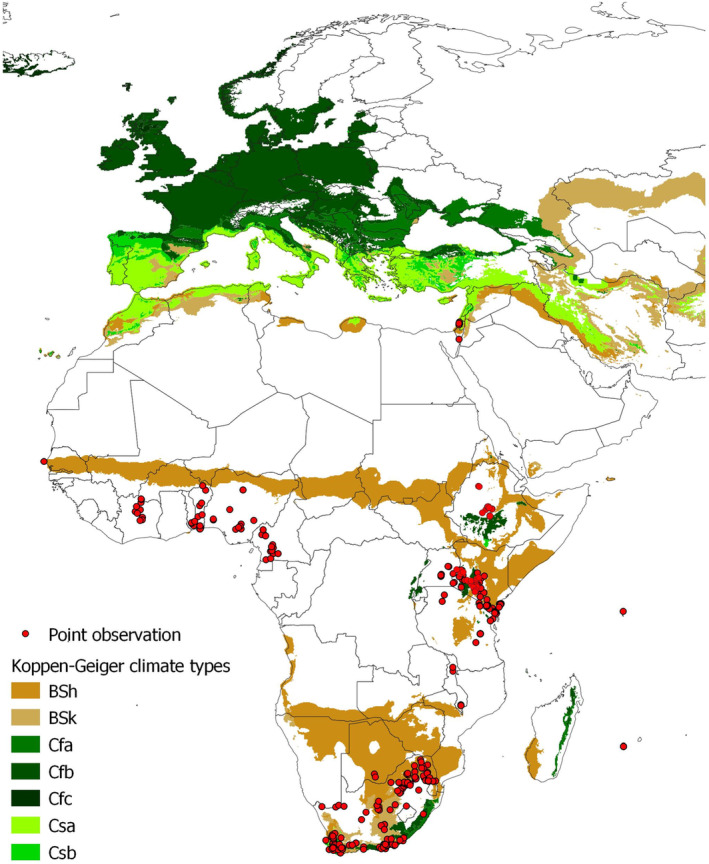
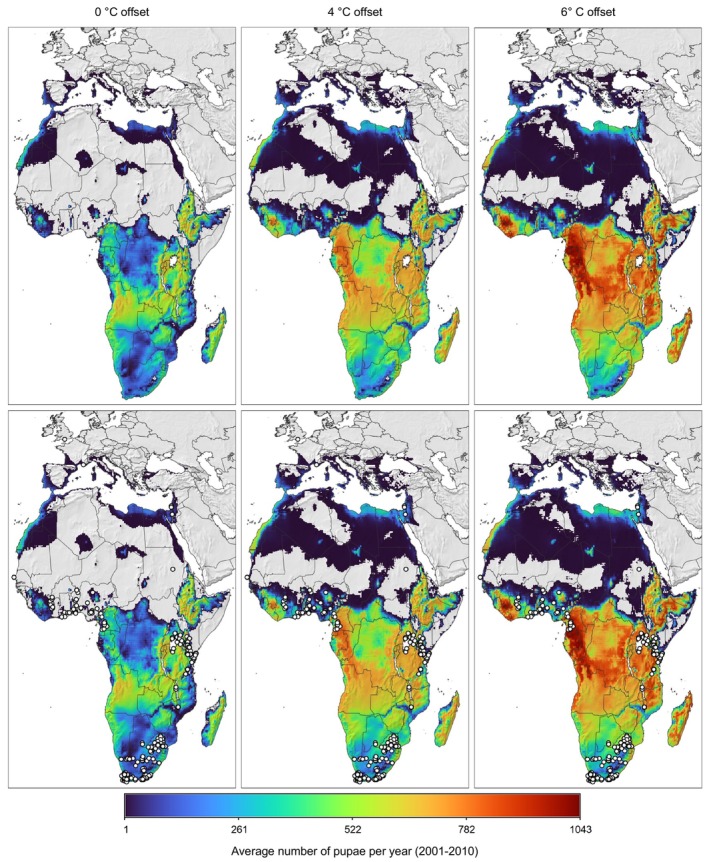
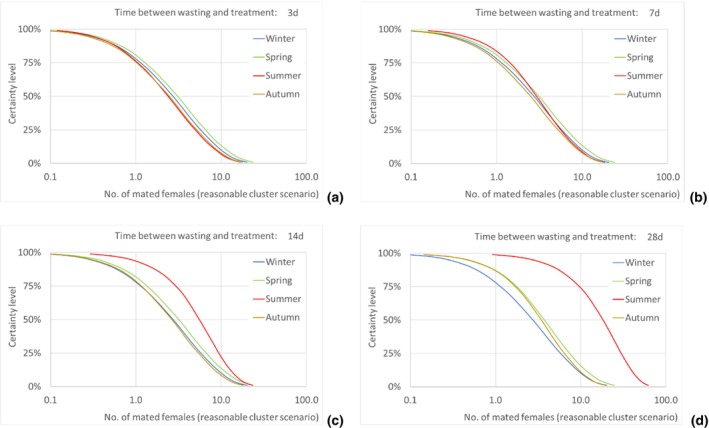
Following a request from the European Commission, the EFSA Panel on Plant Health performed a quantitative pest risk assessment to assess whether the import of cut roses provides a pathway for the introduction of (Lepidoptera: Tortricidae) into the EU. The assessment was limited to the entry and establishment steps. A pathway model was used to assess how many individuals would survive and emerge as adults from commercial or household wastes in an EU NUTS2 region climatically suitable in a specific season. This pathway model for entry consisted of three components: a cut roses distribution model, a developmental model and a waste model. Four scenarios of timing from initial disposal of the cut roses until waste treatment (3, 7, 14 and 28 days) were considered. The estimated median number of adults escaping per year from imported cut roses in all the climatically suitable NUTS2 regions of the EU varied from 49,867 (90% uncertainty between 5,298 and 234,393) up to 143,689 (90% uncertainty between 21,126 and 401,458) for the 3- and 28-day scenarios. Assuming that, on average, a successful mating will happen for every 435 escaping moths, the estimated median number of mated females per year from imported cut roses in all the climatically suitable NUTS2 regions of the EU would vary from 115 (90% uncertainty between 12 and 538) up to 330 (90% uncertainty between 49 and 923) for the 3- and 28-day scenarios. Due to the extreme polyphagia of , host availability will not be a limiting factor for establishment. Climatic suitability assessment, using a physiologically based demographic modelling approach, identified the coastline extending from the northwest of the Iberian Peninsula through the Mediterranean as area suitable for establishment of . This assessment indicates that cut roses provide a pathway for the introduction of into the EU.

摘要

应欧盟委员会的要求,欧洲食品安全局植物健康小组进行了一项有害生物定量风险评估,以评估进口切花玫瑰是否为 (鳞翅目:卷蛾科)传入欧盟提供了途径。该评估仅限于入境和定殖步骤。使用了一个途径模型来评估在特定季节气候适宜的欧盟NUTS2地区,有多少 个体能够从商业或家庭废物中存活并羽化为成虫。这个入境途径模型由三个部分组成:切花玫瑰分布模型、 发育模型和废物模型。考虑了从切花玫瑰初次丢弃到废物处理的四种时间情景(3天、7天、14天和28天)。在欧盟所有气候适宜的NUTS2地区,估计每年从进口切花玫瑰中逃出的成虫中位数在3天情景下为49,867只(90%不确定性区间为5,298至234,393只),在28天情景下为143,689只(90%不确定性区间为21,126至401,458只)。假设平均每435只逃出的蛾会成功交配一次,在欧盟所有气候适宜的NUTS2地区,估计每年从进口切花玫瑰中逃出的已交配雌蛾中位数在3天情景下为115只(90%不确定性区间为12至538只),在28天情景下为330只(90%不确定性区间为49至923只)。由于 的极端多食性,寄主可用性不会成为定殖的限制因素。使用基于生理的种群动态建模方法进行的气候适宜性评估确定,从伊比利亚半岛西北部延伸至地中海的海岸线为适合 定殖的区域。该评估表明,切花玫瑰为 将传入欧盟提供了一条途径。
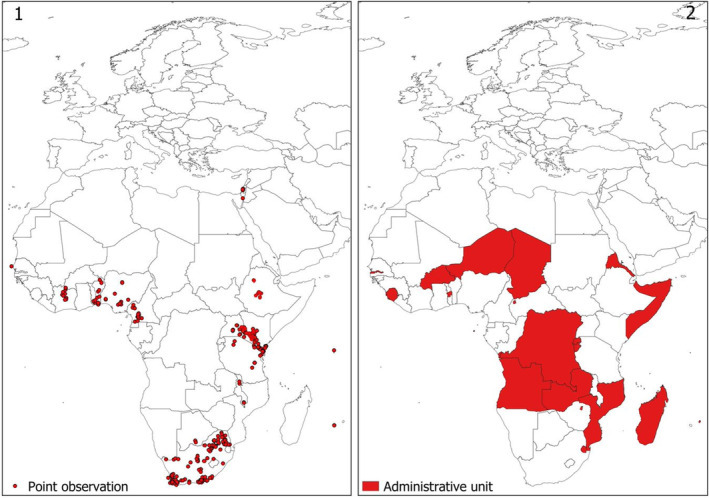
https://cdn.ncbi.nlm.nih.gov/pmc/blobs/0c1b/10585611/b094fea575af/EFS2-21-e08107-g014.jpg
https://cdn.ncbi.nlm.nih.gov/pmc/blobs/0c1b/10585611/a6f6128eac52/EFS2-21-e08107-g041.jpg
https://cdn.ncbi.nlm.nih.gov/pmc/blobs/0c1b/10585611/28cbbe75f309/EFS2-21-e08107-g026.jpg
https://cdn.ncbi.nlm.nih.gov/pmc/blobs/0c1b/10585611/ff12ea479e8b/EFS2-21-e08107-g016.jpg
https://cdn.ncbi.nlm.nih.gov/pmc/blobs/0c1b/10585611/98991f5a7118/EFS2-21-e08107-g053.jpg
https://cdn.ncbi.nlm.nih.gov/pmc/blobs/0c1b/10585611/413b05cb0312/EFS2-21-e08107-g046.jpg
https://cdn.ncbi.nlm.nih.gov/pmc/blobs/0c1b/10585611/c1dd5e7c2810/EFS2-21-e08107-g057.jpg
https://cdn.ncbi.nlm.nih.gov/pmc/blobs/0c1b/10585611/f025623d5b8c/EFS2-21-e08107-g012.jpg
https://cdn.ncbi.nlm.nih.gov/pmc/blobs/0c1b/10585611/a0699f0cbd90/EFS2-21-e08107-g039.jpg
https://cdn.ncbi.nlm.nih.gov/pmc/blobs/0c1b/10585611/dba5872b168a/EFS2-21-e08107-g029.jpg
https://cdn.ncbi.nlm.nih.gov/pmc/blobs/0c1b/10585611/c7da3b469eb8/EFS2-21-e08107-g045.jpg
https://cdn.ncbi.nlm.nih.gov/pmc/blobs/0c1b/10585611/996a1be49945/EFS2-21-e08107-g052.jpg
https://cdn.ncbi.nlm.nih.gov/pmc/blobs/0c1b/10585611/b2b81dad299f/EFS2-21-e08107-g013.jpg
https://cdn.ncbi.nlm.nih.gov/pmc/blobs/0c1b/10585611/5321c08c8697/EFS2-21-e08107-g003.jpg
https://cdn.ncbi.nlm.nih.gov/pmc/blobs/0c1b/10585611/8c49862f5d2b/EFS2-21-e08107-g040.jpg
https://cdn.ncbi.nlm.nih.gov/pmc/blobs/0c1b/10585611/a6efa5e65176/EFS2-21-e08107-g028.jpg
https://cdn.ncbi.nlm.nih.gov/pmc/blobs/0c1b/10585611/53e8bda52716/EFS2-21-e08107-g017.jpg
https://cdn.ncbi.nlm.nih.gov/pmc/blobs/0c1b/10585611/cfff24aabd77/EFS2-21-e08107-g027.jpg
https://cdn.ncbi.nlm.nih.gov/pmc/blobs/0c1b/10585611/7ad805320b2e/EFS2-21-e08107-g056.jpg
https://cdn.ncbi.nlm.nih.gov/pmc/blobs/0c1b/10585611/8844f08f4d85/EFS2-21-e08107-g042.jpg
https://cdn.ncbi.nlm.nih.gov/pmc/blobs/0c1b/10585611/590a22df9061/EFS2-21-e08107-g020.jpg
https://cdn.ncbi.nlm.nih.gov/pmc/blobs/0c1b/10585611/da284b808776/EFS2-21-e08107-g024.jpg
https://cdn.ncbi.nlm.nih.gov/pmc/blobs/0c1b/10585611/b5f5f288ca26/EFS2-21-e08107-g037.jpg
https://cdn.ncbi.nlm.nih.gov/pmc/blobs/0c1b/10585611/ea5fc672bd4f/EFS2-21-e08107-g030.jpg
https://cdn.ncbi.nlm.nih.gov/pmc/blobs/0c1b/10585611/280582e35746/EFS2-21-e08107-g001.jpg
https://cdn.ncbi.nlm.nih.gov/pmc/blobs/0c1b/10585611/589bfa03d97d/EFS2-21-e08107-g054.jpg
https://cdn.ncbi.nlm.nih.gov/pmc/blobs/0c1b/10585611/3fe564b9e5a0/EFS2-21-e08107-g018.jpg
https://cdn.ncbi.nlm.nih.gov/pmc/blobs/0c1b/10585611/b094fea575af/EFS2-21-e08107-g014.jpg
https://cdn.ncbi.nlm.nih.gov/pmc/blobs/0c1b/10585611/a6f6128eac52/EFS2-21-e08107-g041.jpg
https://cdn.ncbi.nlm.nih.gov/pmc/blobs/0c1b/10585611/28cbbe75f309/EFS2-21-e08107-g026.jpg
https://cdn.ncbi.nlm.nih.gov/pmc/blobs/0c1b/10585611/ff12ea479e8b/EFS2-21-e08107-g016.jpg
https://cdn.ncbi.nlm.nih.gov/pmc/blobs/0c1b/10585611/98991f5a7118/EFS2-21-e08107-g053.jpg
https://cdn.ncbi.nlm.nih.gov/pmc/blobs/0c1b/10585611/413b05cb0312/EFS2-21-e08107-g046.jpg
https://cdn.ncbi.nlm.nih.gov/pmc/blobs/0c1b/10585611/c1dd5e7c2810/EFS2-21-e08107-g057.jpg
https://cdn.ncbi.nlm.nih.gov/pmc/blobs/0c1b/10585611/f025623d5b8c/EFS2-21-e08107-g012.jpg
https://cdn.ncbi.nlm.nih.gov/pmc/blobs/0c1b/10585611/a0699f0cbd90/EFS2-21-e08107-g039.jpg
https://cdn.ncbi.nlm.nih.gov/pmc/blobs/0c1b/10585611/dba5872b168a/EFS2-21-e08107-g029.jpg
https://cdn.ncbi.nlm.nih.gov/pmc/blobs/0c1b/10585611/c7da3b469eb8/EFS2-21-e08107-g045.jpg
https://cdn.ncbi.nlm.nih.gov/pmc/blobs/0c1b/10585611/996a1be49945/EFS2-21-e08107-g052.jpg
https://cdn.ncbi.nlm.nih.gov/pmc/blobs/0c1b/10585611/b2b81dad299f/EFS2-21-e08107-g013.jpg
https://cdn.ncbi.nlm.nih.gov/pmc/blobs/0c1b/10585611/5321c08c8697/EFS2-21-e08107-g003.jpg
https://cdn.ncbi.nlm.nih.gov/pmc/blobs/0c1b/10585611/8c49862f5d2b/EFS2-21-e08107-g040.jpg
https://cdn.ncbi.nlm.nih.gov/pmc/blobs/0c1b/10585611/a6efa5e65176/EFS2-21-e08107-g028.jpg
https://cdn.ncbi.nlm.nih.gov/pmc/blobs/0c1b/10585611/53e8bda52716/EFS2-21-e08107-g017.jpg
https://cdn.ncbi.nlm.nih.gov/pmc/blobs/0c1b/10585611/cfff24aabd77/EFS2-21-e08107-g027.jpg
https://cdn.ncbi.nlm.nih.gov/pmc/blobs/0c1b/10585611/7ad805320b2e/EFS2-21-e08107-g056.jpg
https://cdn.ncbi.nlm.nih.gov/pmc/blobs/0c1b/10585611/8844f08f4d85/EFS2-21-e08107-g042.jpg
https://cdn.ncbi.nlm.nih.gov/pmc/blobs/0c1b/10585611/590a22df9061/EFS2-21-e08107-g020.jpg
https://cdn.ncbi.nlm.nih.gov/pmc/blobs/0c1b/10585611/da284b808776/EFS2-21-e08107-g024.jpg
https://cdn.ncbi.nlm.nih.gov/pmc/blobs/0c1b/10585611/b5f5f288ca26/EFS2-21-e08107-g037.jpg
https://cdn.ncbi.nlm.nih.gov/pmc/blobs/0c1b/10585611/ea5fc672bd4f/EFS2-21-e08107-g030.jpg
https://cdn.ncbi.nlm.nih.gov/pmc/blobs/0c1b/10585611/280582e35746/EFS2-21-e08107-g001.jpg
https://cdn.ncbi.nlm.nih.gov/pmc/blobs/0c1b/10585611/589bfa03d97d/EFS2-21-e08107-g054.jpg
https://cdn.ncbi.nlm.nih.gov/pmc/blobs/0c1b/10585611/3fe564b9e5a0/EFS2-21-e08107-g018.jpg
https://cdn.ncbi.nlm.nih.gov/pmc/blobs/0c1b/10585611/b094fea575af/EFS2-21-e08107-g014.jpg

相似文献

1
Assessment of the probability of introduction of into the European Union with import of cut roses.评估随着进口切花玫瑰而传入欧盟的可能性。
EFSA J. 2023 Oct 19;21(10):e08107. doi: 10.2903/j.efsa.2023.8107. eCollection 2023 Oct.
2
Evaluation of the Likelihood of Establishing False Codling Moth () in Australia via the International Cut Flower Market.评估通过国际切花市场在澳大利亚建立虚假苹果蠹蛾( )的可能性。 (注:括号里原英文内容缺失,无法准确完整翻译)
Insects. 2022 Sep 28;13(10):883. doi: 10.3390/insects13100883.
3
Commodity risk assessment of L. fruits from South Africa for under a systems approach.采用系统方法对来自南非的L.水果进行商品风险评估。
EFSA J. 2021 Aug 19;19(8):e06799. doi: 10.2903/j.efsa.2021.6799. eCollection 2021 Aug.
4
Commodity risk assessment of L. fruits from Israel for under a systems approach.采用系统方法对来自以色列的L.果实进行商品风险评估。
EFSA J. 2021 Mar 17;19(3):e06427. doi: 10.2903/j.efsa.2021.6427. eCollection 2021 Mar.
5
Pest risk assessment of for the European Union.针对欧盟的有害生物风险评估。 (你提供的原文“Pest risk assessment of for the European Union.”似乎不完整,少了关键内容,这里是按照现有内容尽量准确翻译的)
EFSA J. 2024 Mar 12;22(3):e8498. doi: 10.2903/j.efsa.2024.8498. eCollection 2024 Mar.
6
Risk assessment of for the EU.欧盟的风险评估。 你提供的原文“Risk assessment of for the EU.”似乎不太完整,少了具体评估的内容。以上是按照现有内容翻译的。
EFSA J. 2024 Apr 29;22(4):e8741. doi: 10.2903/j.efsa.2024.8741. eCollection 2024 Apr.
7
Pest risk assessment of African species for the European Union.针对欧盟的非洲物种有害生物风险评估。
EFSA J. 2024 Apr 29;22(4):e8739. doi: 10.2903/j.efsa.2024.8739. eCollection 2024 Apr.
8
Effect of Moisture Stress on the Development of False Codling Moth Thaumatotibia leucotreta (Lepidoptera: Tortricidae) on Two Tomato Varieties.水分胁迫对两种番茄品种上茶斑蛾(鳞翅目:卷蛾科)发育的影响。
Neotrop Entomol. 2021 Oct;50(5):828-834. doi: 10.1007/s13744-021-00904-z. Epub 2021 Aug 18.
9
False Codling Moth, Thaumatotibia leucotreta (Lepidoptera: Tortricidae), Cold Disinfestation Treatment Using Grapes as the Test Medium.伪苹果蠹蛾,白小食心虫(鳞翅目:卷蛾科),以葡萄为测试介质的冷灭虫处理
J Econ Entomol. 2016 Oct;109(5):2238-42. doi: 10.1093/jee/tow182. Epub 2016 Aug 26.
10
Analysis of Thaumatotibia leucotreta (Lepidoptera: Tortricidae: Olethreutinae) mitochondrial genomes in the context of a recent host range expansion.在最近的宿主范围扩张背景下分析丽叩甲属(鳞翅目:卷蛾科:曲纹叶甲族)的线粒体基因组。
BMC Ecol Evol. 2023 Jul 3;23(1):28. doi: 10.1186/s12862-023-02139-5.

引用本文的文献

1
Standard protocols for plant health scientific assessments.植物健康科学评估的标准规程。
EFSA J. 2024 Sep 5;22(9):e8891. doi: 10.2903/j.efsa.2024.8891. eCollection 2024 Sep.
2
Risk assessment of for the EU.欧盟的风险评估。 你提供的原文“Risk assessment of for the EU.”似乎不太完整,少了具体评估的内容。以上是按照现有内容翻译的。
EFSA J. 2024 Apr 29;22(4):e8741. doi: 10.2903/j.efsa.2024.8741. eCollection 2024 Apr.
3
Pest risk assessment of for the European Union.针对欧盟的有害生物风险评估。 (你提供的原文“Pest risk assessment of for the European Union.”似乎不完整,少了关键内容,这里是按照现有内容尽量准确翻译的)

本文引用的文献

1
Evaluation of the Likelihood of Establishing False Codling Moth () in Australia via the International Cut Flower Market.评估通过国际切花市场在澳大利亚建立虚假苹果蠹蛾( )的可能性。 (注:括号里原英文内容缺失,无法准确完整翻译)
Insects. 2022 Sep 28;13(10):883. doi: 10.3390/insects13100883.
2
Efficacy of Various Low Temperature and Exposure Time Combinations for Thaumatotibia leucotreta (Meyrick) (Lepidoptera: Tortricidae) Larvae.不同低温与暴露时间组合对丽纹白星花金龟(鳞翅目:卷叶蛾科)幼虫的杀灭效果。
J Econ Entomol. 2022 Aug 10;115(4):1115-1128. doi: 10.1093/jee/toac064.
3
SCAN-Clim: a tool to support pest climate suitability analysis based on climate classification.
EFSA J. 2024 Mar 12;22(3):e8498. doi: 10.2903/j.efsa.2024.8498. eCollection 2024 Mar.
SCAN-Clim:一种基于气候分类支持害虫气候适宜性分析的工具。
EFSA J. 2022 Feb 4;20(2):e07104. doi: 10.2903/j.efsa.2022.7104. eCollection 2022 Feb.
4
Rainbows Revisited: Modeling Effective Colormap Design for Graphical Inference.重温彩虹:图形推理中有效配色方案设计的建模。
IEEE Trans Vis Comput Graph. 2021 Feb;27(2):1032-1042. doi: 10.1109/TVCG.2020.3030439. Epub 2021 Jan 28.
5
Three questions to ask before using model outputs for decision support.使用模型输出进行决策支持之前要问的三个问题。
Nat Commun. 2020 Sep 30;11(1):4959. doi: 10.1038/s41467-020-17785-2.
6
Guidance on quantitative pest risk assessment.有害生物定量风险评估指南。
EFSA J. 2018 Aug 3;16(8):e05350. doi: 10.2903/j.efsa.2018.5350. eCollection 2018 Aug.
7
Pest status, bio-ecology and management of the false codling moth, (Meyrick) (Lepidoptera: Tortricidae) and its implication for international trade.假苹果蠹蛾(Meyrick)(鳞翅目:卷蛾科)的虫害状况、生物生态学及其管理及其对国际贸易的影响。
Bull Entomol Res. 2021 Feb;111(1):17-30. doi: 10.1017/S0007485320000358. Epub 2020 Jun 17.
8
Field and Laboratory Performance of False Codling Moth, (Lepidoptera: Troticidae) on Orange and Selected Vegetables.柑橘小实蝇(鳞翅目:麦蛾科)在橙子及选定蔬菜上的田间和实验室表现
Insects. 2019 Feb 28;10(3):63. doi: 10.3390/insects10030063.
9
Spatial Distribution of and in Smallholder Avocado Orchards along Altitudinal Gradient of Taita Hills and Mount Kilimanjaro.泰塔山和乞力马扎罗山海拔梯度上小农户牛油果果园中[具体物质]的空间分布
Insects. 2018 Jun 19;9(2):71. doi: 10.3390/insects9020071.
10
Comparing the Use of Laboratory-Reared and Field-Collected Thaumatotibia leucotreta (Lepidoptera: Tortricidae) Larvae for Demonstrating Efficacy of Postharvest Cold Treatments in Citrus Fruit.比较实验室饲养和田间采集的柑橘小实蝇(鳞翅目:卷蛾科)幼虫在证明柑橘采后冷处理效果方面的应用
J Econ Entomol. 2016 Aug;109(4):1571-7. doi: 10.1093/jee/tow137. Epub 2016 Jun 24.