Haala Frederick, Dielentheis-Frenken Marie R E, Brandt Friedrich M, Karmainski Tobias, Blank Lars M, Tiso Till
Institute of Applied Microbiology, RWTH Aachen University, Aachen, Germany.
Front Bioeng Biotechnol. 2024 Mar 6;12:1379707. doi: 10.3389/fbioe.2024.1379707. eCollection 2024.
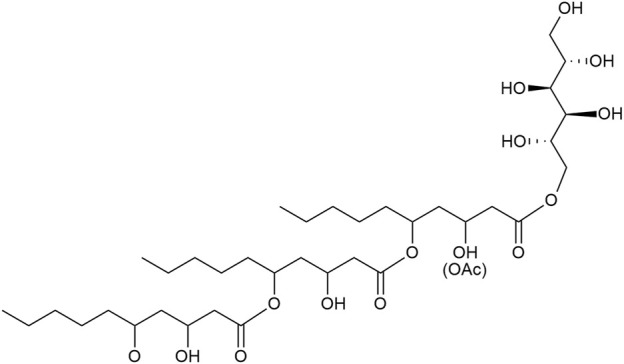
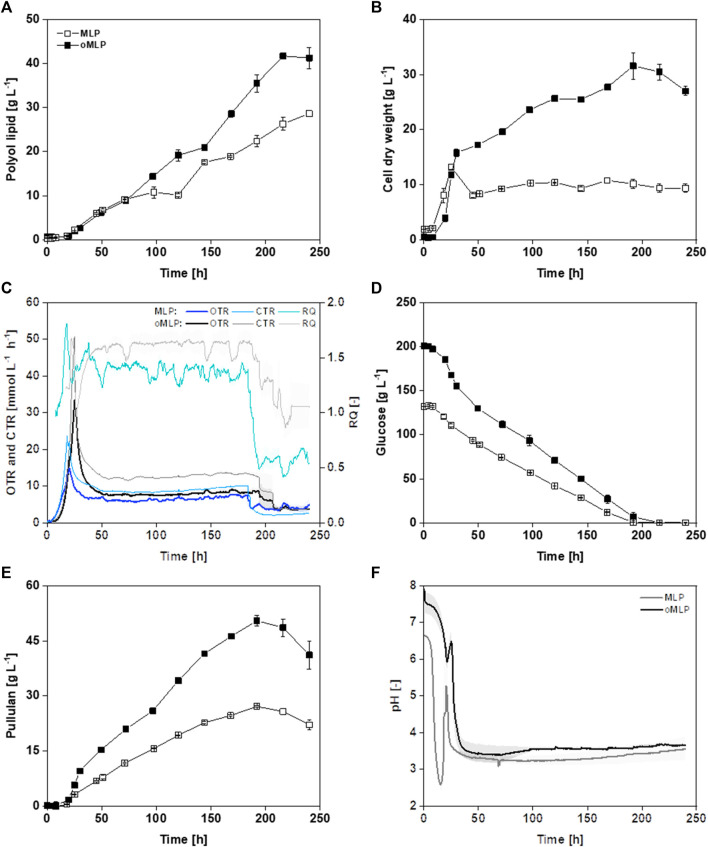
Polyol lipids (a.k.a. liamocins) produced by the polyextremotolerant, yeast-like fungus are amphiphilic molecules with high potential to serve as biosurfactants. So far, cultivations of have been performed in media with complex components, which complicates further process optimization due to their undefined composition. In this study, we developed and optimized a minimal medium, focusing on biosurfactant production. Firstly, we replaced yeast extract and peptone in the best-performing polyol lipid production medium to date with a vitamin solution, a trace-element solution, and a nitrogen source. We employed a design of experiments approach with a factor screening using a two-level-factorial design, followed by a central composite design. The polyol lipid titer was increased by 56% to 48 g L, and the space-time yield from 0.13 to 0.20 g L h in microtiter plate cultivations. This was followed by a successful transfer to a 1 L bioreactor, reaching a polyol lipid concentration of 41 g L. The final minimal medium allows the investigation of alternative carbon sources and the metabolic pathways involved, to pinpoint targets for genetic modifications. The results are discussed in the context of the industrial applicability of this robust and versatile fungus.
由耐多种极端条件的类酵母真菌产生的多元醇脂质(又称利亚莫菌素)是具有作为生物表面活性剂巨大潜力的两亲分子。到目前为止,该真菌的培养是在成分复杂的培养基中进行的,由于其成分不明确,这使得进一步的工艺优化变得复杂。在本研究中,我们开发并优化了一种用于生物表面活性剂生产的基本培养基。首先,我们用维生素溶液、微量元素溶液和氮源取代了迄今为止在性能最佳的多元醇脂质生产培养基中的酵母提取物和蛋白胨。我们采用实验设计方法,先通过两水平析因设计进行因子筛选,随后进行中心复合设计。在微量滴定板培养中,多元醇脂质的滴度提高了56%,达到48 g/L,时空产率从0.13 g/(L·h)提高到0.20 g/(L·h)。随后成功转移至1 L生物反应器,多元醇脂质浓度达到41 g/L。最终的基本培养基能够用于研究替代碳源以及相关代谢途径,以确定基因改造的靶点。我们结合这种强大且通用的真菌在工业上的适用性对结果进行了讨论。