Lei Xuejiao, Hu Quan, Ge Hongfei, Zhang Xuyang, Ru Xufang, Chen Yujie, Hu Rong, Feng Hua, Deng Jun, Huang Yan, Li Wenyan
Department of Neurosurgery Southwest Hospital, Third Military Medical University (Army Medical University) Chongqing China.
Department of Emergency Affiliated Hospital, Zunyi Medical University Zunyi Guizhou China.
Bioeng Transl Med. 2022 Nov 16;8(2):e10451. doi: 10.1002/btm2.10451. eCollection 2023 Mar.
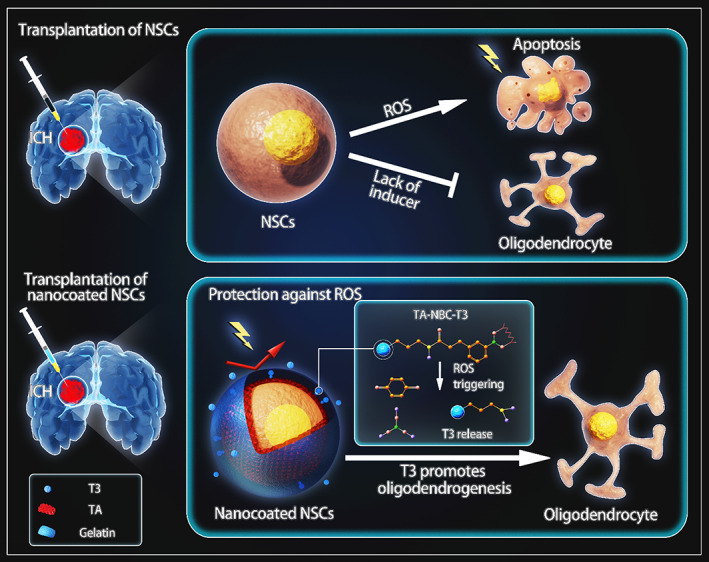
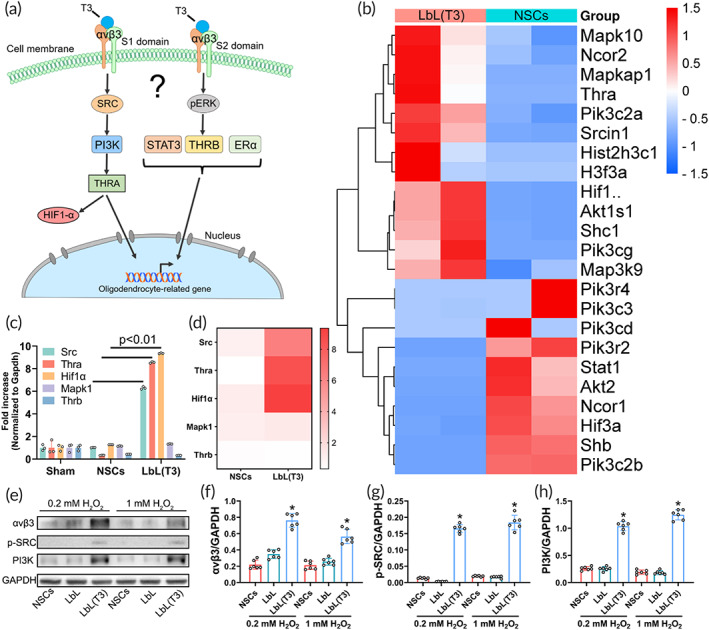
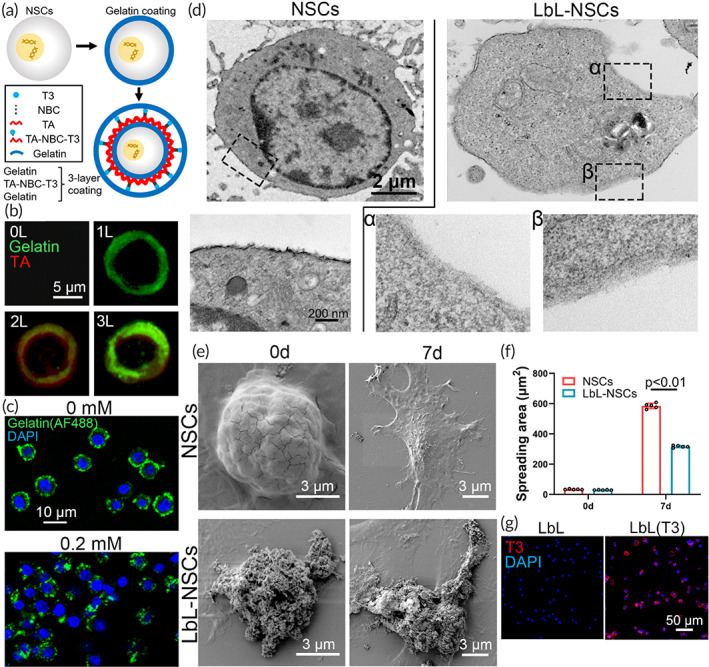
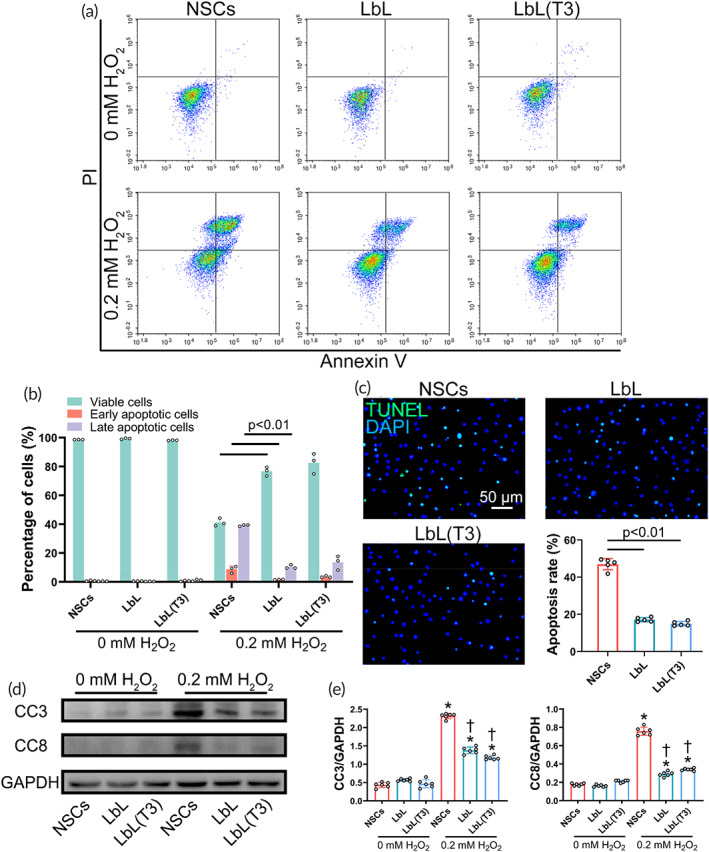
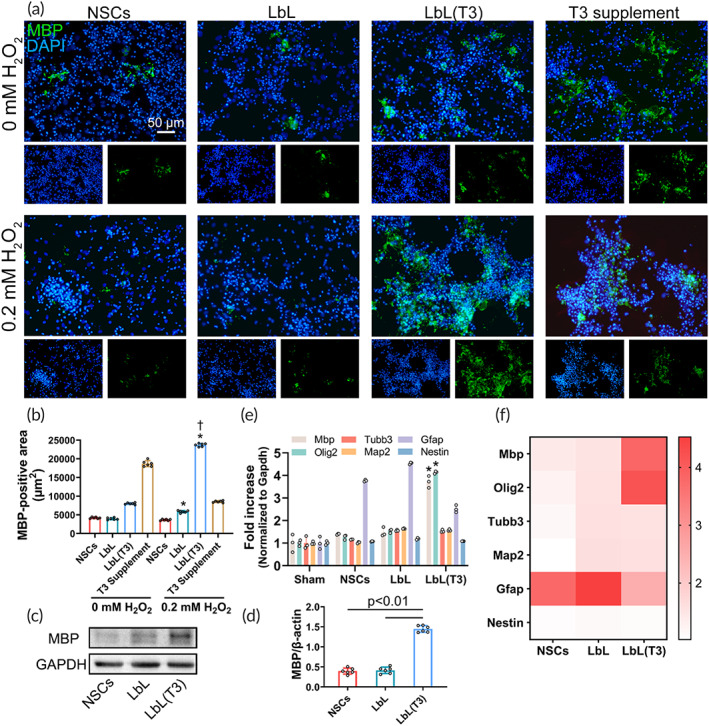
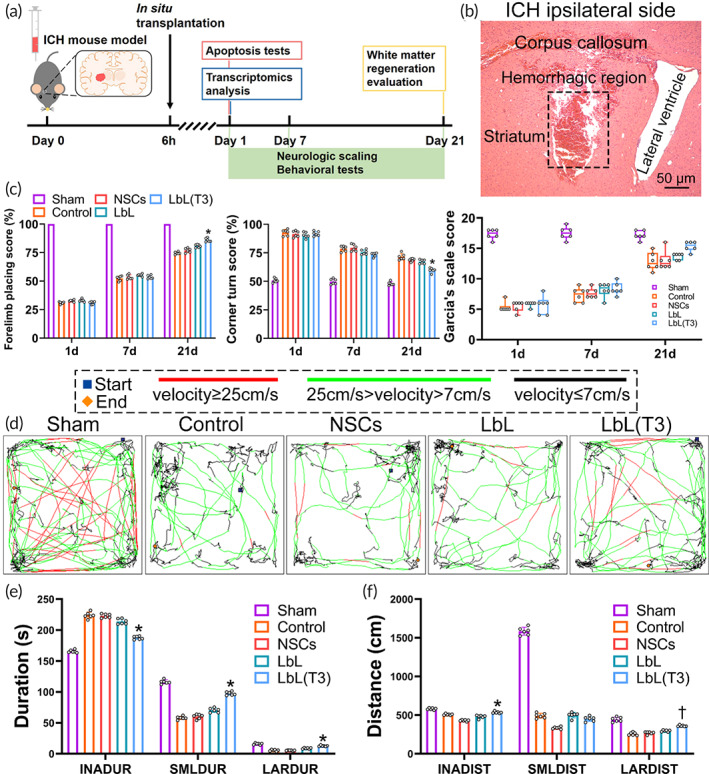
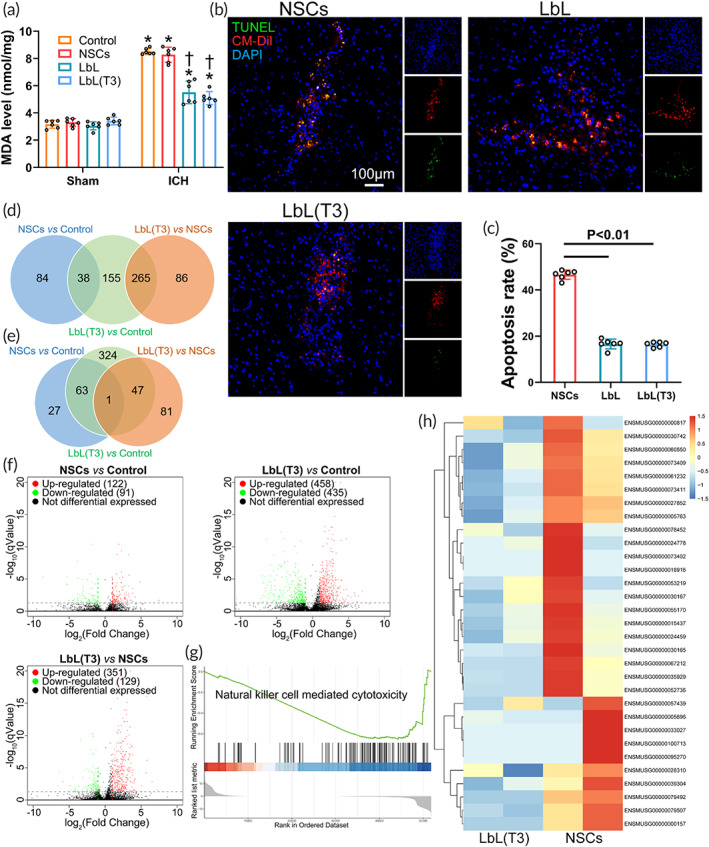
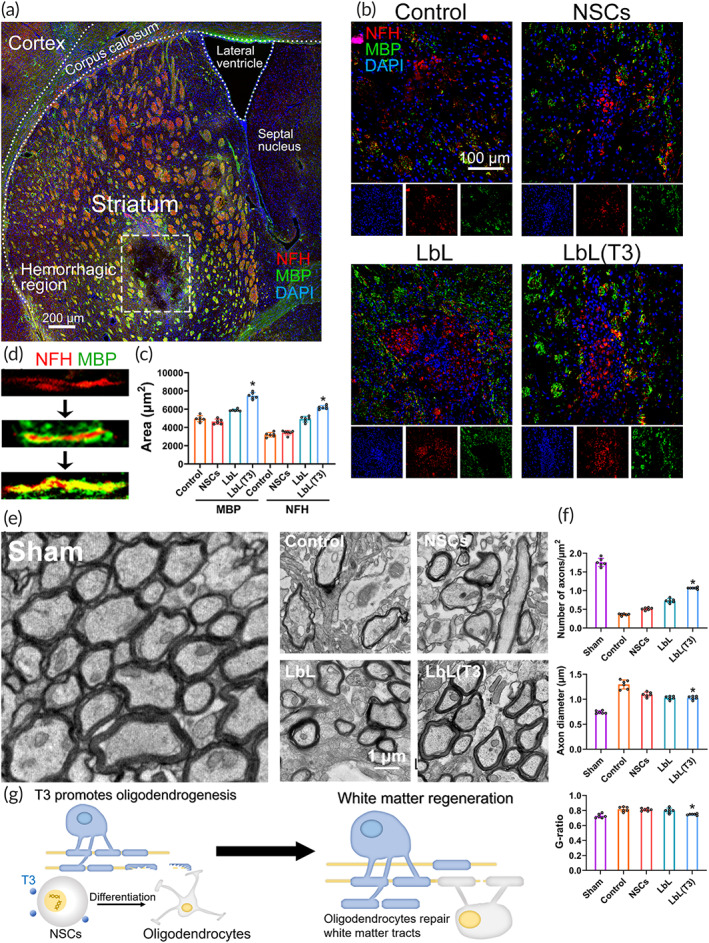
Intracerebral hemorrhage (ICH) poses a great threat to human health because of its high mortality and morbidity. Neural stem cell (NSC) transplantation is promising for treating white matter injury following ICH to promote functional recovery. However, reactive oxygen species (ROS)-induced NSC apoptosis and uncontrolled differentiation hindered the effectiveness of the therapy. Herein, we developed a single-cell nanogel system by layer-by-layer (LbL) hydrogen bonding of gelatin and tannic acid (TA), which was modified with a boronic ester-based compound linking triiodothyronine (T3). In vitro, NSCs in nanogel were protected from ROS-induced apoptosis, with apoptotic signaling pathways downregulated. This process of ROS elimination by material shell synergistically triggered T3 release to induce NSC differentiation into oligodendrocytes. Furthermore, in animal studies, ICH mice receiving nanogels performed better in behavioral evaluation, neurological scaling, and open field tests. These animals exhibited enhanced differentiation of NSCs into oligodendrocytes and promoted white matter tract regeneration on Day 21 through activation of the αvβ3/PI3K/THRA pathway. Consequently, transplantation of LbL(T3) nanogels largely resolved two obstacles in NSC therapy synergistically: low survival and uncontrolled differentiation, enhancing white matter regeneration and behavioral performance of ICH mice. As expected, nanoencapsulation with synergistic effects would efficiently provide hosts with various biological benefits and minimize the difficulty in material fabrication, inspiring next-generation material design for tackling complicated pathological conditions.
脑出血(ICH)因其高死亡率和发病率对人类健康构成巨大威胁。神经干细胞(NSC)移植有望治疗脑出血后的白质损伤,促进功能恢复。然而,活性氧(ROS)诱导的神经干细胞凋亡和不受控制的分化阻碍了该疗法的有效性。在此,我们通过明胶和单宁酸(TA)的逐层(LbL)氢键作用开发了一种单细胞纳米凝胶系统,该系统用连接三碘甲状腺原氨酸(T3)的硼酸酯基化合物进行了修饰。在体外,纳米凝胶中的神经干细胞受到保护,免受ROS诱导的凋亡,凋亡信号通路被下调。材料壳消除ROS的这一过程协同触发T3释放,诱导神经干细胞分化为少突胶质细胞。此外,在动物研究中,接受纳米凝胶的脑出血小鼠在行为评估、神经评分和旷场试验中表现更好。这些动物在第21天通过激活αvβ3/PI3K/THRA途径,表现出神经干细胞向少突胶质细胞的分化增强,促进了白质束再生。因此,LbL(T3)纳米凝胶的移植在很大程度上协同解决了神经干细胞治疗中的两个障碍:低存活率和不受控制的分化,增强了脑出血小鼠的白质再生和行为表现。正如预期的那样,具有协同效应的纳米封装将有效地为宿主提供各种生物学益处,并最大限度地降低材料制造的难度,为解决复杂病理状况的下一代材料设计提供了灵感。