School of Biological Sciences, Seoul National University, Seoul 08826, Republic of Korea.
Genome Biol Evol. 2024 Apr 2;16(4). doi: 10.1093/gbe/evae063.
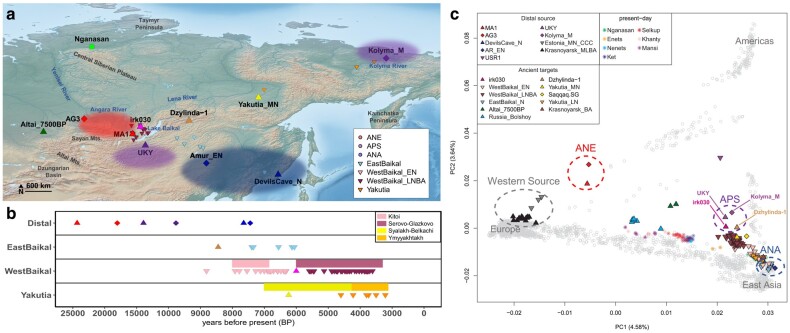
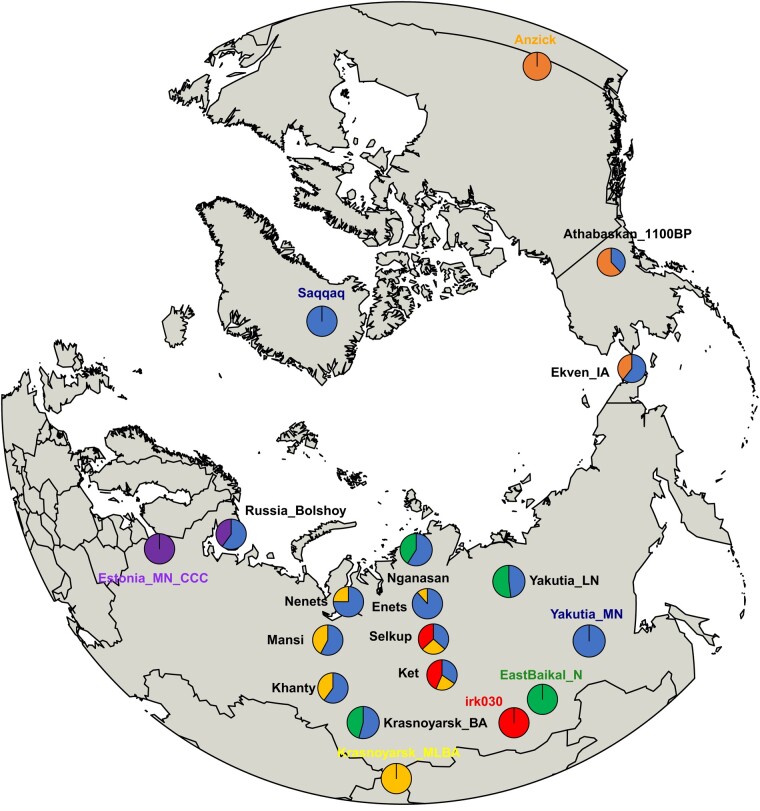
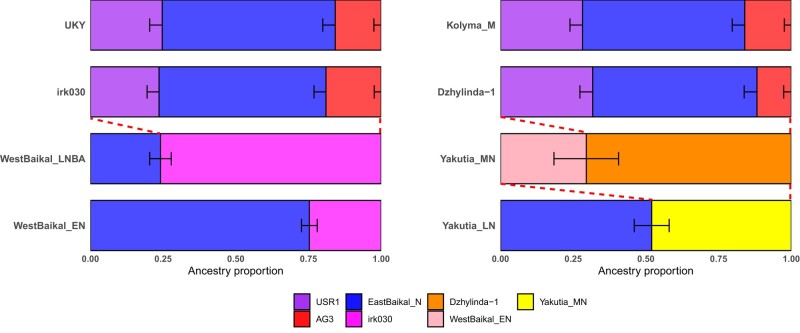
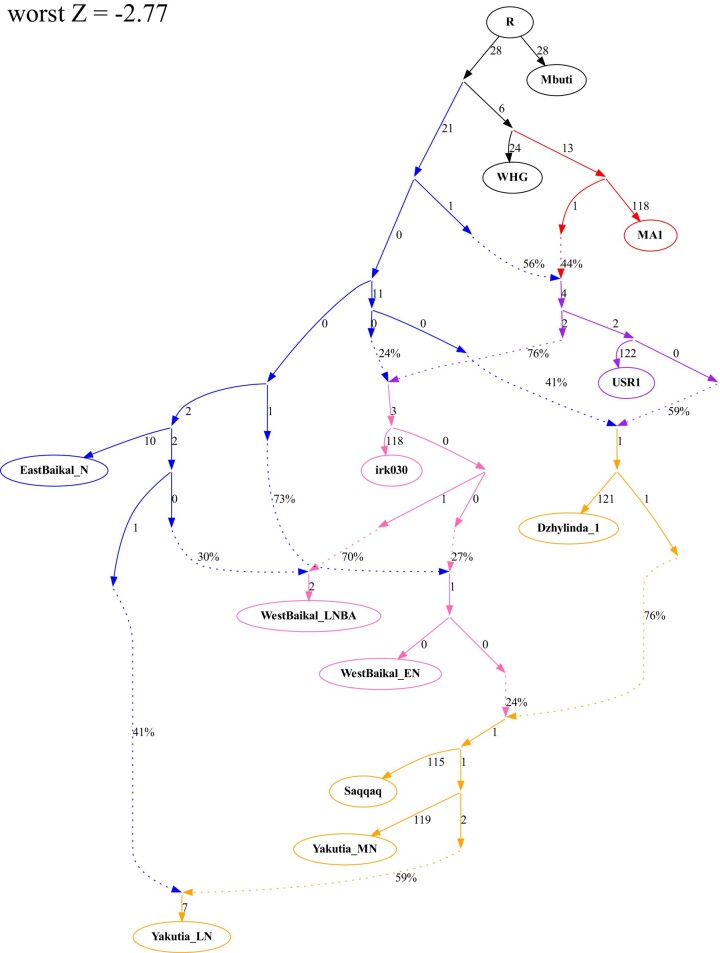
Human populations across a vast area in northern Eurasia, from Fennoscandia to Chukotka, share a distinct genetic component often referred to as the Siberian ancestry. Most enriched in present-day Samoyedic-speaking populations such as Nganasans, its origins and history still remain elusive despite the growing list of ancient and present-day genomes from Siberia. Here, we reanalyze published ancient and present-day Siberian genomes focusing on the Baikal and Yakutia, resolving key questions regarding their genetic history. First, we show a long-term presence of a unique genetic profile in southern Siberia, up to 6,000 yr ago, which distinctly shares a deep ancestral connection with Native Americans. Second, we provide plausible historical models tracing genetic changes in West Baikal and Yakutia in fine resolution. Third, the Middle Neolithic individual from Yakutia, belonging to the Belkachi culture, serves as the best source so far available for the spread of the Siberian ancestry into Fennoscandia and Greenland. These findings shed light on the genetic legacy of the Siberian ancestry and provide insights into the complex interplay between different populations in northern Eurasia throughout history.
从芬诺斯堪的亚到楚科奇,在欧亚大陆北部的广大地区,人类群体共享一种独特的遗传成分,通常被称为西伯利亚血统。尽管西伯利亚的古代和现代基因组越来越多,但这种血统的起源和历史仍然难以捉摸,它在当今的涅涅茨语族群中最为丰富,如涅涅茨人。在这里,我们重新分析了已发表的西伯利亚古代和现代基因组,重点关注贝加尔湖和雅库特地区,解决了其遗传历史的关键问题。首先,我们表明,在 6000 年前,南西伯利亚就存在一种独特的遗传特征,这种特征与美洲原住民有着深刻的祖先联系。其次,我们提供了合理的历史模型,以精细的分辨率追踪了贝加尔湖西部和雅库特地区的遗传变化。第三,来自雅库特的属于贝尔卡奇文化的中石器时代个体,是迄今为止有关西伯利亚血统传播到芬诺斯堪的亚和格陵兰的最佳来源。这些发现揭示了西伯利亚血统的遗传遗产,并为了解历史上欧亚大陆北部不同人群之间的复杂相互作用提供了线索。