Exercise and Nutrition Research Program, Mary MacKillop Institute for Health Research, Australian Catholic University, Level 5, 215 Spring Street, Melbourne, VIC, 3000, Australia.
Sports Med. 2024 May;54(5):1097-1119. doi: 10.1007/s40279-024-02007-2. Epub 2024 Mar 25.
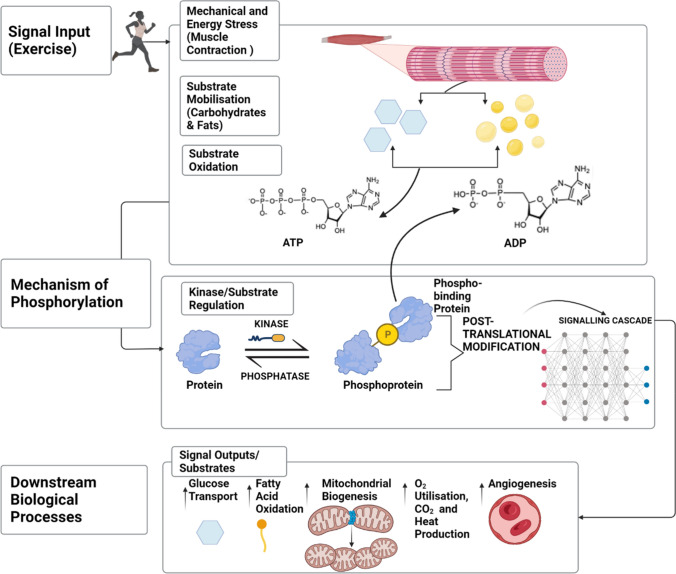
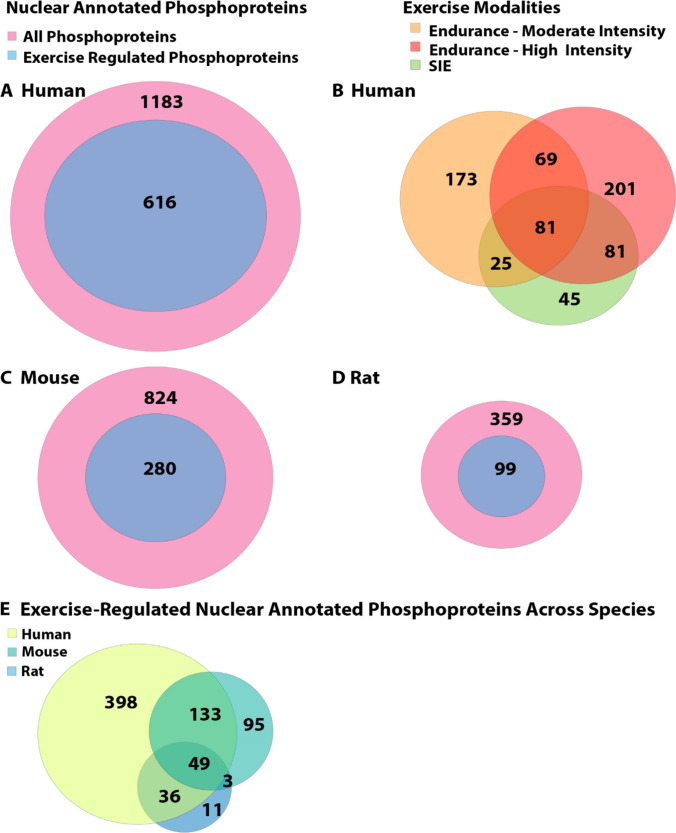
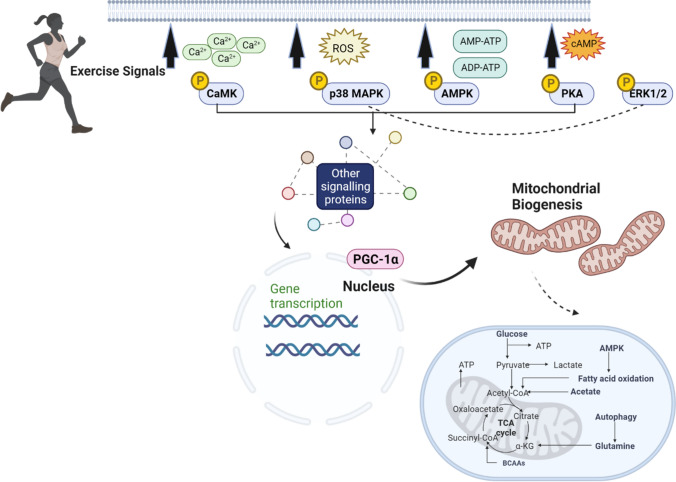
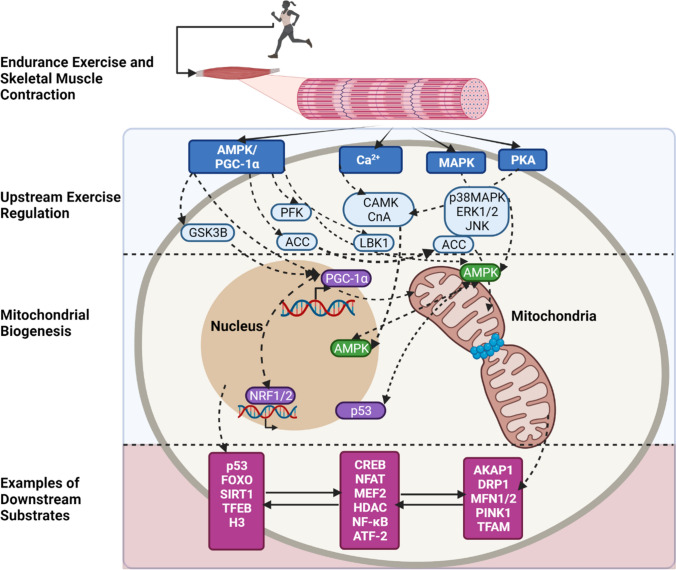
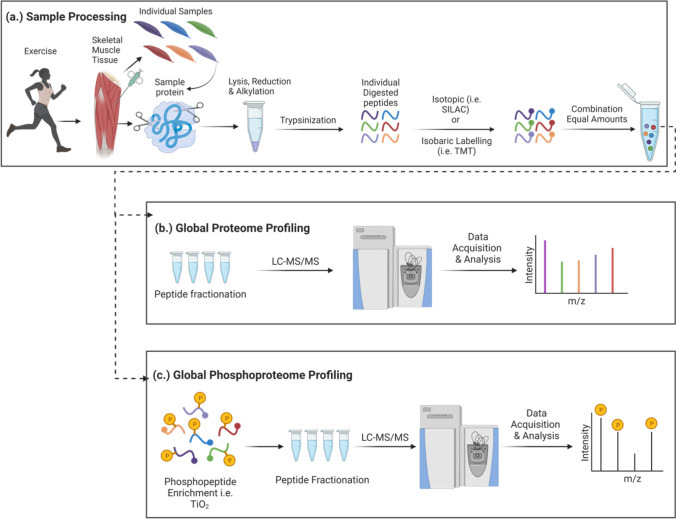
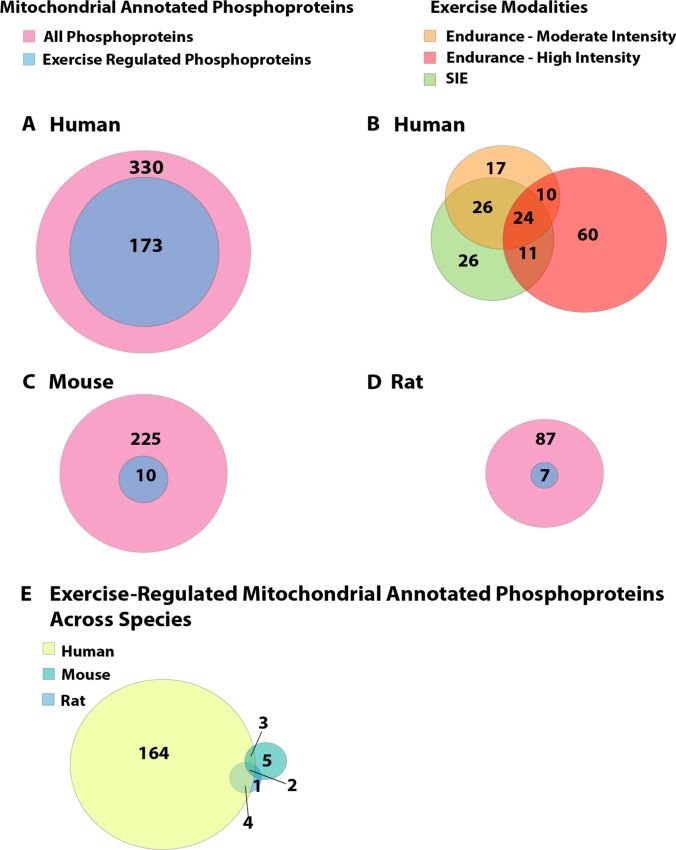
Exercise perturbs energy homeostasis in skeletal muscle and engages integrated cellular signalling networks to help meet the contraction-induced increases in skeletal muscle energy and oxygen demand. Investigating exercise-associated perturbations in skeletal muscle signalling networks has uncovered novel mechanisms by which exercise stimulates skeletal muscle mitochondrial biogenesis and promotes whole-body health and fitness. While acute exercise regulates a complex network of protein post-translational modifications (e.g. phosphorylation) in skeletal muscle, previous investigations of exercise signalling in human and rodent skeletal muscle have primarily focused on a select group of exercise-regulated protein kinases [i.e. 5' adenosine monophosphate-activated protein kinase (AMPK), protein kinase A (PKA), Ca2/calmodulin-dependent protein kinase (CaMK) and mitogen-activated protein kinase (MAPK)] and only a small subset of their respective protein substrates. Recently, global mass spectrometry-based phosphoproteomic approaches have helped unravel the extensive complexity and interconnection of exercise signalling pathways and kinases beyond this select group and phosphorylation and/or translocation of exercise-regulated mitochondrial and nuclear protein substrates. This review provides an overview of recent advances in our understanding of the molecular events associated with acute endurance exercise-regulated signalling pathways and kinases in skeletal muscle with a focus on phosphorylation. We critically appraise recent evidence highlighting the involvement of mitochondrial and nuclear protein phosphorylation and/or translocation in skeletal muscle adaptive responses to an acute bout of endurance exercise that ultimately stimulate mitochondrial biogenesis and contribute to exercise's wider health and fitness benefits.
运动扰乱骨骼肌的能量稳态,并参与整合的细胞信号网络,以帮助满足收缩引起的骨骼肌能量和氧气需求的增加。研究与运动相关的骨骼肌信号网络的干扰揭示了运动刺激骨骼肌线粒体生物发生和促进全身健康和健身的新机制。虽然急性运动调节骨骼肌中蛋白质翻译后修饰(例如磷酸化)的复杂网络,但以前对人类和啮齿动物骨骼肌运动信号的研究主要集中在一组选定的运动调节蛋白激酶上[即 5' 单磷酸腺苷激活蛋白激酶 (AMPK)、蛋白激酶 A (PKA)、钙/钙调蛋白依赖性蛋白激酶 (CaMK) 和丝裂原激活蛋白激酶 (MAPK)],以及它们各自的蛋白质底物的一小部分。最近,基于全局质谱的磷酸化蛋白质组学方法帮助揭示了超出这一组和磷酸化和/或运动调节的线粒体和核蛋白底物的移位的运动信号通路和激酶的广泛复杂性和相互联系。 本综述概述了我们对急性耐力运动调节的信号通路和激酶分子事件的理解的最新进展,重点是磷酸化。我们批判性地评价了最近的证据,强调了线粒体和核蛋白磷酸化和/或移位在骨骼肌对急性耐力运动适应反应中的参与,这最终刺激了线粒体生物发生,并为运动的更广泛健康和健身益处做出了贡献。