Center for Innovation and Entrepreneurship, Taizhou Institute of Zhejiang University, Taizhou, 318000, Zhejiang, China.
Department of Polymer Science and Engineering, Zhejiang University, Hangzhou, 310027, Zhejiang, China.
Sci Rep. 2024 Mar 26;14(1):7172. doi: 10.1038/s41598-024-56534-z.
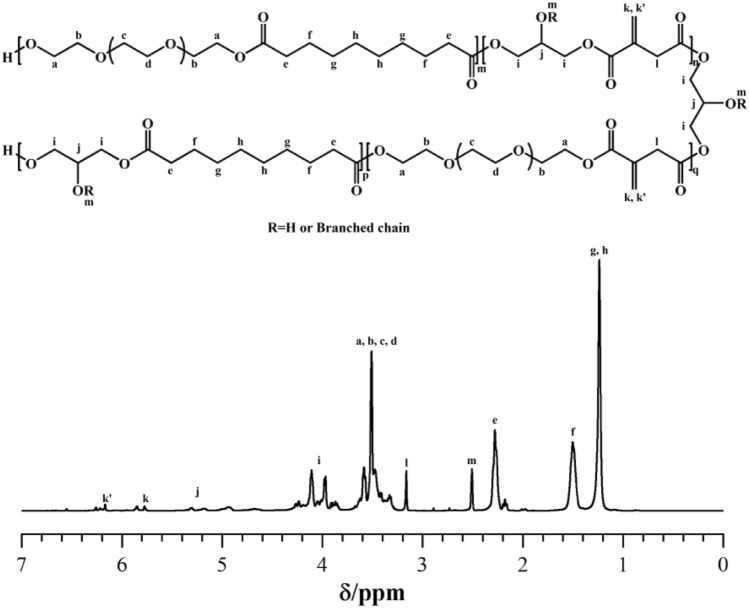
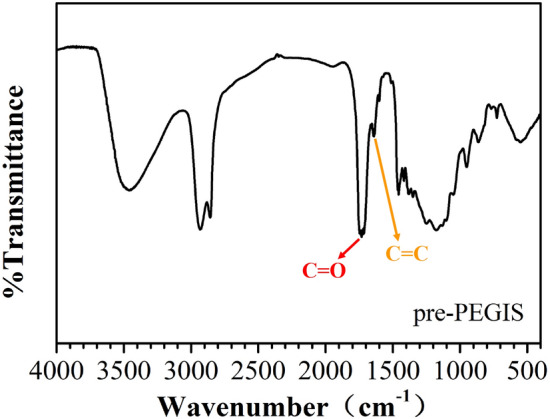
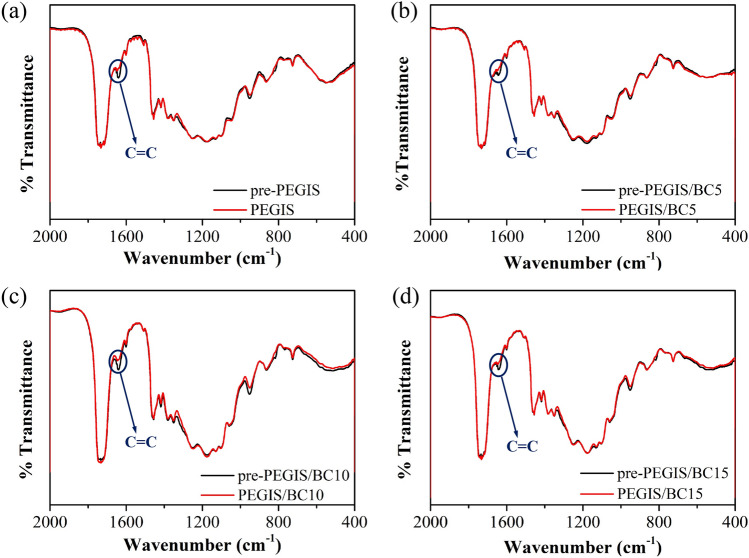
To address the concern that biodegradable elastomers are environmental-friendly but usually associated with poor properties for practical utilization, we report a star-crosslinked poly(ethylene glycol-glycerol-itaconate-sebacate) (PEGIS) elastomer synthesized by esterification, polycondensation and UV curing, and reinforced by bacterial cellulose (BC). The interpenetrating network of primary BC backbone and vulcanized elastomer is achieved by the "in-situ secondary network construction" strategy. With the well dispersion of BC without agglomeration, the mechanical properties of PEGIS are significantly enhanced in tensile strength, Young's modulus and elongation at break. The reinforcement strategy is demonstrated to be efficient and offers a route to the development of biodegradable elastomers for a variety of applications in the future.
为了解决可生物降解弹性体虽然环保但通常与实际应用中的较差性能相关的问题,我们报告了一种通过酯化、缩聚和 UV 固化合成的星型交联聚(乙二醇-甘油-衣康酸-癸二酸)(PEGIS)弹性体,并通过细菌纤维素(BC)进行增强。通过“原位二次网络构建”策略实现了主 BC 骨架和硫化弹性体的互穿网络。由于 BC 的良好分散而没有团聚,PEGIS 的力学性能在拉伸强度、杨氏模量和断裂伸长率方面得到了显著提高。该增强策略被证明是有效的,并为未来各种应用的可生物降解弹性体的开发提供了一种途径。