Yan Fang, Da Qian, Yi Hongmei, Deng Shijie, Zhu Lifeng, Zhou Mu, Liu Yingting, Feng Ming, Wang Jing, Wang Xuan, Zhang Yuxiu, Zhang Wenjing, Zhang Xiaofan, Lin Jingsheng, Zhang Shaoting, Wang Chaofu
Shanghai Artificial Intelligence Laboratory, Shanghai, China.
Ruijin Hospital, Shanghai Jiao Tong University School of Medicine, Shanghai, China.
NPJ Precis Oncol. 2024 Mar 27;8(1):76. doi: 10.1038/s41698-024-00577-y.
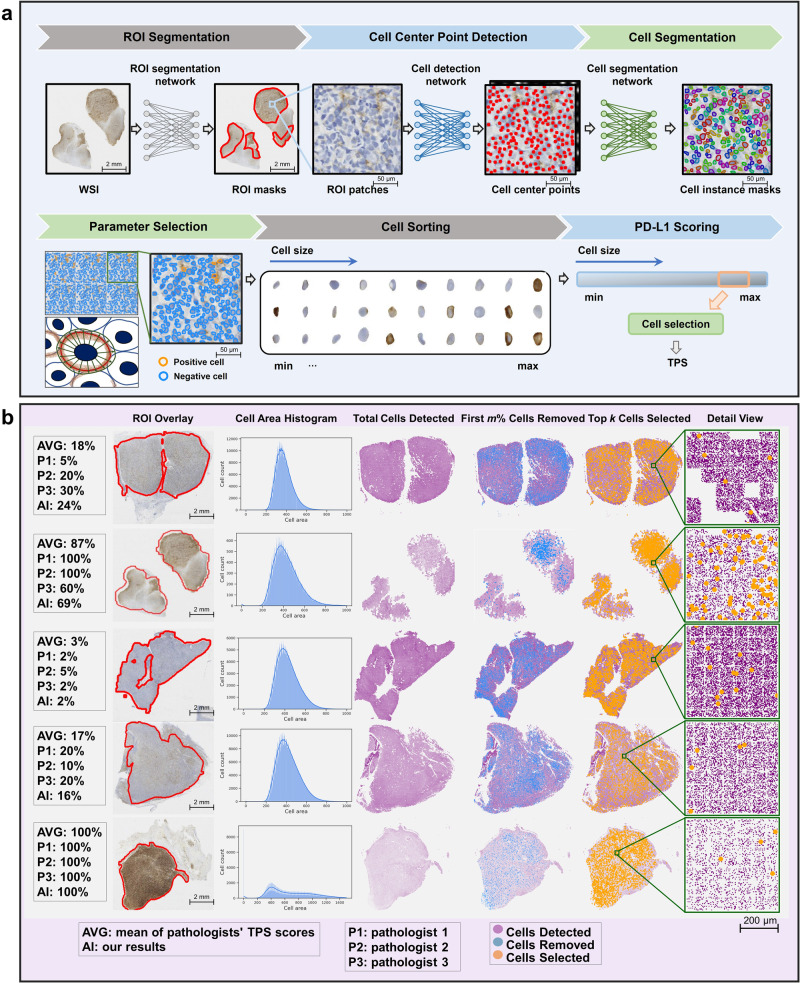
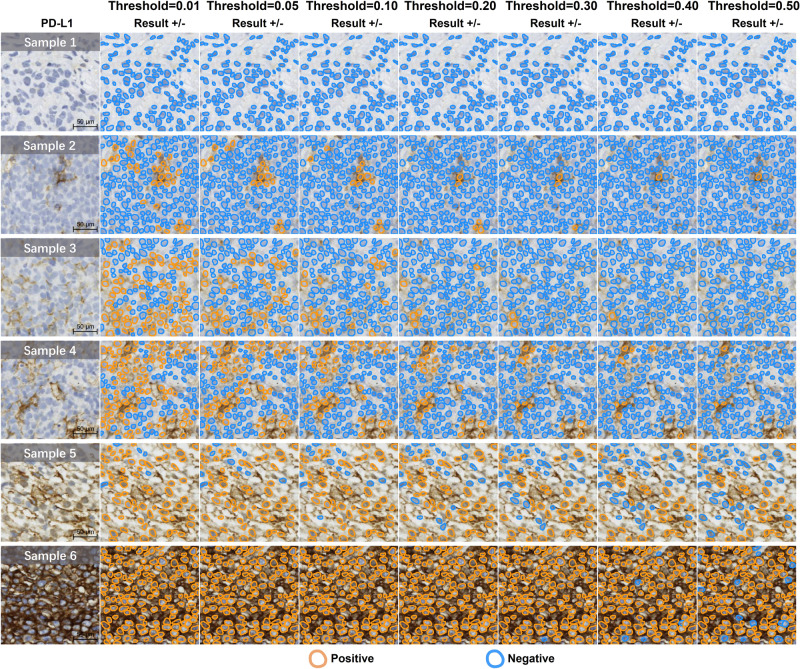
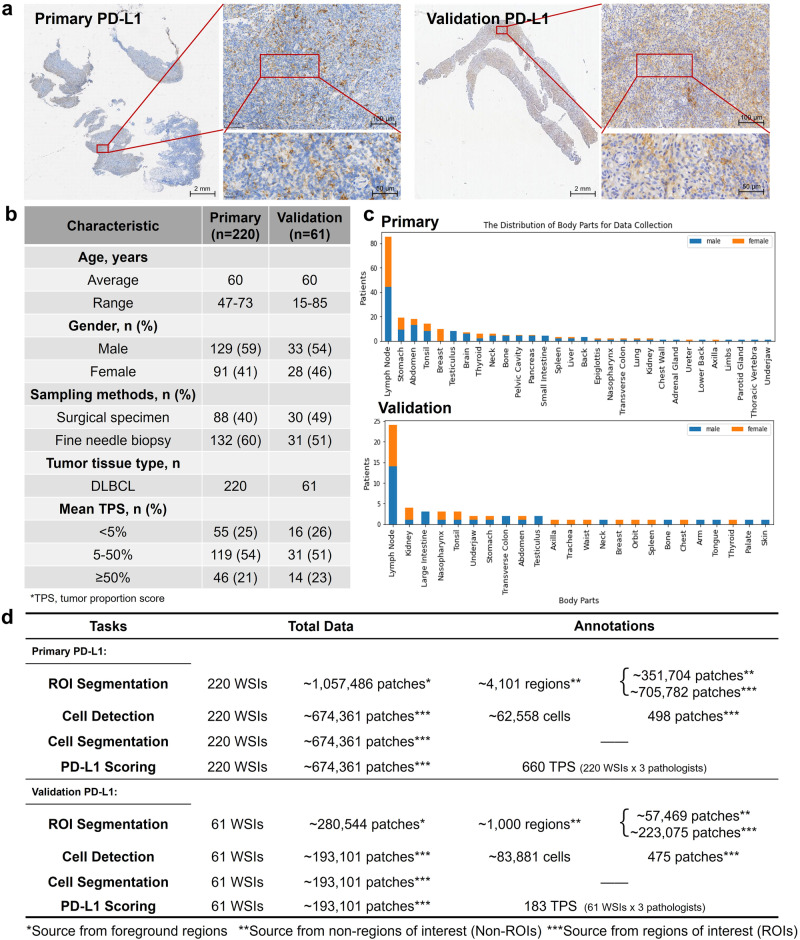
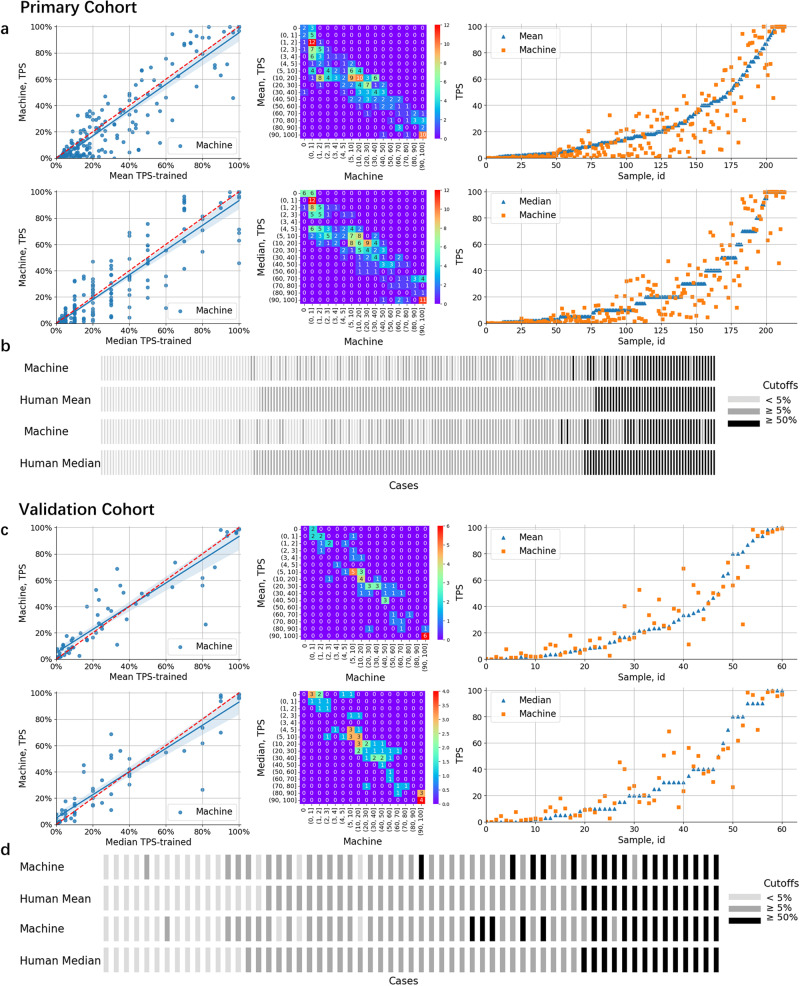
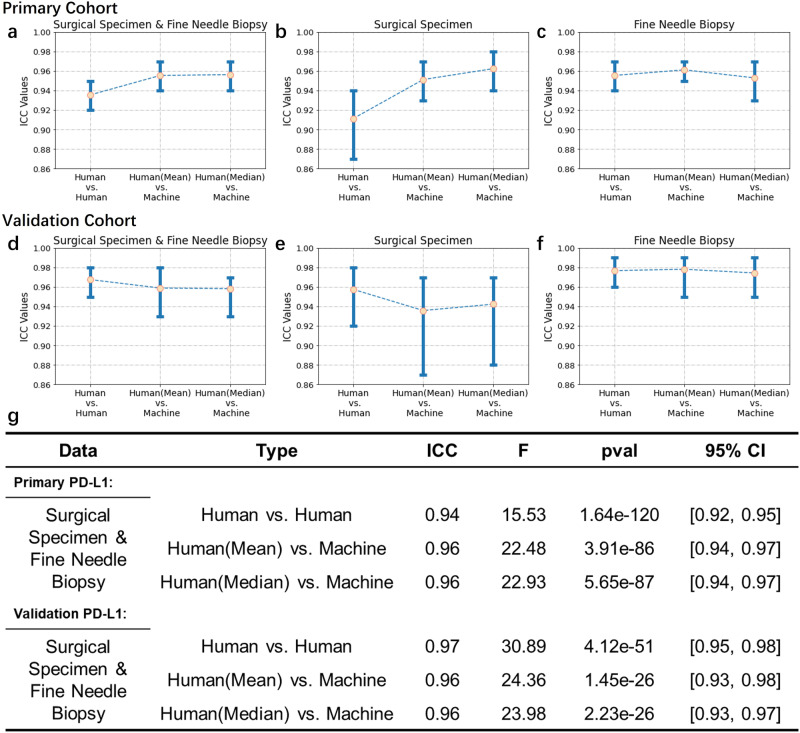
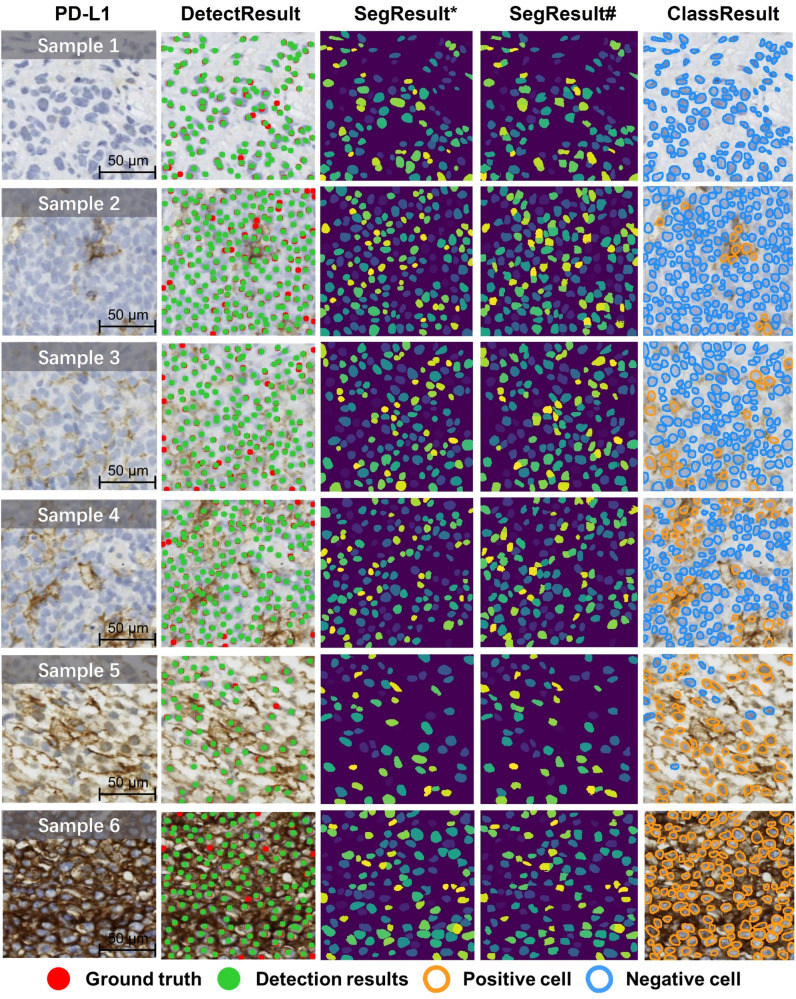
Diffuse large B cell lymphoma (DLBCL) is an aggressive blood cancer known for its rapid progression and high incidence. The growing use of immunohistochemistry (IHC) has significantly contributed to the detailed cell characterization, thereby playing a crucial role in guiding treatment strategies for DLBCL. In this study, we developed an AI-based image analysis approach for assessing PD-L1 expression in DLBCL patients. PD-L1 expression represents as a major biomarker for screening patients who can benefit from targeted immunotherapy interventions. In particular, we performed large-scale cell annotations in IHC slides, encompassing over 5101 tissue regions and 146,439 live cells. Extensive experiments in primary and validation cohorts demonstrated the defined quantitative rule helped overcome the difficulty of identifying specific cell types. In assessing data obtained from fine needle biopsies, experiments revealed that there was a higher level of agreement in the quantitative results between Artificial Intelligence (AI) algorithms and pathologists, as well as among pathologists themselves, in comparison to the data obtained from surgical specimens. We highlight that the AI-enabled analytics enhance the objectivity and interpretability of PD-L1 quantification to improve the targeted immunotherapy development in DLBCL patients.
弥漫性大B细胞淋巴瘤(DLBCL)是一种侵袭性血癌,以其快速进展和高发病率而闻名。免疫组织化学(IHC)的日益广泛应用对详细的细胞特征描述做出了重大贡献,从而在指导DLBCL的治疗策略中发挥了关键作用。在本研究中,我们开发了一种基于人工智能的图像分析方法,用于评估DLBCL患者的PD-L1表达。PD-L1表达是筛选可从靶向免疫治疗干预中获益患者的主要生物标志物。具体而言,我们在免疫组化切片中进行了大规模细胞标注,涵盖超过5101个组织区域和146439个活细胞。在原发性和验证队列中的广泛实验表明,所定义的定量规则有助于克服识别特定细胞类型的困难。在评估细针穿刺活检获得的数据时,实验显示,与手术标本获得的数据相比,人工智能(AI)算法与病理学家之间以及病理学家自身之间在定量结果上的一致性更高。我们强调,基于人工智能的分析增强了PD-L1定量的客观性和可解释性,以促进DLBCL患者靶向免疫治疗的发展。